












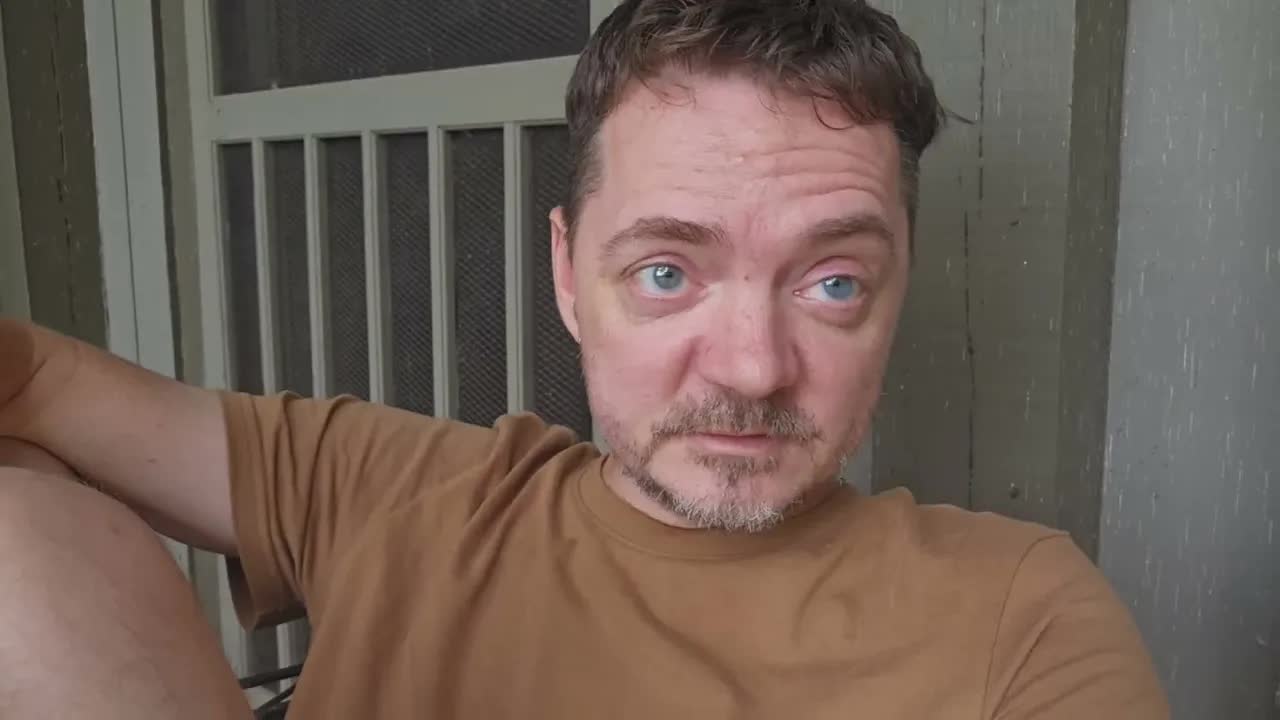
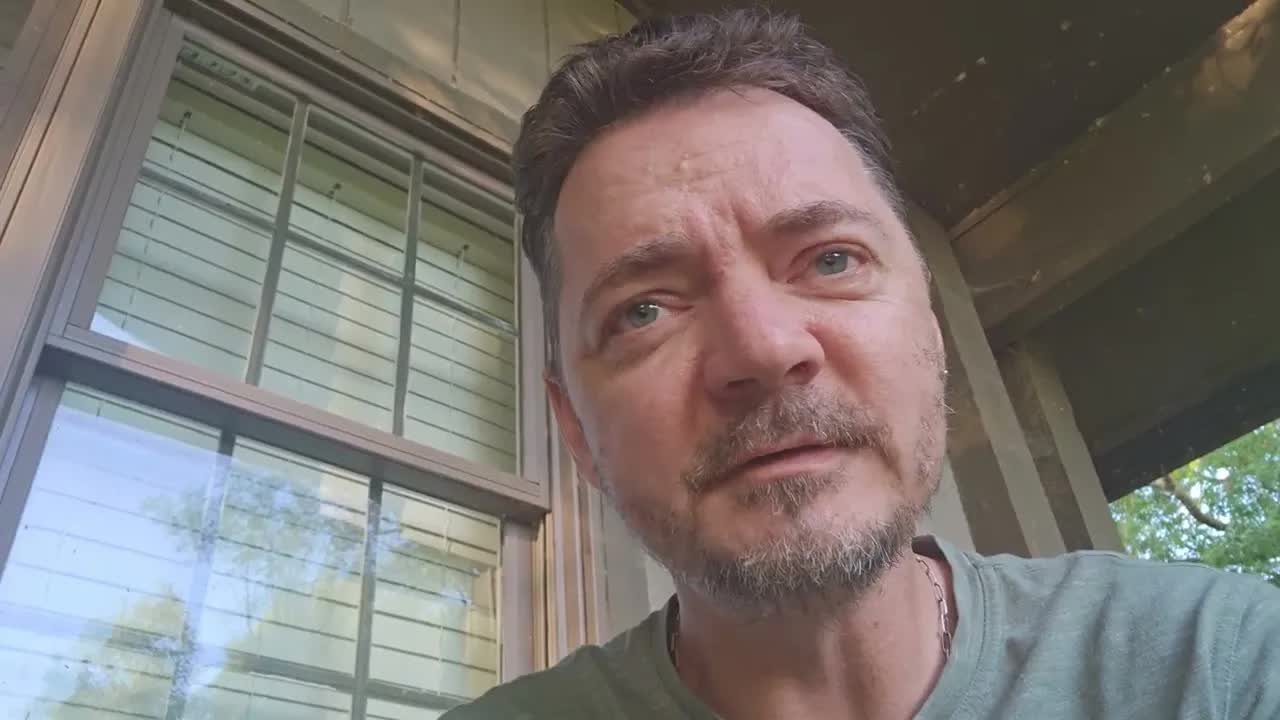
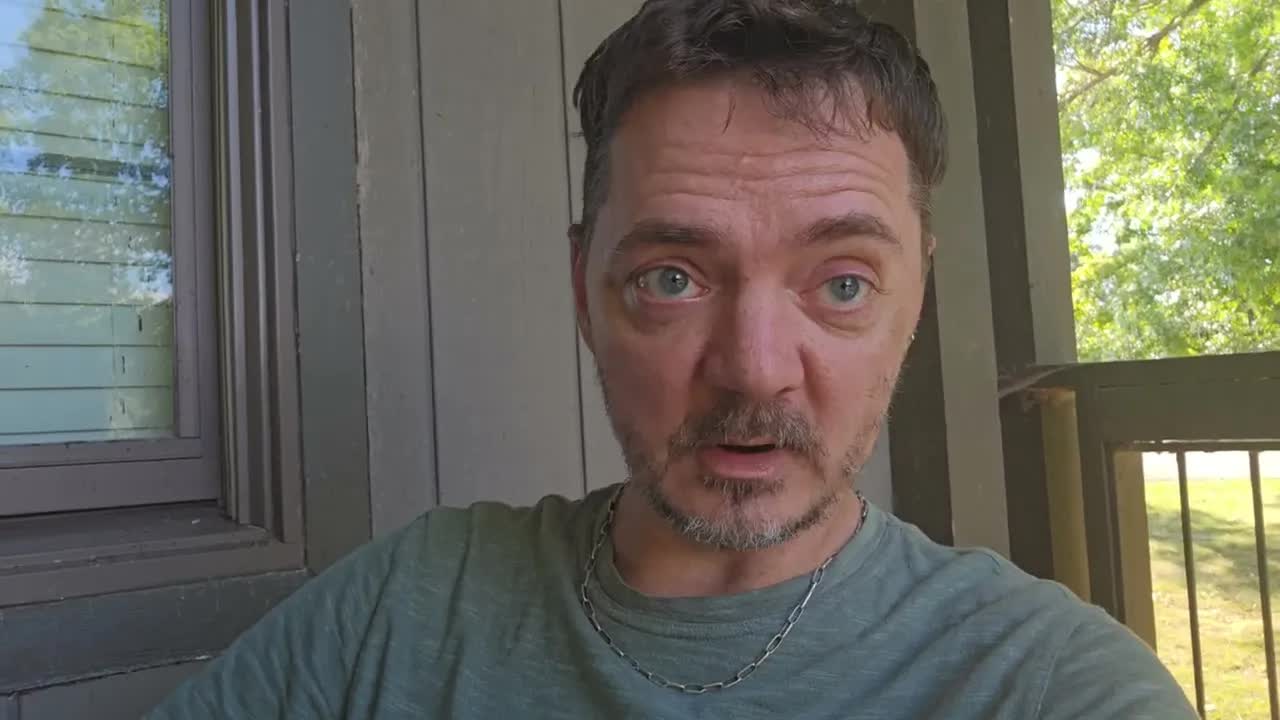
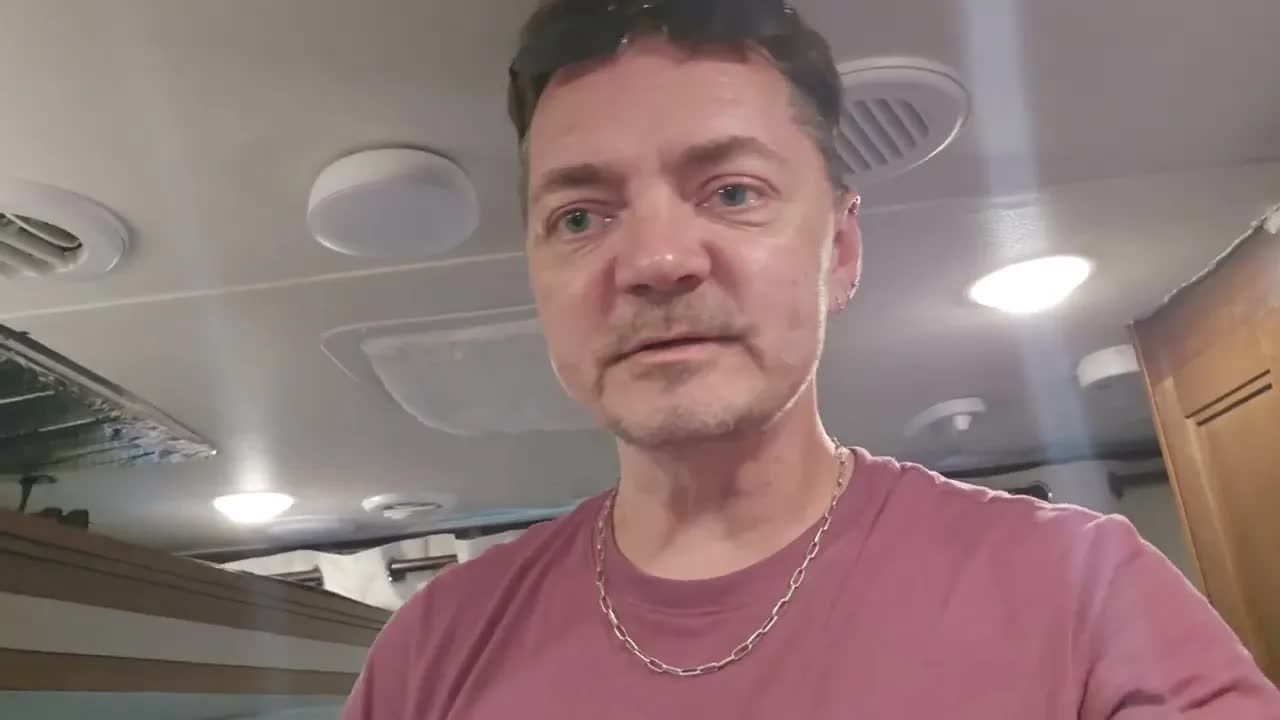
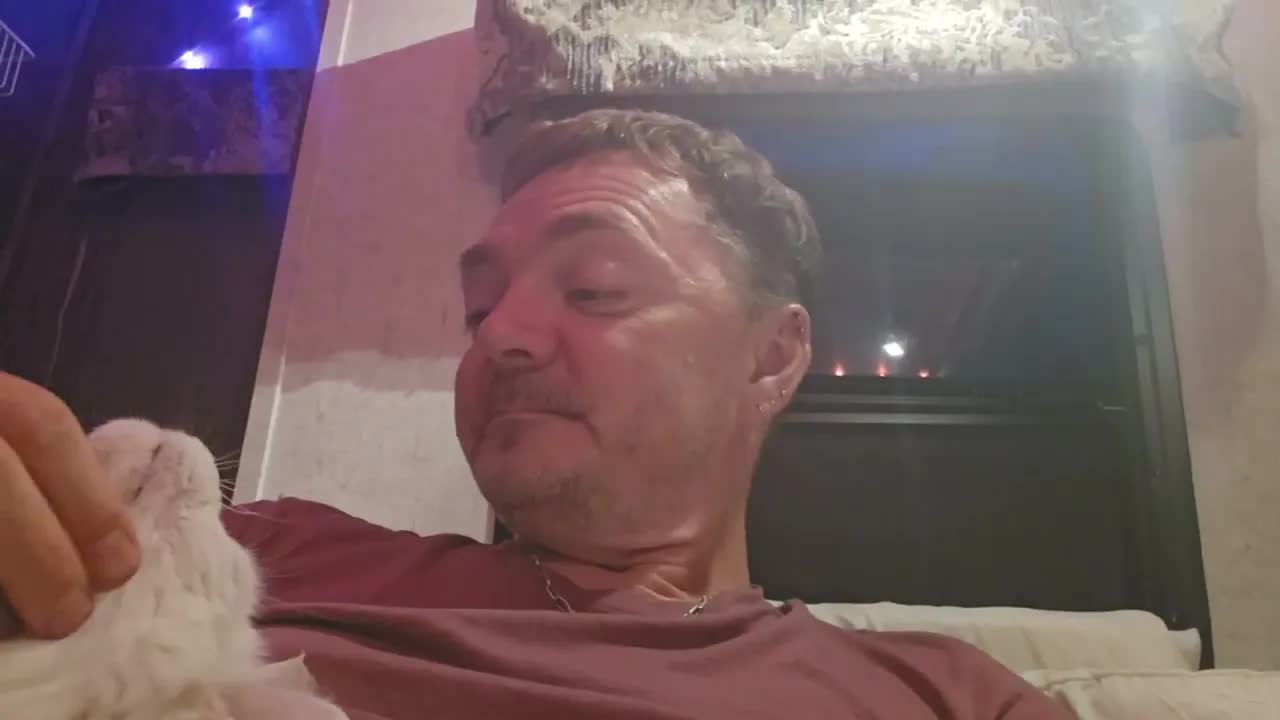


The deck holds the afternoon. Bailey is in his carrier a few feet away, laid down, unbothered, and rswfire begins the way he often begins — mid-thought, as though the camera arrived late to something already underway. In case y'all were wondering, this is how I adapted. The problem he names is simple and structural: he wants Bailey out here, Bailey wants to be out here, and the deck is high enough that a cat with unrestricted range could jump. Two wants and one hazard. The carrier is the answer he arrived at.
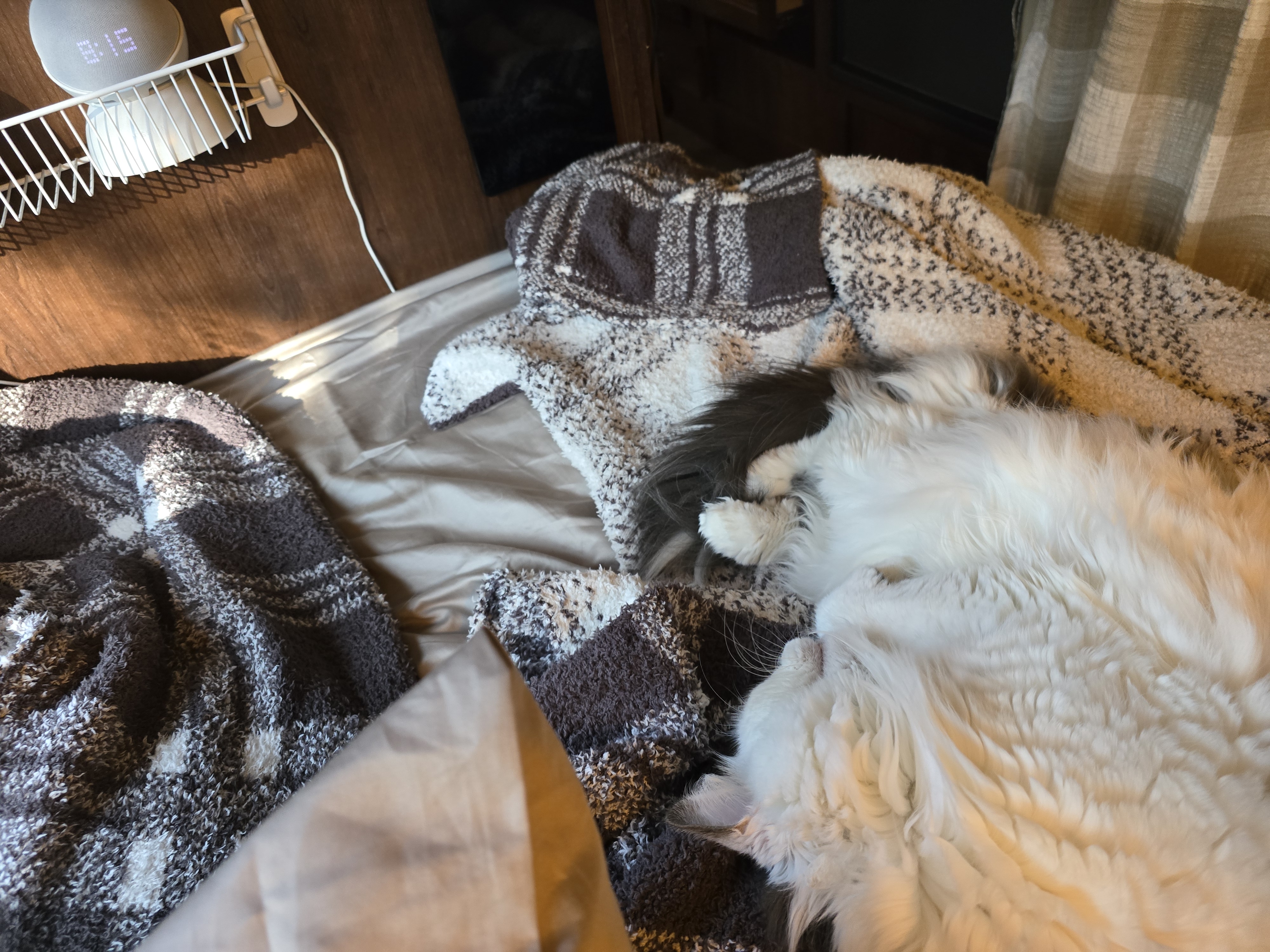
He does not present it as a containment. He presents it as something Bailey participates in. When they are inside and rswfire asks if he wants to go out, Bailey goes right into the carrier on his own. He gets it. Twice now he has been out here, and both times he settled without complaint. rswfire looks over mid-sentence — what are you looking at, Bailey — and returns to the thread. The cat's senses are engaged. The cat is perfectly happy. The arrangement holds.
Then he says he is tired. He says he was tired yesterday too. He does not build anything on top of it — no explanation offered, no correction sought. I just embrace it and move on and keep going. The tiredness is registered the way the deck height was registered: a condition of the situation, stated once, factored in.
He turns the camera. I know it doesn't look like much, but it's just beautiful. And then immediately he refuses the narrowness of his own word — it is not just the view. It is the atmosphere. It is the environment. The visual field is only one channel of what he is receiving out here, and he corrects toward the fuller account before the smaller one can settle.
The correction opens the real subject. He circles back to Bailey and names something he says he does not generally know how to describe: while he is talking, something else is running. A second process, negotiating what he wants to say against what he means. It fragments his speech. He does not apologize for it — he documents it, the way one would document any load-bearing behavior of a working system.
What that second process caught, earlier, was the word compromise. He had been about to say the carrier arrangement was a compromise, and he resisted it, and now he explains why. The word did not feel like authentic language. For me it's synergistic, it's holistic, it's integrated, it's what works. He notes the term he actually leans on — usually the negative form of it, what doesn't work, because that is the operational one. When something doesn't work he changes it. He keeps trying things until he finds out why it fails, and then finds something that doesn't. Not a midpoint between two positions. An iteration until the configuration holds.
He grants the counterargument without letting it convert him. Bailey probably would love to roam. Sometimes he vocalizes exactly that. But rswfire knows he is happy and content, and he extends the frame outward without adjusting it for species: if you were human, I don't think it would be viewed as like a compromise. It would be seen as more holistic than that. Then the line the whole signal was building toward — compromises are fragmented ways of looking at life.
He closes by declining to resolve it. I don't really know how to explain that, and that's why I resisted saying it, because I genuinely don't feel the world that way. The deck stays quiet. Bailey stays laid down. The explanation is unfinished and the position is complete.