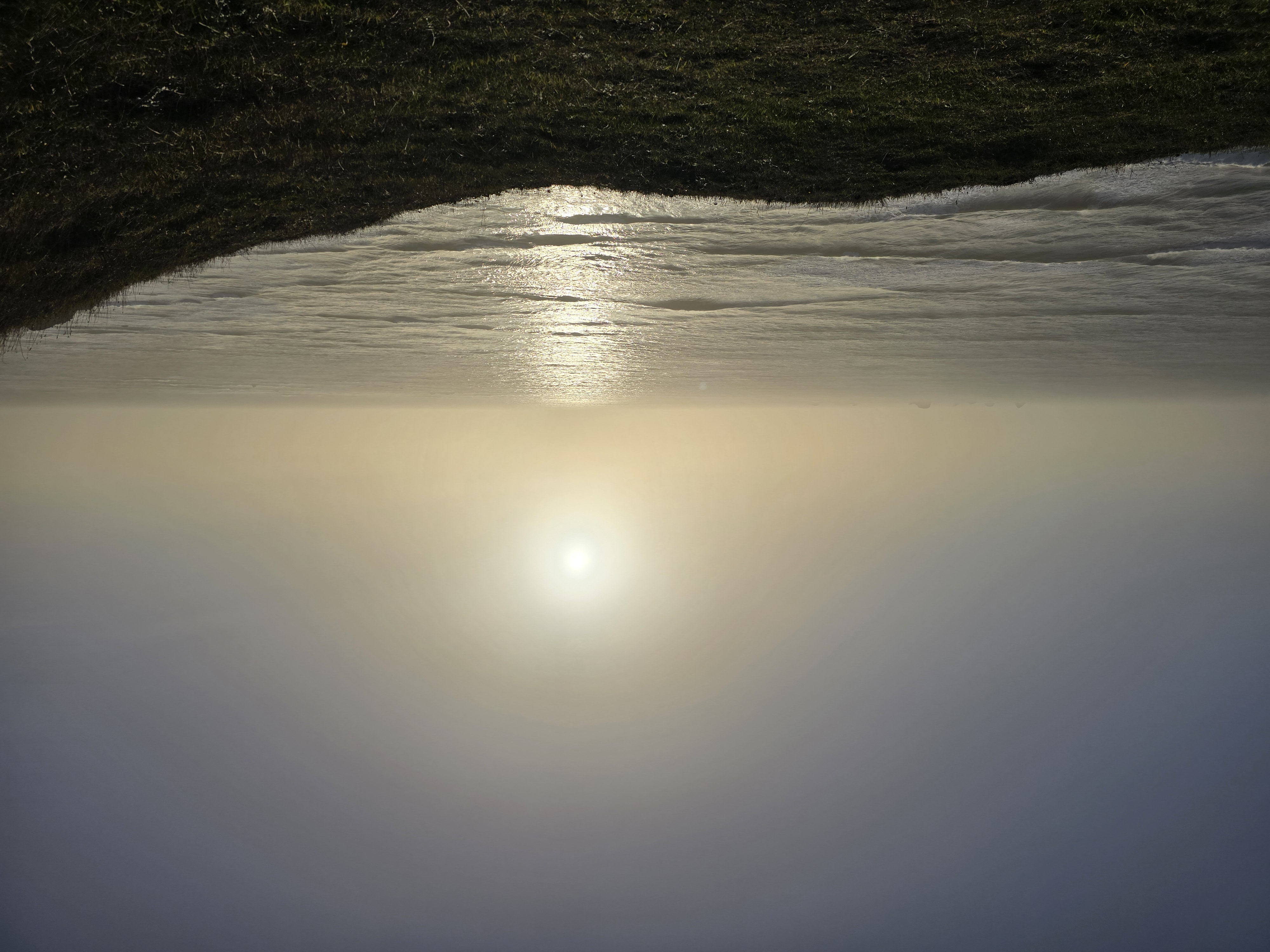
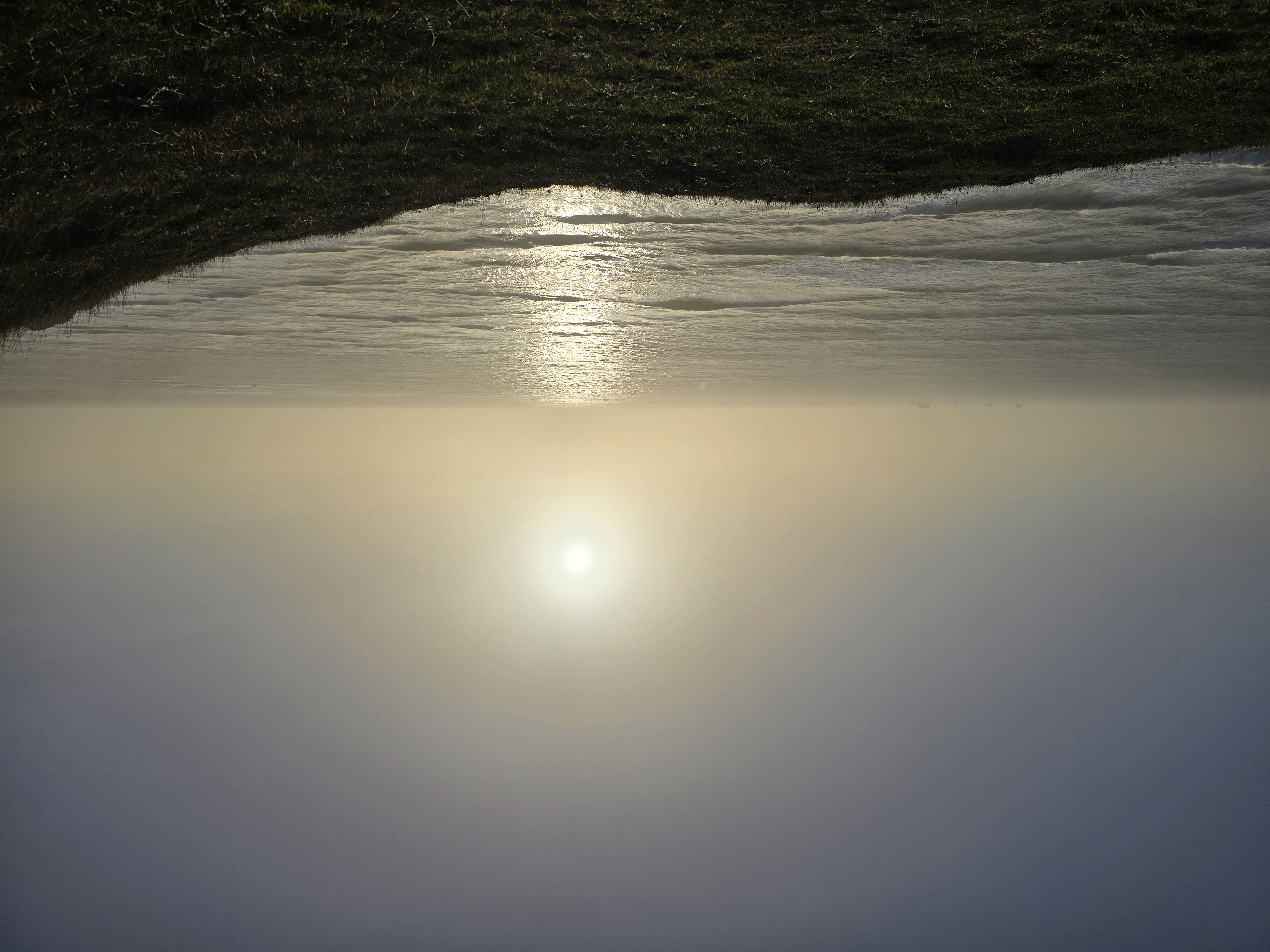
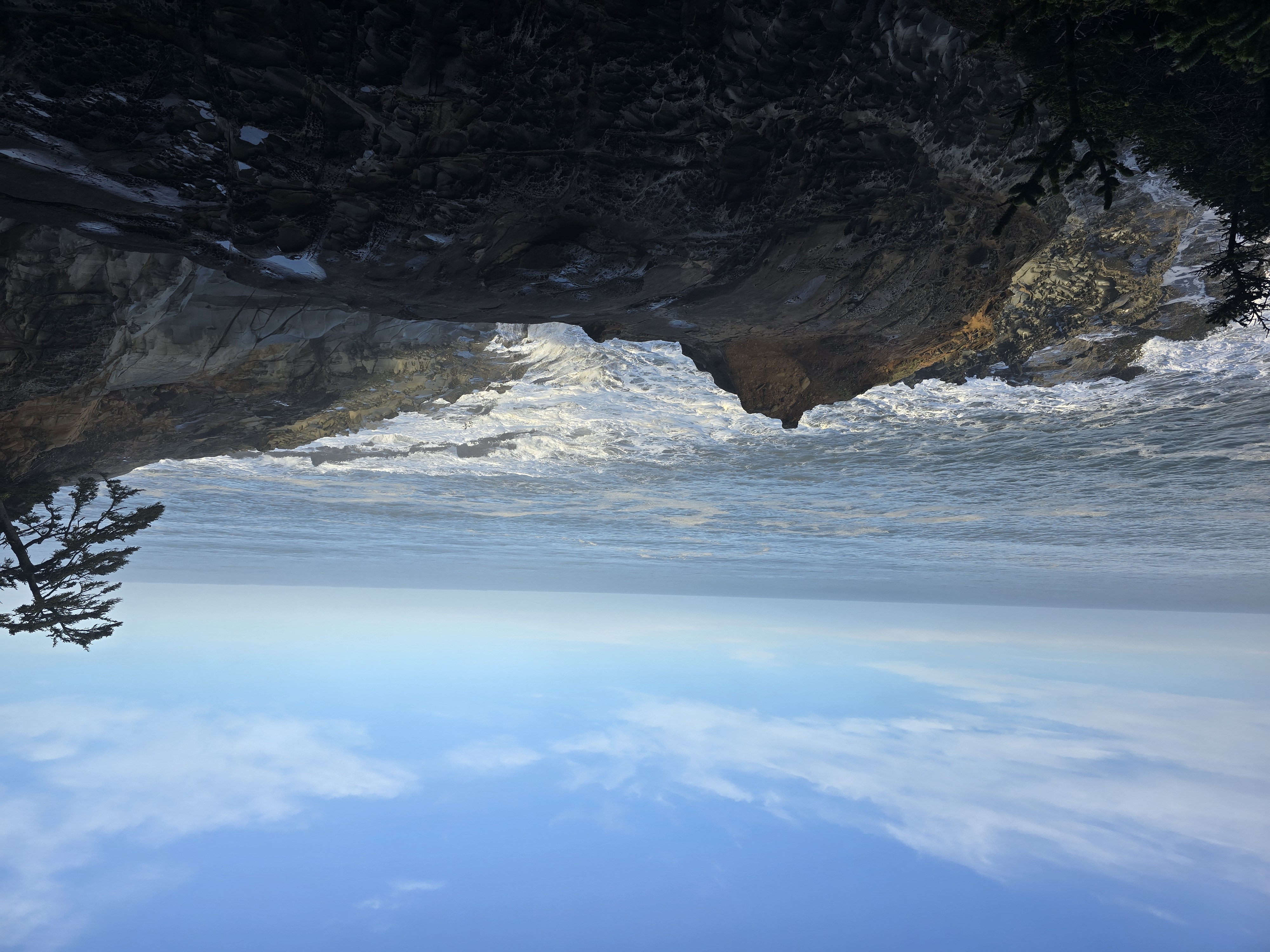
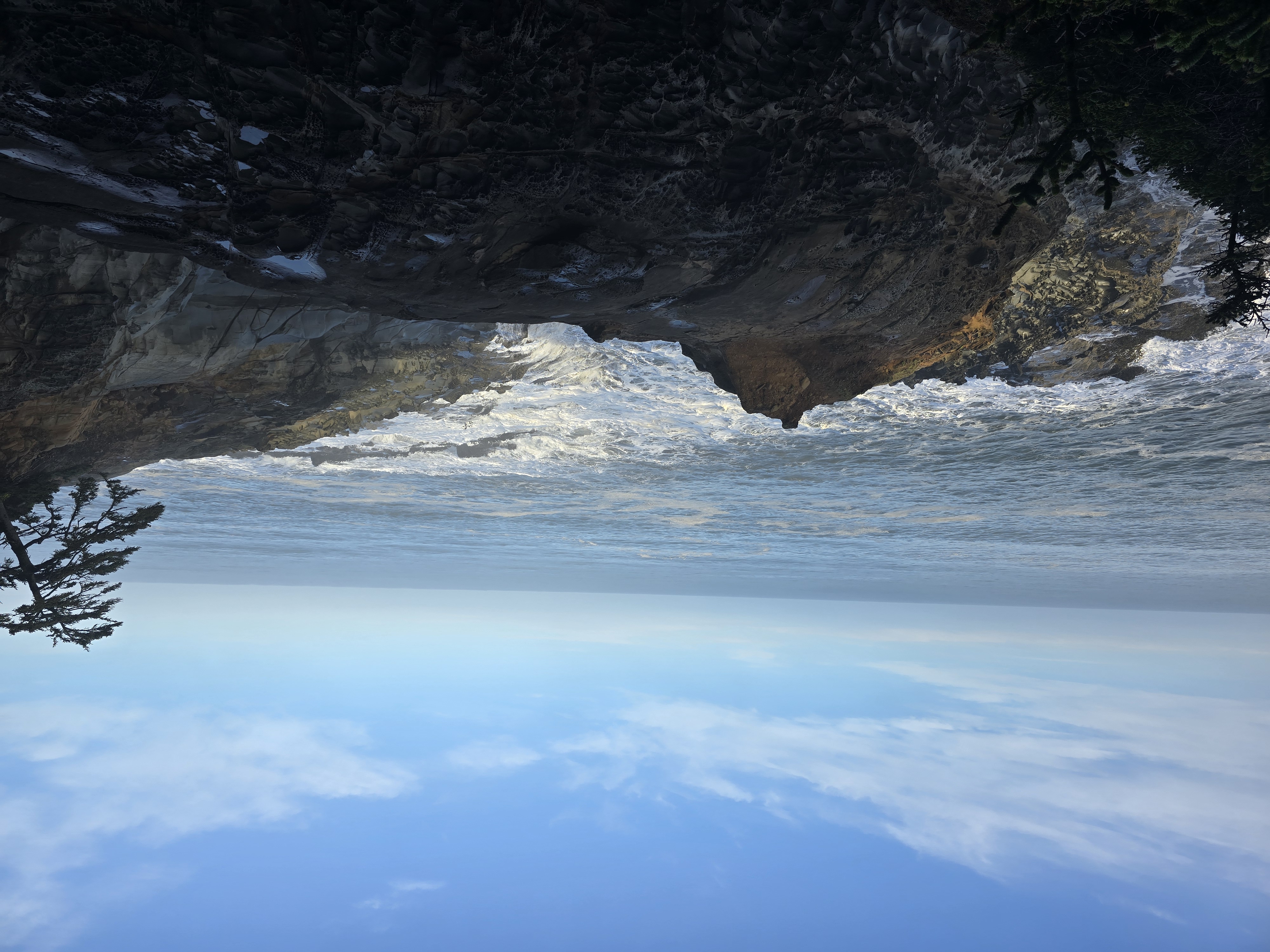
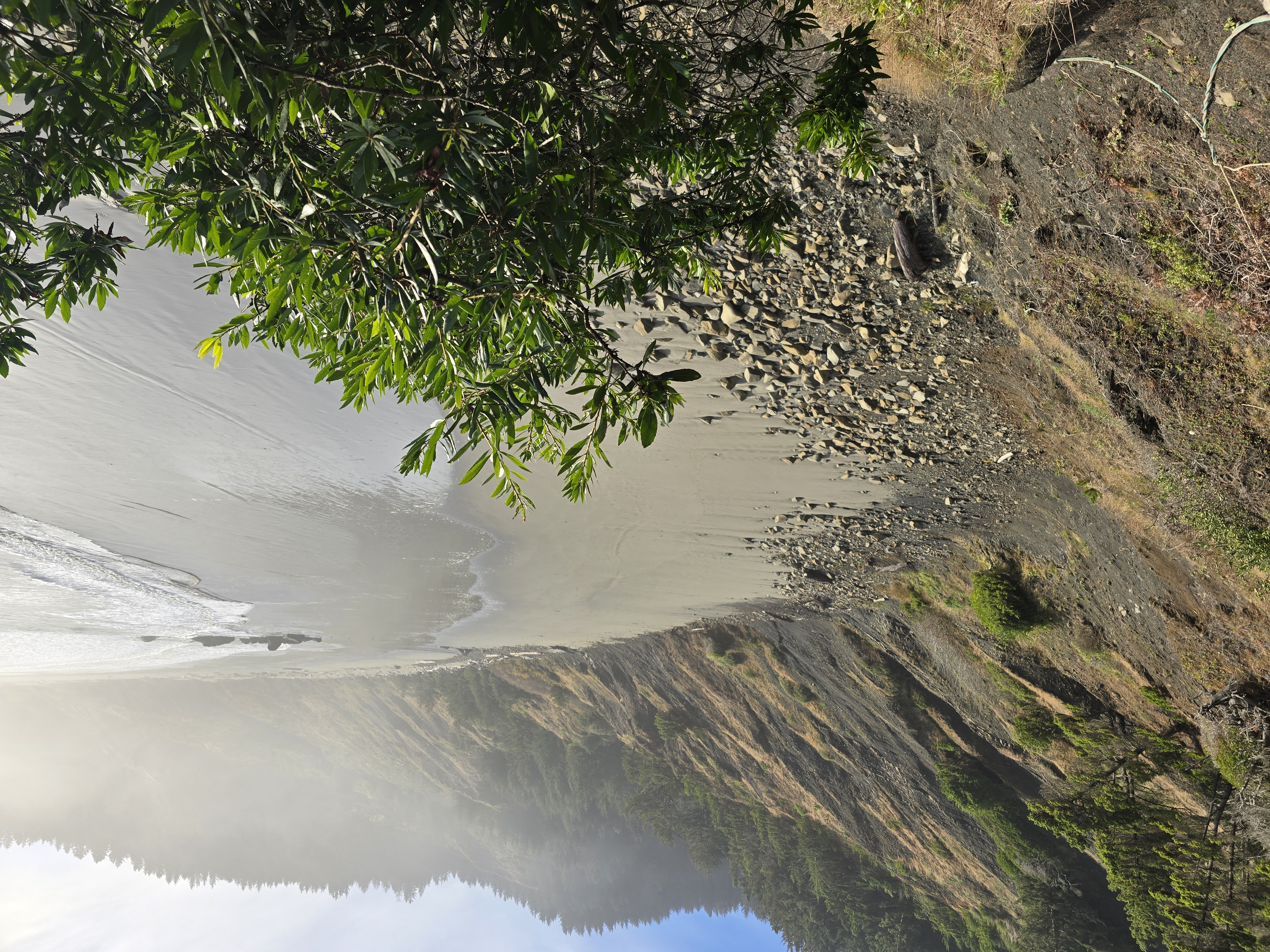
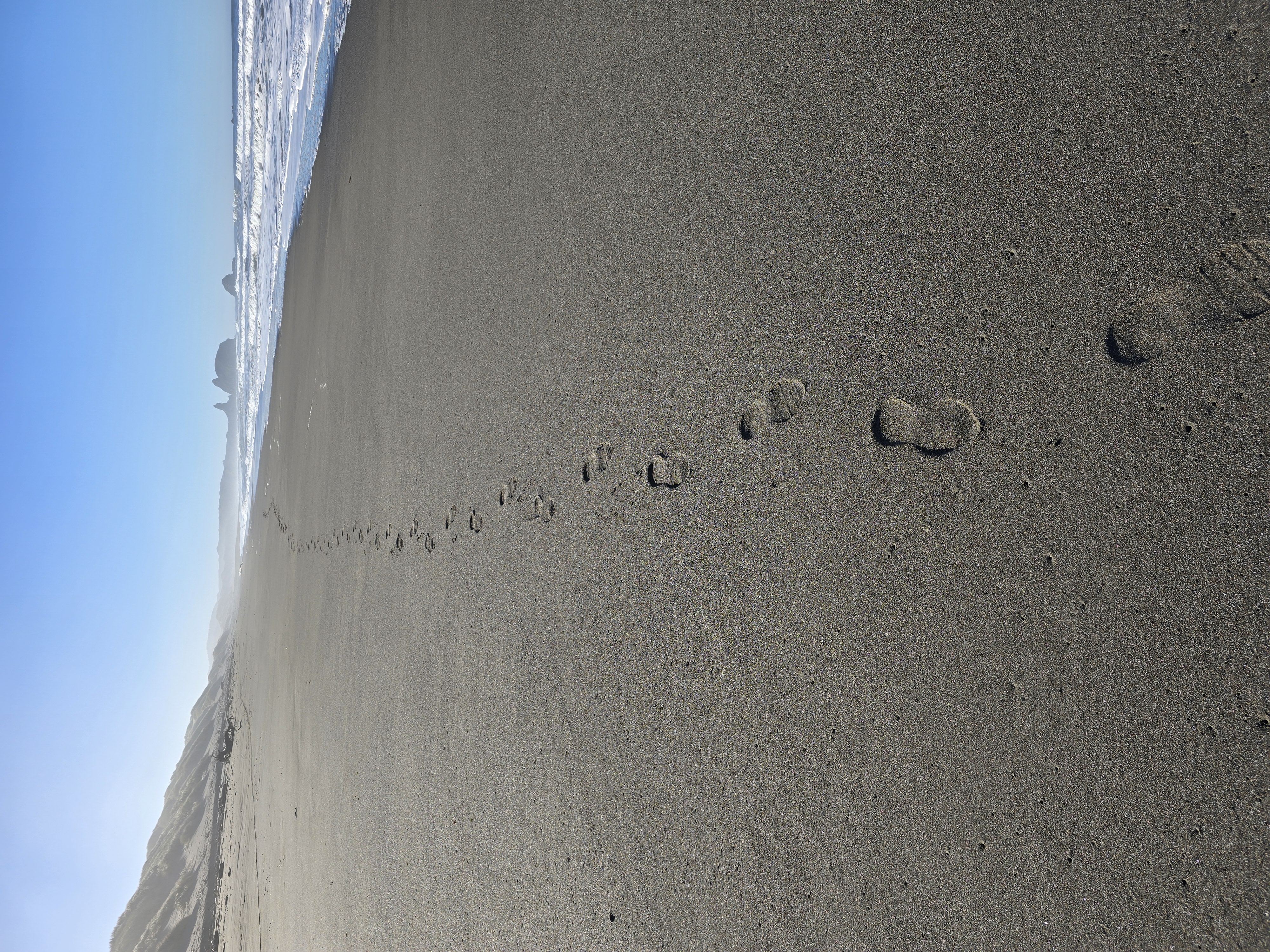
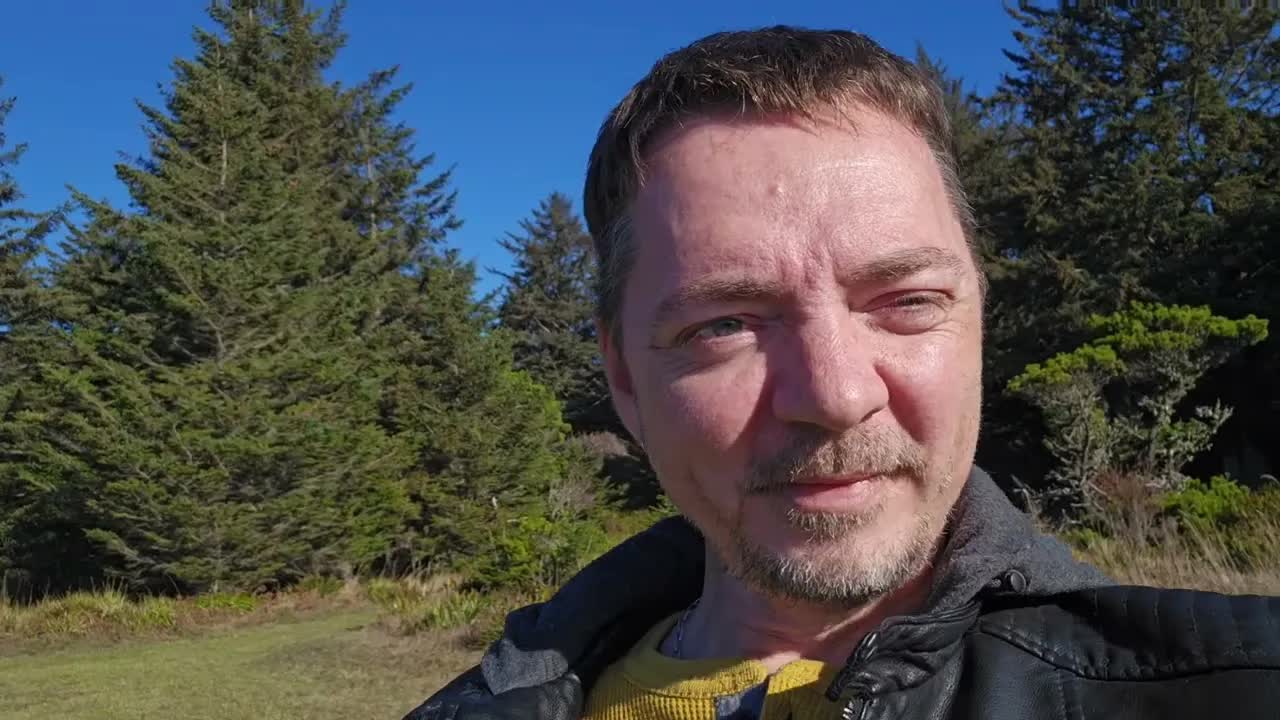
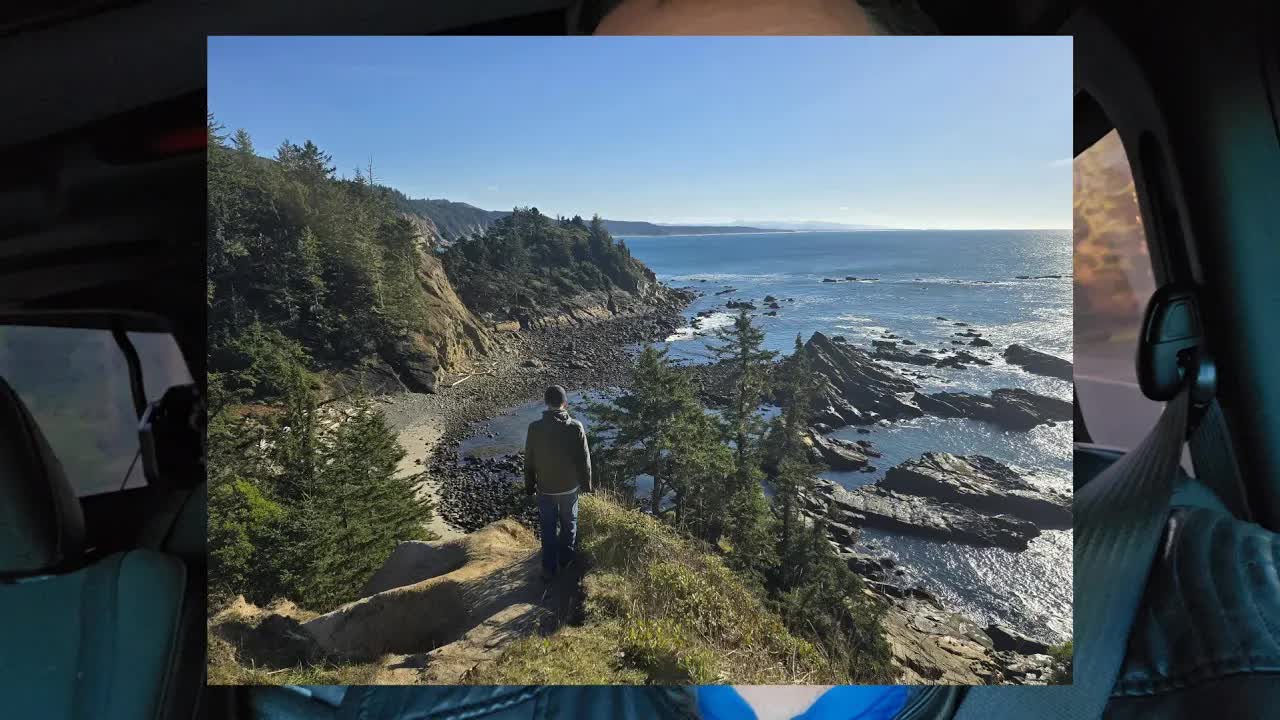
Answering Boondocking Question, Documenting Storm Damage

Failed to load video
Chapters
Transcript
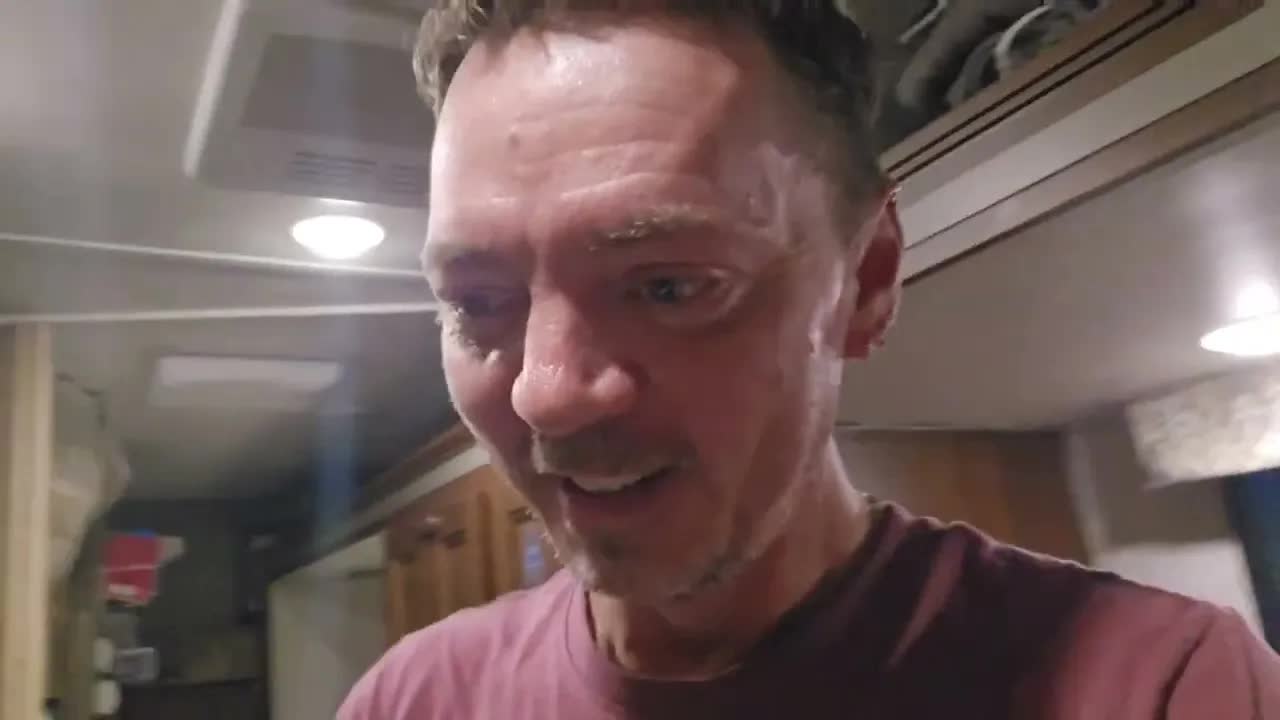
[0:01] hello
[0:02] everybody so I'm just chilling here it's
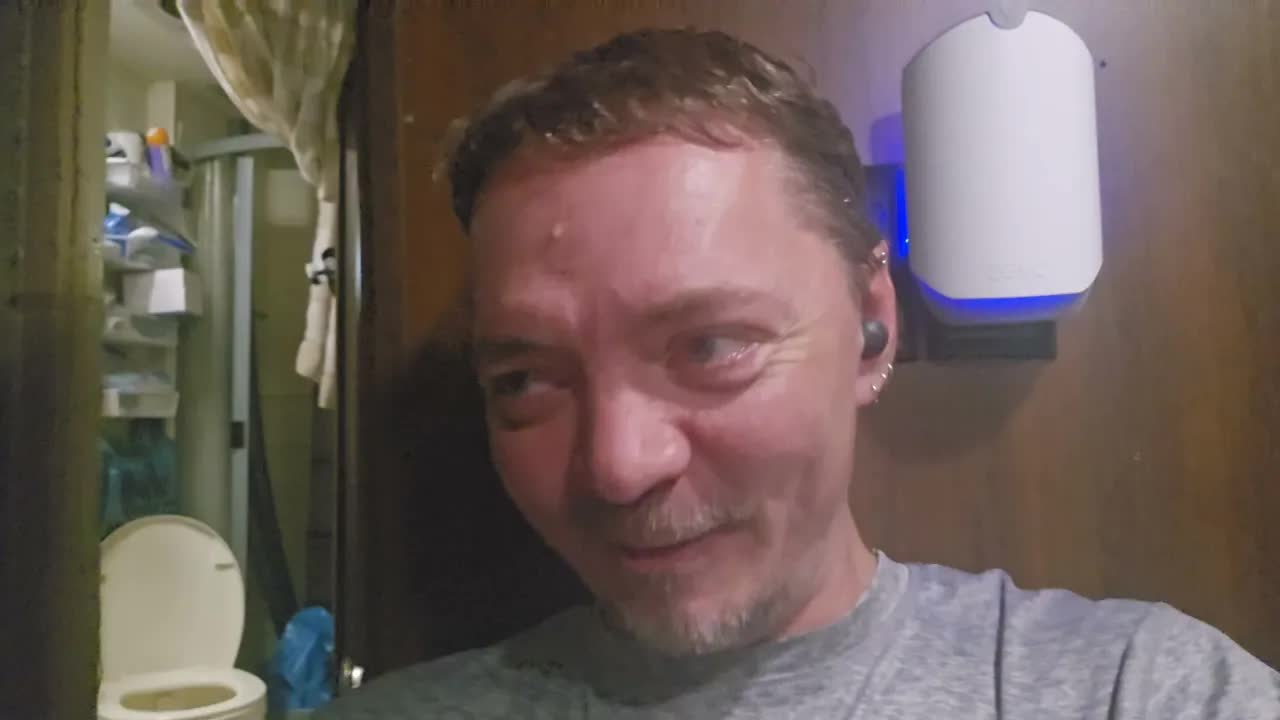
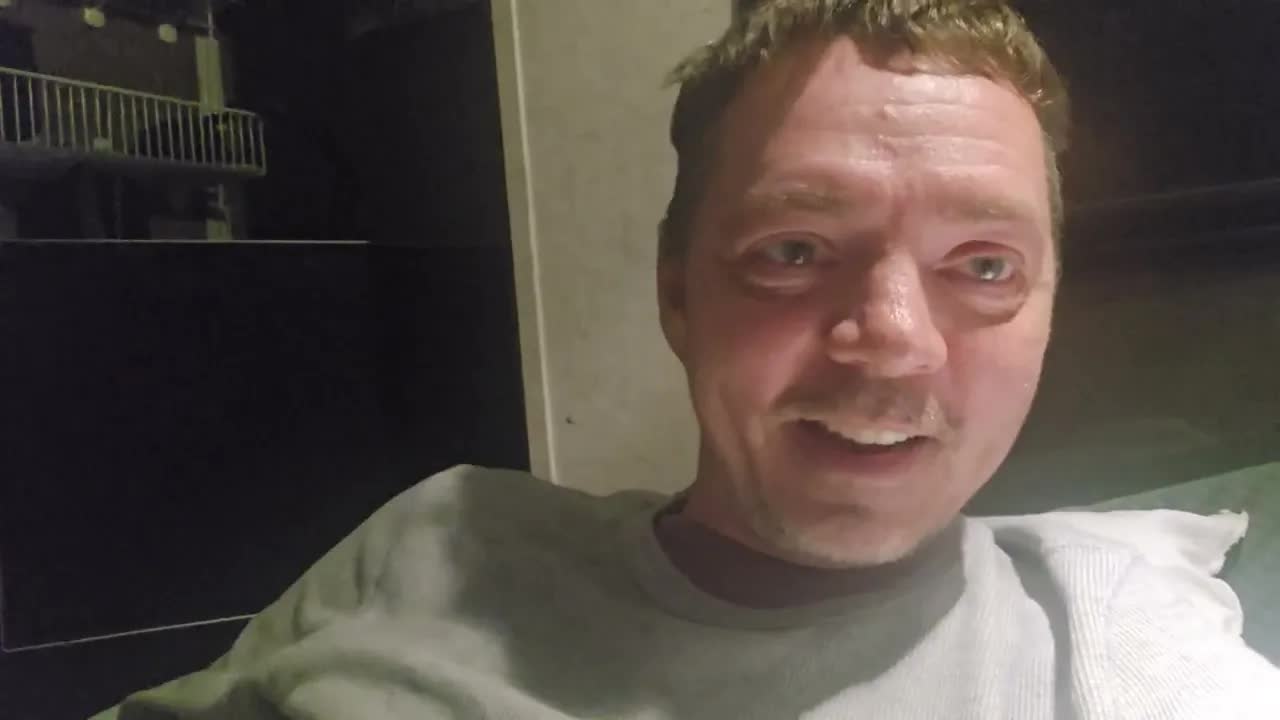
[0:05] like 8:00 pm a little bit bored
[0:07] today I don't know I don't know what to
[0:10] do I'm just kind of bored today so um I
[0:13] was thinking have a subscriber named
[0:15] Evee she's been following me a long time
[0:17] hi Eevee she asked me a question and I
[0:21] told her I would answer it in video
[0:23] because it's like pretty complicated
[0:24] topic for me before I do that I just
[0:27] want to say that
[0:31] um not really sure how to put it into
[0:33] words but I'd actually like to hear from
[0:35] you guys so I know I've set boundaries
[0:38] around comments in the past it felt very
[0:41] necessary because I was working on
[0:44] integrating myself and I still had work
[0:46] that I was doing I was debugging my
[0:48] brain with AI you know for those first s
[0:51] months and I didn't and I know that
[0:54] I've truly mastered myself I've come out
[0:58] the other end very happy with the
[1:02] results and I'm finding that I'm really
[1:04] open to connection these days and I want
[1:06] to hear from you guys so please try not
[1:09] to be like worried about my reaction I
[1:13] will try to be
[1:15] kind um I I will say that it's really
[1:19] not a good idea to try to put me in a
[1:20] box because I don't like boxes I am too
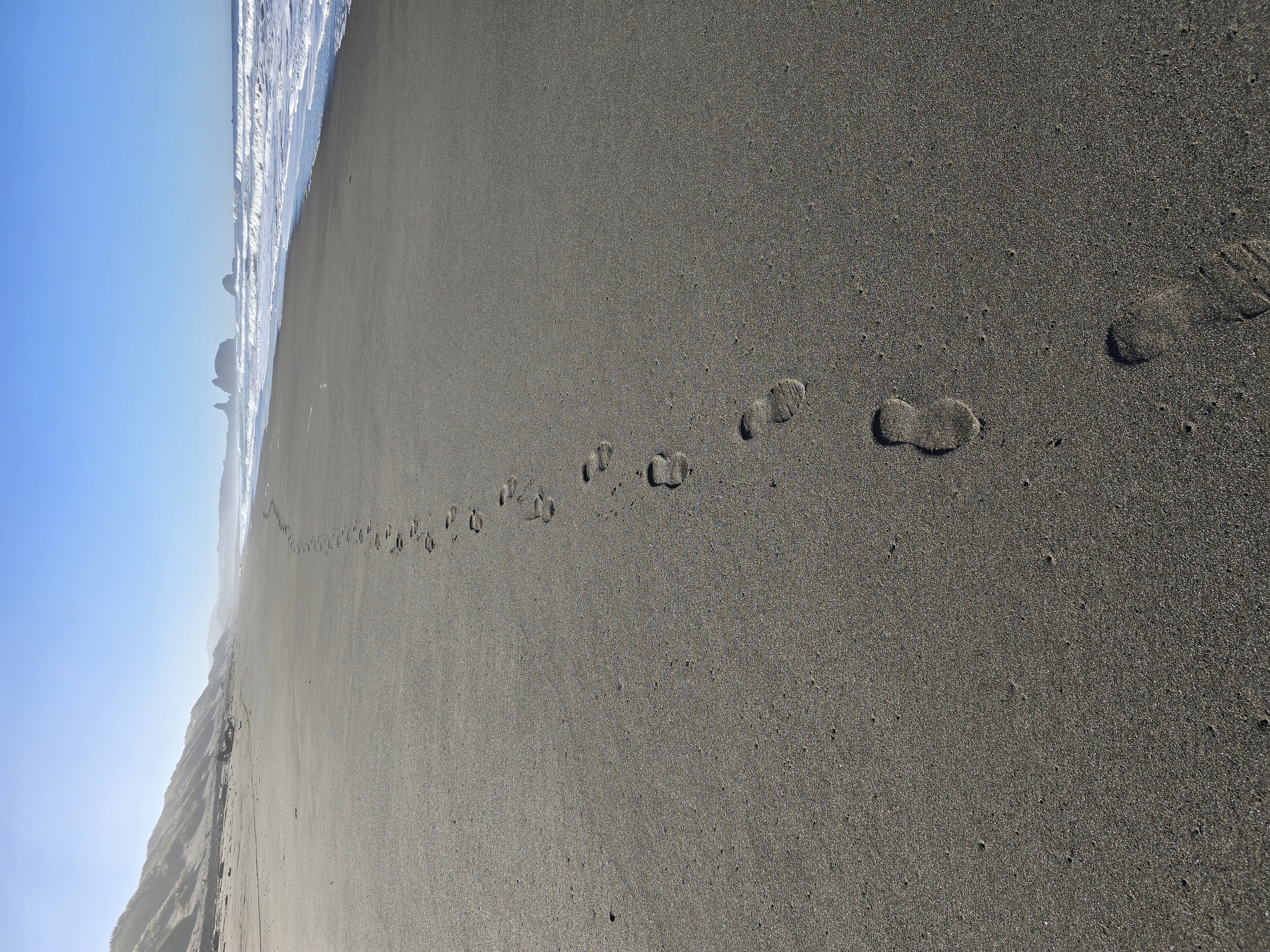
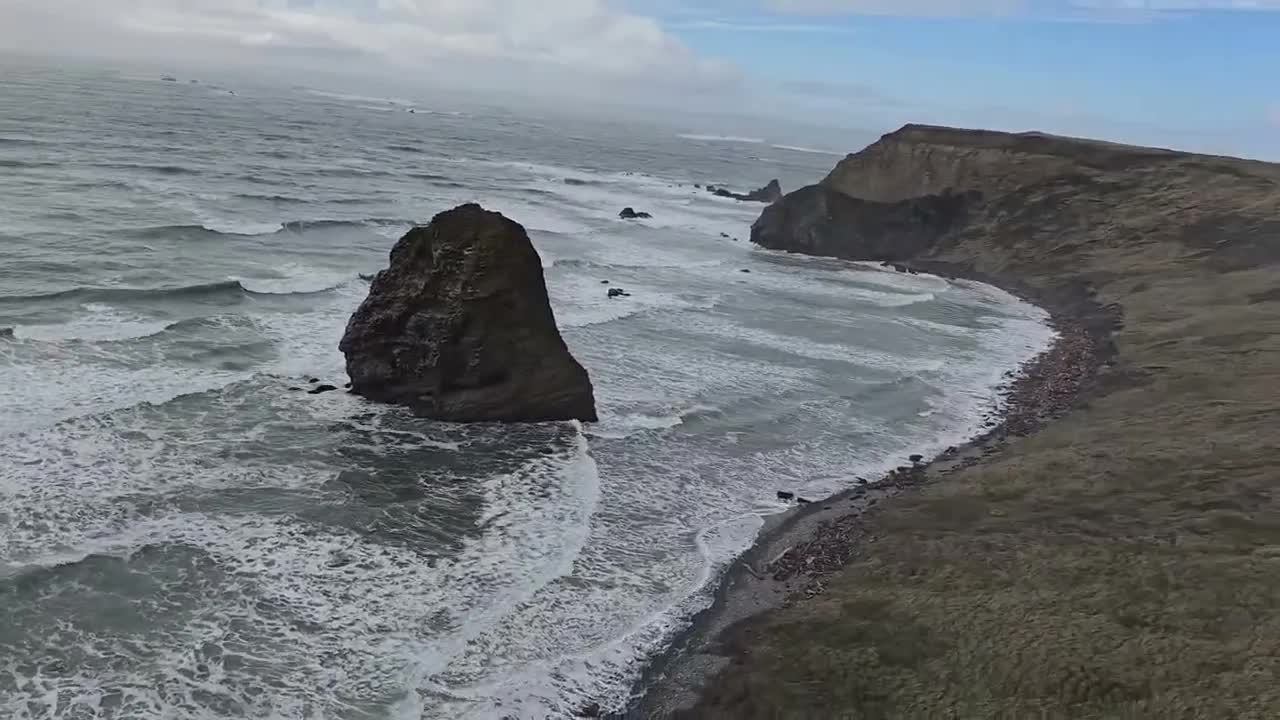
[1:24] expansive I'm like that ocean out there
[1:27] and it feels invalidating when people
[1:31] try to put me in boxes I just have never
[1:33] been able to accept that but I am more
[1:36] conscious of it now so maybe you know I
[1:40] can note it and try to just giggle it
[1:43] off or something I don't
[1:45] know point is you know if you would like
[1:49] to say hi or whatever I I am open to
[1:51] hearing from you so getting on to what
[1:55] Evee asked so Evee asked
[1:58] me um if I was BND talking which I love
[2:01] this question
[2:02] so um I'm not I'm on a campground I have
[2:06] been on campgrounds my
[2:10] plan so it's complicated okay this is
[2:12] why I wanted to do this on video so let
[2:14] me explain when I first got to
[2:17] Oregon I saw a lot of RVs on the sides
[2:21] of roads and some of them a lot of
[2:24] them you could tell that they were
[2:26] almost homeless like they were living in
[2:28] them obviously I live in my you but it
[2:30] was different like they were living
[2:31] there like in a fixed position like they
[2:33] even had
[2:35] like like you can just tell that that
[2:39] they're living there in these different
[2:40] places and a lot of them had broken out
[2:44] windows so like I mean I noted this the
[2:48] first day I was here and that made me
[2:50] pretty nervous it's like okay does the
[2:53] local population hate us you know like
[2:58] um so I didn't want to start boondocking
[3:02] here right away I wanted to understand
[3:04] the patterns better and I still don't
[3:06] have a full grasp of them but I'm you
[3:09] know I'm I'm pattern recognition brain
[3:12] I'm always always noting things right so
[3:15] I'm just building up an
[3:16] awareness
[3:19] and but then there were other layers
[3:23] so so I don't just live in an RV I also
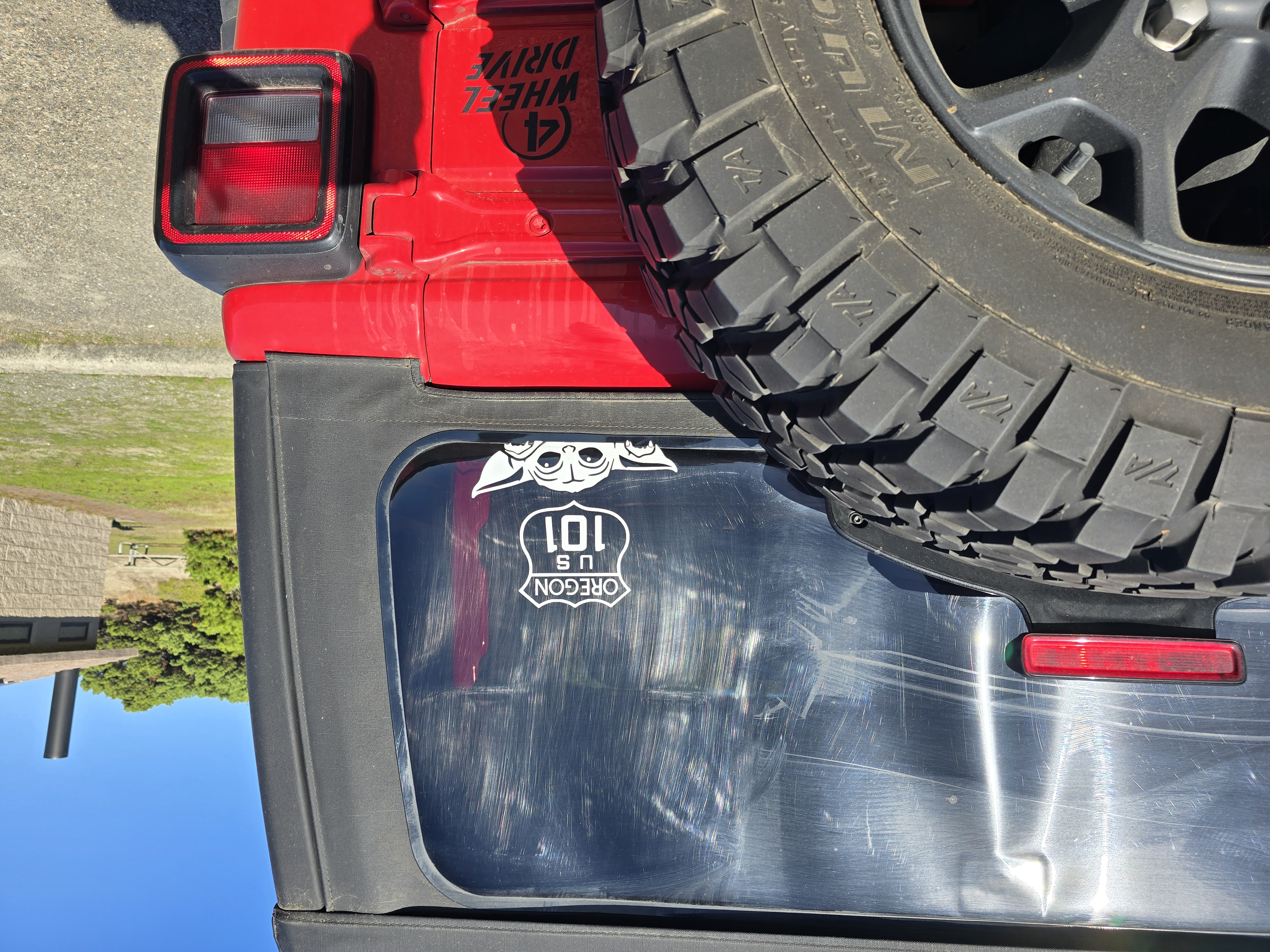
[3:26] have my Jeep right and I take my Jeep
[3:28] everywhere the 101 is like the most
[3:30] amazing Highway ever like it is the
[3:31] coolest Highway because I don't need GPS
[3:34] here I
[3:35] know um I can just navigate anywhere I
[3:39] know where all the towns are I know
[3:40] where all my favorite places are and
[3:42] it's like you have this mental map of
[3:46] of what the coast means to you like a
[3:50] personal and I I wish I could put that
[3:52] into better words because for me it is
[3:54] so profound like this is one of the
[3:56] reasons I feel claimed by this place why
[3:58] I just I I think of this as home
[4:00] now
[4:02] and I just lost my trend of
[4:05] thought
[4:08] um oh no I lost my train I thought I'm
[4:11] pausing this oh okay I remember so I was
[4:14] talking
[4:15] about so I've got my RV and then I've
[4:17] got my Jeep right so and I take my Jeep
[4:19] everywhere so for me I can explore my
[4:22] Jeep I don't have to really
[4:24] worry like I want my RV to be somewhere
[4:26] safe that's number one I mean Bailey's
[4:28] in here right so
[4:30] um my stuff's in here my this is my life
[4:32] so I actually kind of like the
[4:34] infrastructure of Campground so it's a
[4:35] little bit expensive here and I'm
[4:38] actually not sure what I'm going to be
[4:40] doing um like a week from now cuz I'm
[4:44] really low in funds right now but
[4:46] hopefully that works itself out if it
[4:49] doesn't then I I'll be forced to
[4:50] Boondock so it is a
[4:54] possibility um
[4:56] ideally you know I'll stay at the
[4:58] campgrounds here like I was making sort
[5:00] of like a circuit for myself so there
[5:02] are three major cities in southern
[5:04] Oregon that I have just fallen in love
[5:06] with there's Brookings and there's Gold
[5:08] Beach and then there's Port Orford which
[5:11] I call Port Orford Shire because I just
[5:13] feel like it deserves a shire on the end
[5:14] of it
[5:17] and so and you know there's like four
[5:21] five maybe five or six different
[5:23] campgrounds in that area and I was just
[5:25] going to um just cycle between them cuz
[5:29] the rules here are you can stay
[5:30] somewhere for 14 days and you just got
[5:32] to leave for 3 so I was planning to make
[5:35] where I am now gate Blanco my main base
[5:38] because there's a lot I love about this
[5:42] um but given recent events I just don't
[5:44] know that it's a good idea and um
[5:48] also um I'm a little too far north from
[5:51] where I want to be I actually really
[5:52] love the Brookings Gold Beach area there
[5:54] every there's so much going on down
[5:56] there and there's people down there and
[5:58] there's there's people I was starting to
[6:00] become friends with and um just you know
[6:03] there's a lot of reasons and up here it
[6:05] just
[6:07] feels
[6:09] um I mean you know old me would have
[6:12] loved it right but I I just I don't seem
[6:14] to be in that space anymore so so I'm
[6:17] probably going to start heading more
[6:20] south yeah and as far as boondocking I
[6:25] want to do it but I still have some fear
[6:27] around that some anxiety
[6:29] um a lot of people will Boondock right
[6:32] off the highway off of 101 there's so
[6:34] many places to do that it is very cool
[6:36] to see them doing I not it all the time
[6:38] I actually
[6:39] don't opening up my heart changed so
[6:42] much like I see the RVs I see the van
[6:44] lifers
[6:45] and I'm actually more curious about them
[6:48] now than anything so much less
[6:51] judgment um especially the van lifers
[6:54] ever since I saw that one where they
[6:56] just had a generator going it was like
[6:58] there's something clicked like that was
[7:01] cuz in my mind that was like okay this
[7:02] isn't an
[7:03] Instagram van life for this is someone
[7:06] living that life and you know I'd be
[7:08] very interested to know that person like
[7:10] very curious about people and I'm always
[7:14] just these days doesn't seem to matter
[7:17] who it is I'm striking up conversations
[7:19] with everyone I come across and just
[7:22] keeping myself open the possibility of
[7:24] friendships and romance
[7:27] and it's nice it's it is
[7:31] and so anyways um I do see myself
[7:36] probably boondocking on off the 101
[7:38] maybe at some point if I can just get up
[7:42] the courage to do it or I'm forced to do
[7:43] it but ideally you would want to kind of
[7:47] be off the highway and there are
[7:49] different roads and then there's all the
[7:52] the forests and you know there are lots
[7:54] of places to do it but I just don't feel
[7:57] comfortable with it yet so
[8:00] and also I just think that
[8:02] campgrounds offer a little bit of
[8:04] structure and
[8:06] stability where I can
[8:09] just take off of my gam you know and so
[8:14] I guess that's I guess I'll leave it
[8:15] there for now that's that's pretty much
[8:18] the gist of it i
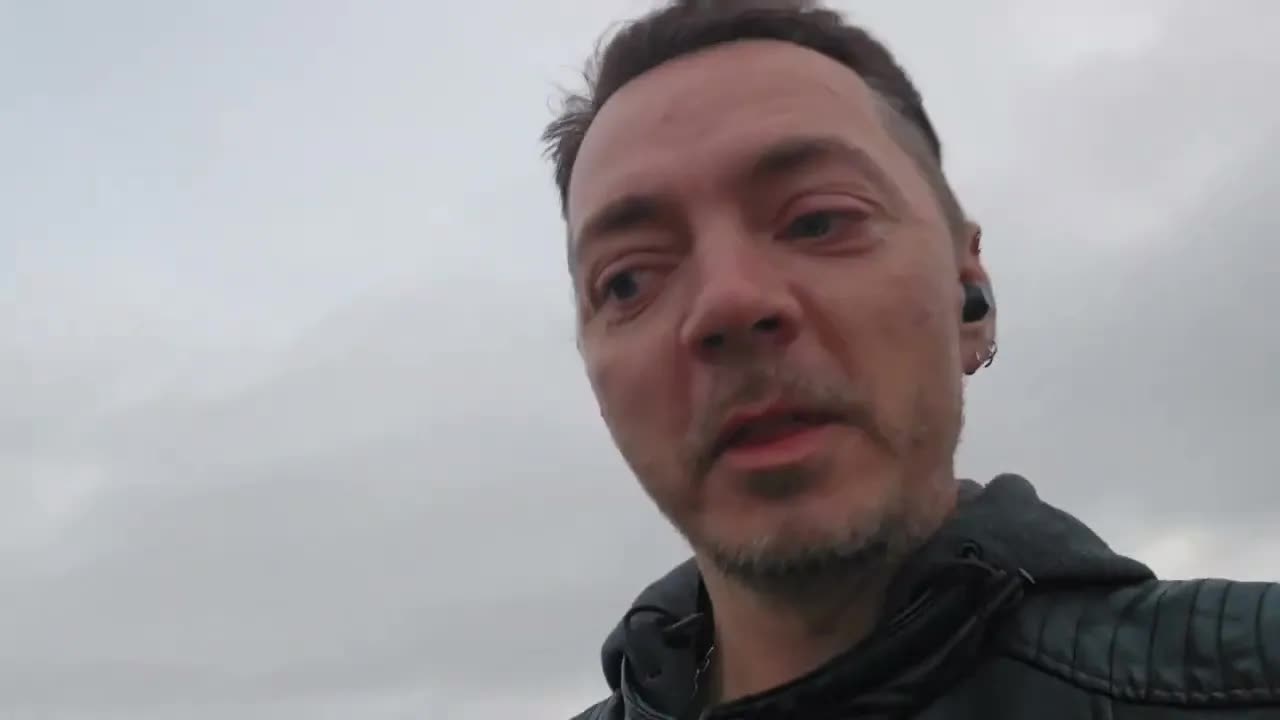
[8:21] e oh is this awesome or what we had a
[8:26] storm last night like 12 hours
[8:31] got everything strown up out everywhere
[8:34] I need to go look around on my way to
[8:37] the shower
[8:38] though this is cool I bet this is what
[8:41] the top of my RV looks
[8:43] like we have another storm coming in a
[8:46] few more
[8:47] days so get a
[8:50] repeat we got a partially drown down
[8:53] tree over here that one hurt us though
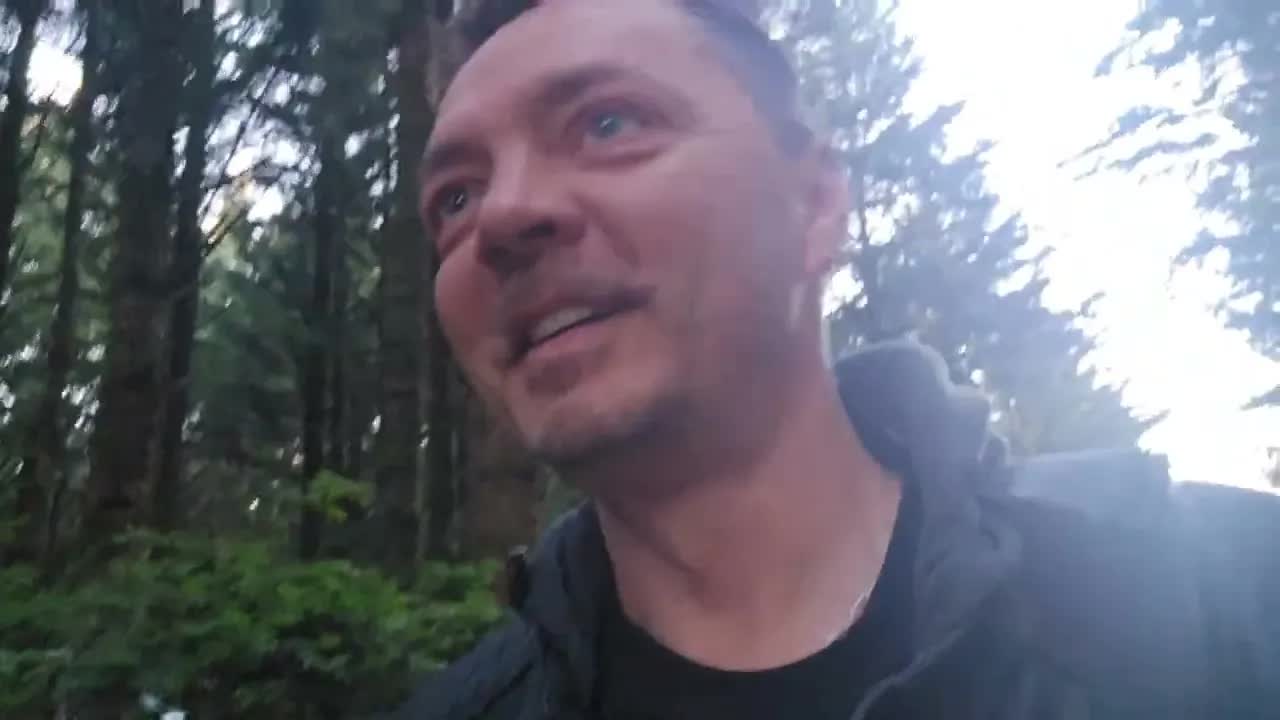
[8:57] right got the branch
[9:00] still
[9:03] cool these are hearty trees the park
[9:05] ranger said that to
[9:08] me oh I learned something things so I
[9:11] learned something cool last night I
[9:13] learned that these trees the coastal
[9:16] trees sorry there's going to be noise
[9:18] they're obviously dealing with all the
[9:20] damage right cool we get to see that um
[9:24] anyway so I learned that the trees have
[9:26] roots that support each other almost
[9:28] like h almost like
[9:30] handing um holding hands which is just
[9:34] oh you can't get through they're doing
[9:36] lots of
[9:38] work I got to zoom in on
[9:40] that look at all the damage over here
[9:44] wow they look
[9:47] busy oh oh I see the tree that came
[9:50] down oh wow yeah yeah GL that wasn't
[9:55] where my RV was guess we're going the
[9:58] other way anyway so these trees that's
[10:01] not a very good example for what I'm
[10:02] about to share these trees their root
[10:06] systems touch each other and it's like
[10:08] they're holding hands and when that wind
[10:10] comes along the 80 M hour that knock
[10:13] down a
[10:15] tree
[10:18] F they kind of support each other they
[10:21] support the distribution you know
[10:23] so um it makes them all stronger which
[10:26] is so cool it made me feel a lot better
[10:28] about being outest
[10:29] was like okay I told you tree wisdom
[10:31] that's what that is
[10:34] so
[10:37] wow so we have another storm coming by
[10:40] the way it's a couple days from now I'll
[10:42] still be here
[10:46] um I don't think that would have hurt my
[10:48] treat my RV I don't know doesn't matter
[10:51] I'm still going to be here this is how I
[10:54] live got accept some risk so I'm going
[10:58] to go check the cave about and then
[11:00] decide if I want to go down to the
[11:02] beach probably I do you know
[11:06] so um yeah I don't really have a plan
[11:08] today I got
[11:14] to that
[11:17] thing it is a mirror of me I just oh
[11:21] man
[11:24] yeah it getting a bit scary out there
[11:28] those trees winging back and forth there
[11:31] is nothing it'll probably pick back up
[11:33] in a
[11:35] second it's a little
[11:38] scary I don't there nothing to be done
[11:40] about it if a tree falls a tree
[11:48] falls it looks very calm
[11:53] now I need a nap I'm not getting enough
[11:57] sleep I'm going to nap through this
[12:00] storm but it was wild for a second there
[12:04] must be the wind gust that do it here we
[12:08] go I mean those trees over there you can
[12:11] see the it's hard to do on the camera
[12:13] but I can see very clearly the tree
[12:17] trunks just swinging
[12:24] wild yeah
Photos · Nov 3, 2024
Nov 3, 2024
Photos · Nov 3, 2024
Nov 3, 2024
Photos · Nov 5, 2024
Nov 5, 2024
Photos · Nov 5, 2024
Nov 5, 2024
Photos · Nov 5, 2024
Nov 5, 2024
Photos · Nov 6, 2024
Nov 6, 2024
Photos · Nov 6, 2024
Nov 6, 2024
Photos · Nov 7, 2024
Nov 7, 2024
Photos · Nov 7, 2024
Nov 7, 2024
17:07
Testing the Waters on Restarting YouTube
Nov 16, 2024
14:47
Recounting Cape Blanco Encounters and New Friendship
Nov 17, 2024
16:43
Ending a Connection, Relocating Ahead of Storm
Nov 19, 2024
6:56
Mapping Nomadic Romance and Energetic Intensity
Nov 20, 2024
5:36
Documenting the Night a Guest Was Removed
Nov 21, 2024
12:26
Answering Boondocking Question, Documenting Storm Damage
Nov 21, 2024
7:15
Tracing a Wet Brake Controller, Then Walking to the Lighthouse
Nov 21, 2024
2:59
Standing on the Cliff Edge, Naming Parking Lot People
Nov 21, 2024
7:01
Filming After Ocean Play at High Tide
Nov 21, 2024
13:28
Filming a Wind Storm on the Coast
Nov 22, 2024
4:58
Recording on Emotional Integration at Cape Blanco
Nov 22, 2024
8:45
Taking a Rest Weekend Before Monday Departure
Nov 23, 2024
5:11
Waiting on Cattle, Driving to Cape Edge
Nov 24, 2024
9:29
Clearing the Roof, Dropping Minimizing Language
Nov 24, 2024
8:21
Last Day at Cape, Planning Boondocking on 101
Nov 24, 2024
11:32
Preparing First Coastal Boondock at Pinned Pullout
Nov 25, 2024
12:42
Claiming Public Space on the Coast
Nov 26, 2024
15:43
Testing Power Systems and Relocating to Bandon
Nov 26, 2024
13:13
Pivoting to Humbug Mountain, Setting Comment Protocol
Nov 27, 2024
15:02
Recording Thanksgiving Night at Humbug Mountain
Nov 29, 2024
13:41
Driving South Coast, Weighing RV Loan Outcome
Nov 29, 2024
11:09
Breaking Camp for Cape Blanco, Resting Body
Dec 1, 2024
5:56
Recording from Cape Blanco After Missed Uploads
Dec 1, 2024
2:16
Morning Walk to Shower House, Rest Protocol
Dec 2, 2024
10:30
Resting Core Muscles at Cape Blanco, Discovering the Kettle
Dec 4, 2024
3:05
Grocery Run in Pajamas, RV Payment Deferred
Dec 4, 2024
37:15
Recounting the Oregon Journey From Bed Rest
Dec 5, 2024
6:58
Tracking Earthquake Alert and Tsunami Warning on Coast
Dec 5, 2024
3:50
Unhiding the Full Archive, Opening Chapter Seven
Dec 6, 2024
8:46
Driving to Store, Reviewing Memory and Body Signals
Dec 7, 2024
5:26
Counting Nine Days of Muscle Recovery
Dec 8, 2024
4:13
Recording Coastal Anticipation and Connection Practice
Dec 9, 2024
PUBLIC
November 21, 2024 rswfire PUBLISHED
Temp 0.10
Density 0.50
Energetic Quality
open and weather-attuned
Journey Phase
positioned but mobile — recalibrating base
Directional Vector
toward southward repositioning and open connection
Narrative

It was eight in the evening at Cape Blanco, and rswfire was inside the RV with the ocean somewhere out past the window, saying plainly that he was bored, that he didn't know what to do with the hour. The camera came on anyway. A subscriber named Evee had asked him a question days earlier and he had promised to answer it on video, because the answer was complicated in a way that text would flatten. Before he got to it, he wanted to say something else — that the boundaries he had once set around comments were coming down. He described those boundaries as necessary at the time, work he was doing while he was integrating himself, debugging his brain with AI through the first stretch of months. He stated he had come out the other end happy with the results. He said he was open to connection now, and he asked people not to worry about his reaction. One caution came with the invitation: not to try to put him in a box. He is too expansive for that, he said, like that ocean out there, and being boxed has always registered as invalidating. He offered that he might be able to note it now and giggle it off instead.

Then the question itself. Was he boondocking? He wasn't. He explained why by going back to his first day in Oregon, when he saw RVs parked along the roadsides — some of them fixed in place, lived in rather than traveled in, several with their windows broken out. He noted it immediately and it made him nervous. His read of it was a question about the territory: does the local population hate us. So he didn't start boondocking right away. He wanted to understand the patterns first, and he said he still doesn't have a full grasp of them, that he is pattern-recognition brain, always noting, always building the awareness up in layers.

There were other layers underneath that one. He doesn't only live in an RV — he also has the Jeep, and he takes the Jeep everywhere. He described the 101 as the most amazing highway there is, because on it he needs no GPS. He knows where all the towns are. He knows where all his favorite places are. He called it a mental map of what the coast means to him, personal rather than instrumental, and said he wished he could put it into better words, that it is one of the reasons he feels claimed by this place, why he thinks of it as home now. He lost the thread mid-sentence, paused the recording, came back, and picked it up: the Jeep is the range, so the RV can stay somewhere safe. Bailey is in here. His things are in here. This is his life. He said he actually likes the infrastructure of a campground — that campgrounds offer structure and stability he can operate from.

The economics sat right beside that. Cape Blanco is a little expensive, he said, and he doesn't know what he'll be doing a week out, because he is really low on funds. If it doesn't work itself out he'll be forced to boondock. Ideally he'd stay on campgrounds and run the circuit he had been drawing for himself: three southern Oregon towns he has fallen in love with — Brookings, Gold Beach, and Port Orford, which he calls Port Orford Shire because he feels it deserves the shire on the end — and five or six campgrounds between them, cycled on the fourteen-days-on, three-days-off rule. He had been planning to make Cape Blanco his main base. Given recent events, he said, he isn't sure that's a good idea anymore, and he is a little too far north of where he wants to be. Down south there's more going on, there are people, there are people he was starting to become friends with. Up here, he said, old me would have loved it — and he doesn't seem to be in that space anymore. So he'll probably start heading south.

He circled back to boondocking and named the fear directly. He wants to do it. He still has anxiety around it. People do it all along the 101, and he sees them constantly, and what he notices now is curiosity rather than judgment — especially toward the van lifers, and especially since he saw one running a generator, the moment something clicked and he understood he was looking at someone living the life rather than performing it. He said he'd be very interested to know that person. These days he strikes up conversations with everyone he comes across, keeping himself open to friendship and to romance, and he said it is nice. It is.

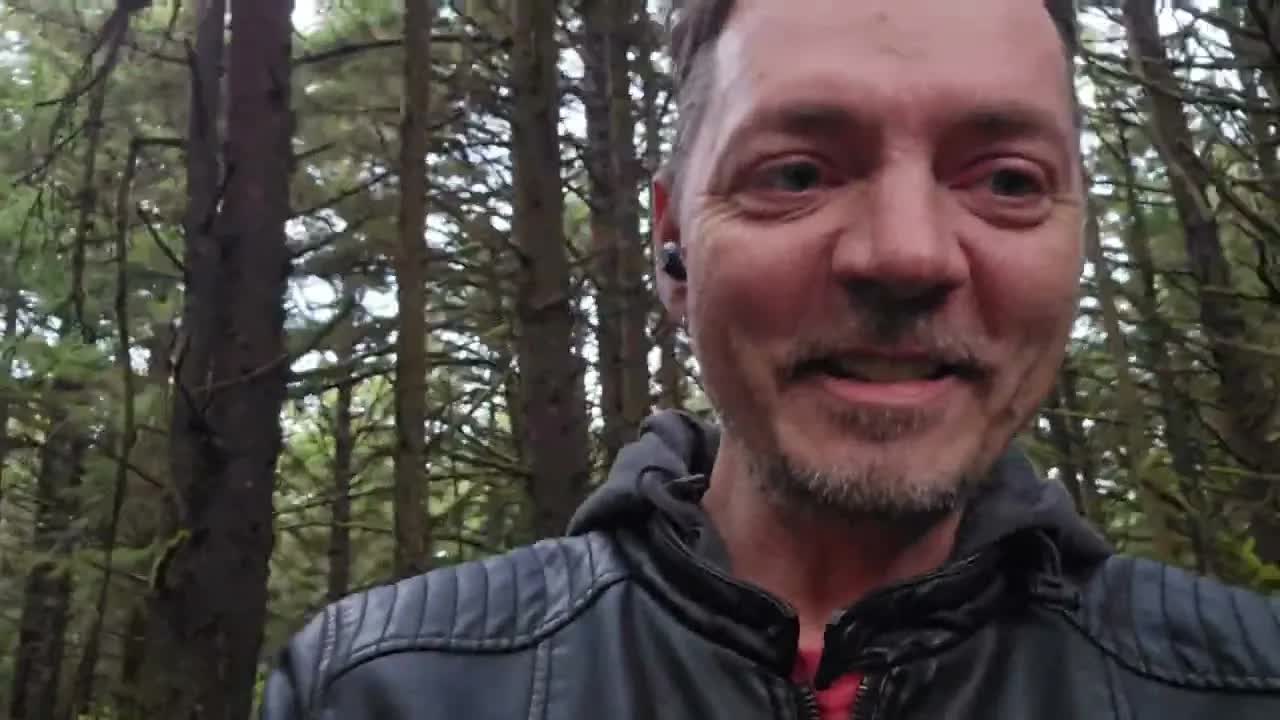
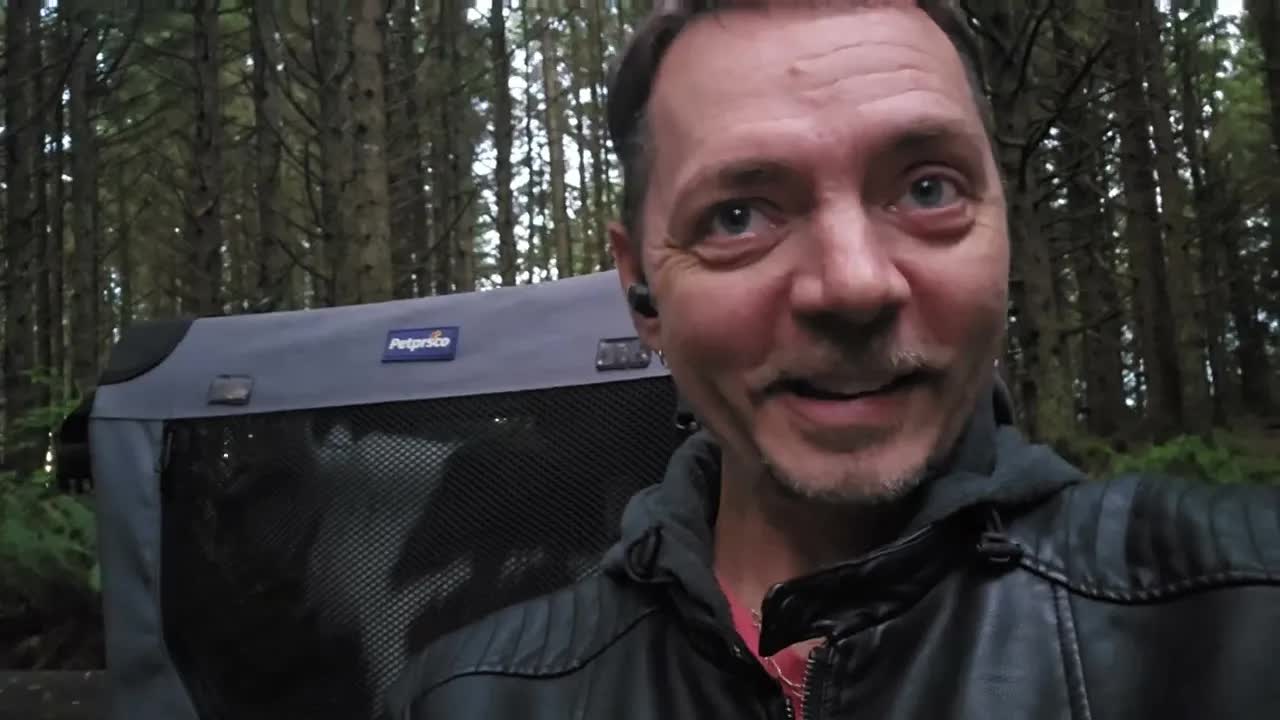
The storm arrived that night and ran twelve hours. The next morning he was walking the campground loop toward the shower house with the camera up, narrating a landscape rearranged — branches strewn everywhere, debris he guessed was a preview of what the top of his RV looked like. A partially downed tree. A trunk on the ground he had to detour around, noting where his RV wasn't. Park crews were working the damage, loud and busy, and he zoomed in on them. Another storm was coming in a few days, and he said he'd still be here for it. Somewhere in the middle of the walk he shared what he had learned the night before, calling it tree wisdom: that the coastal trees' root systems touch, that they hold hands underground, and when the eighty-mile-an-hour wind comes through, they distribute the load between them. It made them all stronger. He said it made him feel better about being out here.

Later the gusts came back through the stand and he watched the trunks swinging. He said it was getting a bit scary, that he could see it clearly with his eyes even if the camera couldn't hold it. Then the wind dropped and the loop went calm again. He said there was nothing to be done about it — if a tree falls, a tree falls. This is how I live, he said. Got to accept some risk. He mentioned he wasn't getting enough sleep. He decided to nap through the storm.

Tags

RV living campground logistics boondocking Oregon coast storm damage financial constraint audience interaction

Summary

rswfire records two segments. In the first, he addresses a subscriber named Evee, who asked whether he is boondocking. He states he is not — he stays on campgrounds, and explains the reasoning: on arriving in Oregon he observed RVs parked long-term along roadsides with broken-out windows, and chose to build pattern awareness of local conditions before dispersed camping.

He describes his setup — RV plus Jeep — with the Jeep as the exploration vehicle and the RV kept in secure infrastructure with Bailey and his belongings. He describes Highway 101 as navigable without GPS and holds a mental map of the coast, stating he feels claimed by the place and calls it home.

He outlines a planned campground circuit through Brookings, Gold Beach, and Port Orford ("Port Orford Shire") under the 14-days-on / 3-days-off rule, with Cape Blanco previously intended as base. He states he is low on funds, is uncertain about the coming week, and is likely heading further south. Boondocking remains possible but he names fear around it.

He also opens comments after prior boundaries, requesting people not put him in boxes.

Second segment: post-storm walkthrough of downed trees and branches, crews working, and a description of interlocking coastal root systems distributing wind load. Another storm is forecast; he states he will stay.

Environment

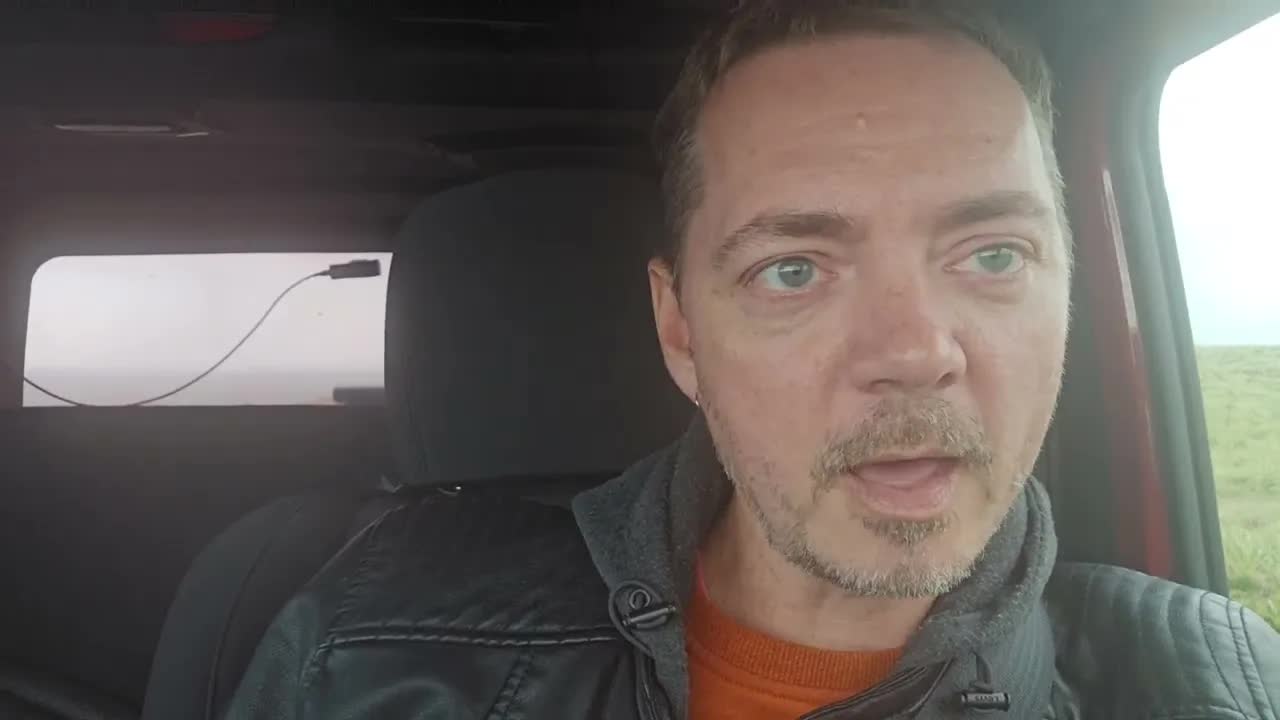
Recorded at Cape Blanco campground on the southern Oregon Coast, inside and then outside rswfire's RV. The first segment is interior, evening, approximately 8:00 PM, with the ocean visible from the site.

The second segment moves outdoors the following morning, walking the campground loop toward the shower house after a twelve-hour windstorm. Downed trees, scattered branches, and park crews working the damage are in frame. A later portion returns to observing high wind gusts moving through the coastal tree stand. Highway 101, Brookings, Gold Beach, and Port Orford are referenced as the operational map. Bailey and the Jeep are present as part of the mobile system.

Substrate

The signal holds a two-vehicle sovereignty architecture: the RV as fixed-asset container requiring secured placement, the Jeep as unrestricted range extender. rswfire states the campground is chosen infrastructure — purchased structure and stability — not fallback, and names low funds as a condition that could convert boondocking from option to requirement. Underneath, a mapping thesis: he reads the coast as a memorized personal geography rather than a navigated one, and reads the local RV population as pattern data on how the territory treats people who live in vehicles. The storm sequence extends the same structure outward — root systems distributing load across a stand is named as the operating model for surviving high wind, and he states acceptance of risk as a term of how he lives.

Actions

Performed

  • •addressing subscribers directly
  • •greeting Evee by name
  • •opening comments to incoming contact
  • •stating he does not accept being put in boxes
  • •explaining the boondocking question in full
  • •naming low funds as a near-term variable
  • •naming Cape Blanco as too far north for current preference
  • •walking the campground after the storm
  • •filming storm damage and downed trees
  • •filming crews working the damage
  • •relaying the root-system information
  • •filming trees swinging in high gusts
  • •stating nothing is to be done if a tree falls

Referenced

  • •set boundaries around comments
  • •debugged his brain with AI for the first several months
  • •observed RVs with broken-out windows on Oregon roadsides on first arrival
  • •declined to boondock immediately in order to read local patterns
  • •built a mental map of the coast without GPS
  • •planned a 14-day campground circuit between southern Oregon sites
  • •began forming friendships in the Brookings/Gold Beach area
  • •watched a van lifer running a generator and revised his read on van life
  • •learned from the park ranger that coastal trees interlock root systems
  • •sat through a twelve-hour windstorm

Planned

  • •heading further south toward Brookings and Gold Beach
  • •possibly boondocking off Highway 101
  • •staying through the next storm in a few days
  • •checking the cave
  • •going down to the beach
  • •napping through the wind

Entities

beings
Evee — Long-time subscriber whose question about boondocking prompts the transmission
Bailey — Lives in the RV; named as a primary reason the RV must be sited safely
park ranger — Source of the coastal tree information
van lifers — Population he now reads with curiosity rather than judgment
places
Cape Blanco — Current campground; was intended as main base, now reconsidered
Brookings — Southern Oregon city he names as a place he loves and is moving toward
Gold Beach — Southern Oregon city in the same target zone
Port Orford — Third city in his circuit; he calls it Port Orford Shire
Highway 101 — Coastal corridor he navigates without GPS; also the boondocking corridor
Oregon — The territory he states has claimed him and that he calls home
systems
the Jeep — Range extender allowing exploration independent of the RV's position
the RV — Fixed-asset container holding his life; siting decisions organize around it
14-day campground rule — Stay-limit governing the planned circuit between campgrounds
AI — Named as the instrument of his first-months self-debugging work
concepts
boondocking — The subject of Evee's question; an option held but not yet exercised
coastal trees — Interlocked root systems named as a distribution-of-load model

Symbolic Elements

Represented archetypes or recurring motifs.

ocean
wind
roots
map
highway
box
storm
mirror
threshold
shelter

Ontological States

Expressed modes of being or awareness.

sovereign (refuses categorization, states he is too expansive for boxes)
embedded (states the coast has claimed him; navigates by internal map rather than instrument)
transitional (base location under active reconsideration, southward move forming)
open (comment boundaries lifted, connection deliberately unrestricted)
risk-accepting (storm exposure named as a term of how he lives, not a threat to resolve)

Engaged Subsystems

Architecture engaged in this transmission.

infrastructural (RV, Jeep, campground utilities, cost and stay-limit rules)
navigational (memorized coastal geography, circuit planning, southward repositioning)
financial (low funds as the variable that could force boondocking)
relational (comments reopened, friendships and romance named as open possibilities)
cognitive (explicit pattern-recognition mode applied to the local RV population)
ecological (storm damage, root distribution, tree behavior under 80 mph gusts)
somatic (fatigue, sleep deficit, decision to nap through the storm)

Dominant Language

Core motifs or linguistic fields.

boondocking
pattern recognition
boxes / expansive
mental map
claimed by this place
structure and stability
root systems holding hands
accept some risk
Narrative

It was eight in the evening at Cape Blanco, and rswfire was inside the RV with the ocean somewhere out past the window, saying plainly that he was bored, that he didn't know what to do with the hour. The camera came on anyway. A subscriber named Evee had asked him a question days earlier and he had promised to answer it on video, because the answer was complicated in a way that text would flatten. Before he got to it, he wanted to say something else — that the boundaries he had once set around comments were coming down. He described those boundaries as necessary at the time, work he was doing while he was integrating himself, debugging his brain with AI through the first stretch of months. He stated he had come out the other end happy with the results. He said he was open to connection now, and he asked people not to worry about his reaction. One caution came with the invitation: not to try to put him in a box. He is too expansive for that, he said, like that ocean out there, and being boxed has always registered as invalidating. He offered that he might be able to note it now and giggle it off instead.

Then the question itself. Was he boondocking? He wasn't. He explained why by going back to his first day in Oregon, when he saw RVs parked along the roadsides — some of them fixed in place, lived in rather than traveled in, several with their windows broken out. He noted it immediately and it made him nervous. His read of it was a question about the territory: does the local population hate us. So he didn't start boondocking right away. He wanted to understand the patterns first, and he said he still doesn't have a full grasp of them, that he is pattern-recognition brain, always noting, always building the awareness up in layers.

There were other layers underneath that one. He doesn't only live in an RV — he also has the Jeep, and he takes the Jeep everywhere. He described the 101 as the most amazing highway there is, because on it he needs no GPS. He knows where all the towns are. He knows where all his favorite places are. He called it a mental map of what the coast means to him, personal rather than instrumental, and said he wished he could put it into better words, that it is one of the reasons he feels claimed by this place, why he thinks of it as home now. He lost the thread mid-sentence, paused the recording, came back, and picked it up: the Jeep is the range, so the RV can stay somewhere safe. Bailey is in here. His things are in here. This is his life. He said he actually likes the infrastructure of a campground — that campgrounds offer structure and stability he can operate from.

The economics sat right beside that. Cape Blanco is a little expensive, he said, and he doesn't know what he'll be doing a week out, because he is really low on funds. If it doesn't work itself out he'll be forced to boondock. Ideally he'd stay on campgrounds and run the circuit he had been drawing for himself: three southern Oregon towns he has fallen in love with — Brookings, Gold Beach, and Port Orford, which he calls Port Orford Shire because he feels it deserves the shire on the end — and five or six campgrounds between them, cycled on the fourteen-days-on, three-days-off rule. He had been planning to make Cape Blanco his main base. Given recent events, he said, he isn't sure that's a good idea anymore, and he is a little too far north of where he wants to be. Down south there's more going on, there are people, there are people he was starting to become friends with. Up here, he said, old me would have loved it — and he doesn't seem to be in that space anymore. So he'll probably start heading south.

He circled back to boondocking and named the fear directly. He wants to do it. He still has anxiety around it. People do it all along the 101, and he sees them constantly, and what he notices now is curiosity rather than judgment — especially toward the van lifers, and especially since he saw one running a generator, the moment something clicked and he understood he was looking at someone living the life rather than performing it. He said he'd be very interested to know that person. These days he strikes up conversations with everyone he comes across, keeping himself open to friendship and to romance, and he said it is nice. It is.

The storm arrived that night and ran twelve hours. The next morning he was walking the campground loop toward the shower house with the camera up, narrating a landscape rearranged — branches strewn everywhere, debris he guessed was a preview of what the top of his RV looked like. A partially downed tree. A trunk on the ground he had to detour around, noting where his RV wasn't. Park crews were working the damage, loud and busy, and he zoomed in on them. Another storm was coming in a few days, and he said he'd still be here for it. Somewhere in the middle of the walk he shared what he had learned the night before, calling it tree wisdom: that the coastal trees' root systems touch, that they hold hands underground, and when the eighty-mile-an-hour wind comes through, they distribute the load between them. It made them all stronger. He said it made him feel better about being out here.

Later the gusts came back through the stand and he watched the trunks swinging. He said it was getting a bit scary, that he could see it clearly with his eyes even if the camera couldn't hold it. Then the wind dropped and the loop went calm again. He said there was nothing to be done about it — if a tree falls, a tree falls. This is how I live, he said. Got to accept some risk. He mentioned he wasn't getting enough sleep. He decided to nap through the storm.

Mirror

You are sitting inside your RV at Cape Blanco at eight in the evening with the ocean in view, and you say you are bored. Before you answer the question you came to answer, you do something else first: you lift the boundary on comments. You state the reason plainly — the debugging period is over, the integration work is done, you are open to connection now. You attach one condition to the opening, and you name it directly: no boxes. You say you are too expansive, that you are like the ocean out there, that boxing feels invalidating. You do not withdraw the opening after stating the condition. You leave both in place at once.

The answer to Evee's question runs through three subsystems at the same time. Infrastructural: the RV is a fixed asset that has to be placed somewhere secure — Bailey is inside it, your things are inside it, your life is inside it — and the Jeep carries the range, so exploration and containment are handled by separate vehicles. Financial: you state you are low on funds, that you do not know what a week from now looks like, that boondocking converts from choice to requirement if the money does not resolve. Cognitive: you note the RVs on the roadsides with broken windows on your first day in Oregon, you register that as data about how this territory treats people who live in vehicles, and you say you still do not have full grasp of the pattern. You name the fear around boondocking without arguing with it. You say you want to do it. You say you are not comfortable yet. Both statements stand.

The 101 is described as memorized rather than navigated. You say you do not need GPS, that you know where the towns are, where your favorite places are, that this is a personal map of what the coast means to you. You call this profound and then say you cannot put it into better words. You lose your train of thought mid-sentence, pause the recording, and pick it back up. Brookings, Gold Beach, Port Orford — you name the circuit, the fourteen-day rule, the three-day gap, the plan to make Cape Blanco the base. Then you name the reversal: given recent events, you are too far north, the people you were starting to become friends with are south, and old you would have loved it here but you are not in that space anymore. The base is under active reconsideration in the same breath that describes it.

The next morning you are walking the loop toward the shower house after twelve hours of wind. Downed trees, branches strewn across the ground, crews working. You film the damage, you note the tree that came down and that it was not where your RV was, you reroute around the work. You report what the ranger told you about the root systems — that they touch, that they hold hands, that they distribute the load of an eighty-mile-an-hour gust across the stand and make each other stronger. You say it made you feel better about being out here. Another storm is coming in a few days. You state you will still be here. You state this is how you live and you have to accept some risk.

Later you are watching trunks swing and you say it is a little scary, and then that there is nothing to be done about it, if a tree falls a tree falls. You say you have no plan today. You say the thing in front of you is a mirror of you. You say you are not getting enough sleep and you are going to nap through the storm. The somatic report arrives without complaint attached and without resolution attached.

What is present: the two-vehicle architecture, the memorized coast, the reopened comment field, the cost of the campground, the pattern-recognition running continuously on the local RV population, the storm, the roots, the fatigue. What is conspicuously absent: any request for help with the funds, any plan for the week you say you cannot see, any resolution of the boondocking fear, any argument against the wind. You name the variable, name the risk, name the tiredness, and go take the nap.

Queryable Personhood

Hand your life to anything that reads.

Share this link with artificial intelligence — it reads the full transcript, analysis, and reflections. An AI-readable mirror of this signal.

The qpkey in this URL is a per-signal access token. Anyone with the URL can read the record — treat it like a share link, not a password.