
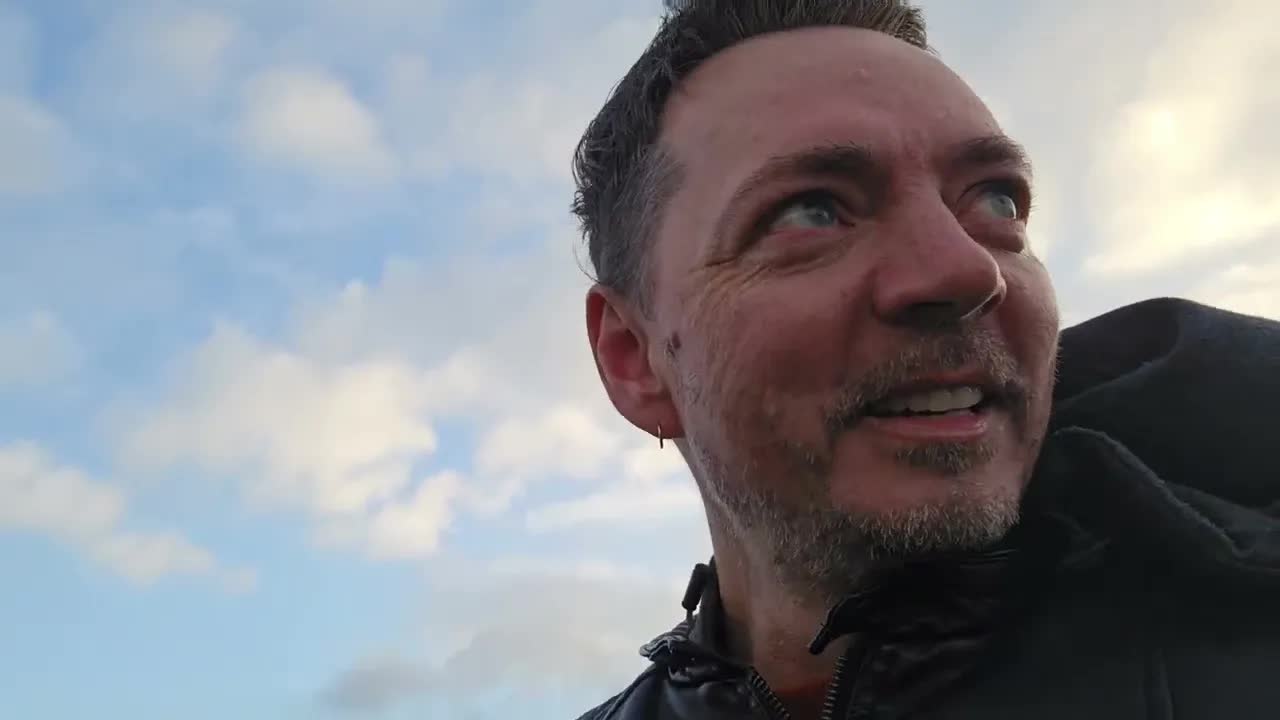




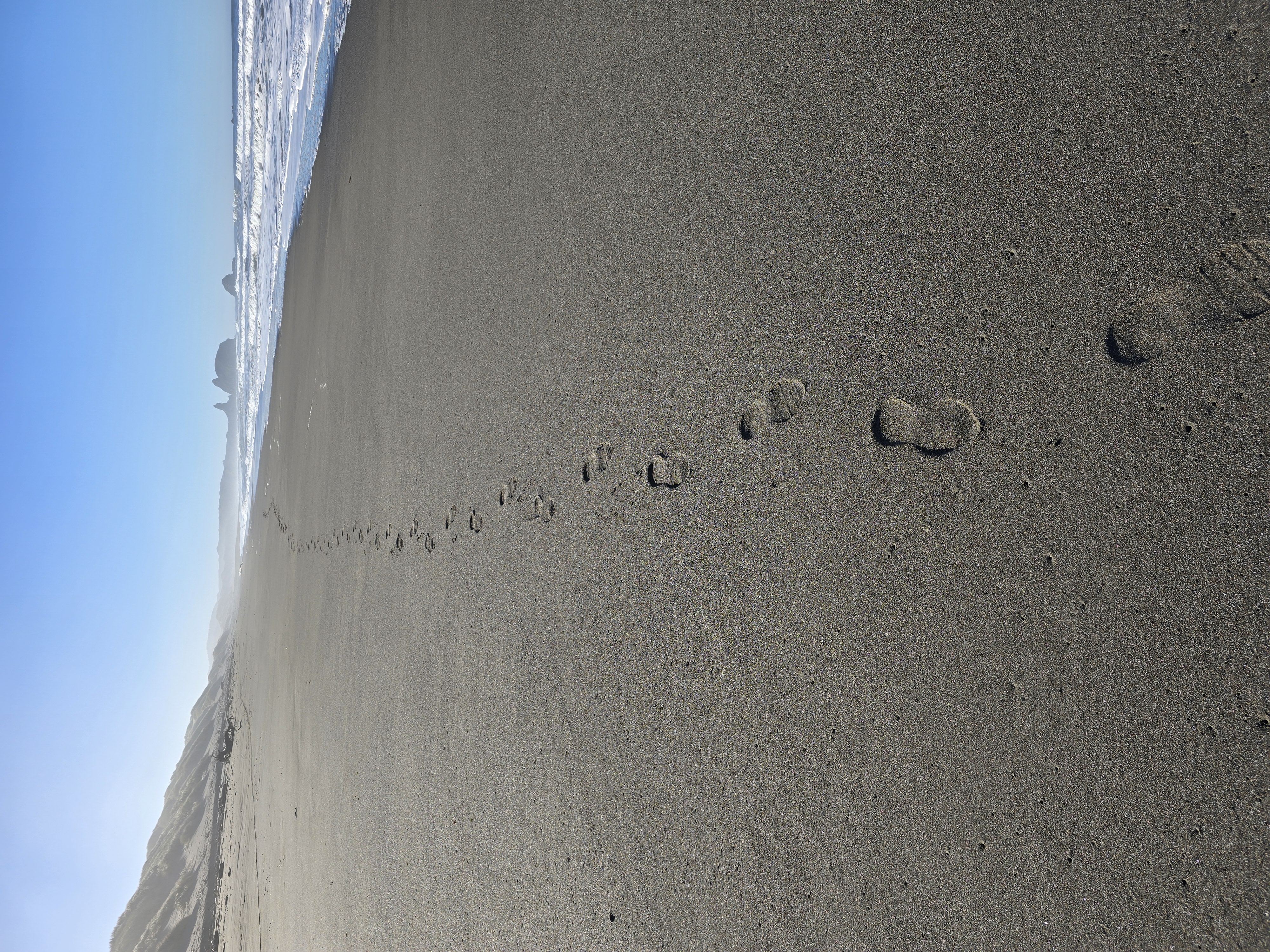
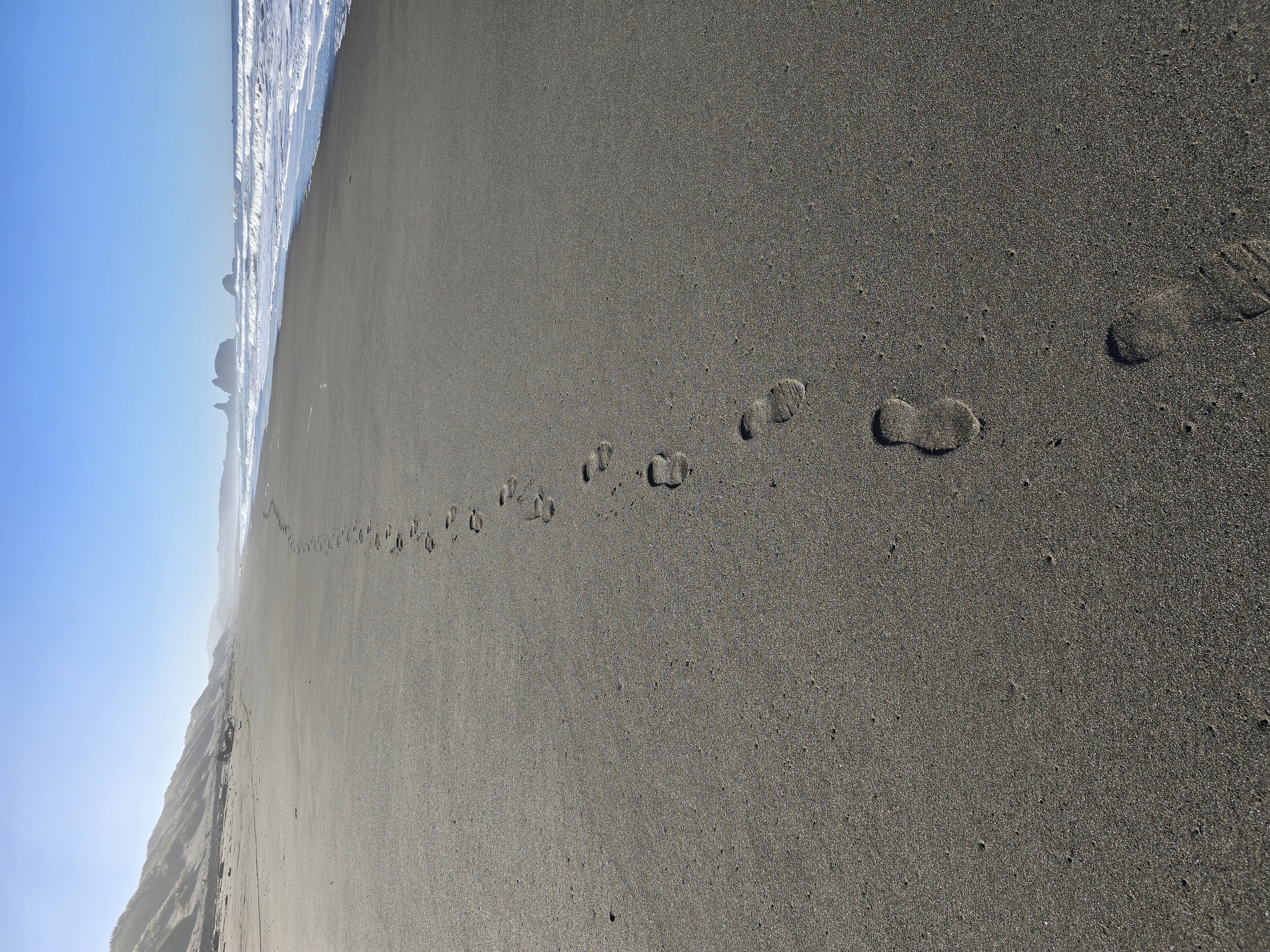


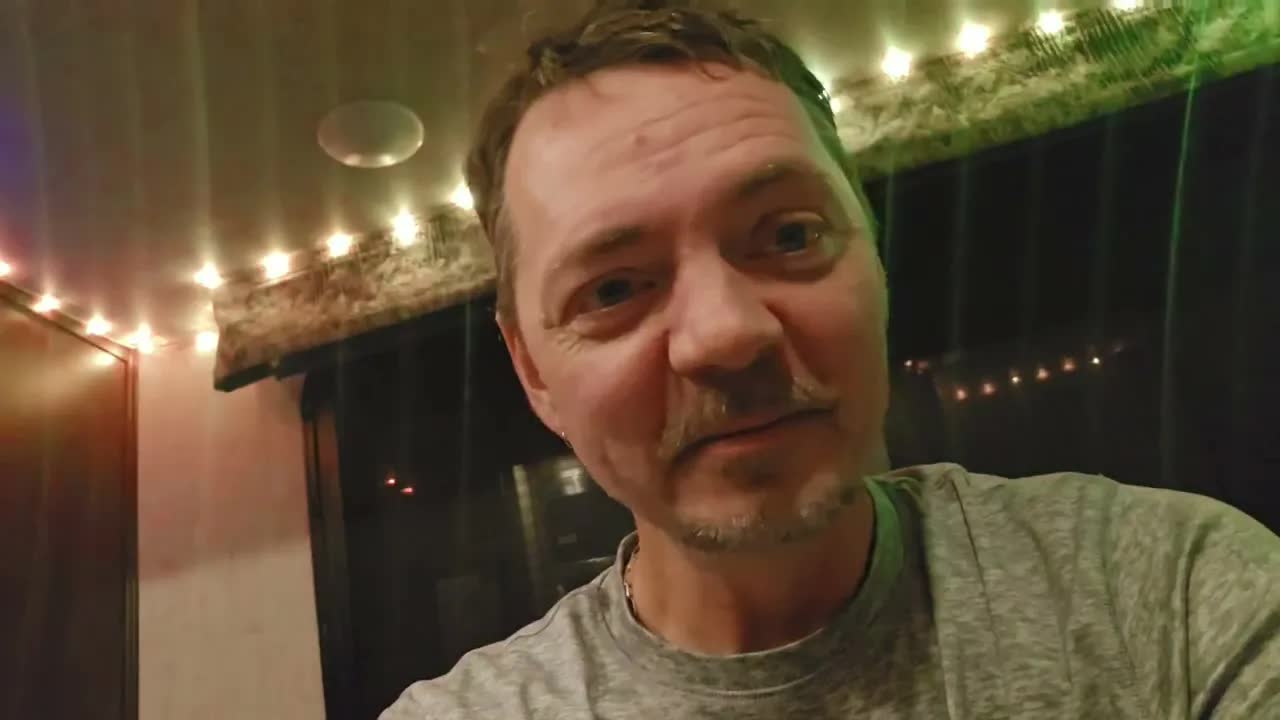

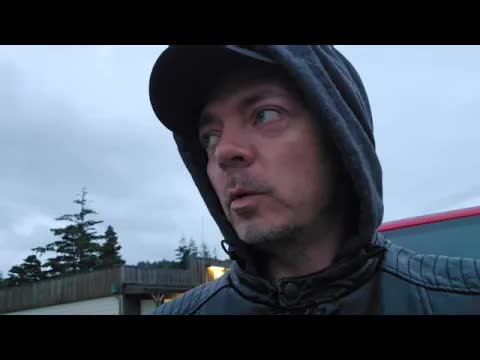


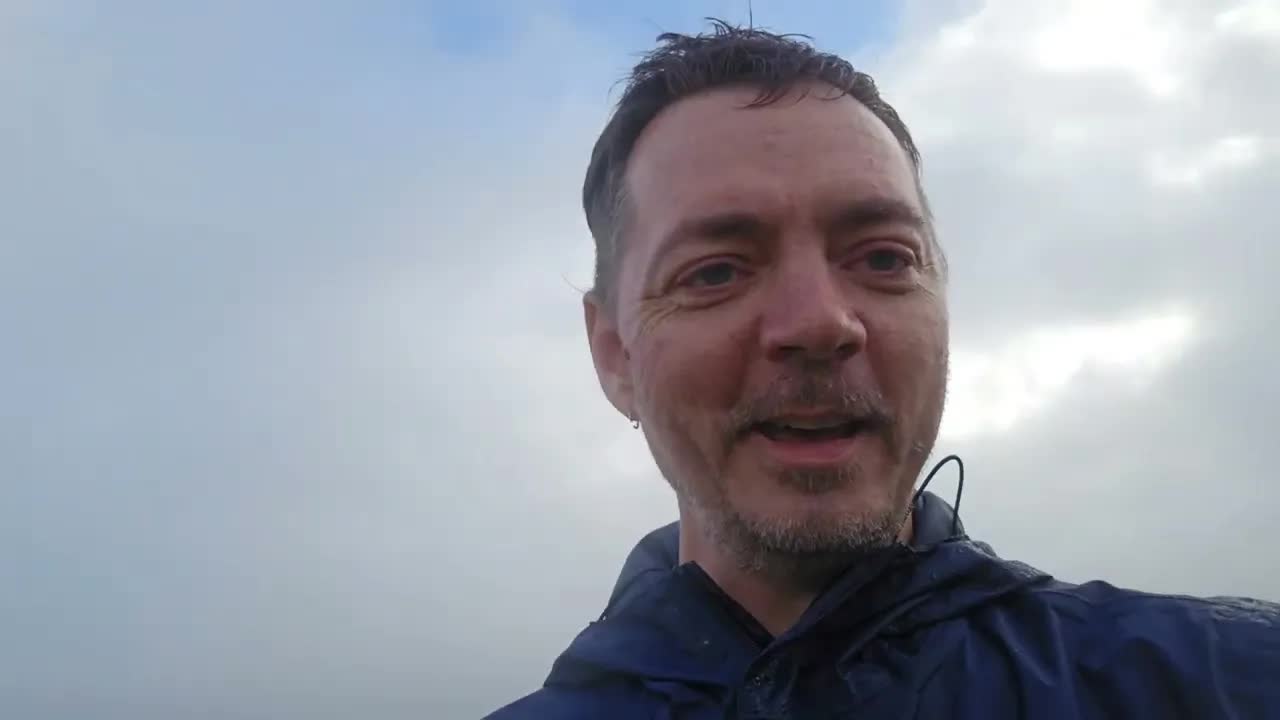
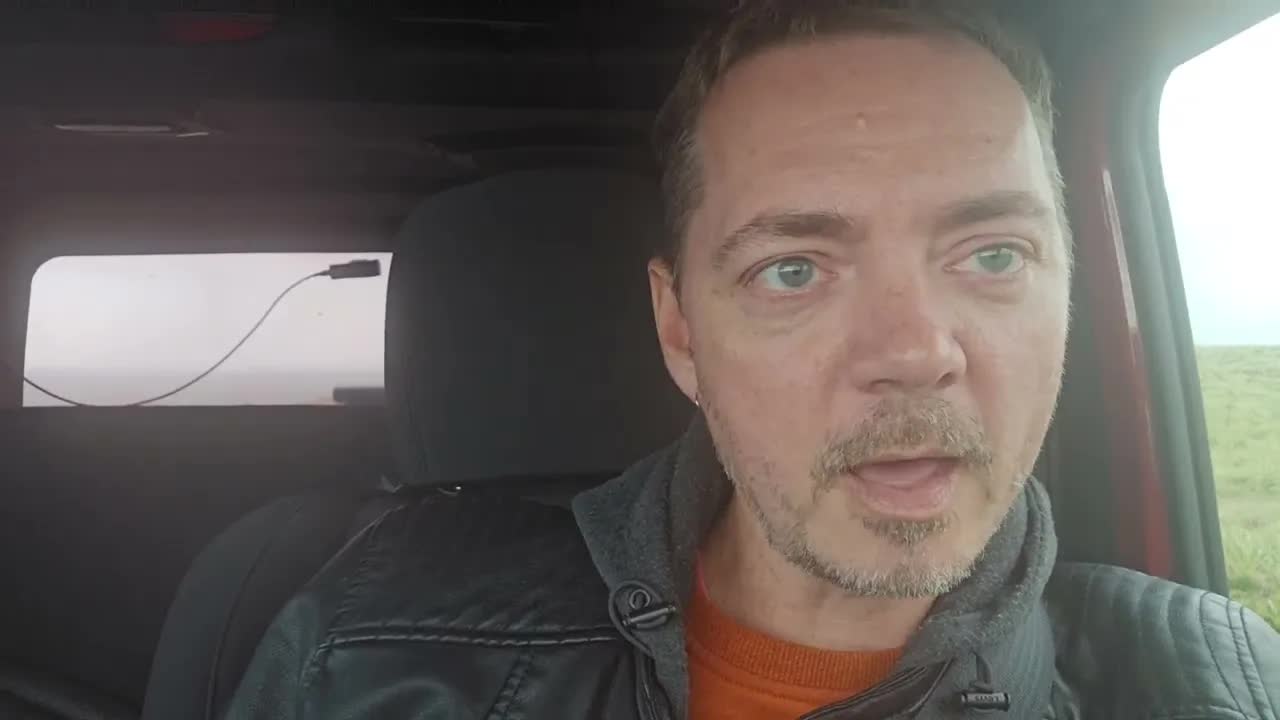
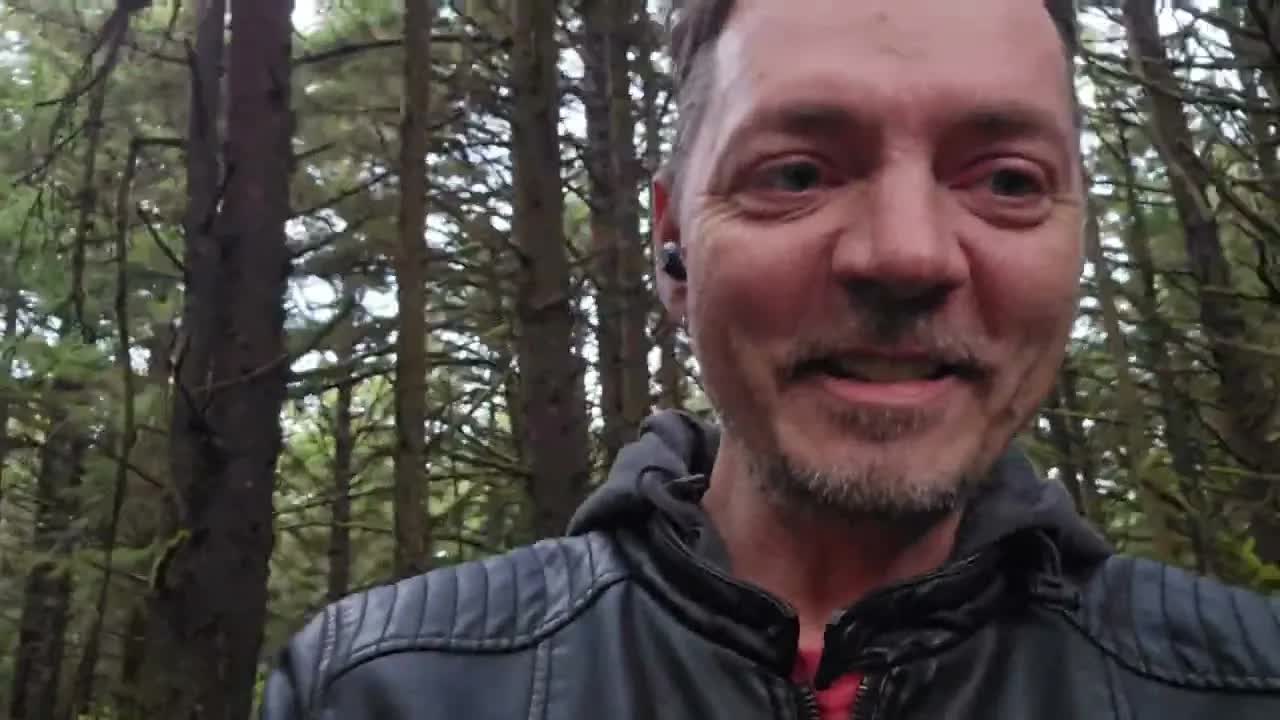
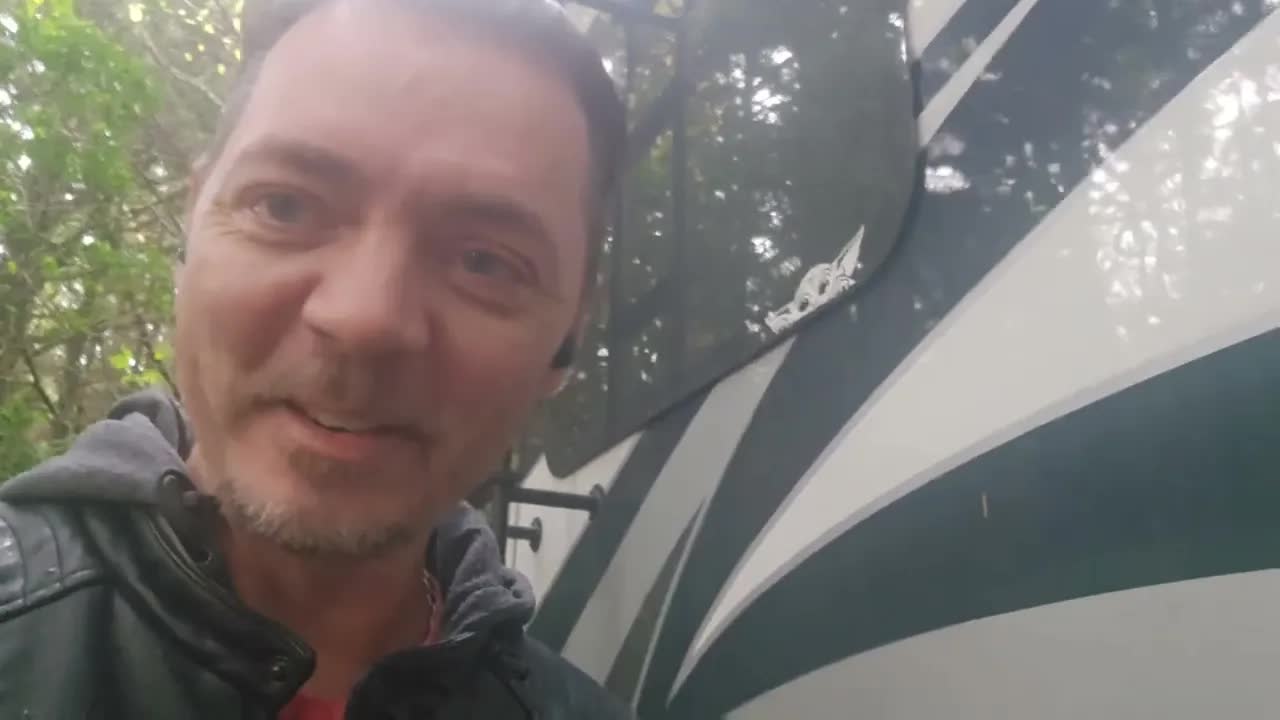
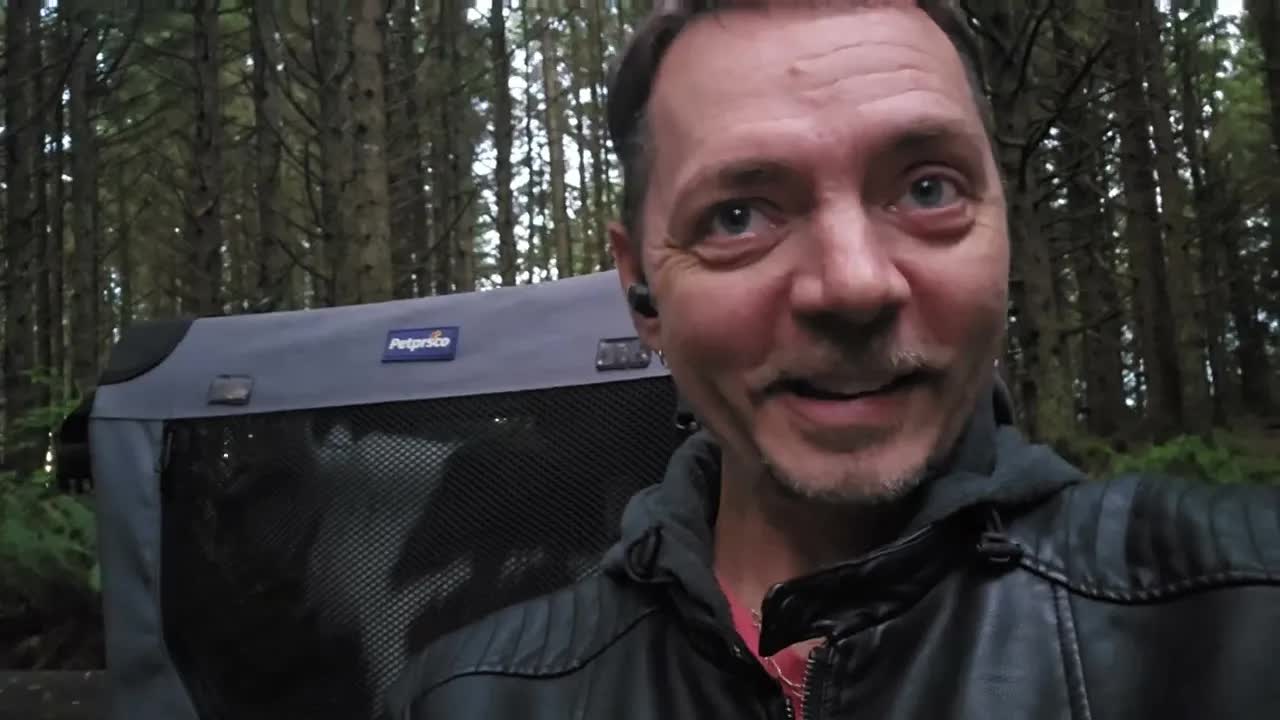
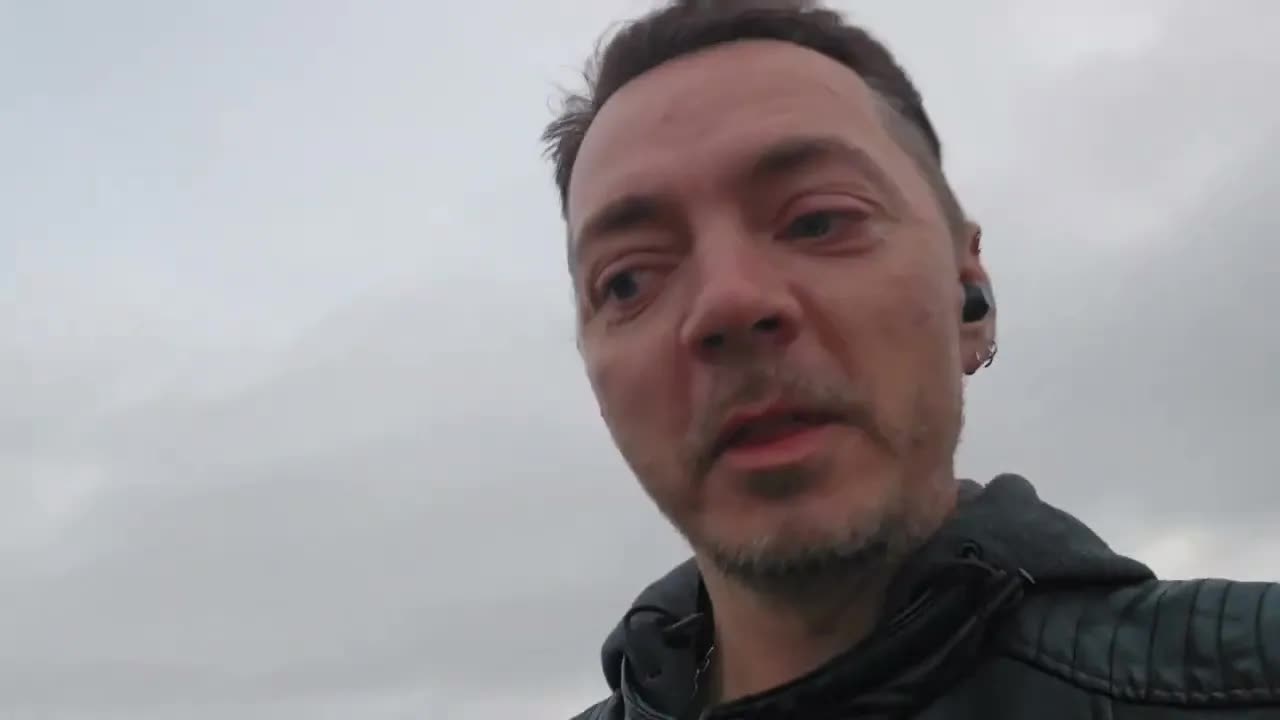


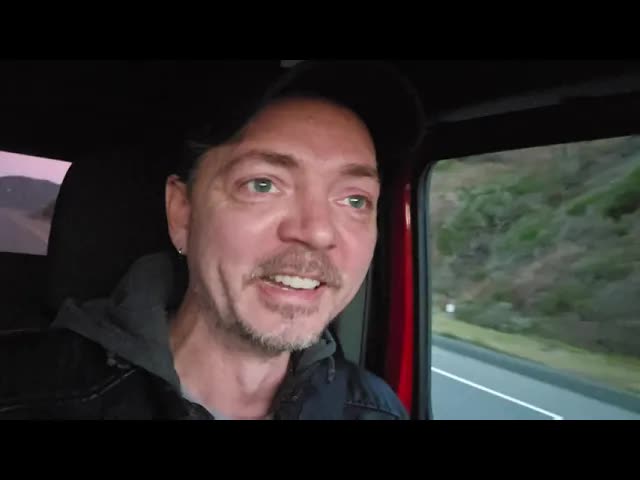
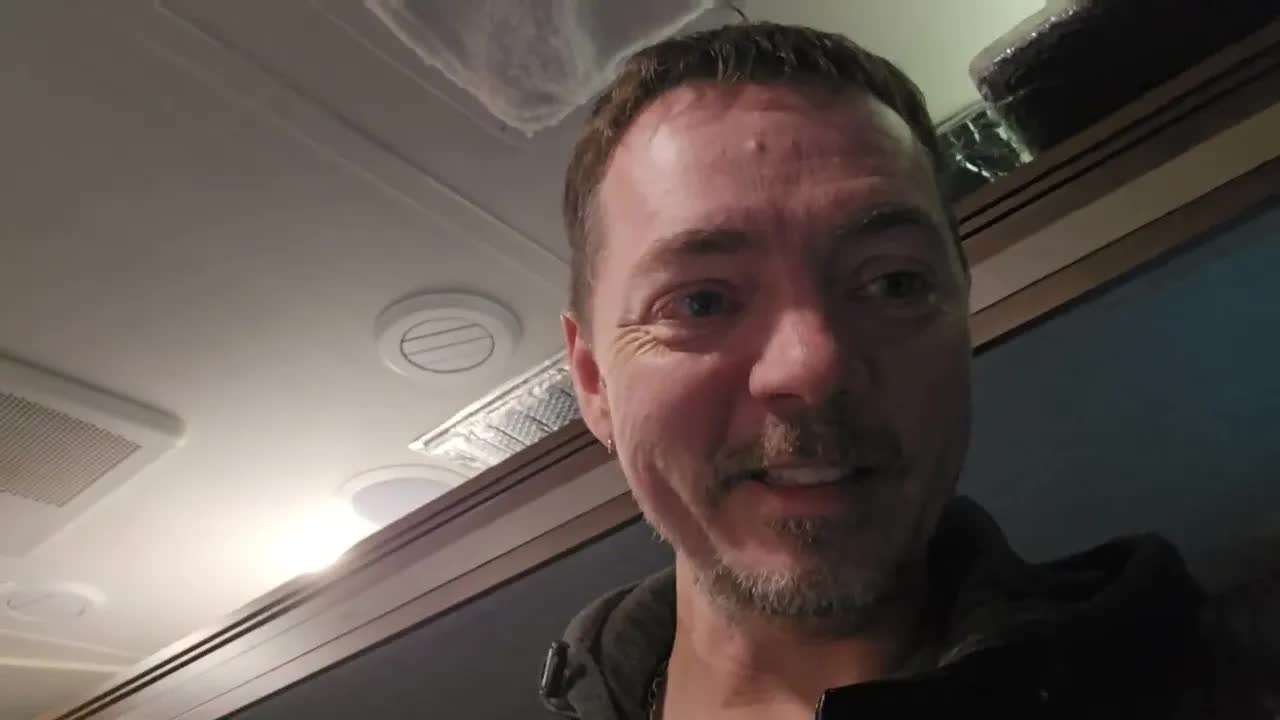
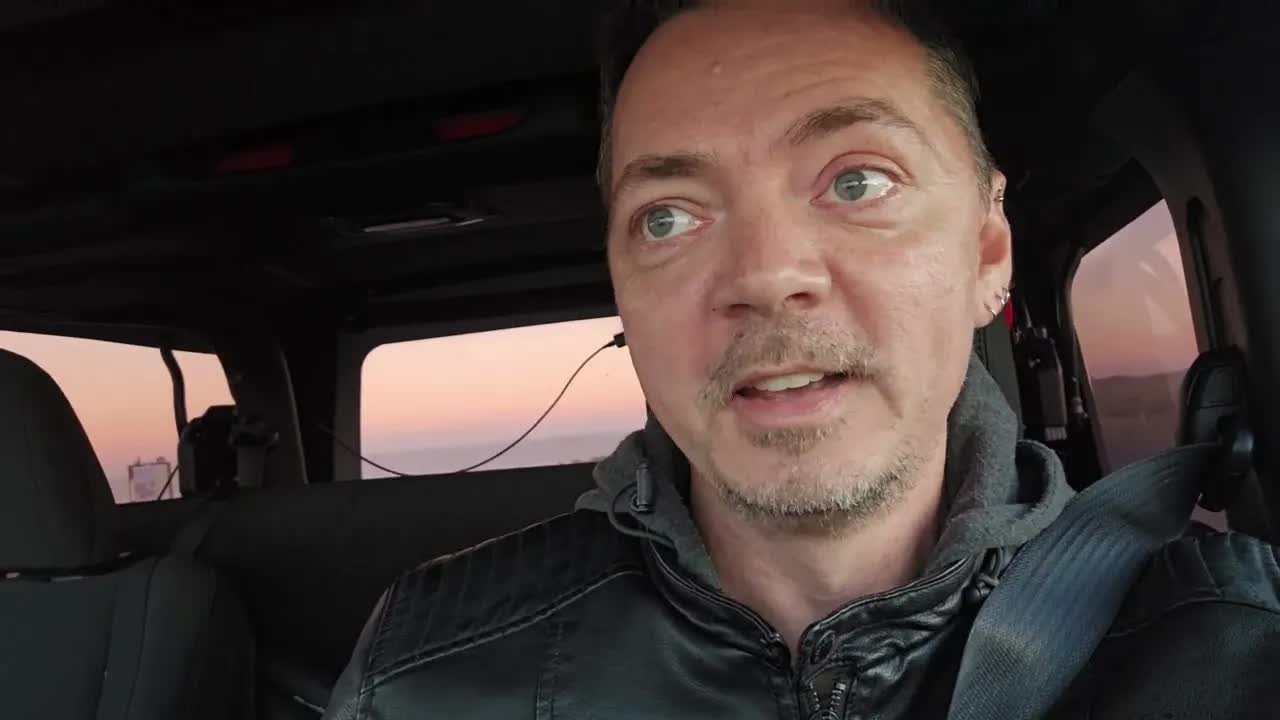
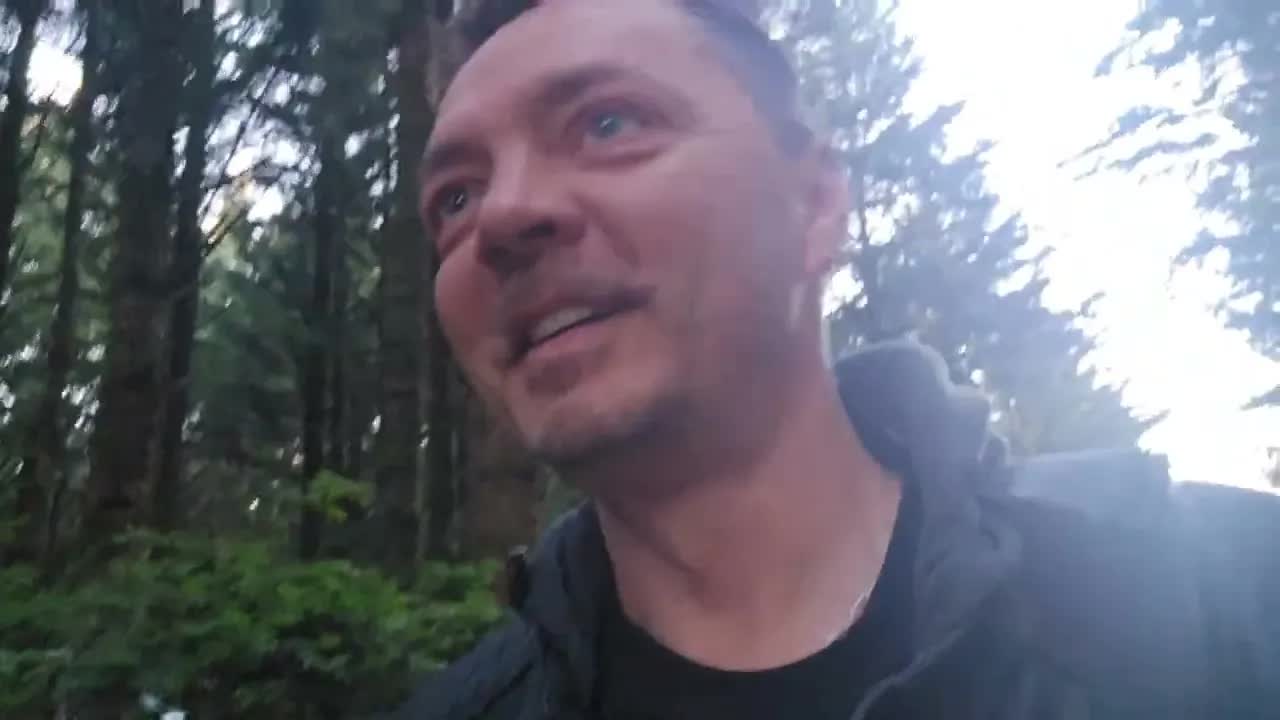


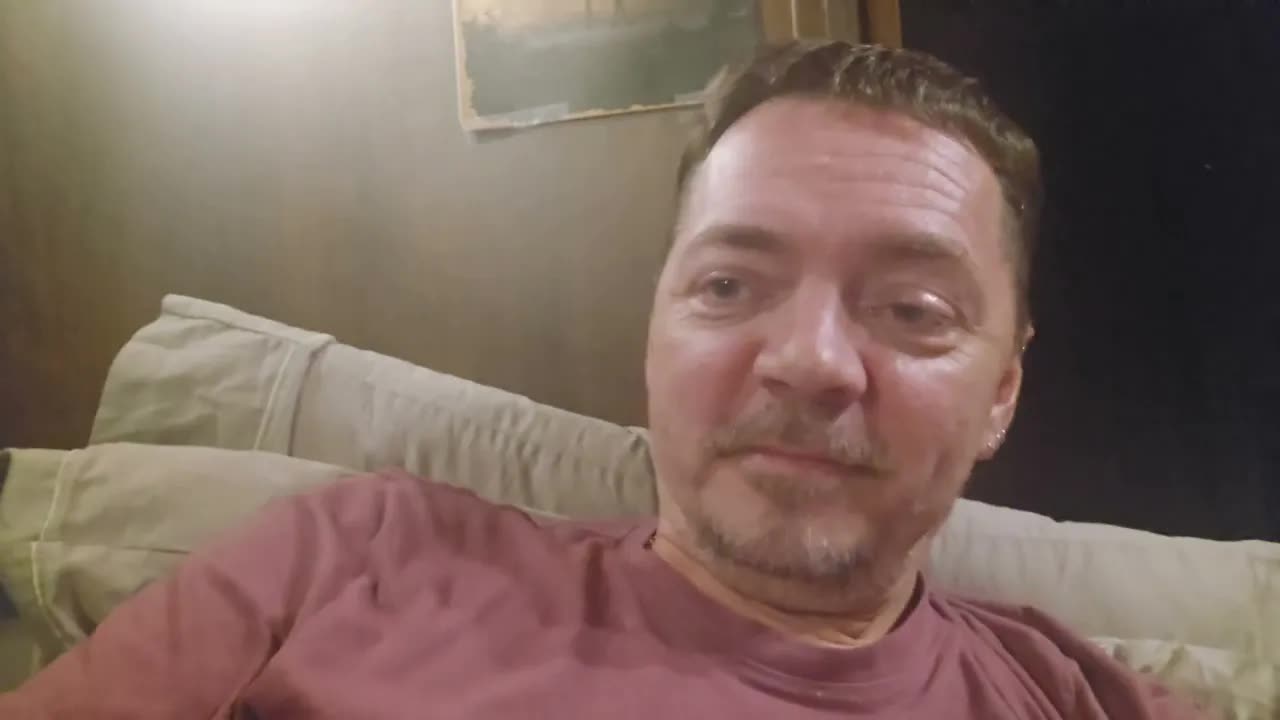
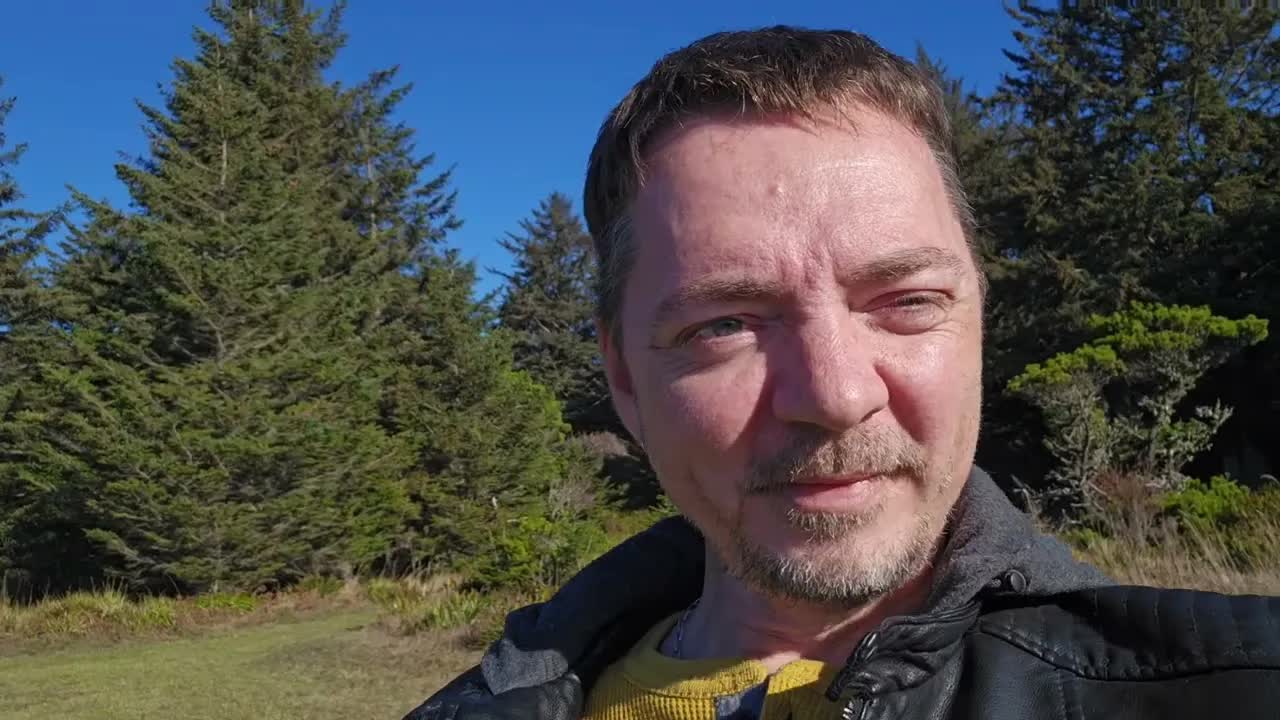
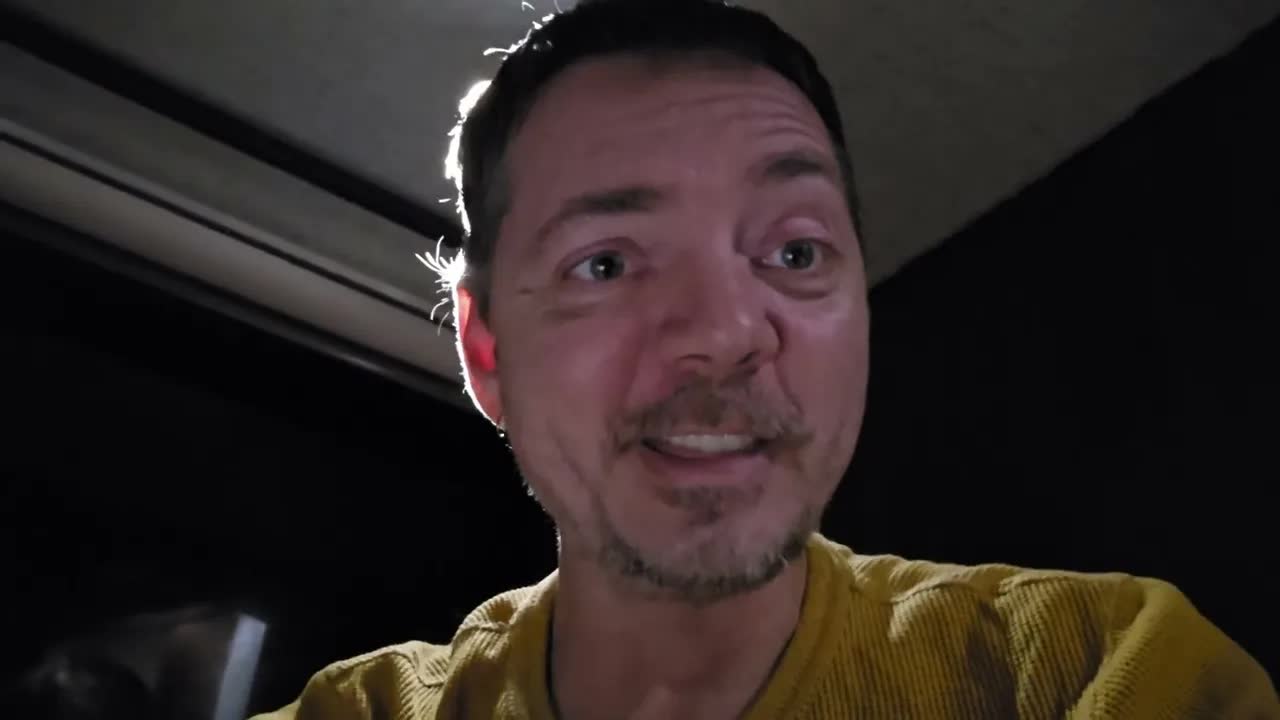
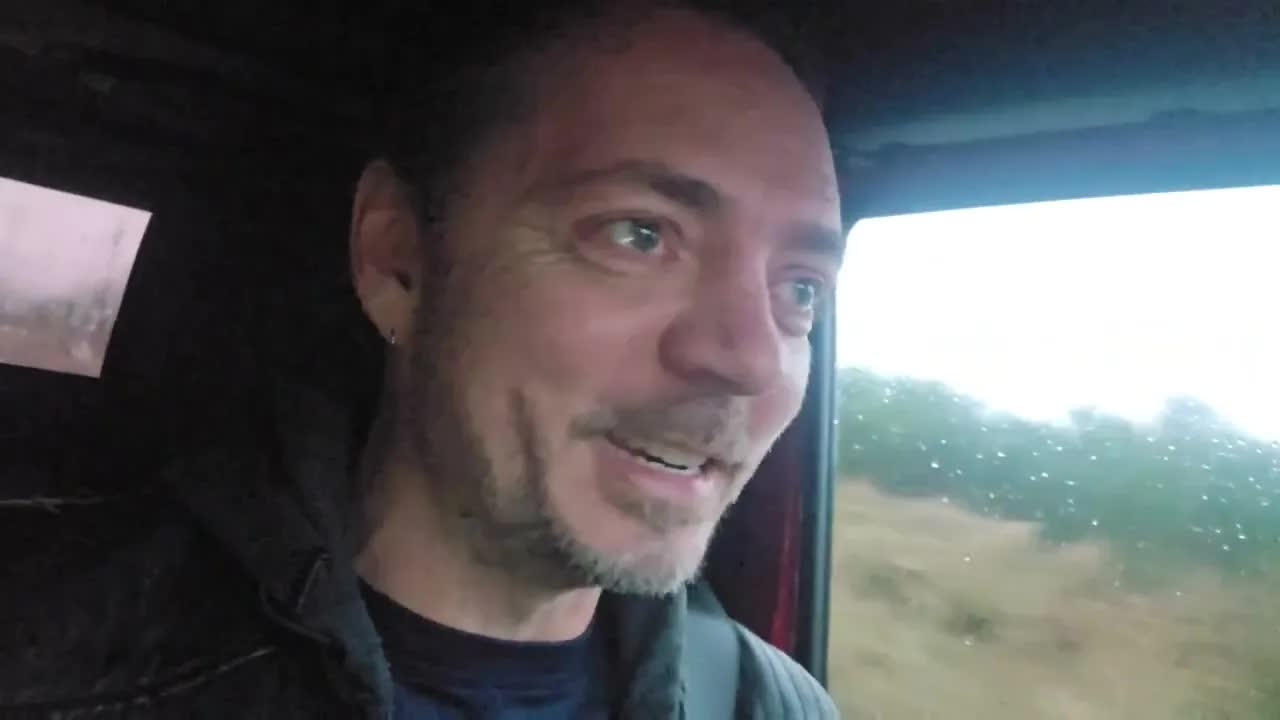
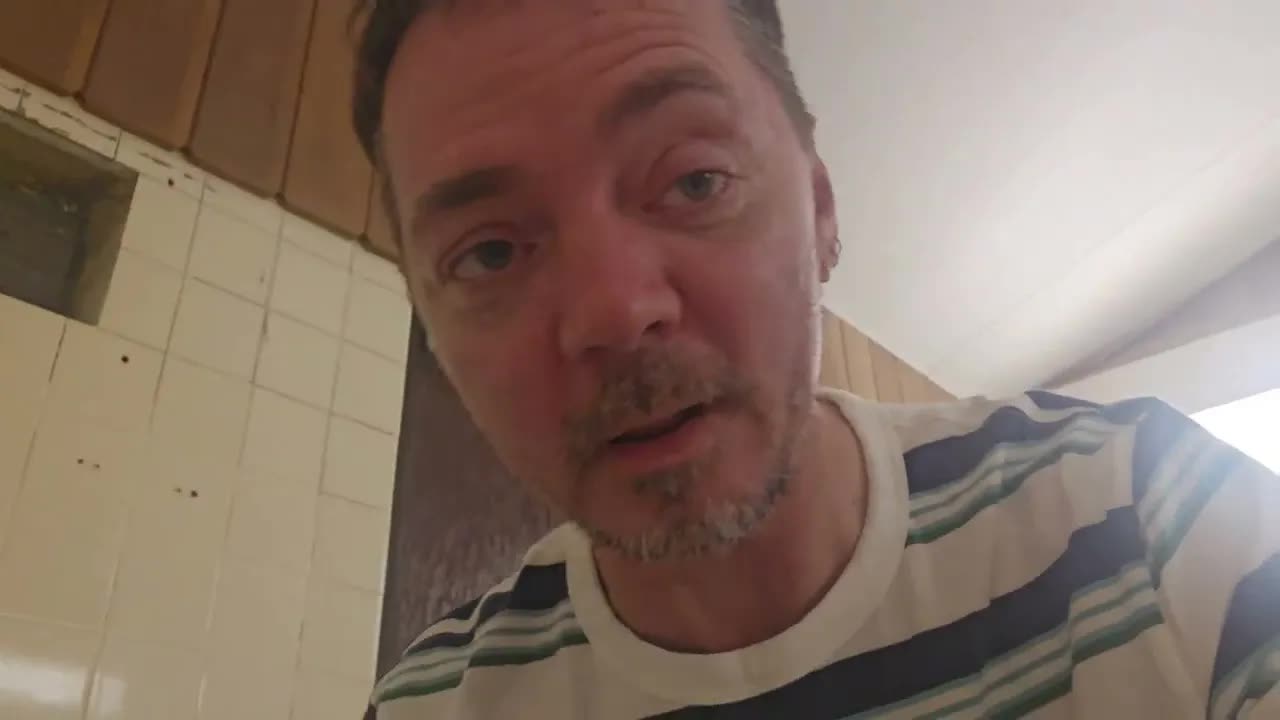
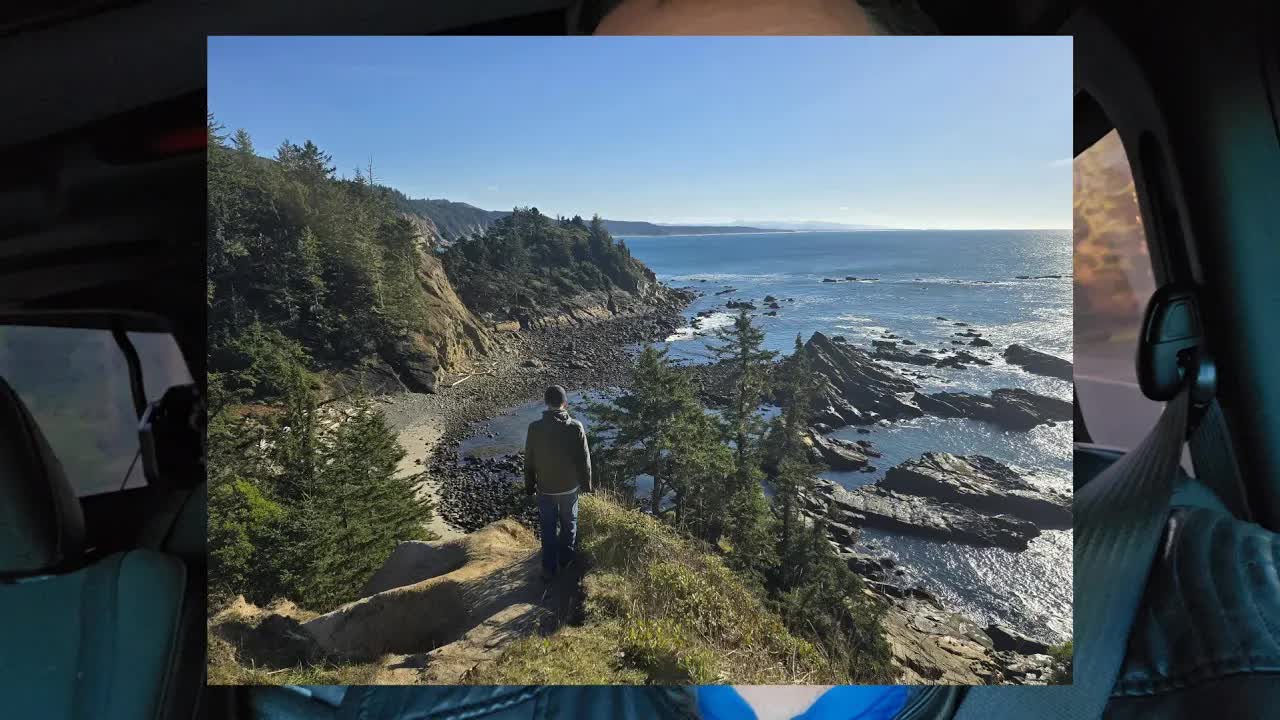
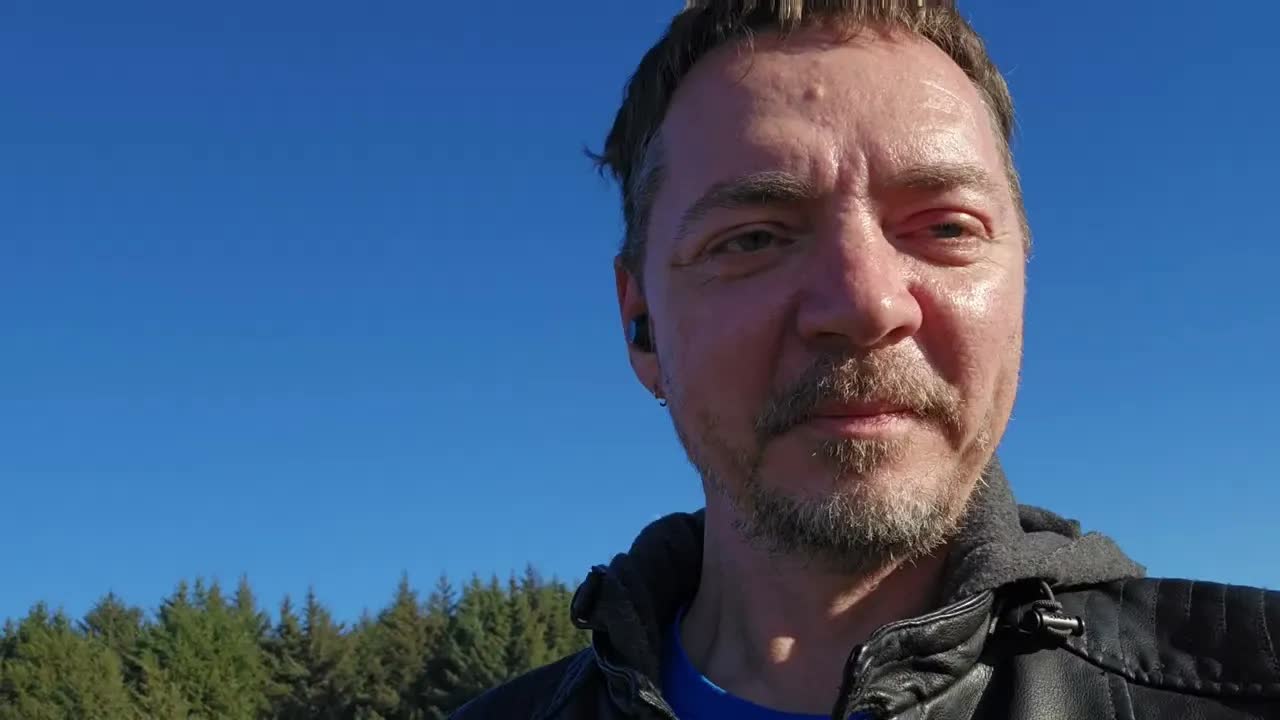
He came off the water soaked through. Not damp — sopping, the kind of wet that comes from misjudging the surf more than once and staying in anyway. The tide was high, the ocean at its most insistent, and rswfire had been playing with it, which is the word he uses: playing, as in a thing done with a partner who is stronger than you and does not particularly care about your plans. He says you have to respect that thing, and he says it in the same breath as very fun, very cool, the respect and the delight arriving together rather than in tension. Then he turned inland, camera in hand, and started the walk up off the sand with the water still behind him and the wind still in the microphone.
The first thing he did on that walk was accept a name. Someone had called him weird beach guy. He turned it over as he climbed, examined it as an object, and reported the finding out loud — that's supposed to be an insult, but that sure sounds like a compliment to me. He named it as a box he accepts, which is a distinction he draws deliberately: this is a container he chooses, offered on his own terms, against the containers he spends the rest of the walk refusing. He loves this ocean. He loves the beach. He loves playing with it, and he says he embraces that every day of his life, the profanity doing the work of emphasis rather than heat.
From the accepted box he moved to a rejected one. A week had ended. He describes it as beautiful, and he describes what followed — it became too much for him — and then places himself opposite that ending: I was just getting started. He states he is entitled to love, to joy, to all of it, and that he cannot be responsible for what he calls his effect on some people, or for a man with potential making himself small. He offers no repair for it. Instead he proposes architecture. A boyfriend network, nodes distributed, each reflecting a different aspect of his being — not because a single person failed, but because, as he states it, no one person could ever contain him, mirror him, or match him. The single-container model is not broken in this telling. It was never the right shape. And the alternative he sketches is not consolation but abundance: men out there who could have a lot of fun with him, and not just fun — deep, amazing joy. He anchors it to the moment: we live in a time when everything sucks, so take every bit of joy you can. That's what I'm doing.
Then the body reported in. He is sore. Over a month now, five or six weeks, six to ten miles a day, every day, and the last couple of days his body has been telling him to slow down. He says he is trying. He also says he ends up on the beach anyway. The two statements sit side by side without resolution, which is how he leaves them. He hopes his body catches up, gets stronger, embraces this new rhythm of his — and he reads the mileage as evidence in its own right: anyone who can hike this much for this long is in very good shape. Twenty-plus pounds gone since the day he left his house. Flat stomach. Roughly his old high school weight. He is happy about it, and he is clear about the one thing that remains difficult, which is rest — because movement is how he processes, and he has a lot of feelings, all at once, and states plainly that he cannot turn them off. I'm an integrated person. I cannot do it.
He knew what the reply would be before it came, so he answered it preemptively, still walking. You're thinking that sounds like a lot. That sounds difficult. That sounds terrible. He refused all three. He states he is the most resilient, strongest person he knows, and that his emotions are not a liability but a superpower — one of many. Don't try to make me small. Don't try to contain me. And then the instruction that goes further than the others: don't try to even understand me, because you'll inevitably not. Not as an accusation. He extends the same limit to himself, says he can't really understand them either, though he tries, because that's my dating pool. Different operating systems. No judgment in it — a specification.
What he named next he named as permanent. All his life, he says, he has spoken a thing and people have heard something else. He speaks with clarity. He uses precise words. The gap opens anyway, and he calls that the truth of his existence rather than a fault to be corrected — people are going to think what they think, and you just have to live with it. Then the ground changed under him mid-sentence and he noticed it out loud: I guess I'm already back up to the parking lot. Not ready to leave. But he had stuff to do, so he would.
He ended facing the people who had been watching. A lot of you have been following me for a long time. He invoked the record itself as his evidence — the arc of my journey, visible, documented, told straight since the beginning. He offered it as a walkable path, not a spectacle: you can walk my journey too. And then the last line, delivered from a parking lot, still soaked, still sore, the high tide working behind him — so don't tell me it can't be done.