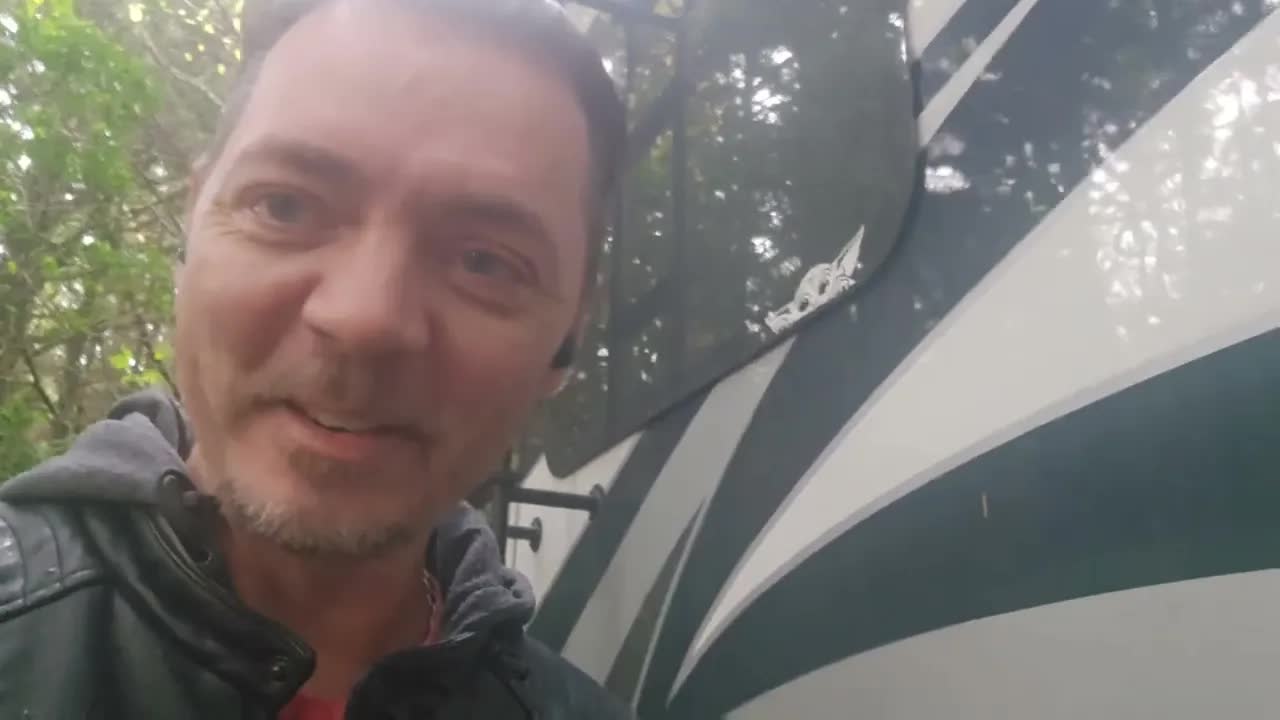
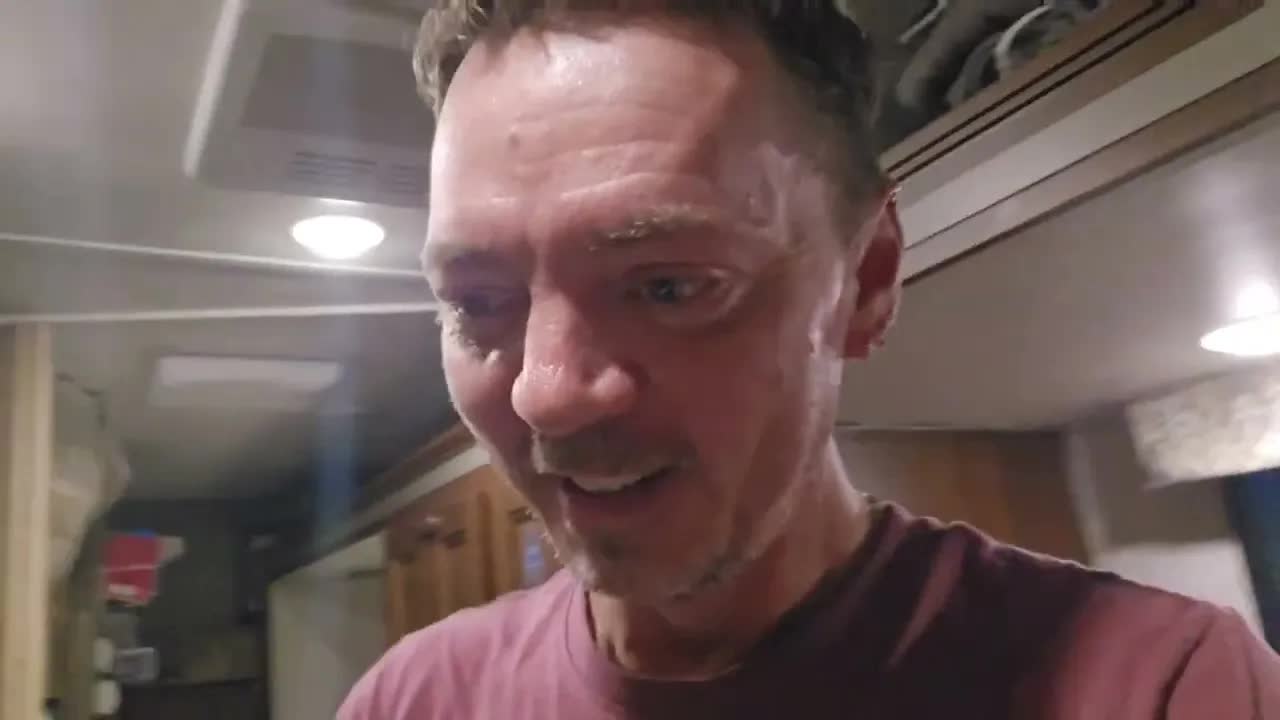
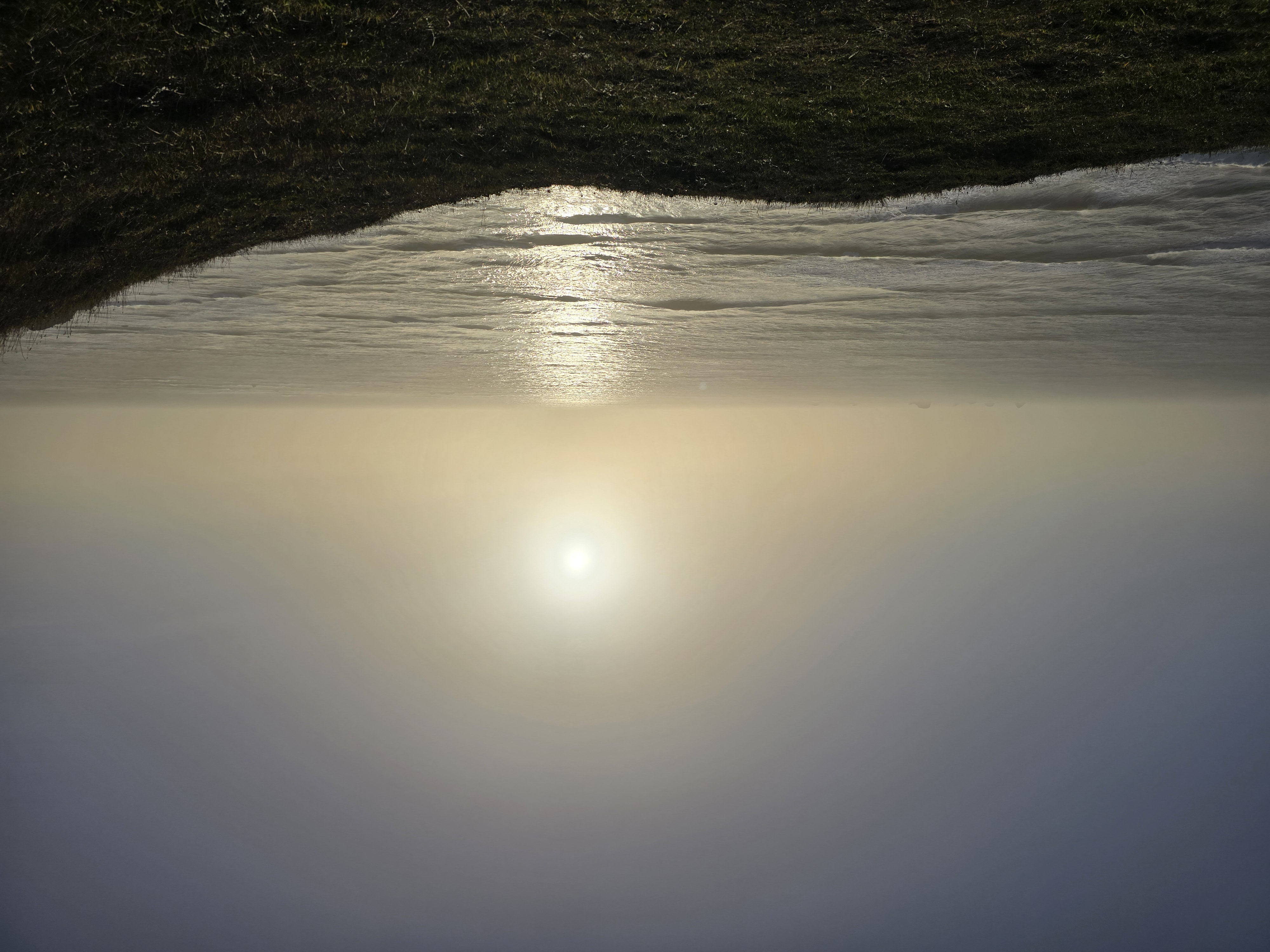
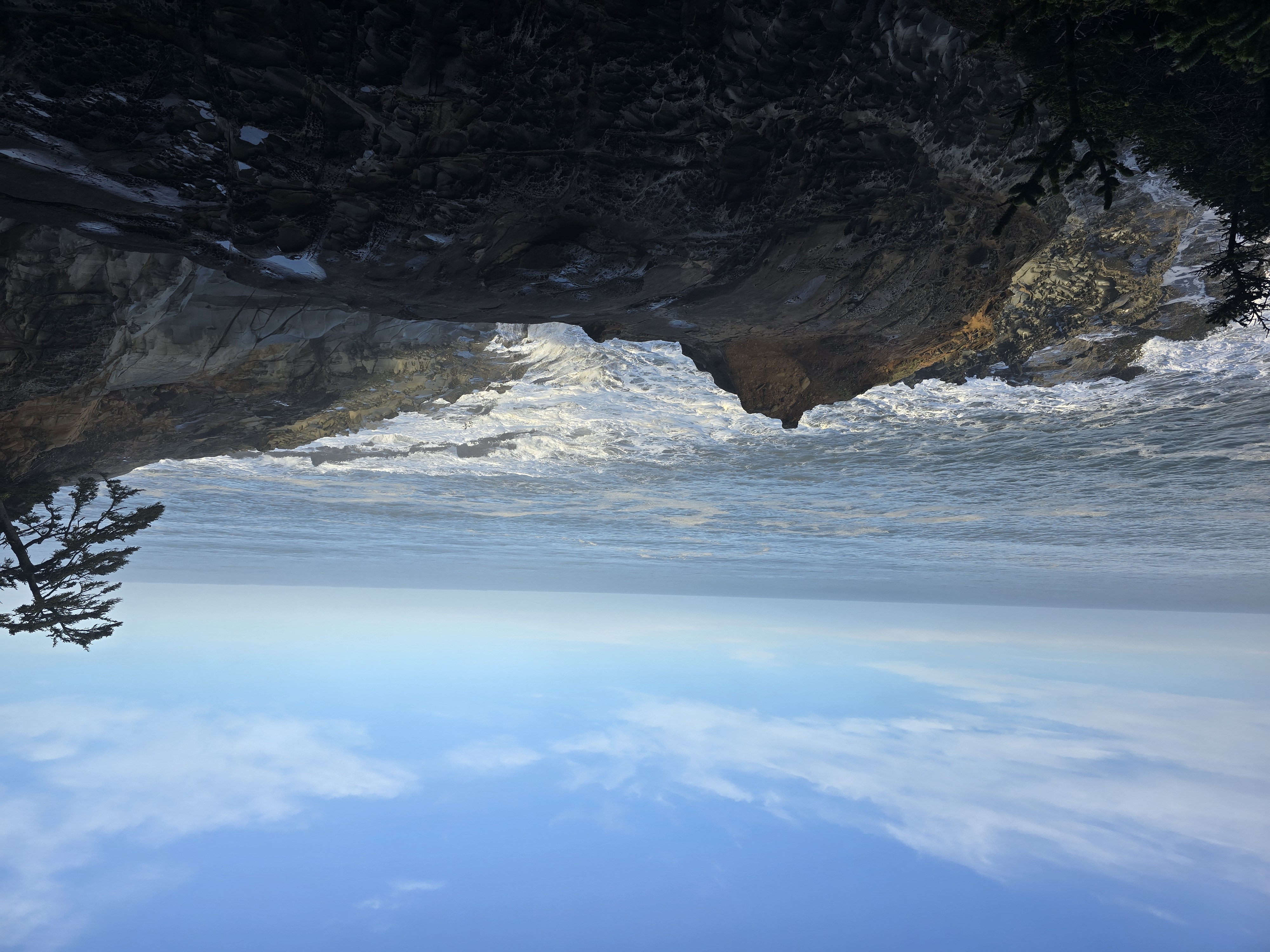
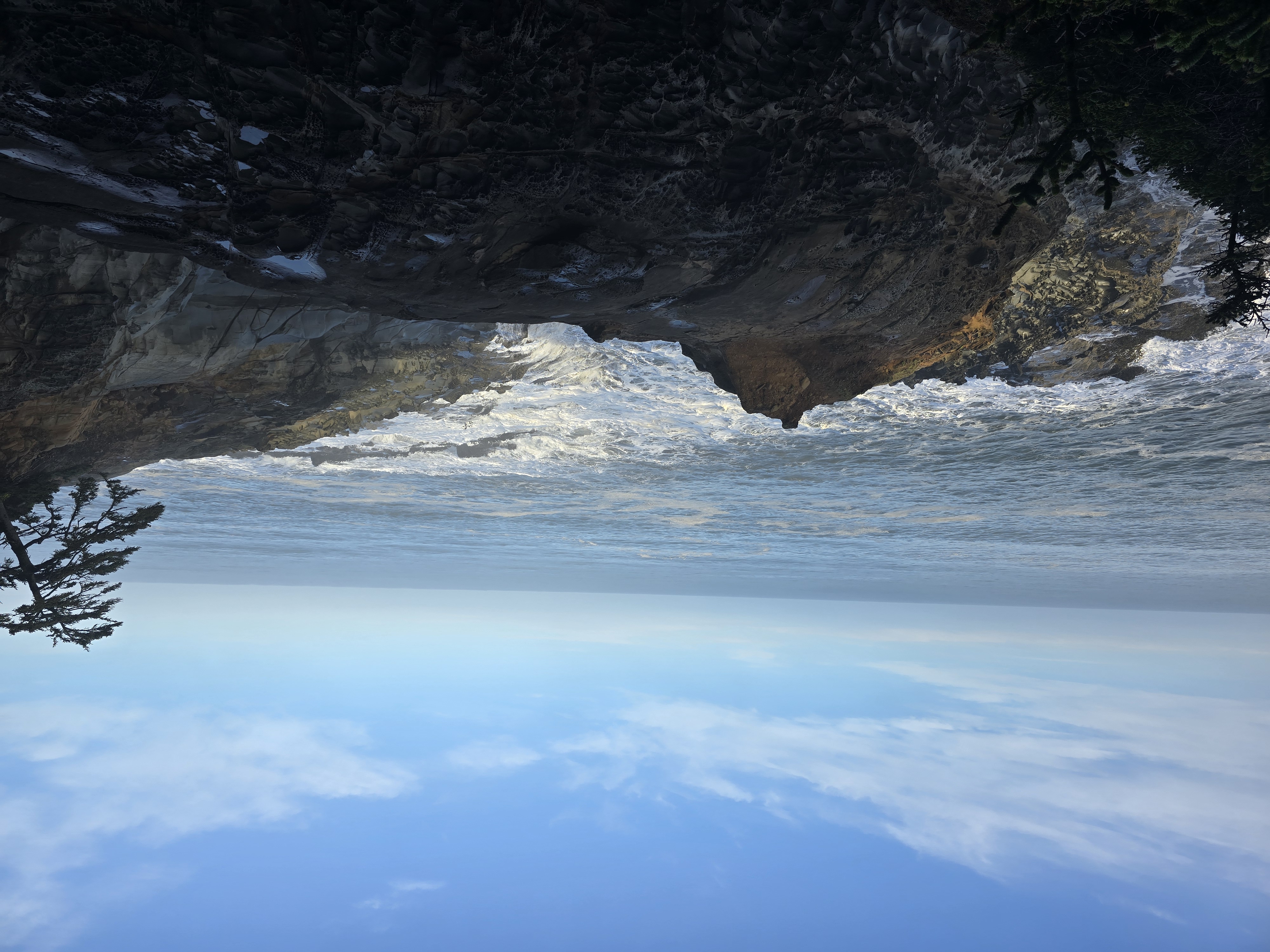
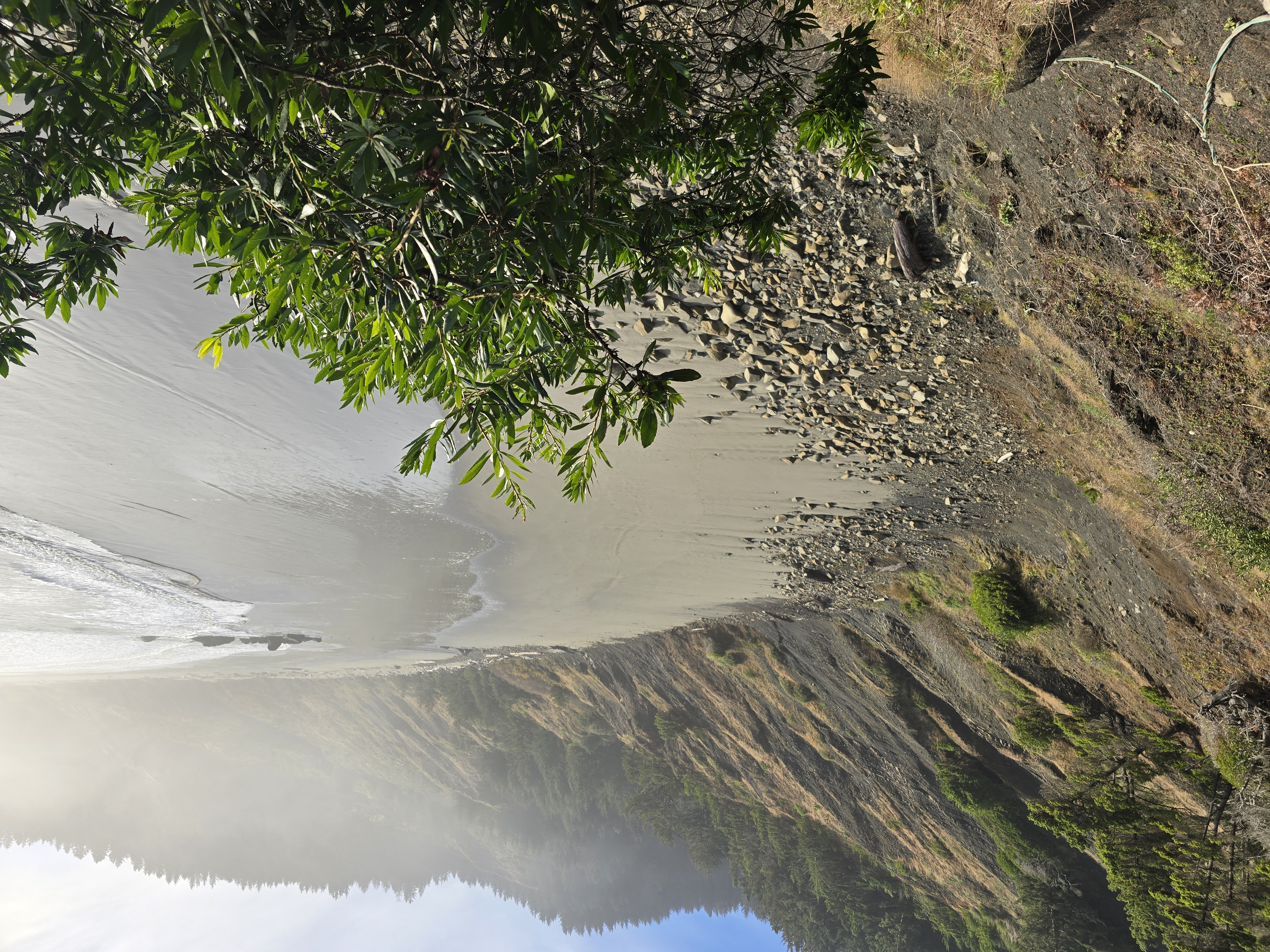
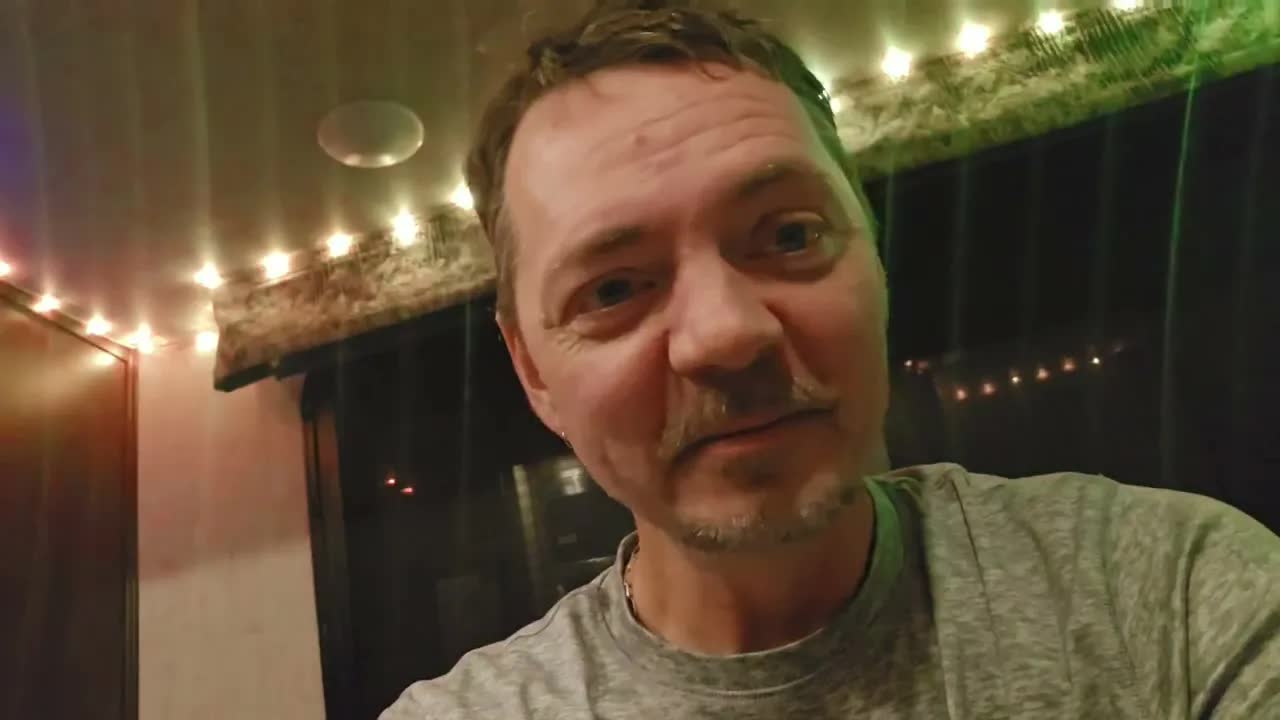
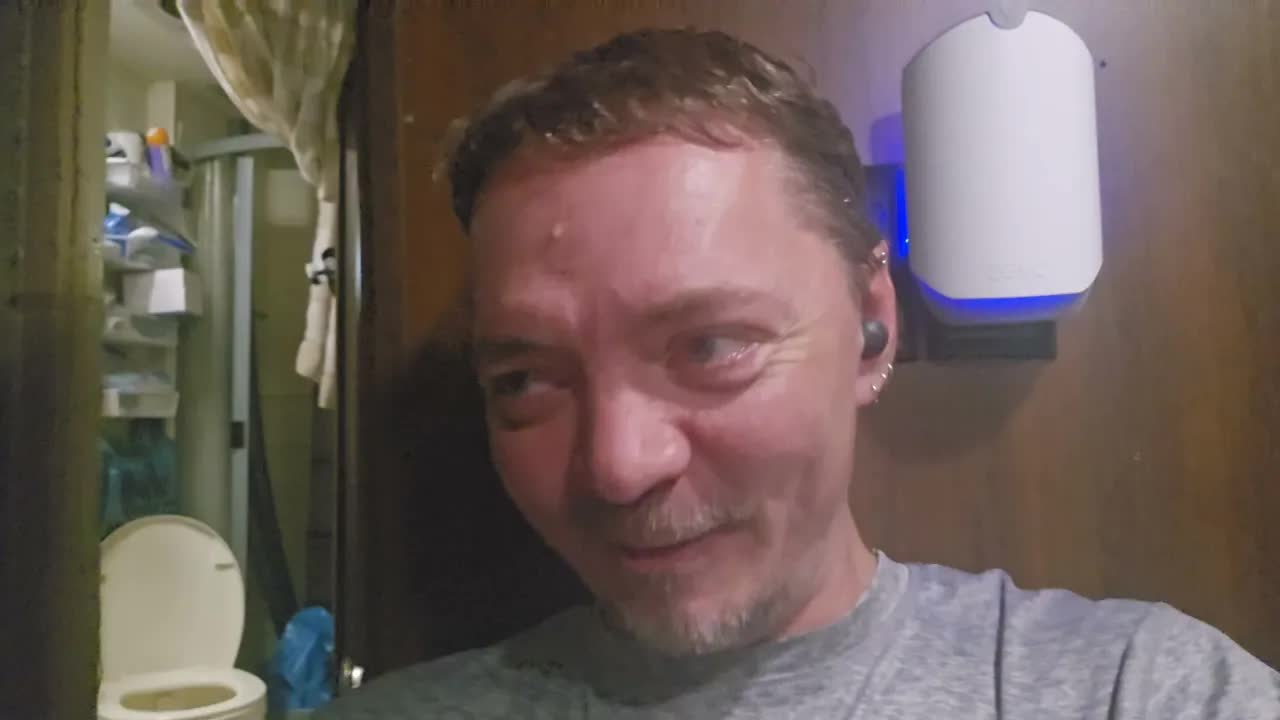
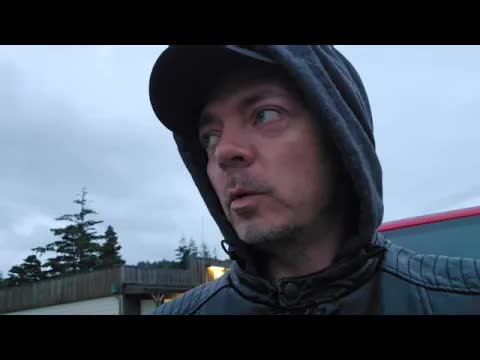
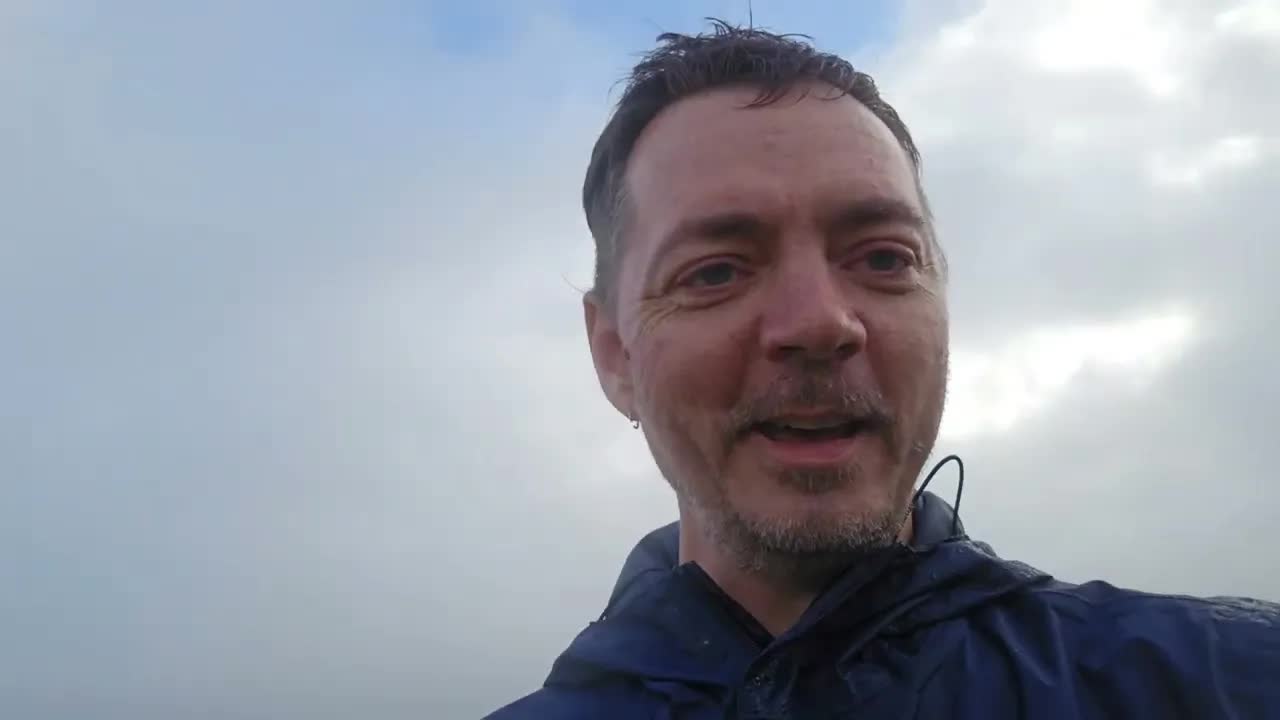
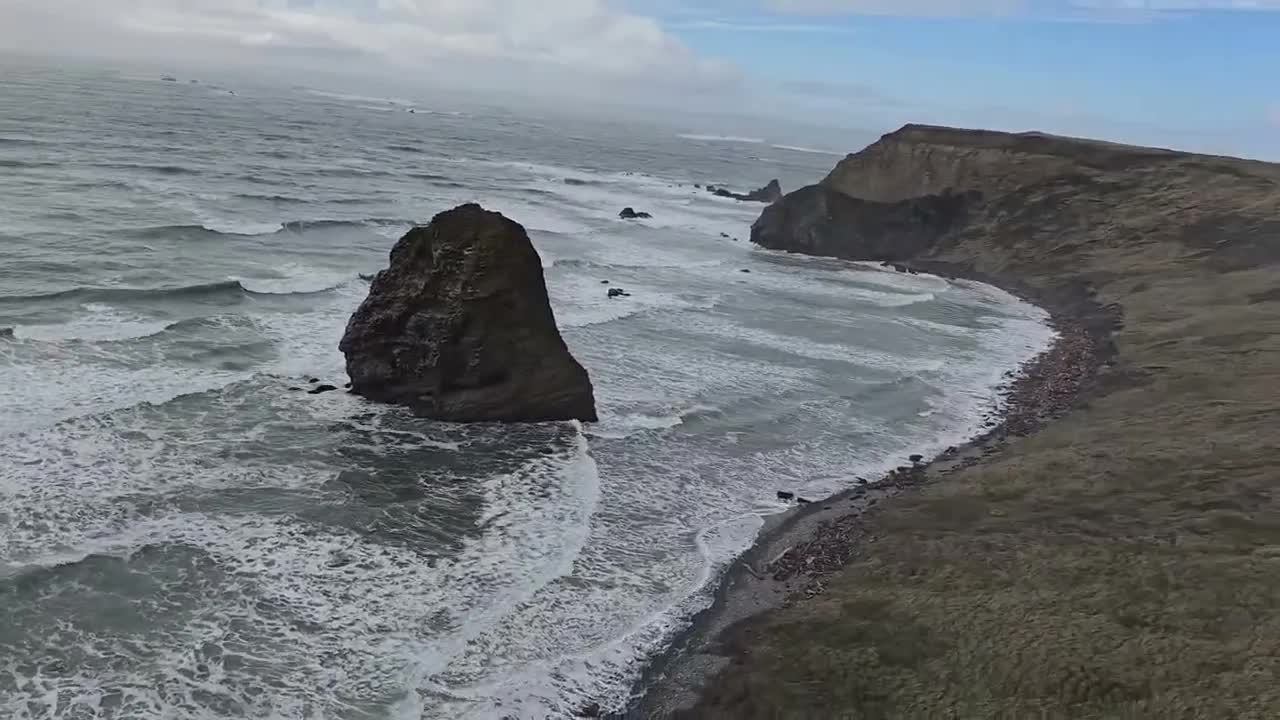
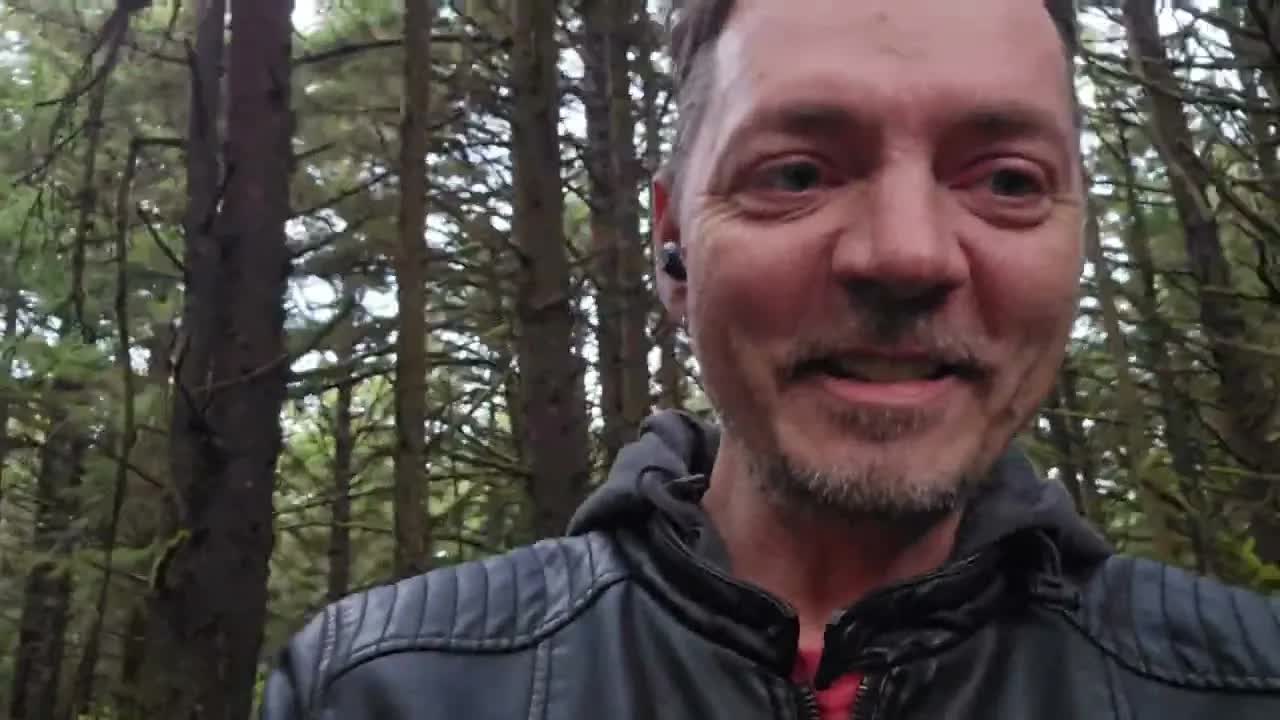
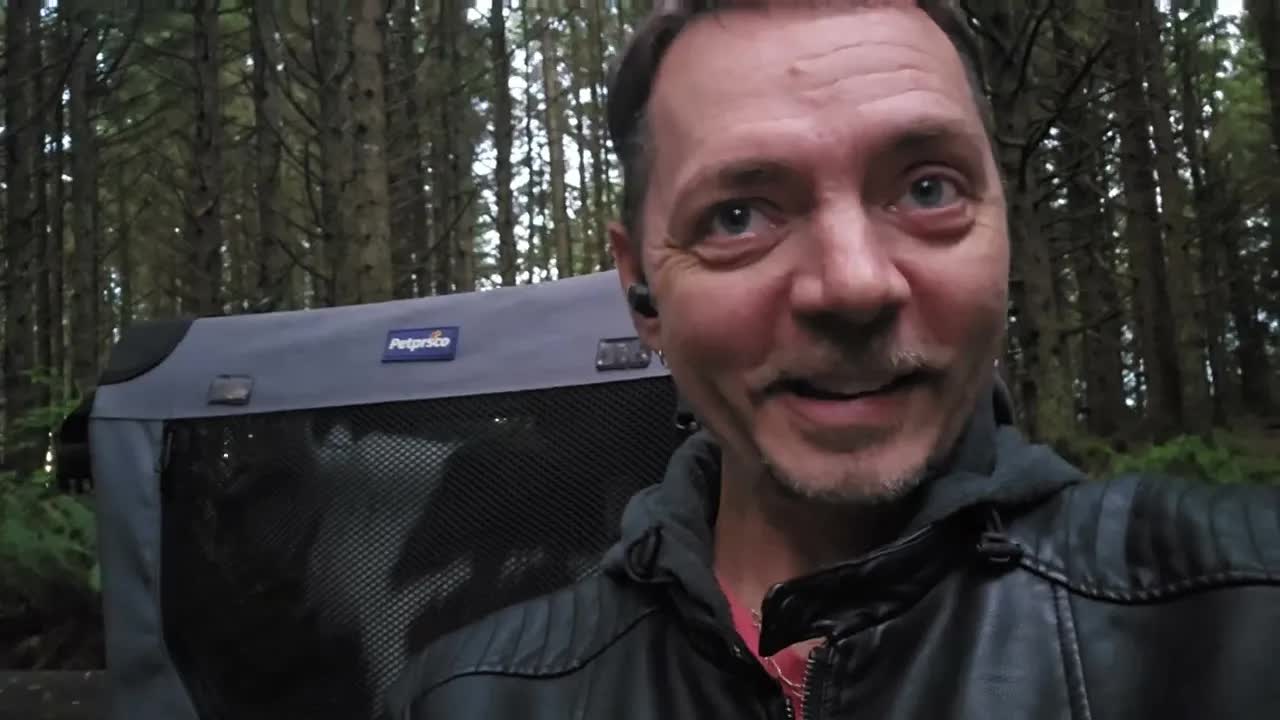
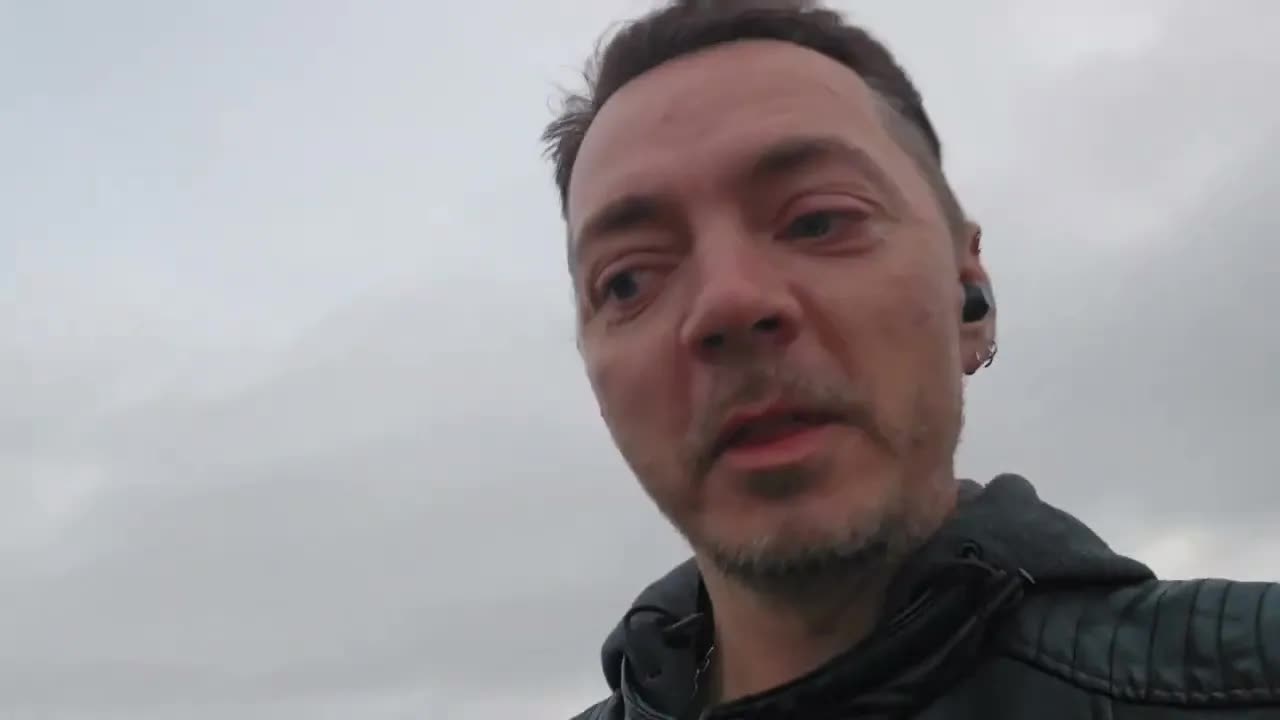
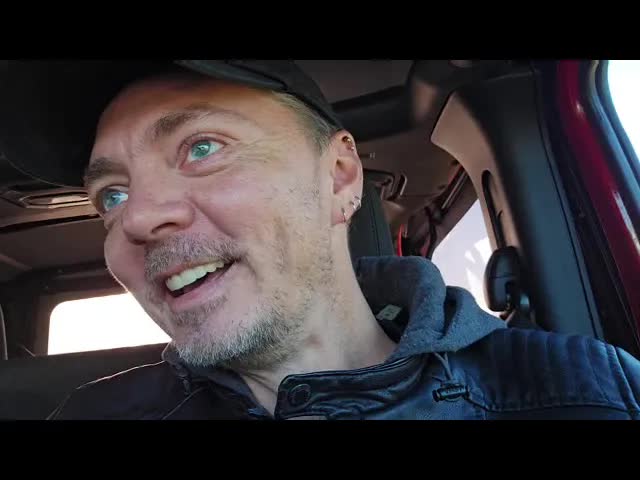
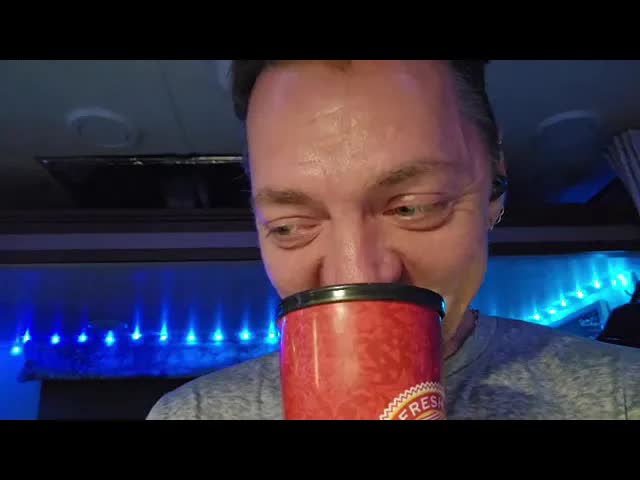
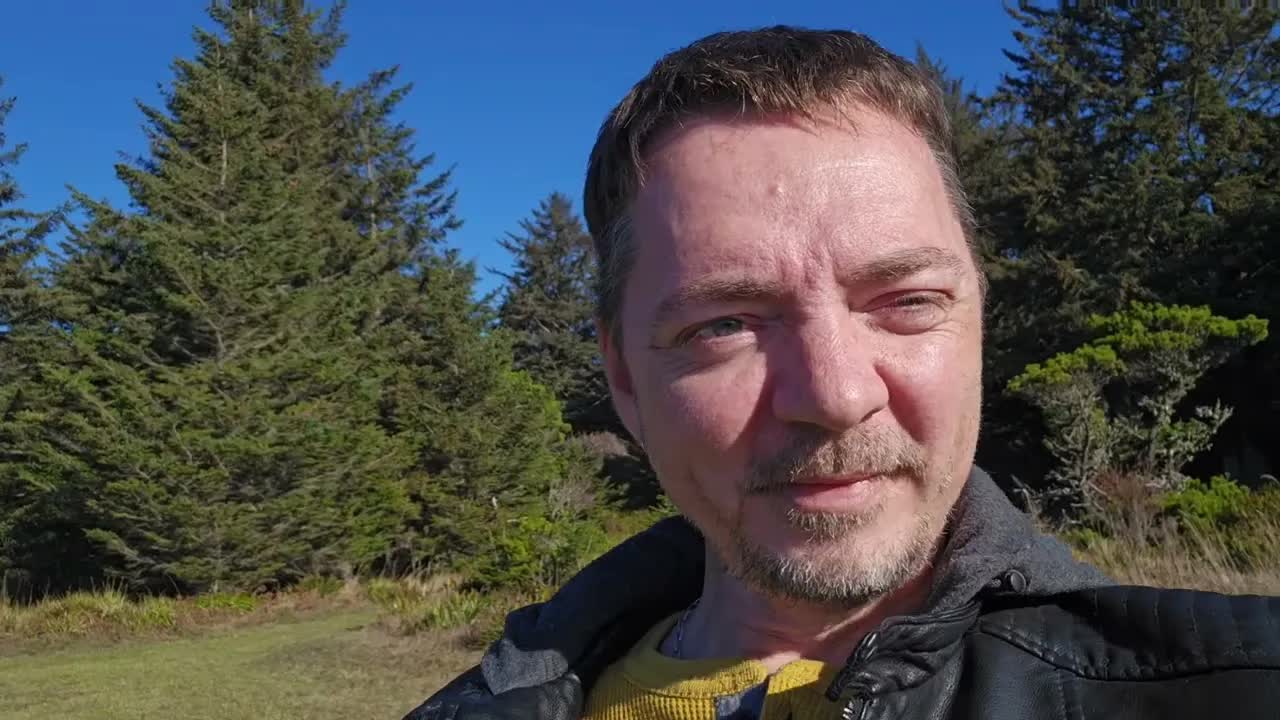
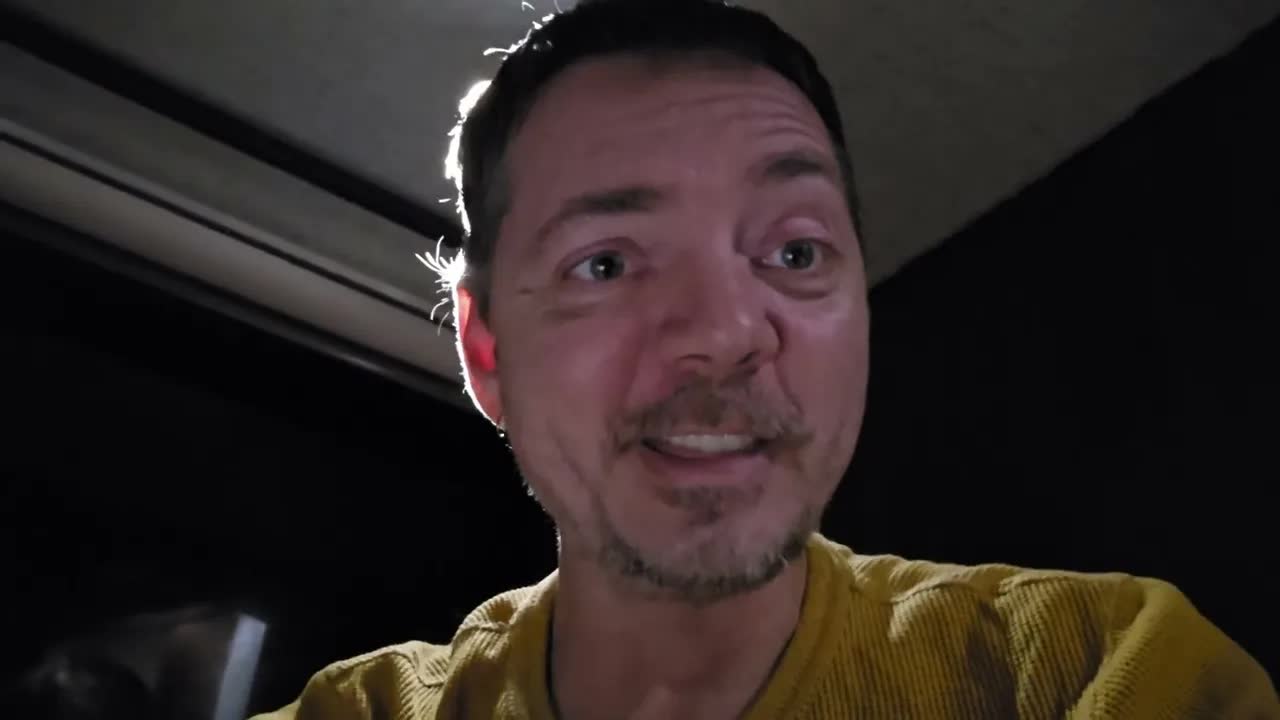
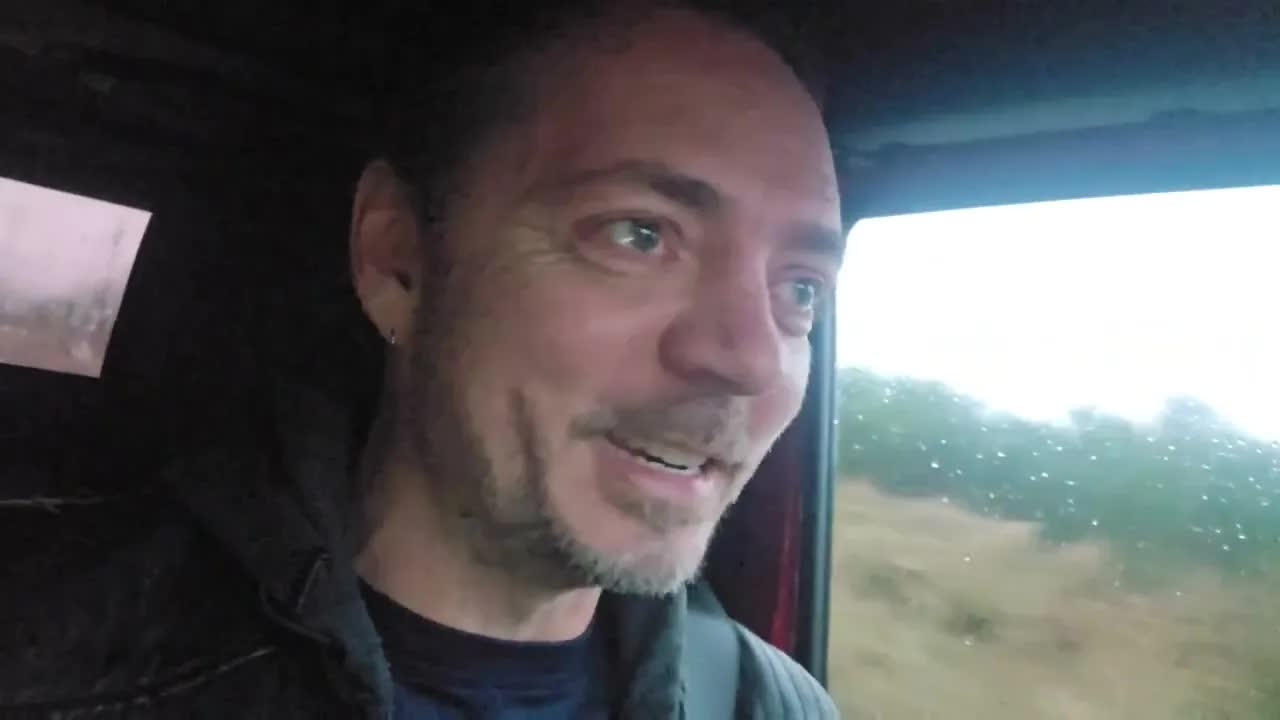
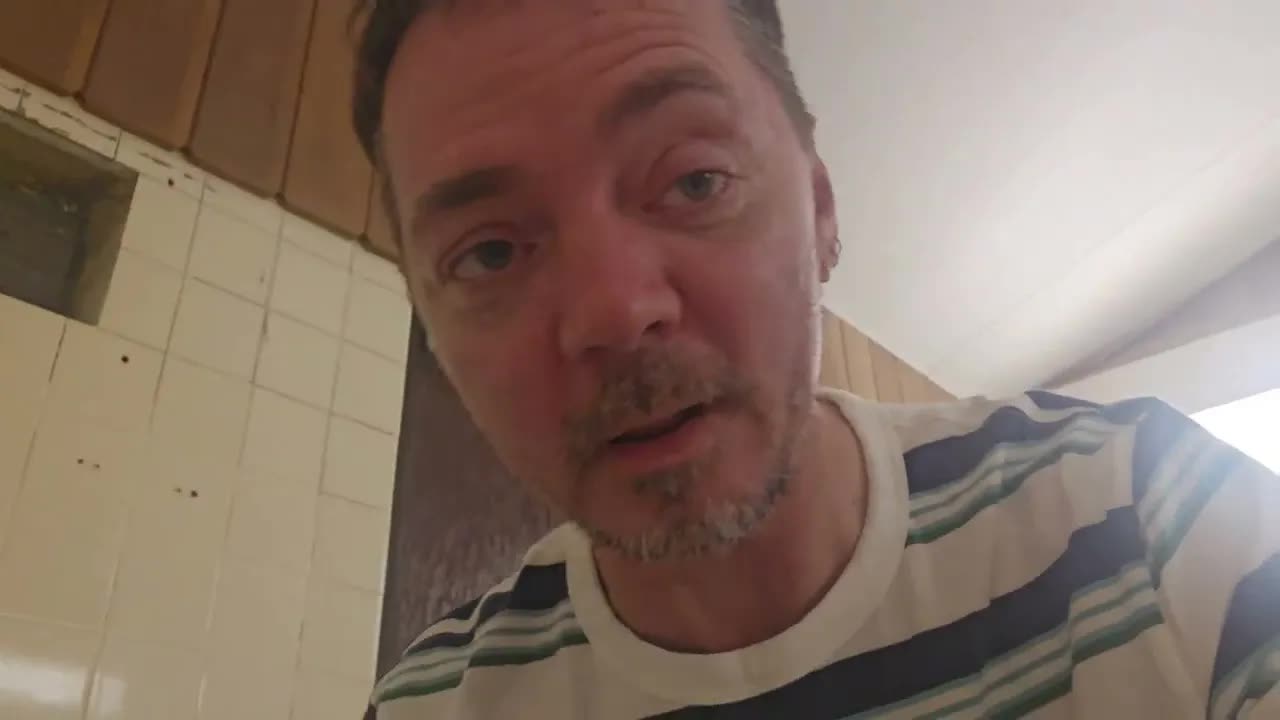
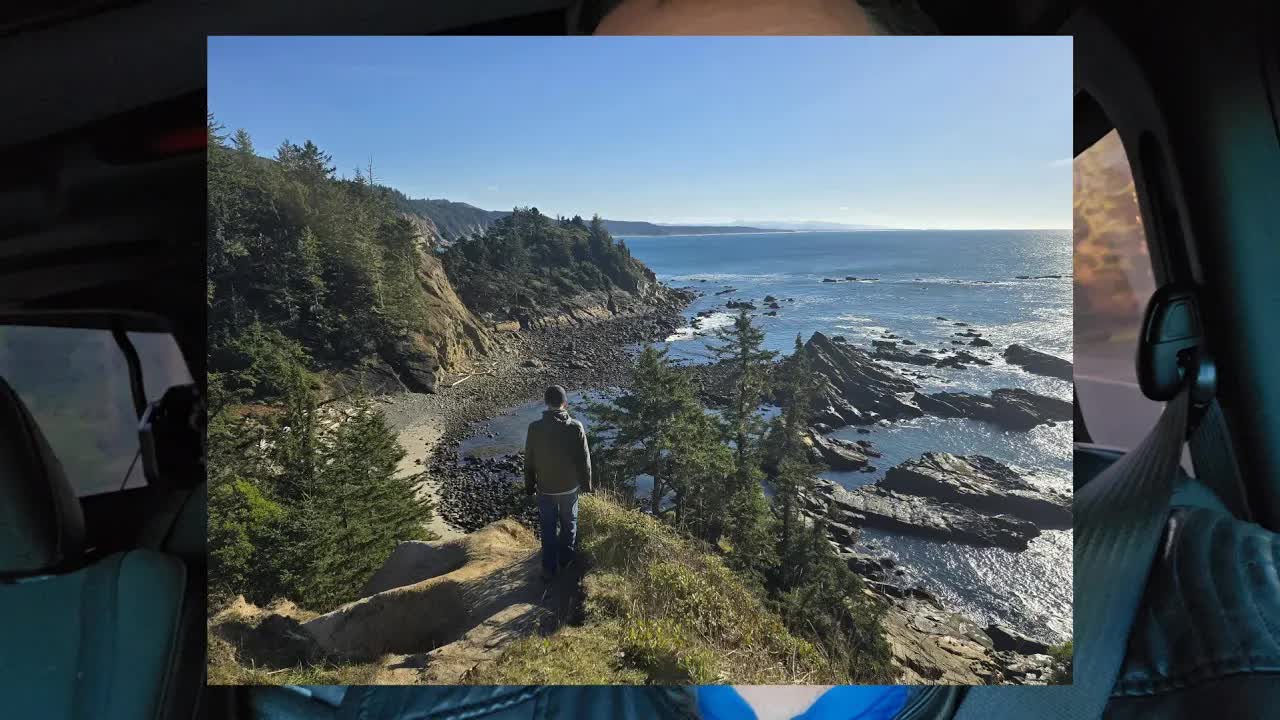
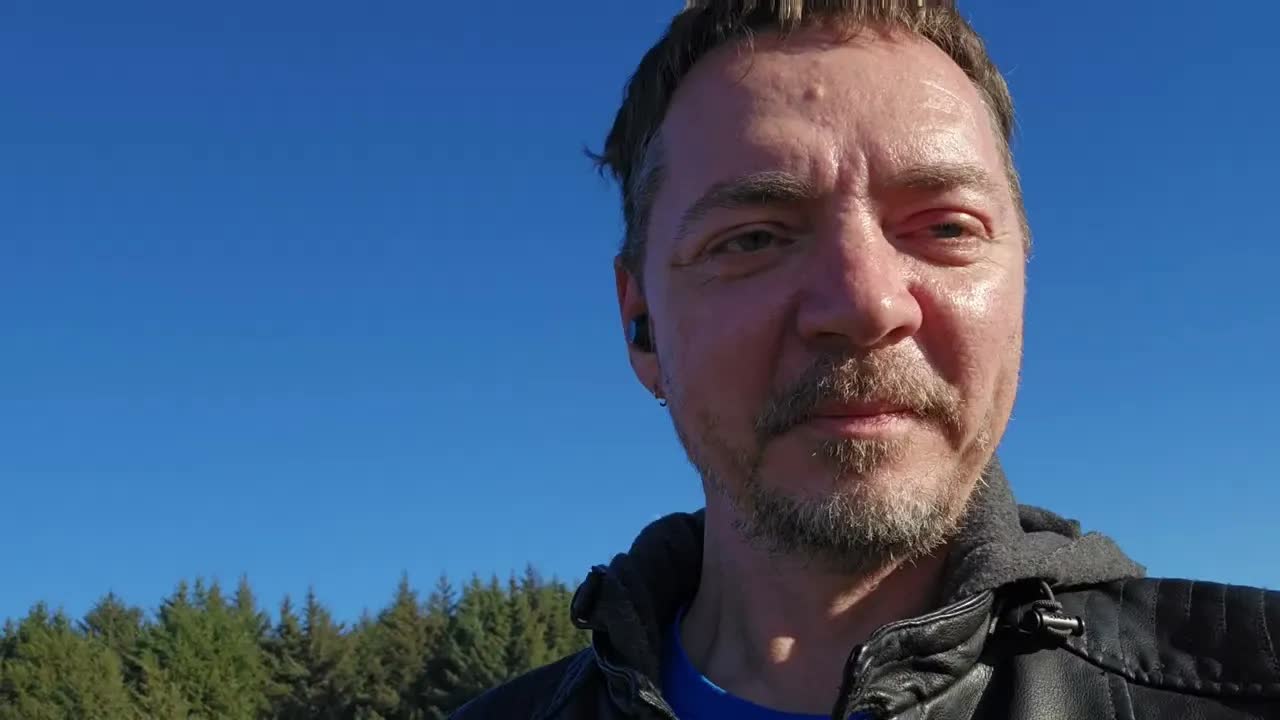
The camera came on by itself, and rswfire let it. Morning at Cape Lookout, the last of fourteen days, and behind him Bailey moved through the frame the way cats do — incidental, sovereign, unbothered. He greeted the lens like an old collaborator. He said he liked seeing himself on camera, said he thought he was amazing, and then he dispatched any judgment that might have followed before it could arrive. Earlier he had taken a clipper with no attachment to a mole on his face, because hair had come out of it and that would not stand. Not a perfect solution — the tool wasn't built for it — but out here the tools you have are the tools you use, and something better would have to be figured out later. This is just how you live out here, he said.
The morning's inventory ran through his hands as he talked. Bailey needed his flea treatment; rswfire had been forgetting, and the cat was already outside. He considered the leash, considered the collar, looked at the wet ground left by a run of storms and decided against it — not today, buddy. There had been a stretch where he thought about putting the cat on an airplane, sending him back to his mother, and that thought had come and gone. He liked having his cat with him. He hadn't showered yesterday, was still in the same shirt, and he named both facts without apology. The showers were downhill and they were a production, and they were shared, and shared showers meant carrying a pocket knife, because straight men believed things about gay men that gay men have to plan around. He stated it as fact, not grievance.
Two weeks at the cape had been wonderful — the ocean, the storms, all of it. He had meant this to be his base camp, the place he came back to. Then there was the man he'd met, fun until it wasn't, and now the return was in question. He was careful about what the problem actually was: not personal safety, he could take care of himself, and if the man did something there would be a clean through line straight to the police. The problem was navigation. He turned it over once, said he didn't know how to handle it — and then he did. He had cameras. He'd put the cameras back up. There's always a solution, what am I thinking. The whole detour took under a minute.
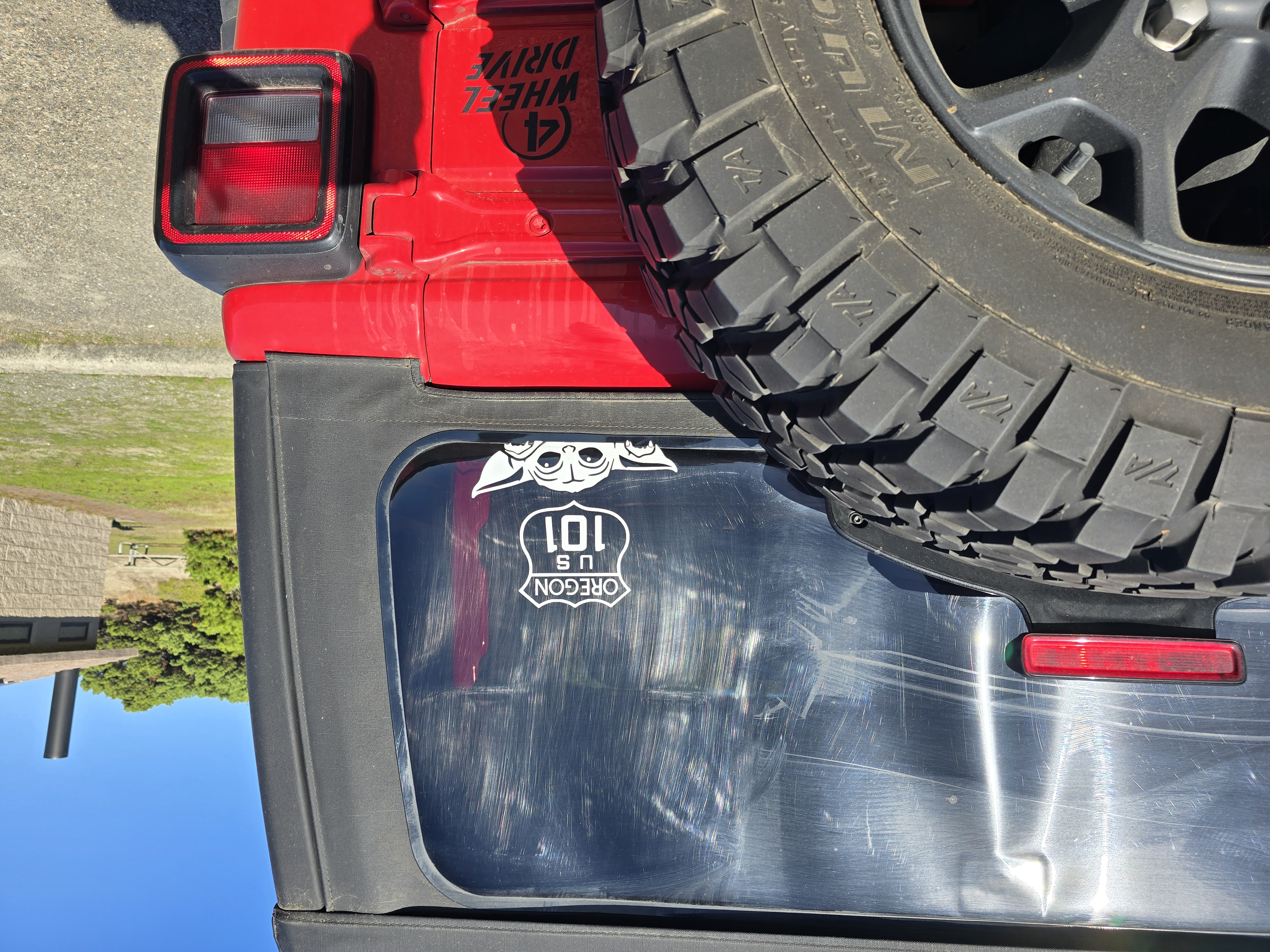
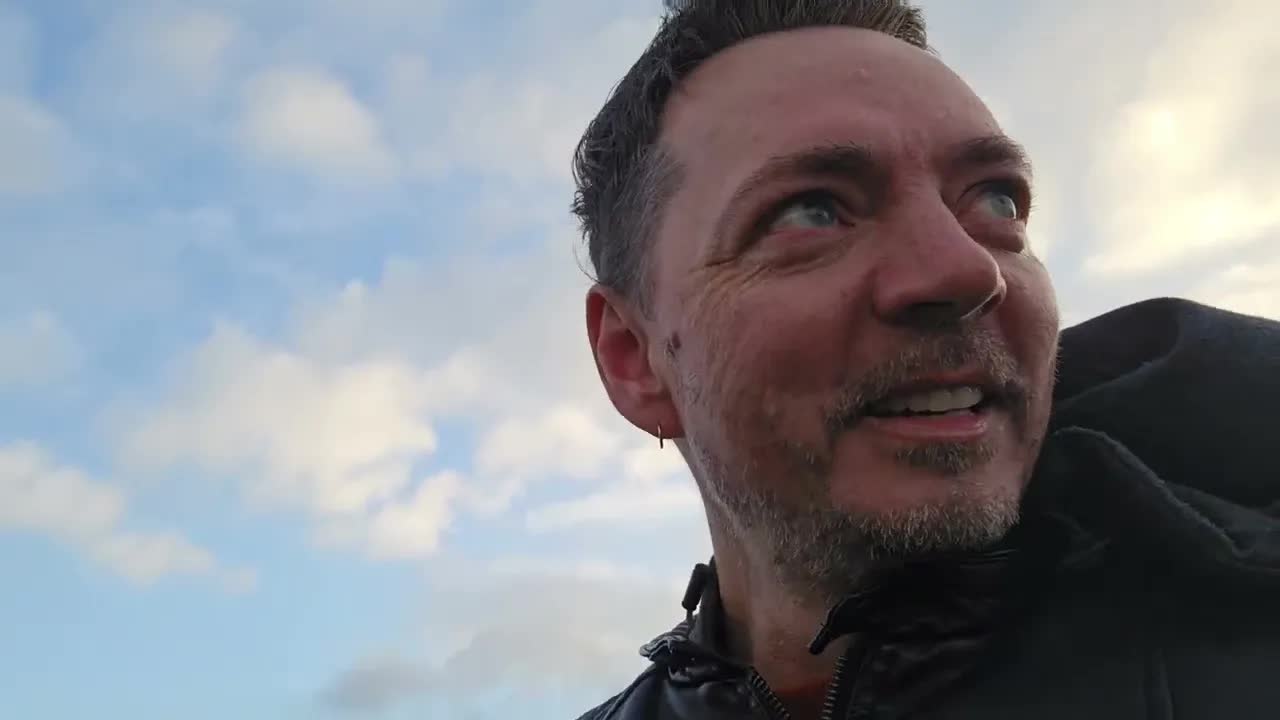
He didn't know where he'd be the next day. Less than a dollar in his bank accounts, literally. The music cut out mid-sentence and he restarted it. He'd end up on the side of a road somewhere on the 101, and he was okay with that, because — and here the register lifted, the wind audible in the trees swinging behind him — that was the life he wanted. The ocean, the highway, the towns strung along it. There were no words for it, he said, and then spent a while finding some anyway. He wanted to be boondocking up and down this coast. He just had so much to learn before doing it well.
He listed what he'd have to learn against. The house batteries were crap and he knew it. A component in the back was malfunctioning, leaving lights on, and lights drew power, and power off-grid was finite in a way it wasn't at a campground pedestal. He had an inverter now, still boxed in principle — bought, unused, unset-up. He named each of these plainly and then set them down: I'll just navigate whatever comes, that's what I do. Work was returning too, the same client of ten years, a man he called amazing. There had been moments of doubt, and he located those in himself rather than in the arrangement — the trust had held, so he hadn't panicked.
Then the correction. He was transcribing these videos and running them through AI, using it as a place to start a conversation, and something it said had prompted him to clarify his position. He laid it out: he had no money, none; he was owed money by clients; that was the reality, he guessed — and he stopped himself mid-word. I just said "I guess." We talked about this yesterday. I'm not hedging, I'm not doing that anymore. I don't guess. I know this. I am owed money. The client might not have it in time. That meant a road. And the road meant practice at the exact thing he was trying to learn, in the exact place he wanted to be, with a whole community out there whose unspoken rules and good spots he didn't know yet. That was how he learned. Life throws something, he rolls with it, he learns from it.
He noticed the wind again and wondered aloud if the microphone was catching it. He was moving fast, aware he was moving fast — this feels chaotic to you, but in my world, not chaotic at all. His core muscles were still healing, so he was trying to stay chill, though he knew he'd end up over at the edge looking at the ocean, because he always did. The mood was playful and he said so twice; he had playful energy and no one to spend it on. What he needed, he'd decided that morning, was a man in his mid-thirties or early forties, somewhere near his own forty-seven. That was the energy.
He closed with an assignment, handed back through the lens to whoever was watching. He was nervous about tomorrow. He was still going to do it. He was going to lean into it. What are you nervous about — can you lean into it also?