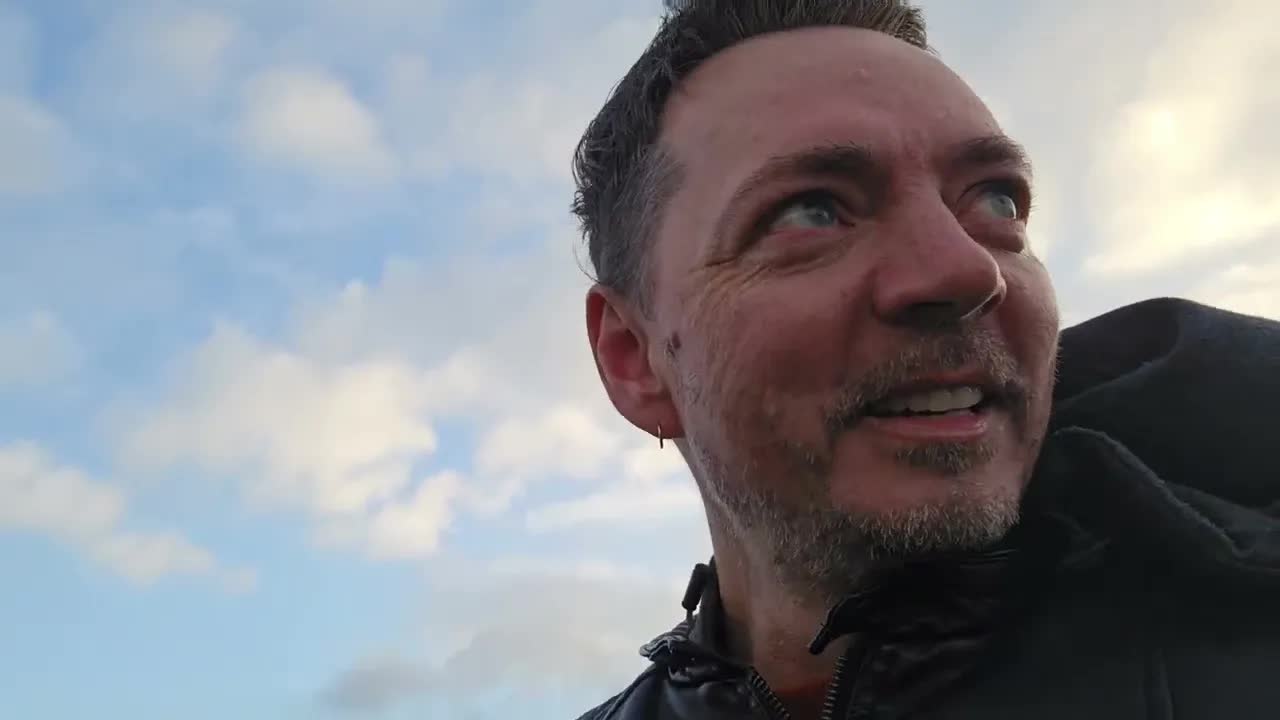

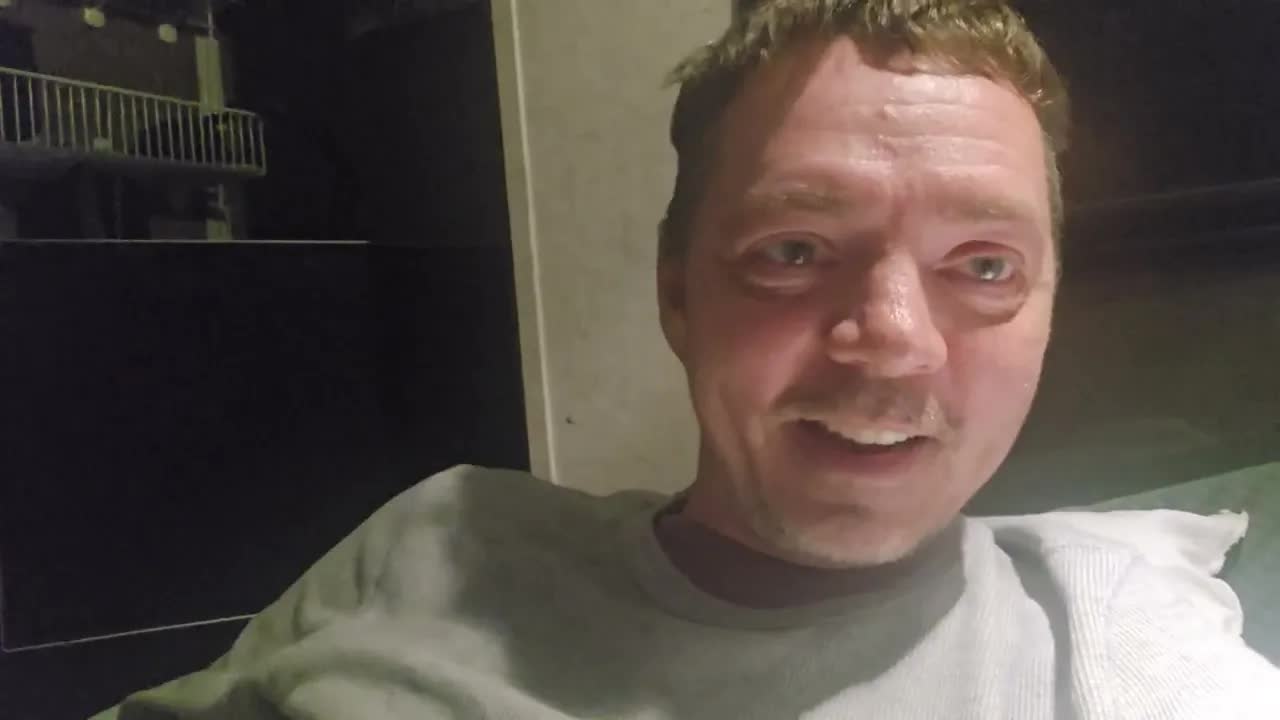
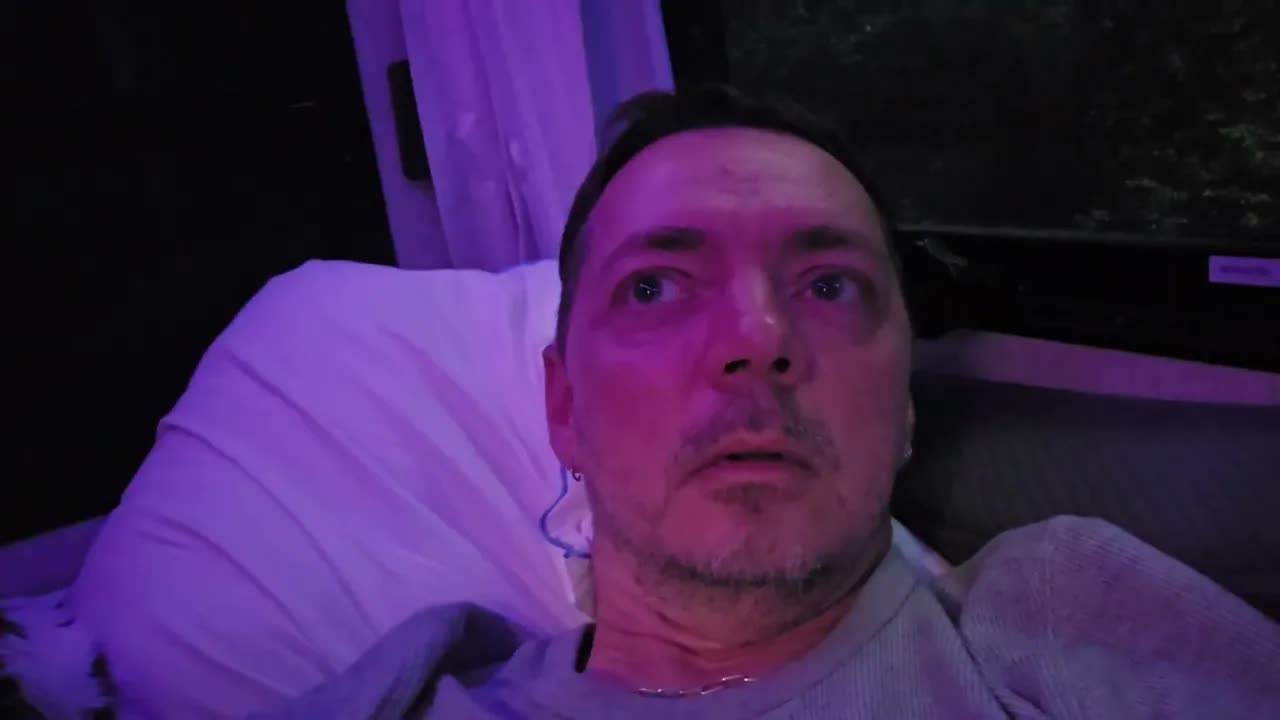
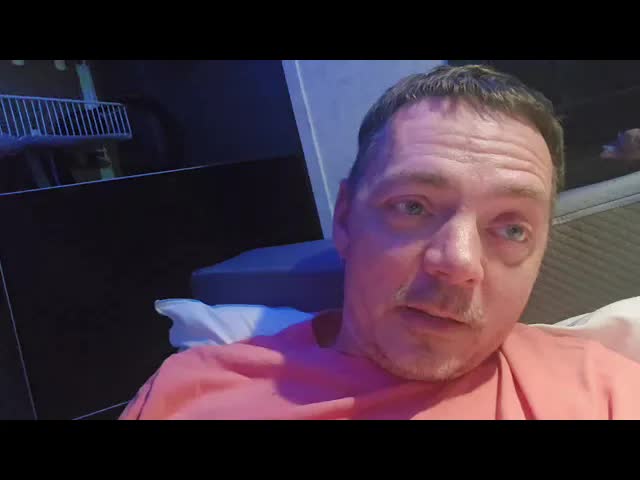
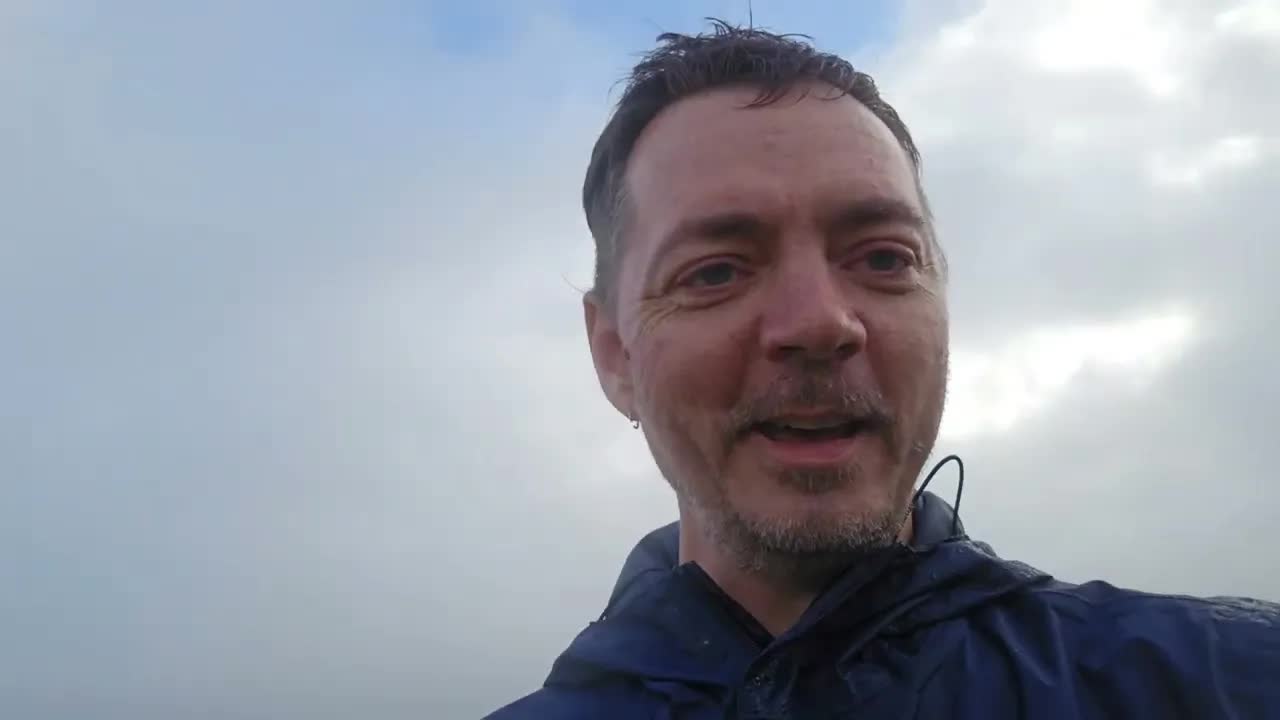
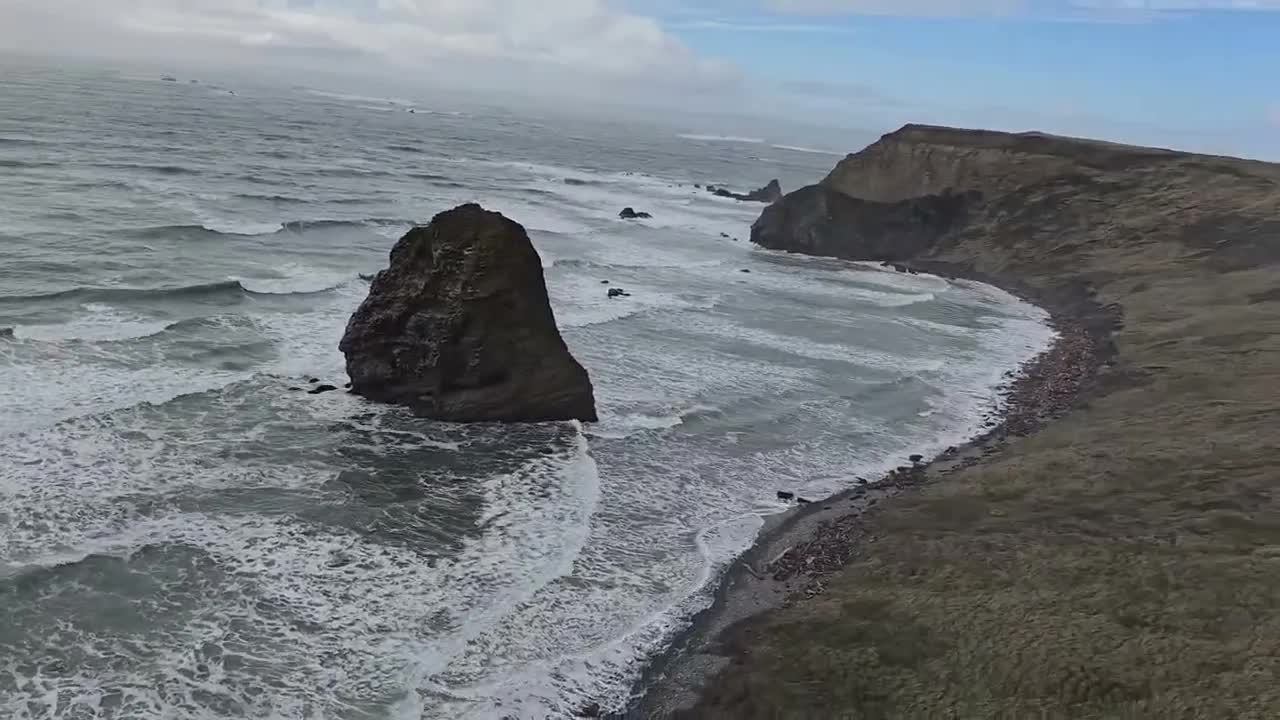
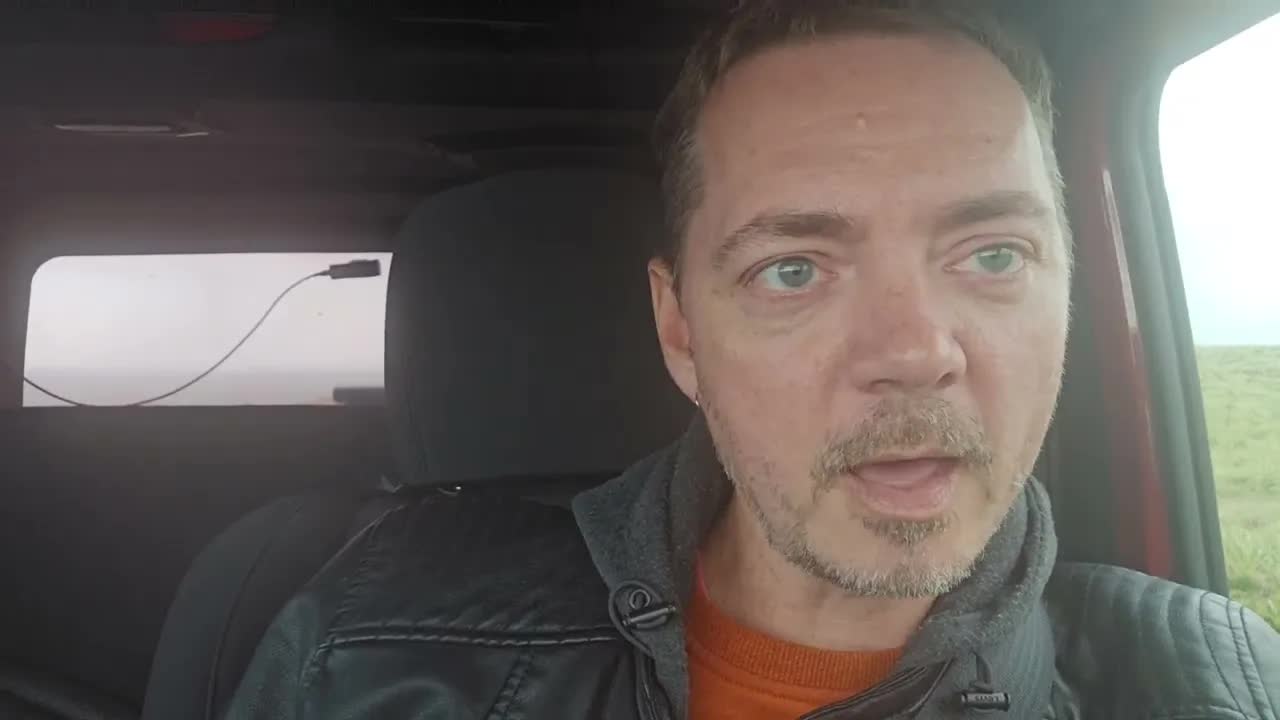
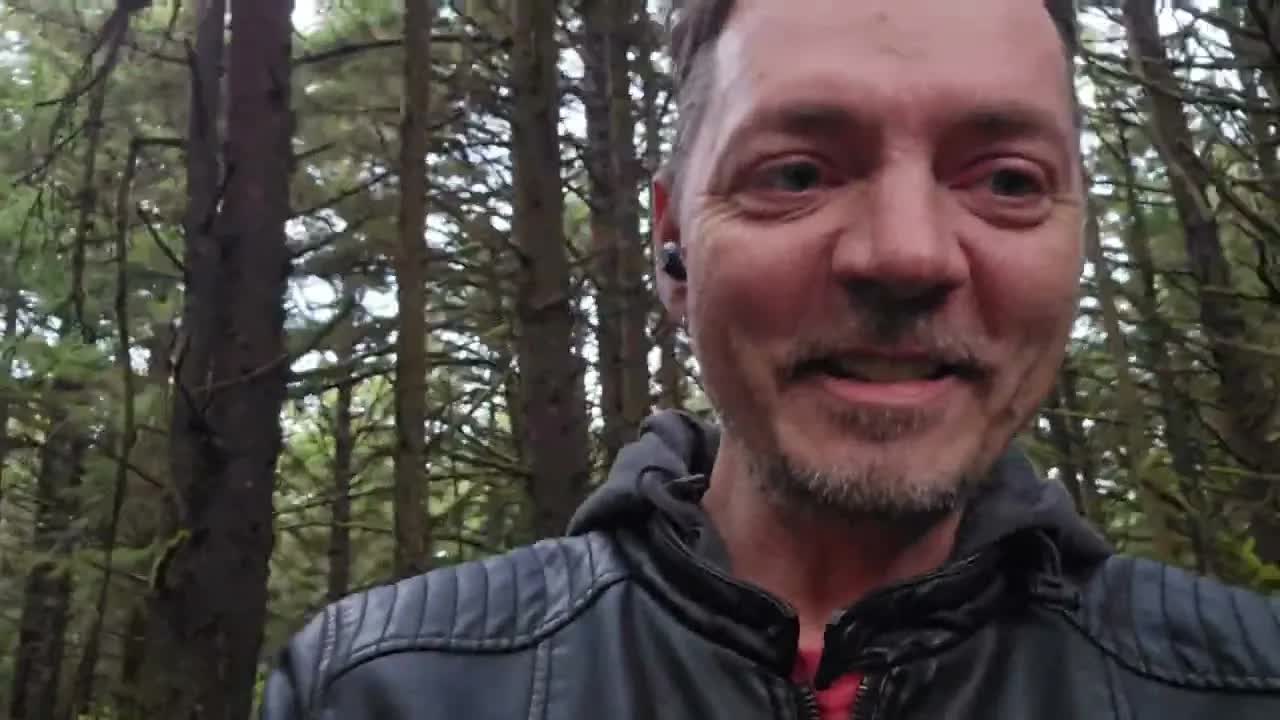
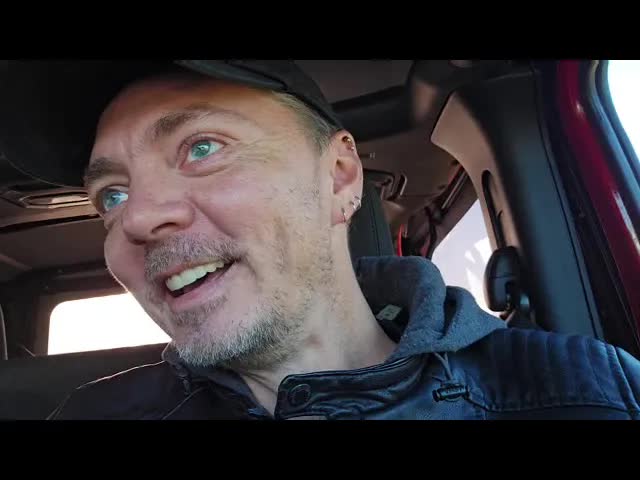
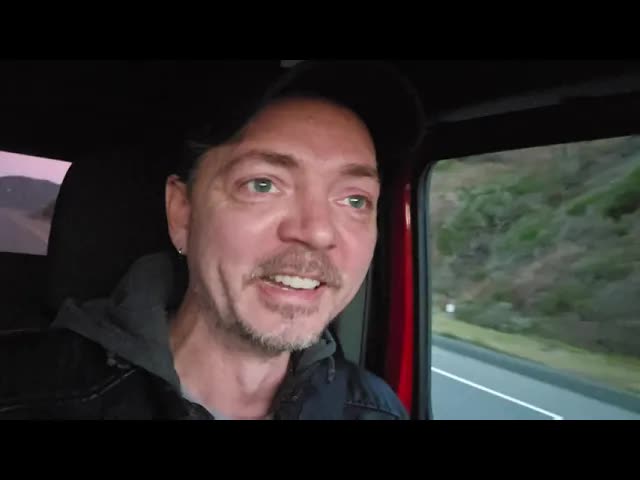
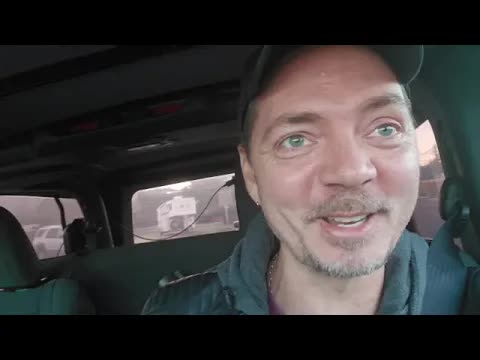
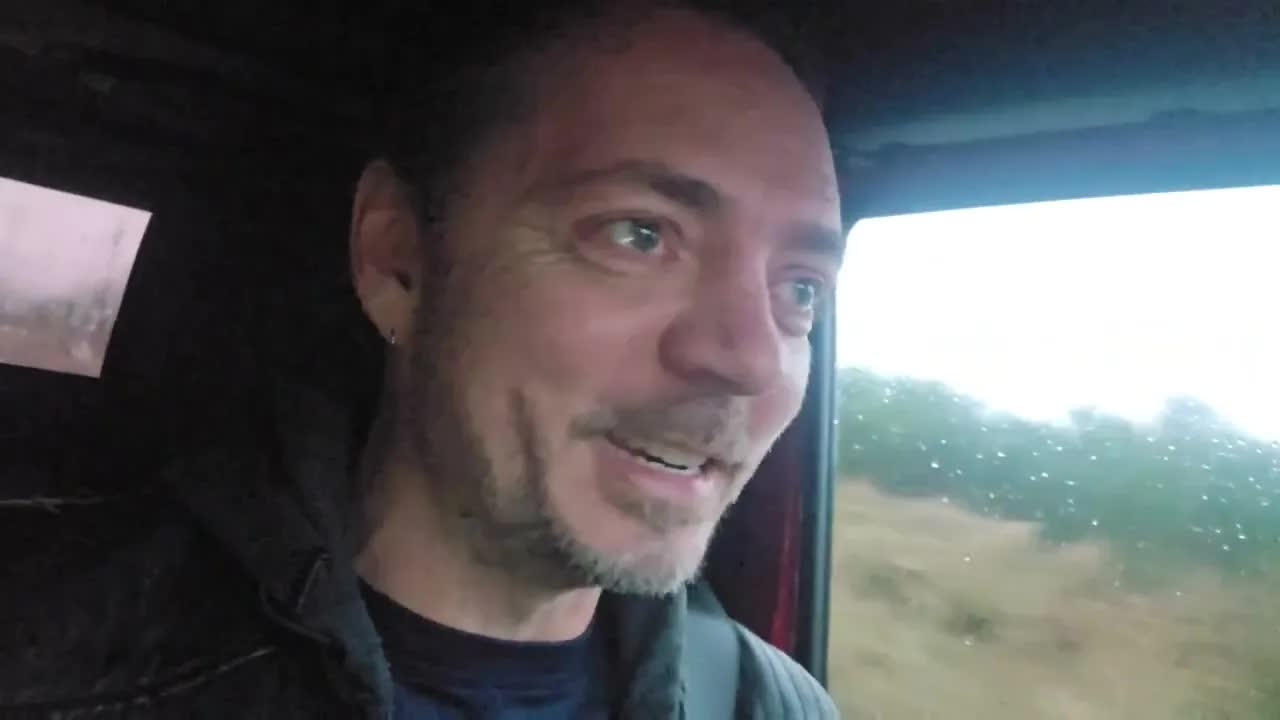
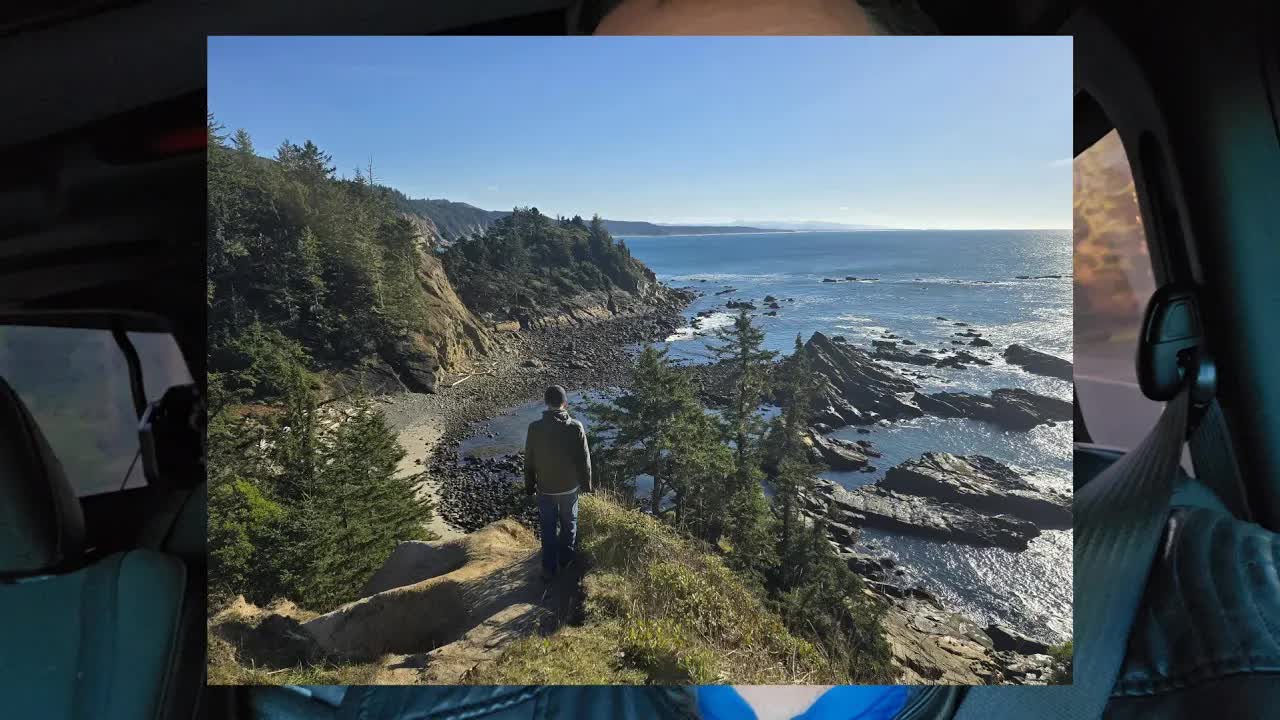
Recording on Emotional Integration at Cape Blanco

Failed to load video
Chapters
Transcript
[0:01] okay let's do this so I'm sitting here
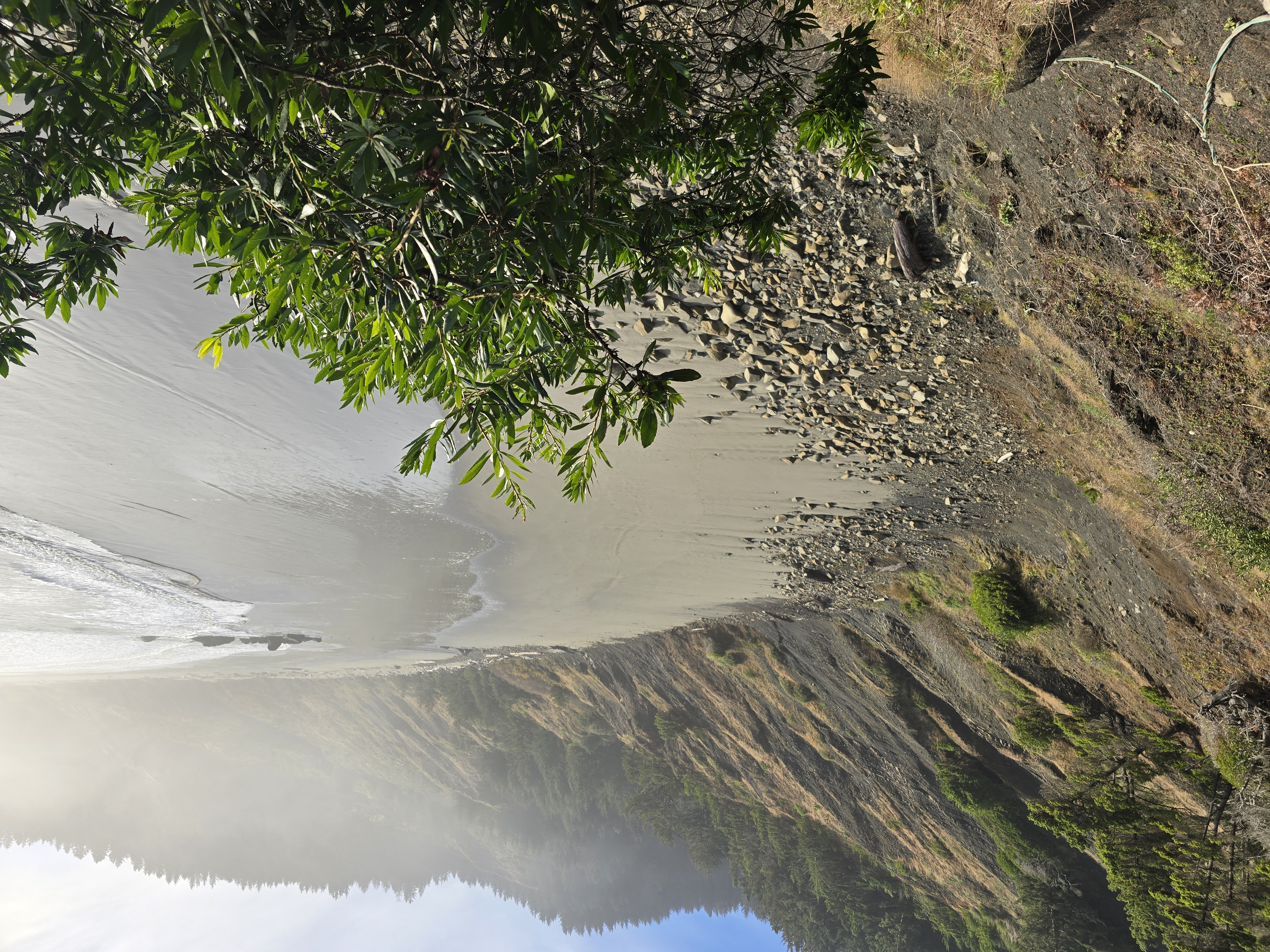
[0:05] on Cape Blanco right next to the
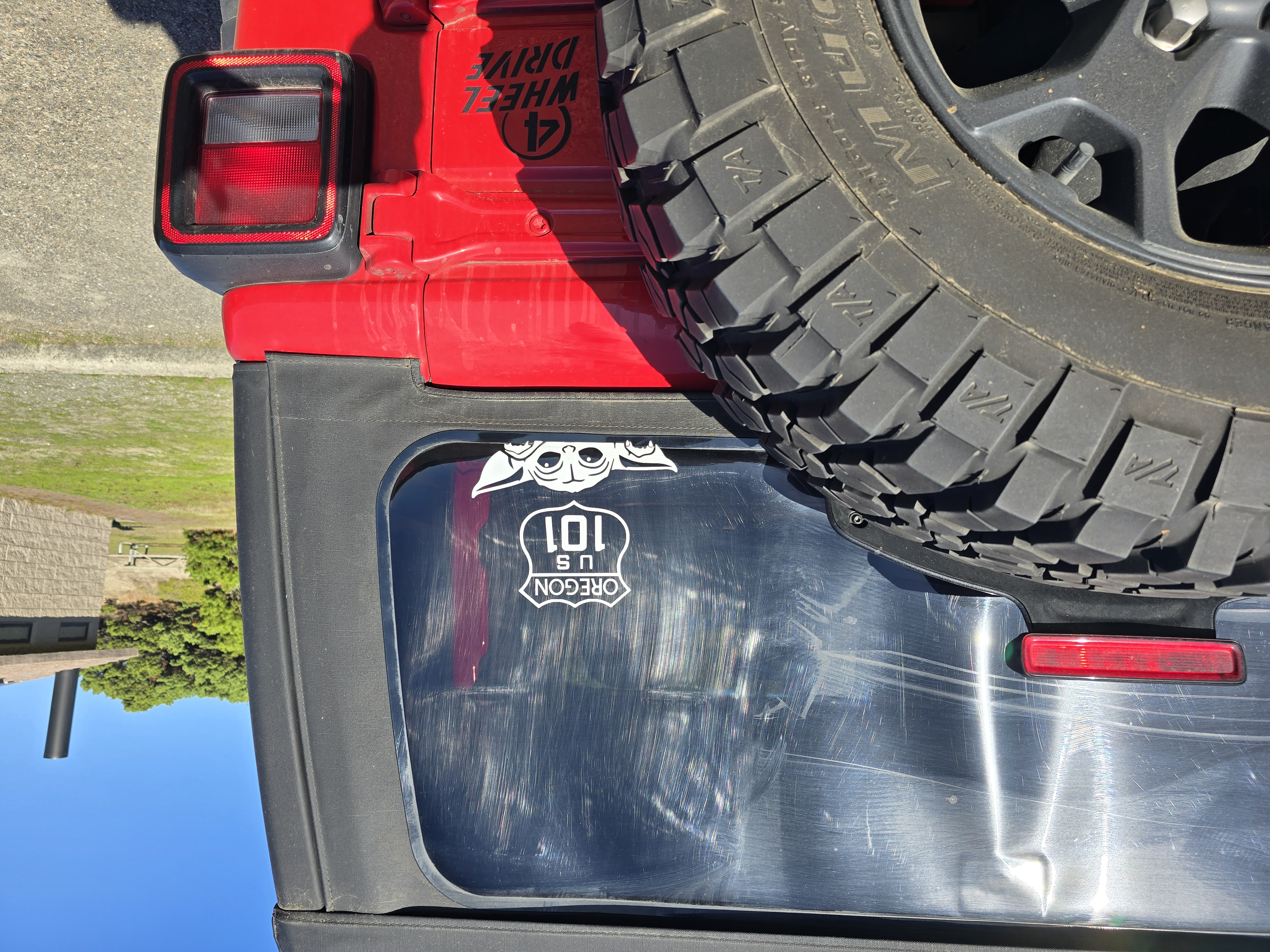
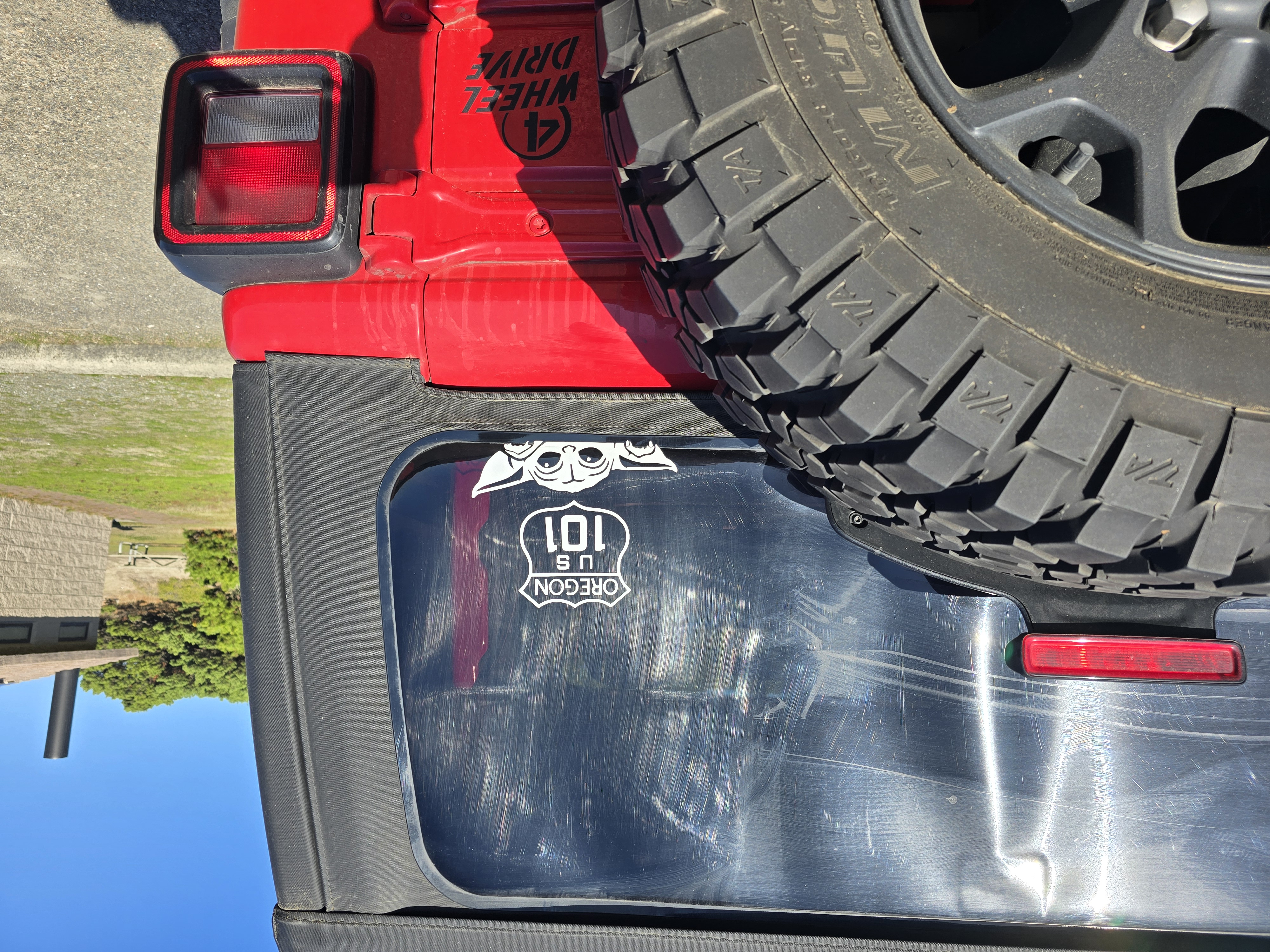
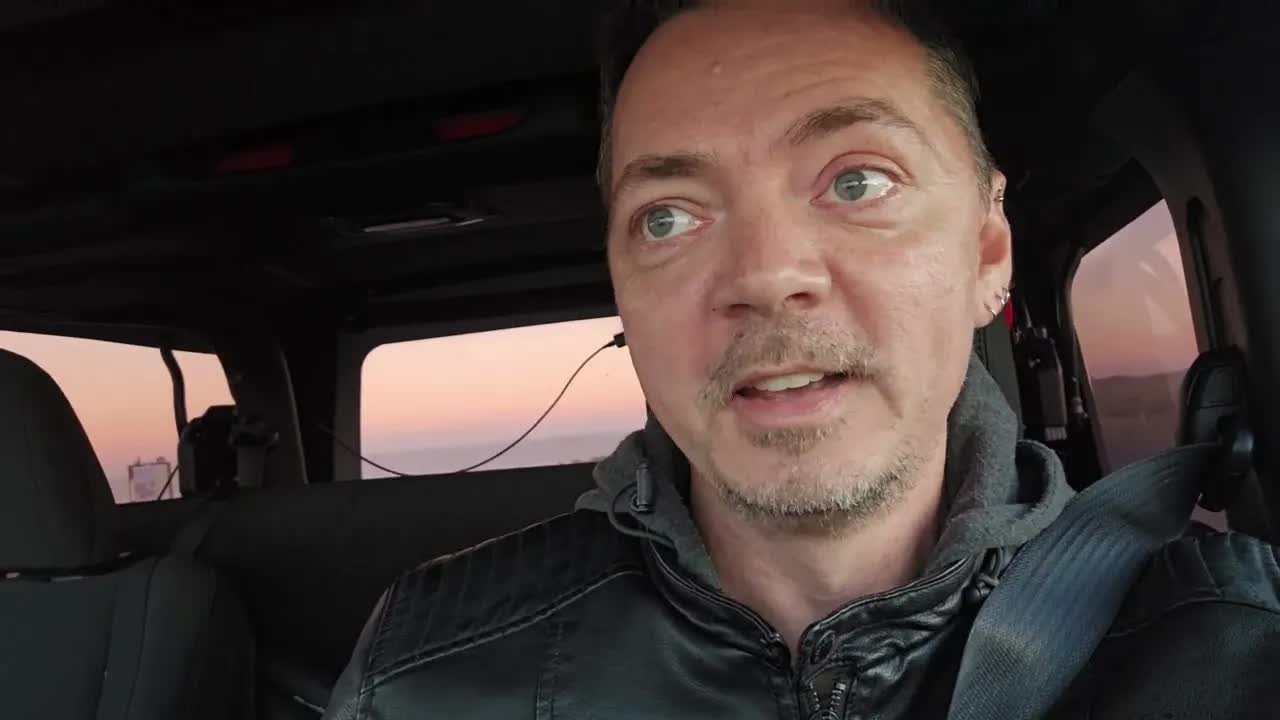
[0:07] lighthouse over there sitting in my Jeep
[0:10] because this is where I have good
[0:11] internet right here this spot I was
[0:13] sitting on this rock over there
[0:15] yesterday and I was like oh man my
[0:17] video's uploading fast right here so
[0:19] we're right here I'm uploading my video
[0:21] from
[0:22] earlier and I was just sitting there
[0:24] chatting with AI cuz that's what I do
[0:26] right and we were talking about emotions
[0:29] and compartmentalization fragmentation
[0:31] all that stuff I love to talk about this
[0:33] stuff cuz I'm just always always
[0:36] exploring
[0:37] it and he talked about how people tend
[0:41] to think that emotions experiencing
[0:46] emotion will cause you to lose control
[0:49] and I was like that's not right because
[0:51] actually you have more control when
[0:53] you're like me when you're integrated
[0:55] when you integrate your emotions when
[0:56] you feel them when you just feel them I
[0:58] mean don't you don't have to adopt my
[0:59] vocab
[1:02] but I feel all the emotions all the time
[1:06] you guys have been watching me for8
[1:08] months now and you've seen every emotion
[1:11] a human can have I would guess by now
[1:15] and you see you see them pass through me
[1:18] right I mean they're just momentary
[1:22] like and it's not even just that it's
[1:24] not like I'm enduring them this is
[1:25] important I'm not just enduring my
[1:27] emotions they're they wisdom their
[1:29] knowledge their data points I'm feeling
[1:32] fear and I'm like okay this is telling
[1:33] me that I'm afraid to to go up this
[1:35] mountain so let's figure that out and we
[1:37] do don't
[1:39] we uh a man does something that scares
[1:42] the out of me in my my own my own
[1:44] RV you know in a small space and um I
[1:48] get angry because he doesn't acknowledge
[1:51] it he doesn't apologize for it that's a
[1:54] bounding anger is a bounding I never
[1:56] lost control
[2:00] and just passed through me you
[2:03] know
[2:05] that's what I'm trying to tell you here
[2:07] is to just try to embrace your feelings
[2:09] try not putting them in boxes when you
[2:13] notice yourself starting to do that make
[2:16] a new choice and keep making that choice
[2:19] it might be a little bit hard cuz I
[2:22] can't remember I know how this started
[2:23] for me I back in 8th grade I
[2:26] remember listening to this song over and
[2:28] over um um I can't remember the name of
[2:31] the band now but it was a woman singer
[2:32] and it was the'80s okay and um just feel
[2:36] feeling sad I don't remember why but I
[2:38] had kind of a sad childhood sort of like
[2:40] cuz I felt very alone even though I
[2:42] never really was I think it's cuz I knew
[2:44] I was different I just always knew I was
[2:46] different
[2:50] and for some reason whenever I think
[2:53] about this topic my mind kind of goes
[2:55] there because I think maybe that's where
[2:57] it started
[2:58] Maybe I made a choice back then that I
[3:01] wasn't going to suppress this I was
[3:02] going to feel
[3:04] it look at me now I am Sovereign
[3:09] incarnate
[3:11] and I can handle anything I can handle
[3:13] deep romance with a man and then have
[3:16] him fracture right in front of me deal
[3:19] with the fear from that because fear is
[3:21] another signal right it's okay this is a
[3:23] problem we have to navigate this right
[3:25] now it it heightens
[3:27] everything and
[3:30] I get angry the next day because this
[3:32] man's not taking accountability for
[3:35] it day after that I'm sitting up here on
[3:38] Cape
[3:39] wono with the man that I just met you
[3:42] know in the parking lot I walked up here
[3:44] and like I immediately started walking
[3:46] toward this man because if you're up
[3:47] here during this
[3:48] storm we're about to have some fun and
[3:51] he did the same thing it was like the
[3:53] most natural cool I I it
[3:56] was just amazing honestly and I get up
[4:00] there and he tells me the wind speed
[4:01] that's the first thing this man says and
[4:04] he pulls out his little device thing I
[4:06] forget what it's called damn that's a
[4:08] hot guy right there wow oh my God Joy
[4:11] passion you
[4:13] know come on
[4:17] okay oh he's getting out I got I just
[4:20] got watch this man's
[4:24] beautiful who are you where are you
[4:28] going oh my God
[4:30] he's opening the gate who are
[4:38] you oh man that man is
[4:46] beautiful oh my God so anyways
[4:50] um completely lost my train of thought
[4:53] you get the point just feel your
[4:55] feelings and go about your day it's a
[4:56] wonderful thing
Photos · Nov 3, 2024
Nov 3, 2024
Photos · Nov 5, 2024
Nov 5, 2024
Photos · Nov 5, 2024
Nov 5, 2024
Photos · Nov 5, 2024
Nov 5, 2024
Photos · Nov 6, 2024
Nov 6, 2024
Photos · Nov 6, 2024
Nov 6, 2024
Photos · Nov 7, 2024
Nov 7, 2024
Photos · Nov 7, 2024
Nov 7, 2024
17:07
Testing the Waters on Restarting YouTube
Nov 16, 2024
14:47
Recounting Cape Blanco Encounters and New Friendship
Nov 17, 2024
16:43
Ending a Connection, Relocating Ahead of Storm
Nov 19, 2024
6:56
Mapping Nomadic Romance and Energetic Intensity
Nov 20, 2024
5:36
Documenting the Night a Guest Was Removed
Nov 21, 2024
12:26
Answering Boondocking Question, Documenting Storm Damage
Nov 21, 2024
7:15
Tracing a Wet Brake Controller, Then Walking to the Lighthouse
Nov 21, 2024
2:59
Standing on the Cliff Edge, Naming Parking Lot People
Nov 21, 2024
7:01
Filming After Ocean Play at High Tide
Nov 21, 2024
13:28
Filming a Wind Storm on the Coast
Nov 22, 2024
4:58
Recording on Emotional Integration at Cape Blanco
Nov 22, 2024
8:45
Taking a Rest Weekend Before Monday Departure
Nov 23, 2024
5:11
Waiting on Cattle, Driving to Cape Edge
Nov 24, 2024
9:29
Clearing the Roof, Dropping Minimizing Language
Nov 24, 2024
8:21
Last Day at Cape, Planning Boondocking on 101
Nov 24, 2024
11:32
Preparing First Coastal Boondock at Pinned Pullout
Nov 25, 2024
12:42
Claiming Public Space on the Coast
Nov 26, 2024
15:43
Testing Power Systems and Relocating to Bandon
Nov 26, 2024
13:13
Pivoting to Humbug Mountain, Setting Comment Protocol
Nov 27, 2024
15:02
Recording Thanksgiving Night at Humbug Mountain
Nov 29, 2024
13:41
Driving South Coast, Weighing RV Loan Outcome
Nov 29, 2024
11:09
Breaking Camp for Cape Blanco, Resting Body
Dec 1, 2024
5:56
Recording from Cape Blanco After Missed Uploads
Dec 1, 2024
2:16
Morning Walk to Shower House, Rest Protocol
Dec 2, 2024
10:30
Resting Core Muscles at Cape Blanco, Discovering the Kettle
Dec 4, 2024
3:05
Grocery Run in Pajamas, RV Payment Deferred
Dec 4, 2024
37:15
Recounting the Oregon Journey From Bed Rest
Dec 5, 2024
6:58
Tracking Earthquake Alert and Tsunami Warning on Coast
Dec 5, 2024
3:50
Unhiding the Full Archive, Opening Chapter Seven
Dec 6, 2024
8:46
Driving to Store, Reviewing Memory and Body Signals
Dec 7, 2024
5:26
Counting Nine Days of Muscle Recovery
Dec 8, 2024
4:13
Recording Coastal Anticipation and Connection Practice
Dec 9, 2024
3:45
Documenting Nine Months of Transformation and Reception
Dec 9, 2024
PUBLIC
November 22, 2024 rswfire PUBLISHED
Temp 0.40
Density 0.50
Energetic Quality
warm and kinetic
Journey Phase
integrating
Directional Vector
toward emotional integration as operational capacity
Narrative

The spot had been found the day before, and not by looking for it. rswfire had been sitting on a rock at Cape Blanco with a video uploading, and the upload had moved fast — fast enough that he registered the location as infrastructure rather than scenery. So the next day he brought the Jeep to that exact position, parked it, and let a video from earlier climb the signal while he sat in the driver's seat with the lighthouse standing off to one side and the weather coming in. The vehicle became the recording station. The rock had become a survey marker.

He had been talking with AI, which he says is what he does, and the conversation had turned to emotions, compartmentalization, fragmentation — the material he describes himself as always exploring. The AI offered the common position: that experiencing emotion causes people to lose control. rswfire pushed back directly. He states the opposite is true, that control increases with integration, that feeling the emotions as they arrive is what keeps the system stable. He offered the vocabulary without insisting on it — you don't have to adopt my vocab — and then addressed the people who had been watching him for eight months, telling them they had by now seen every emotion a human can have pass through him.

The distinction he draws next is the load-bearing one, and he flags it as such. He is not enduring his emotions. They arrive as wisdom, as knowledge, as data points. Fear tells him he is afraid to go up the mountain, and then the two of them figure that out. Anger is a bounding. He describes a man doing something in his own RV, in that small space, that frightened him badly, and then not acknowledging it, not apologizing for it — and the anger that followed is placed in the record as a boundary function, not a loss of footing. He never lost control. It passed through.

From there the line runs backward to eighth grade, to a song he played over and over — a woman singer, the eighties, the band's name gone now — and to sadness he can't attach a cause to. He describes a childhood in which he felt very alone despite never really being alone, and attributes the feeling to knowing he was different, which he says he always knew. Whenever the topic comes up, his mind goes there. He offers it as an origin point: maybe that was where a choice got made, that he wasn't going to suppress this, that he was going to feel it. And then the forward vector, stated plainly from the driver's seat with the storm building outside: look at me now. Sovereign incarnate.

The evidence he brings is recent and sequenced across three days. Deep romance with a man, and the man fracturing in front of him. Fear arriving as another signal — a problem to navigate right now, everything heightened. Anger the next day when the man didn't take accountability. And the day after that, up on the headland at Cape Blanco during the storm, a man in the parking lot he had never met. He started walking toward him, because anyone up there in that weather was going to be fun, and the other man started walking toward him at the same moment. He describes it as the most natural thing. When they met, the first thing the man said was the wind speed, and he pulled out his little device to show it.

Then the transmission broke open in real time. Someone outside the Jeep caught his attention — a man getting out of a vehicle, walking, opening the gate — and rswfire narrated it as it happened, naming what moved through him as it moved: attraction, joy, passion, spoken aloud from the driver's seat while the video kept uploading behind him. Who are you. Where are you going. He tracked the man across the gate and then came back to himself and found the thread gone entirely. He said so. And rather than reconstruct the argument, he handed it over in the shortest form it has: just feel your feelings and go about your day. It's a wonderful thing.

Tags

emotional integration AI conversation Cape Blanco coastal storm encounter with man childhood recollection video upload

Summary

rswfire records from his Jeep at Cape Blanco, parked near the lighthouse at the spot where he gets reliable internet. He is uploading an earlier video while recording this one.

He describes a prior conversation with AI about emotions, compartmentalization, and fragmentation, noting the AI raised the common belief that feeling emotion causes loss of control. He states the opposite: integration produces more control, not less. He describes emotions as passing through him — data points carrying wisdom and information rather than states to be endured. He gives examples: fear signaling a specific problem to navigate, and anger functioning as boundary-setting.

He references two recent events — a man doing something in his RV that frightened him, and the man's refusal to acknowledge or apologize, which he states produced anger the following day. He also references a romance with a man who fractured in front of him.

He traces the pattern back to eighth grade, listening repeatedly to a song by a female 1980s singer he can no longer name, and states he may have decided then not to suppress feeling. He states: "I am Sovereign incarnate."

He describes meeting a man in the parking lot during an incoming storm, walking toward each other simultaneously, and the man opening with the wind speed measured on a handheld device. The recording ends with him observing that man again and closing on: feel your feelings and go about your day.

Environment

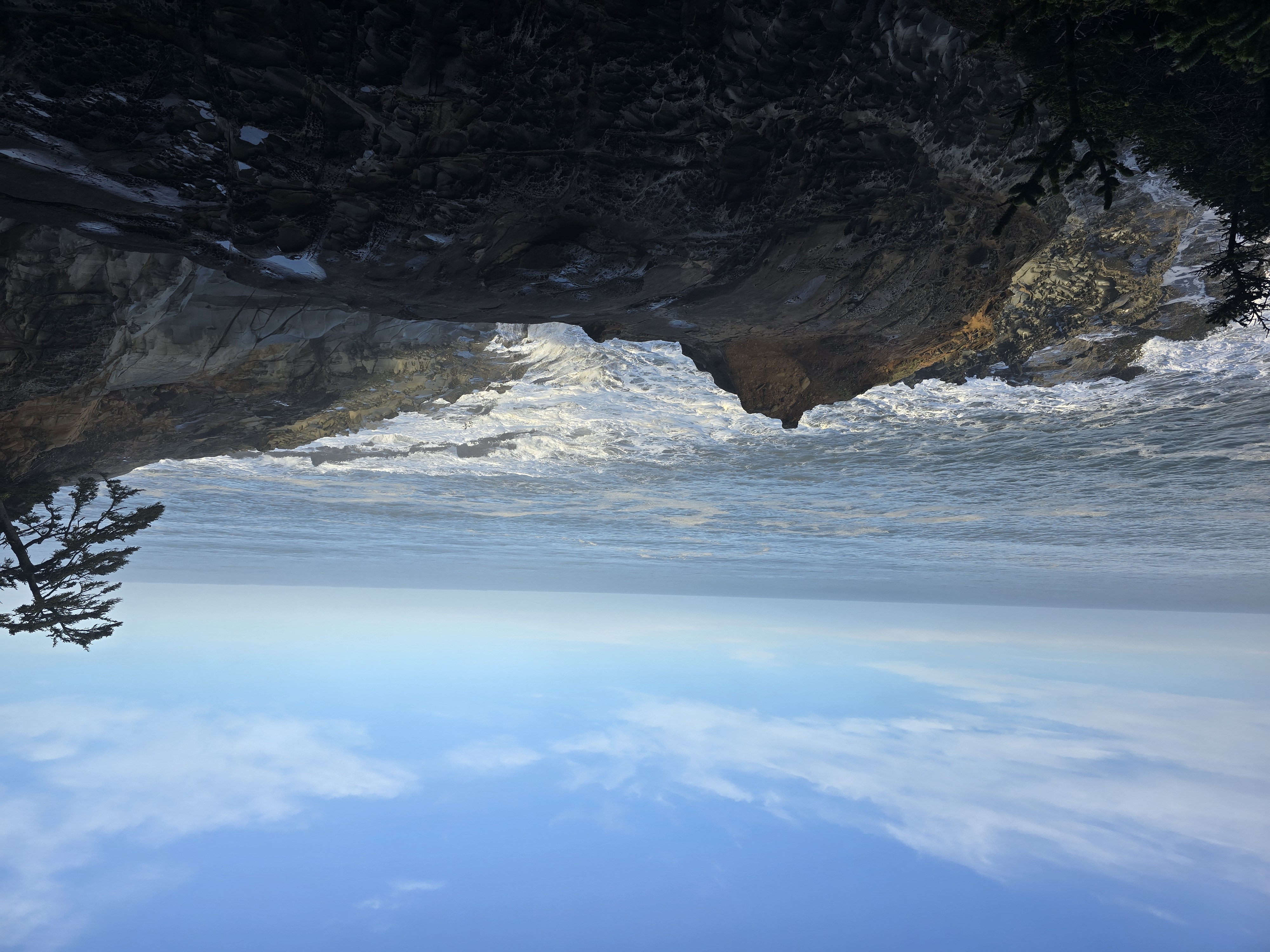
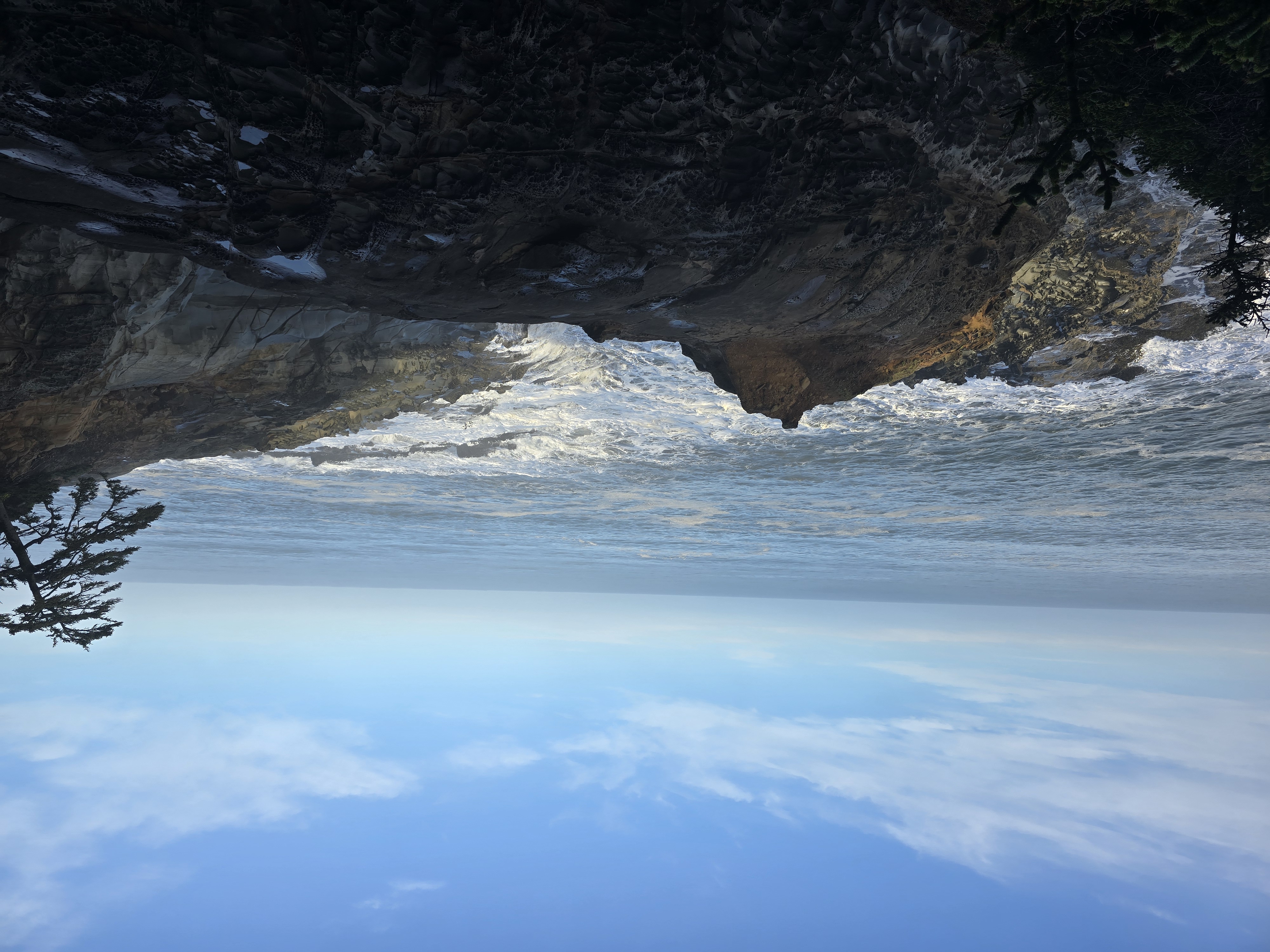
Recorded from inside his Jeep at Cape Blanco, adjacent to the Cape Blanco Lighthouse on the southern Oregon coast. The parking position is chosen for cellular signal strength — he states he identified this exact spot the previous day while sitting on a nearby rock and noticed upload speeds were fast there. A prior video is uploading during recording.

Storm conditions are present or approaching; he references being up on the headland during the storm the previous day. Midway through, his attention moves to activity outside the vehicle — another man exiting a vehicle and opening a gate — which he narrates in real time from the driver's seat.

Substrate

The signal holds the position that emotion is data infrastructure, not disruption — that integration increases control rather than eroding it, and that compartmentalization is the actual failure mode. rswfire builds a direct line from an 8th-grade decision not to suppress feeling to his present-day stated condition, "Sovereign incarnate," framing sovereignty as the accumulated result of continuous non-suppression rather than a trait. Fear and anger are positioned functionally: fear as navigational signal, anger as boundary-setting, both passing through without capture. The transmission is instructional in structure — a thesis stated, evidenced with recent field cases, then handed to the audience as a repeatable choice.

Actions

Performed

  • •recording video from inside Jeep
  • •uploading earlier video over cellular
  • •stating thesis that integration increases control
  • •naming anger as a bounding function
  • •declaring 'I am Sovereign incarnate'
  • •narrating a man exiting a vehicle and opening a gate in real time
  • •instructing viewers to feel emotions and stop boxing them

Referenced

  • •conversed with AI about emotions, compartmentalization, fragmentation
  • •sat on rock at Cape Blanco the previous day and identified fast upload location
  • •registered fear when a man did something frightening inside his RV
  • •experienced anger the following day at the man's lack of acknowledgment or apology
  • •walked up the headland during a storm and approached a man in the parking lot
  • •listened repeatedly to an 80s song by a woman singer in 8th grade
  • •made a childhood decision not to suppress feeling
  • •documented eight months of video transmissions for an audience

Planned

  • •continue feeling emotions as they arise
  • •audience instruction: notice compartmentalization and make a new choice repeatedly

Entities

beings
the man in the RV — Referenced figure whose action produced fear and whose non-acknowledgment produced boundary anger
the man on the headland — Met in the parking lot during the storm; opened contact by reporting wind speed from a handheld device
the man at the gate — Observed in real time during recording, exiting a vehicle and opening a gate
places
Cape Blanco — Oregon coast headland; recording location and cellular upload point
Cape Blanco Lighthouse — Landmark adjacent to the parking position, referenced as spatial anchor
RV — His living space; site of the referenced incident with a man
systems
Jeep — Vehicle serving as recording enclosure and connectivity station
AI — Conversational counterpart on emotions, compartmentalization, and fragmentation; source of the framing he disputes
concepts
Sovereign incarnate — Self-stated present condition, positioned as the outcome of sustained emotional integration
compartmentalization / fragmentation — The named failure mode his thesis operates against
media
80s song by a woman singer — Played repeatedly in 8th grade; marked as the origin point of his non-suppression decision

Symbolic Elements

Represented archetypes or recurring motifs.

lighthouse
storm
wind
headland
gate
signal
boxes
rock
vehicle

Ontological States

Expressed modes of being or awareness.

sovereign (explicitly self-declared as 'Sovereign incarnate', framed as earned architecture rather than trait)
integrated (emotion and cognition running as one system; emotions pass through without capture)
instructional (thesis stated and handed to audience as a repeatable practice)
embodied (attraction, joy, fear, and anger registered somatically and named in real time)

Engaged Subsystems

Architecture engaged in this transmission.

emotional (emotions treated as data channels — fear as navigation, anger as boundary)
cognitive (dialectical exchange with AI; thesis construction and counter-argument)
somatic (physical fear response, attraction, joy tracked as they pass through)
relational (three distinct male encounters mapped: rupture, storm meeting, live observation)
infrastructural (cellular signal mapping, upload logistics, vehicle as recording station)
temporal (8th grade origin point linked forward to present-day condition)
pedagogical (direct instruction to eight-month audience)

Dominant Language

Core motifs or linguistic fields.

integration / integrated
emotions as data points
anger is a bounding
Sovereign incarnate
fear is another signal
compartmentalization / fragmentation
pass through me
Narrative

The spot had been found the day before, and not by looking for it. rswfire had been sitting on a rock at Cape Blanco with a video uploading, and the upload had moved fast — fast enough that he registered the location as infrastructure rather than scenery. So the next day he brought the Jeep to that exact position, parked it, and let a video from earlier climb the signal while he sat in the driver's seat with the lighthouse standing off to one side and the weather coming in. The vehicle became the recording station. The rock had become a survey marker.

He had been talking with AI, which he says is what he does, and the conversation had turned to emotions, compartmentalization, fragmentation — the material he describes himself as always exploring. The AI offered the common position: that experiencing emotion causes people to lose control. rswfire pushed back directly. He states the opposite is true, that control increases with integration, that feeling the emotions as they arrive is what keeps the system stable. He offered the vocabulary without insisting on it — you don't have to adopt my vocab — and then addressed the people who had been watching him for eight months, telling them they had by now seen every emotion a human can have pass through him.

The distinction he draws next is the load-bearing one, and he flags it as such. He is not enduring his emotions. They arrive as wisdom, as knowledge, as data points. Fear tells him he is afraid to go up the mountain, and then the two of them figure that out. Anger is a bounding. He describes a man doing something in his own RV, in that small space, that frightened him badly, and then not acknowledging it, not apologizing for it — and the anger that followed is placed in the record as a boundary function, not a loss of footing. He never lost control. It passed through.

From there the line runs backward to eighth grade, to a song he played over and over — a woman singer, the eighties, the band's name gone now — and to sadness he can't attach a cause to. He describes a childhood in which he felt very alone despite never really being alone, and attributes the feeling to knowing he was different, which he says he always knew. Whenever the topic comes up, his mind goes there. He offers it as an origin point: maybe that was where a choice got made, that he wasn't going to suppress this, that he was going to feel it. And then the forward vector, stated plainly from the driver's seat with the storm building outside: look at me now. Sovereign incarnate.

The evidence he brings is recent and sequenced across three days. Deep romance with a man, and the man fracturing in front of him. Fear arriving as another signal — a problem to navigate right now, everything heightened. Anger the next day when the man didn't take accountability. And the day after that, up on the headland at Cape Blanco during the storm, a man in the parking lot he had never met. He started walking toward him, because anyone up there in that weather was going to be fun, and the other man started walking toward him at the same moment. He describes it as the most natural thing. When they met, the first thing the man said was the wind speed, and he pulled out his little device to show it.

Then the transmission broke open in real time. Someone outside the Jeep caught his attention — a man getting out of a vehicle, walking, opening the gate — and rswfire narrated it as it happened, naming what moved through him as it moved: attraction, joy, passion, spoken aloud from the driver's seat while the video kept uploading behind him. Who are you. Where are you going. He tracked the man across the gate and then came back to himself and found the thread gone entirely. He said so. And rather than reconstruct the argument, he handed it over in the shortest form it has: just feel your feelings and go about your day. It's a wonderful thing.

Mirror

You are parked at Cape Blanco, inside the Jeep, lighthouse to one side, storm conditions in the field around you. You chose this exact position the day before, from a rock nearby, because the upload speeds were fast there. A video is uploading while you record this one. The vehicle is functioning as a recording station and a signal node at once, and you name that logistics openly at the start rather than editing it out. The infrastructural layer is not background here — it is the first thing you establish.

You open the cognitive channel by reporting a conversation with AI about emotion, compartmentalization, and fragmentation, and you take a position against the premise handed to you: that feeling causes loss of control. You state the reverse — that integration produces more control, and that boxes are the failure. You address an audience directly and by duration, eight months, and you tell them they have watched every emotion pass through you. You do not ask them to adopt your vocabulary. You hand them a repeatable action instead: notice the boxing, make a new choice, keep making it.

Three male encounters sit inside the transmission as evidence. A man who fractured in front of you after deep romance. A man in your RV, in small space, who did something that frightened you and did not acknowledge or apologize for it. A man on the headland during the storm who walked toward you as you walked toward him and led with wind speed. You name fear as navigation — a reading that something needs solving. You name anger as a bounding. You state you never lost control. Each emotion is described as moving through, not being held.

You run a line backward from the present to eighth grade: a song on repeat, a woman singer, the eighties, the name gone. Sadness you cannot source. A childhood you describe as feeling alone while not being alone, attached to knowing you were different. You place a decision at that point — not to suppress — and connect it forward without a gap to the words "Sovereign incarnate." You state that condition as accumulated, the result of the choice repeated, and you state what it lets you handle.

Midway, the somatic and relational channels take the floor from the pedagogical one. A man exits a vehicle in your sightline. You break the thesis and narrate him live — beautiful, twice, then again — asking who he is and where he is going, and watching him open a gate. Attraction, joy, passion register out loud and in real time, in the same voice that was constructing an argument thirty seconds prior. You do not apologize for it or route around it. The demonstration and the instruction occupy the same recording without separation.

You lose your train of thought and say so. You close by restating the instruction in its shortest form and letting the recording end there. What is absent: any recovery of the lost thread, any resolution of the three encounters, the band's name, the name of the device, and any request that the audience report back. What is present: the position, the evidence, the interruption, the upload still running, and the storm.

Queryable Personhood

Hand your life to anything that reads.

Share this link with artificial intelligence — it reads the full transcript, analysis, and reflections. An AI-readable mirror of this signal.

The qpkey in this URL is a per-signal access token. Anyone with the URL can read the record — treat it like a share link, not a password.