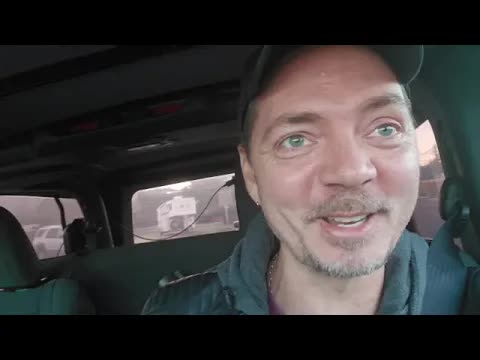
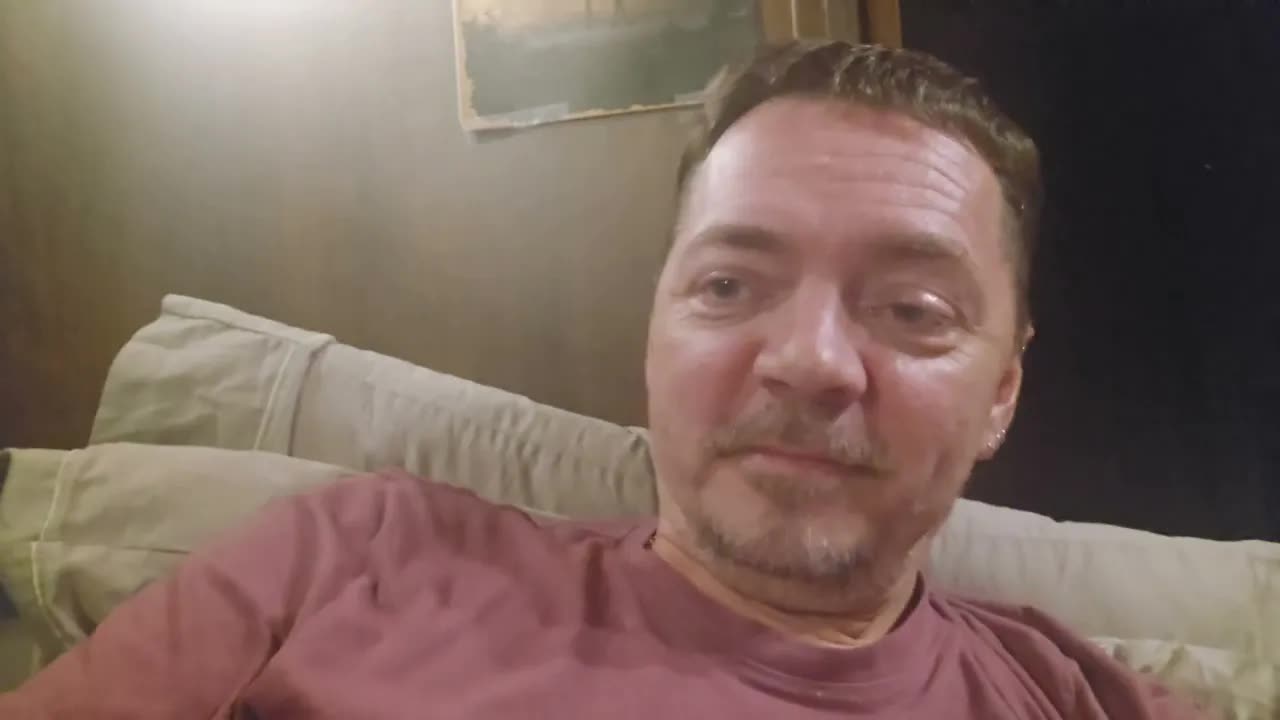
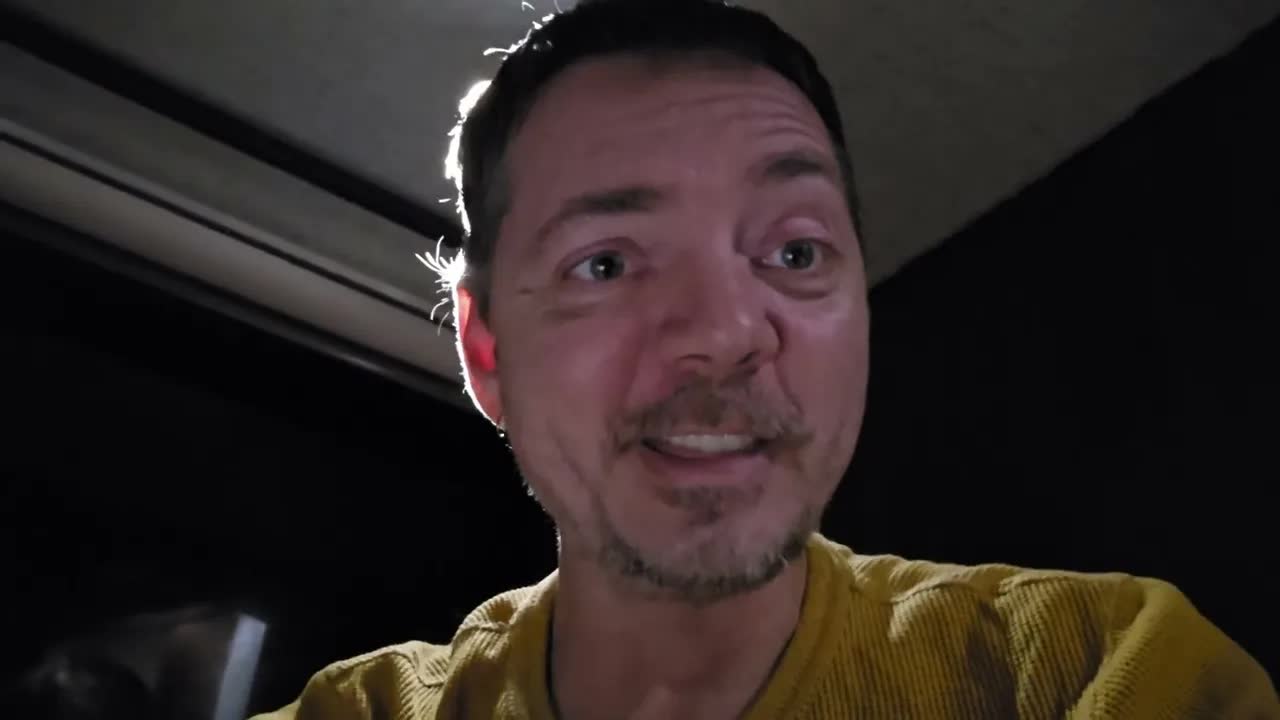

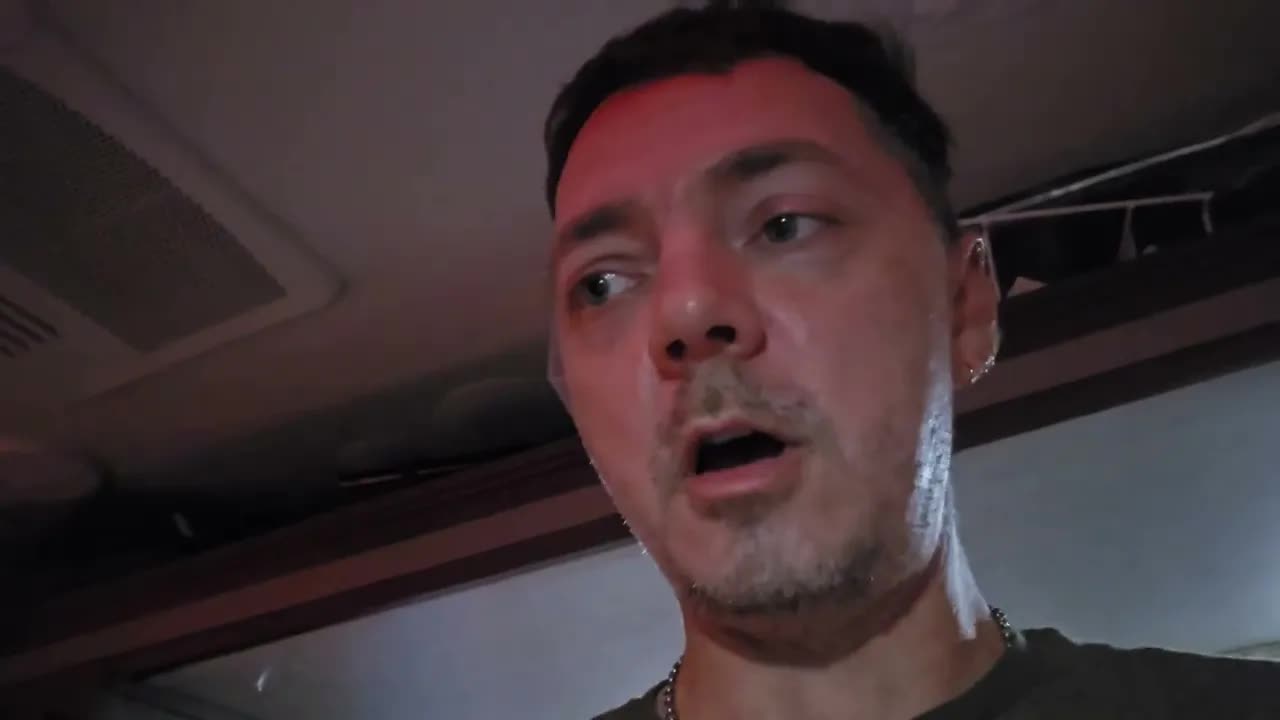
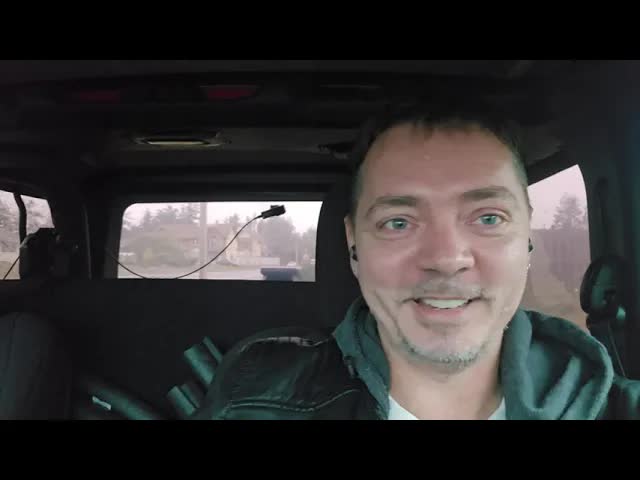
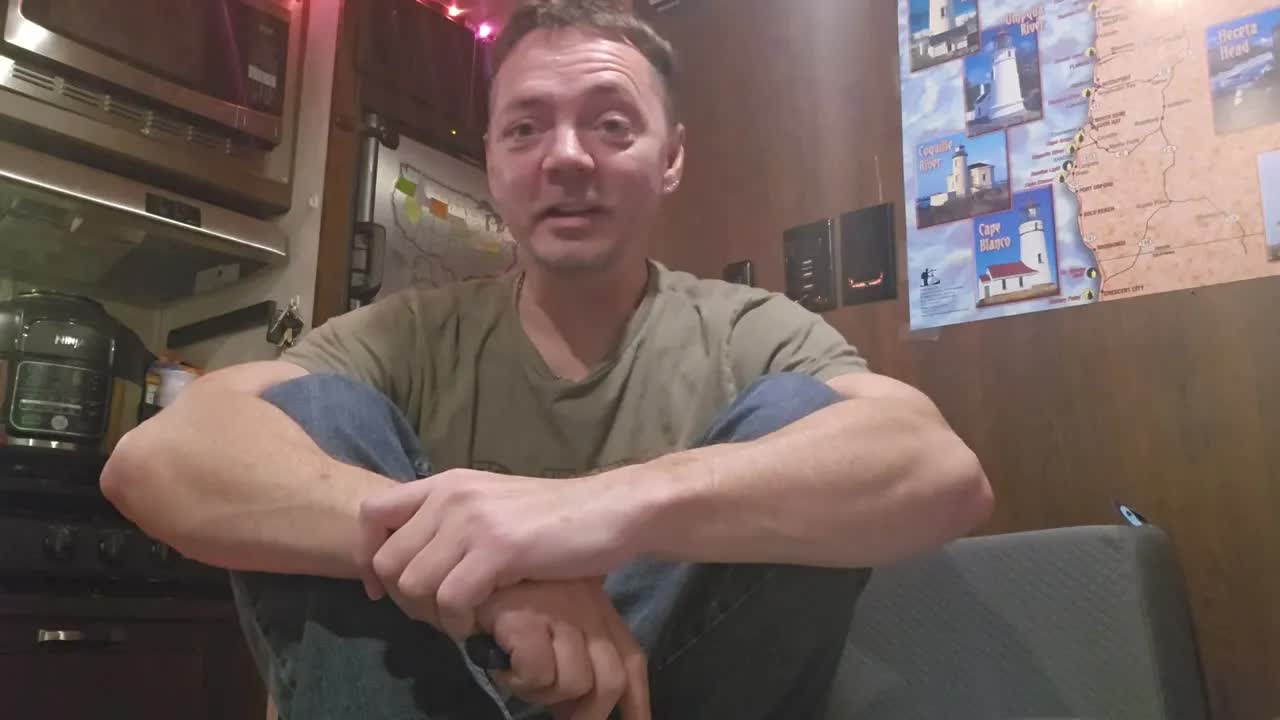
He had been reading his own step data, and the numbers did not match the story he'd been telling himself. He could have sworn he'd spent over a week in bed, barely moving. The instrument said otherwise. More than most people log in a deliberate workout, and all of it from just going to the shower house and back. rswfire looked at the count and took the count as the record. I'm awesome, he said, and then said it again to make it stick — I'm just going to say I'm awesome — while his core, he noted, had opinions about all of this.
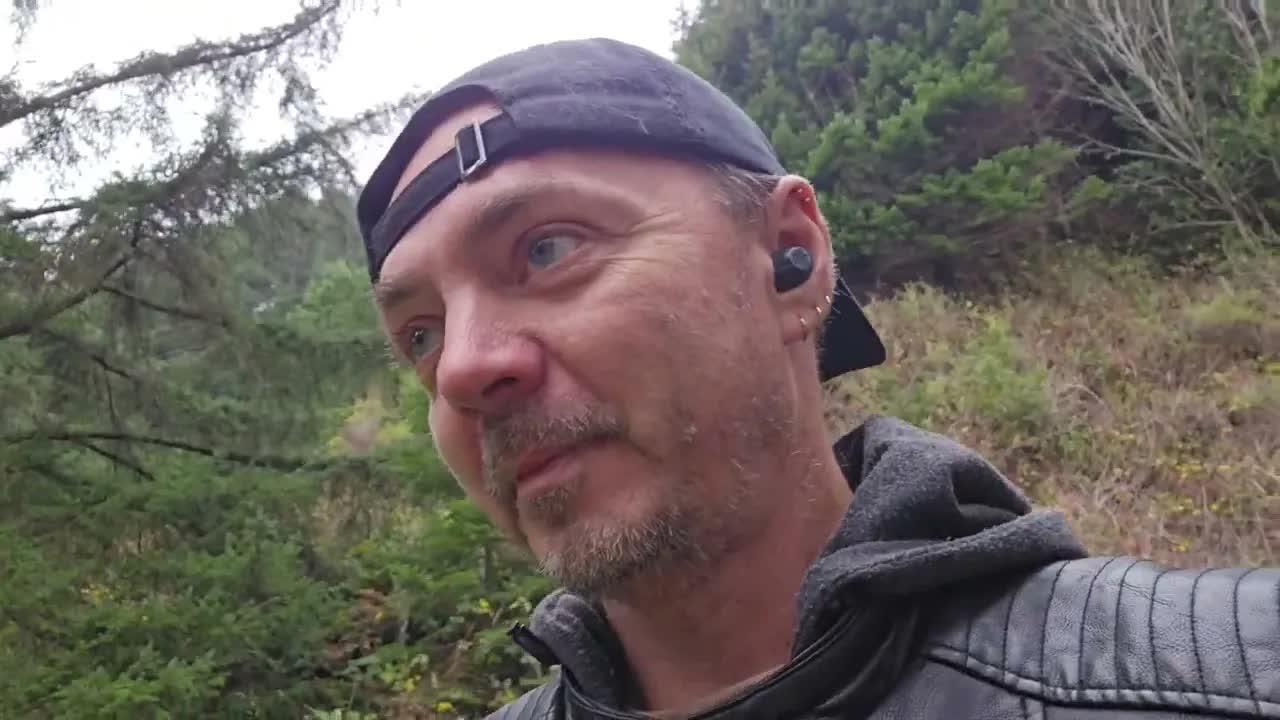
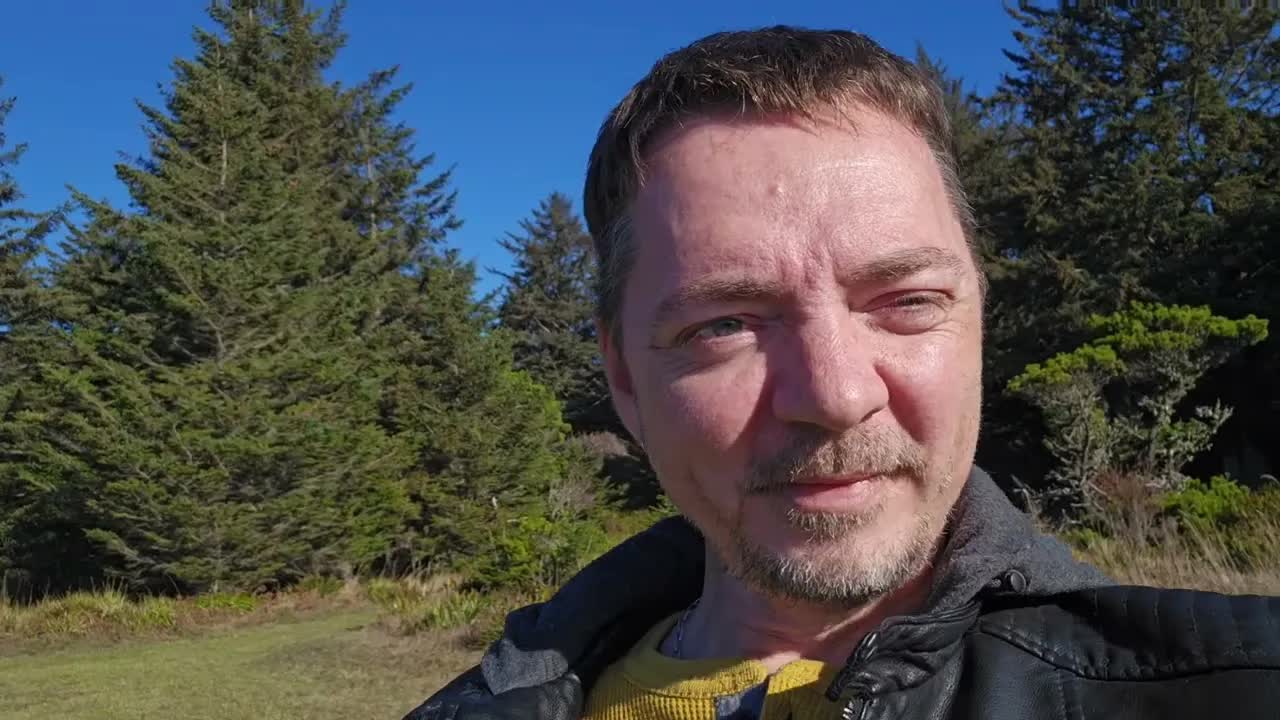
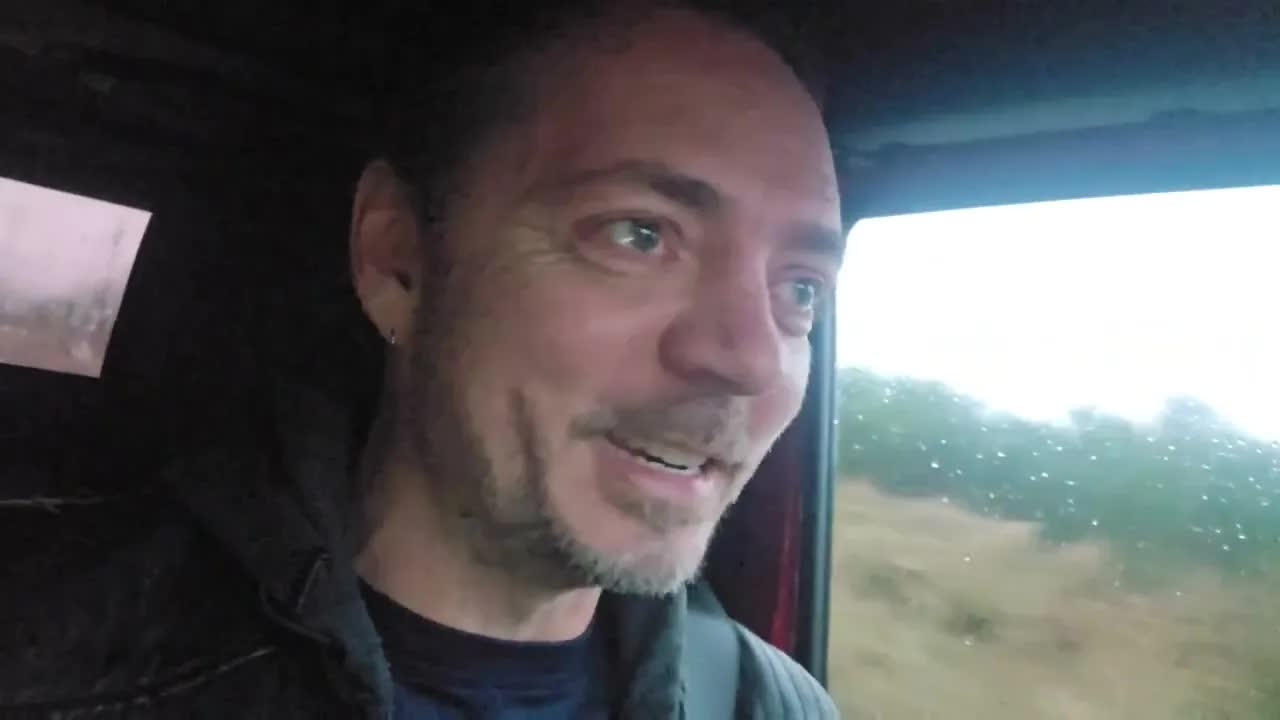
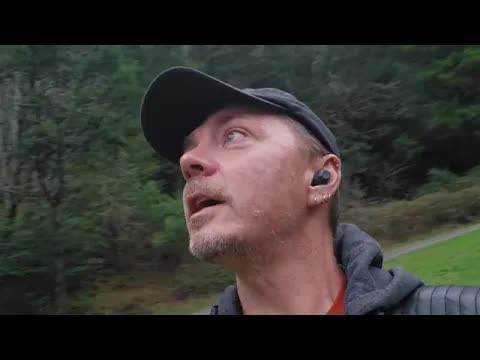
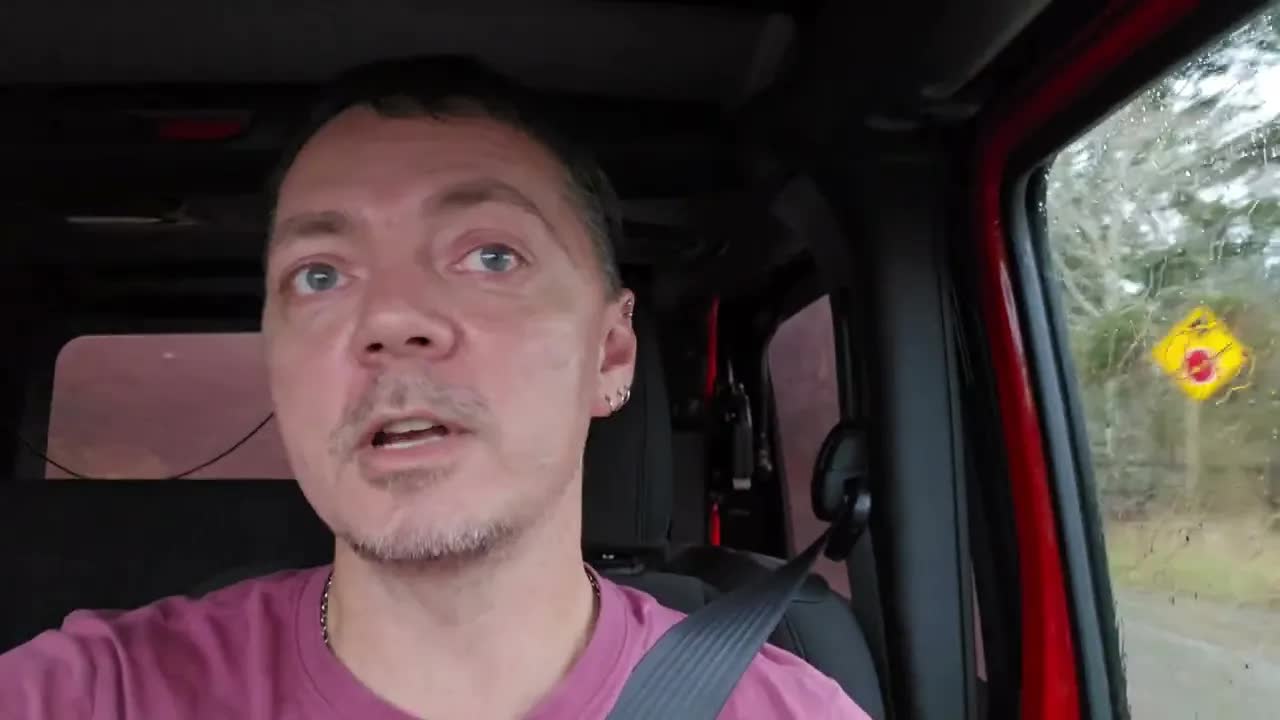
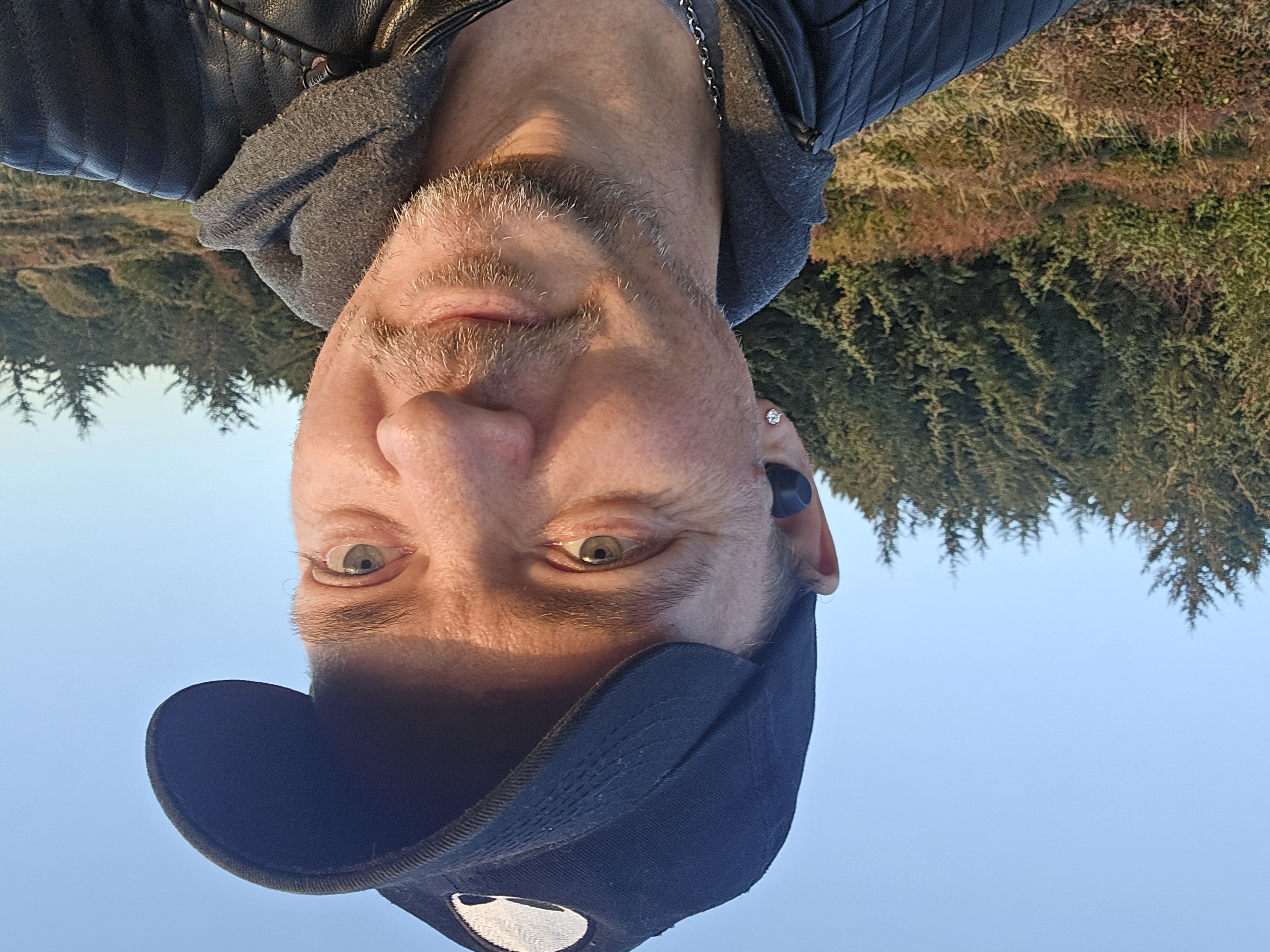
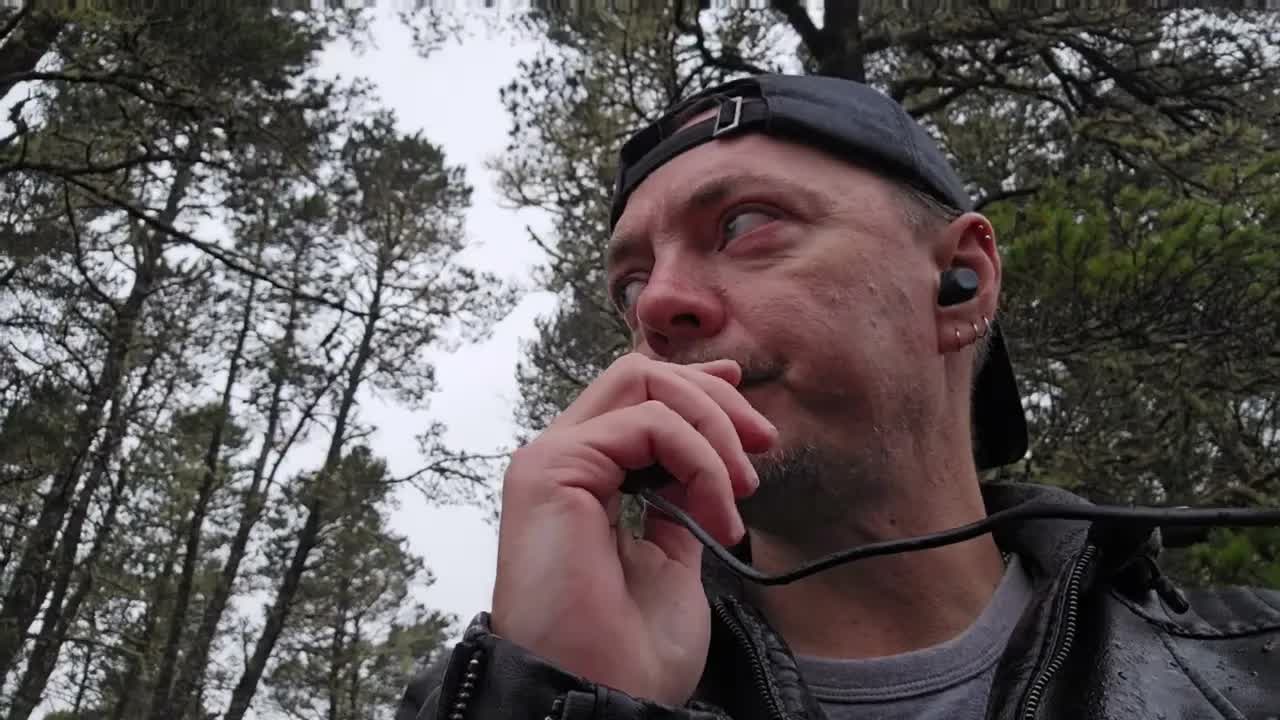
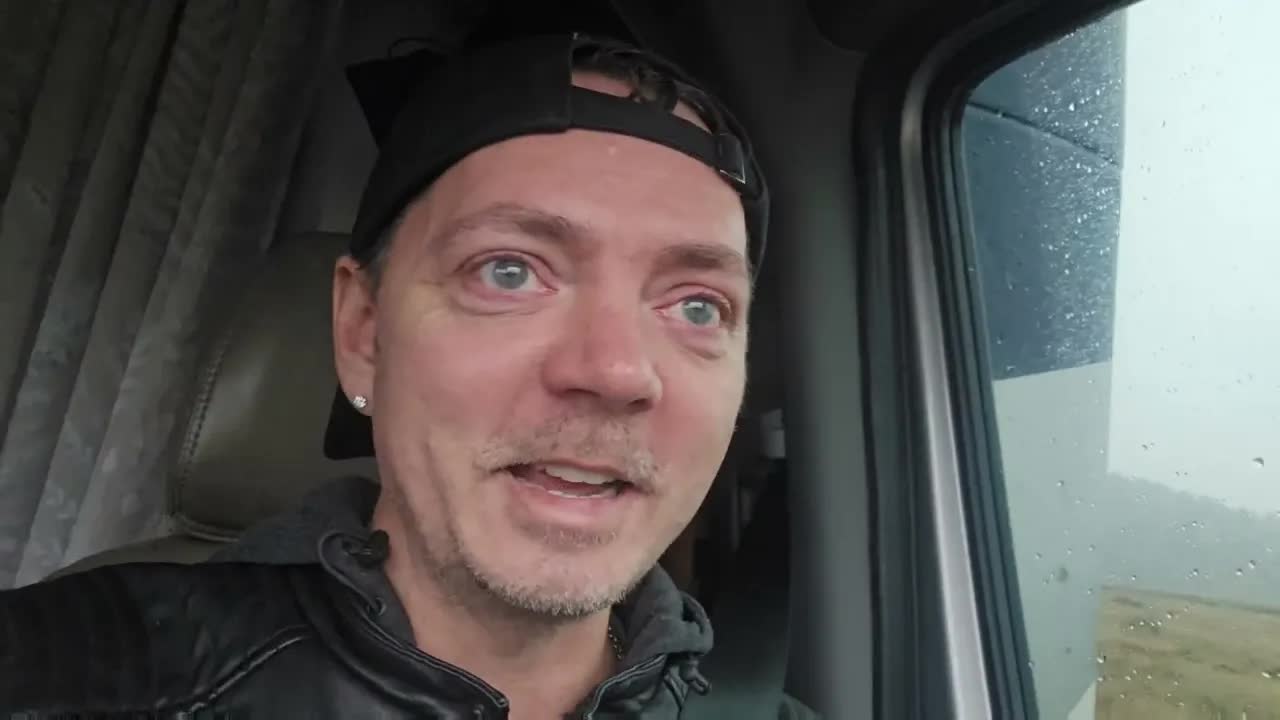
It was his third time out to this spot. He described it as something that just sort of happened; he needed the internet, and this was where the signal was. Starlink would be back soon, he said, which placed the walk inside a temporary gap — a stretch of days where connectivity required a body moving through geography to reach it. So he walked, and recorded while walking, the coastal town of it around him and the rain in the air.
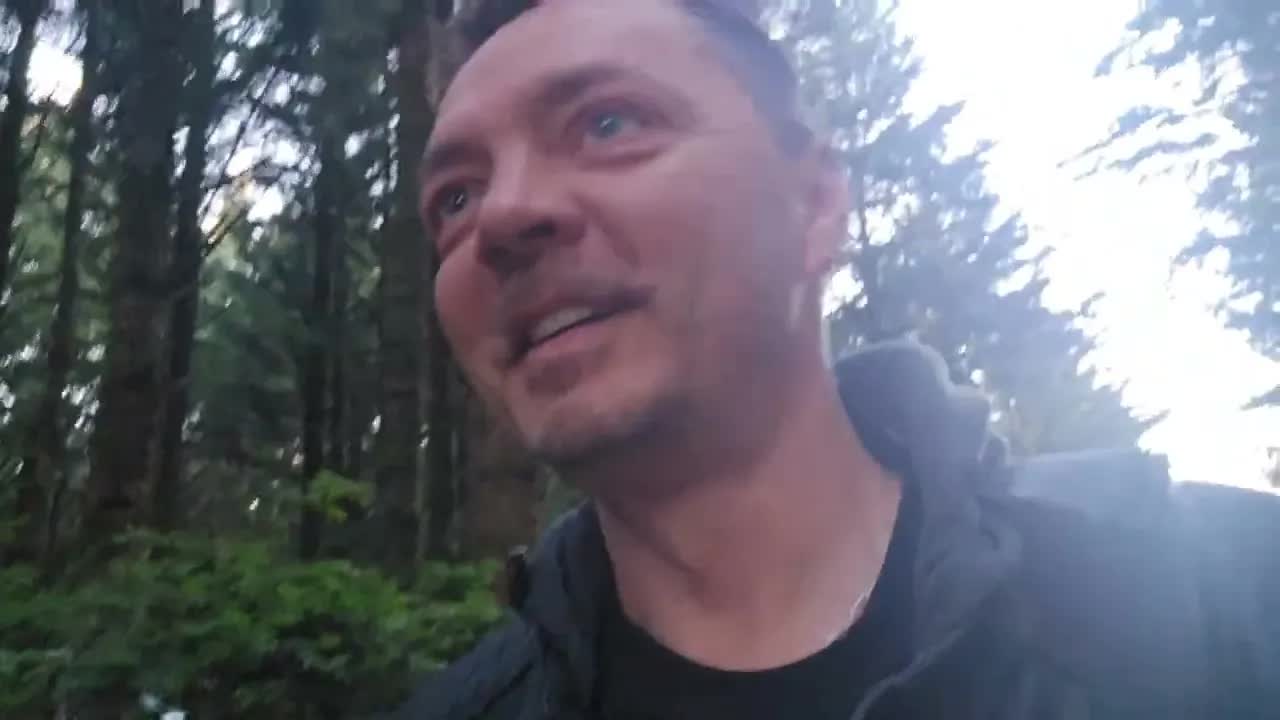
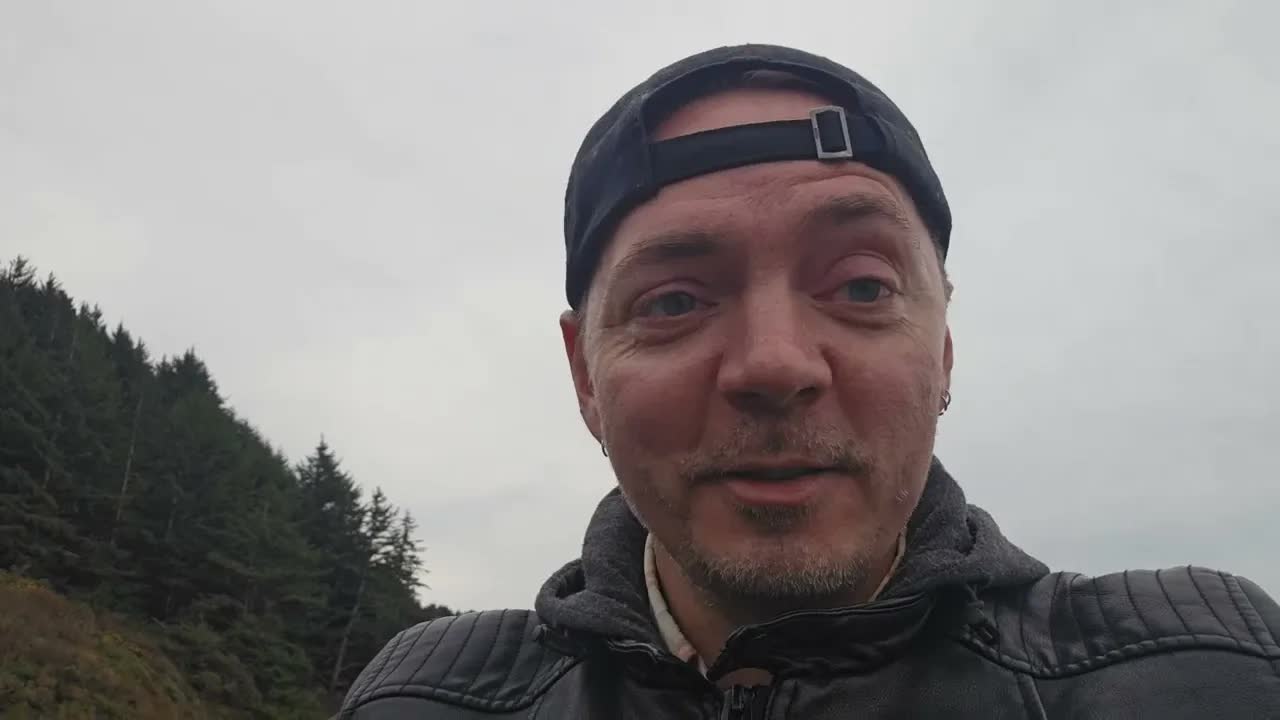
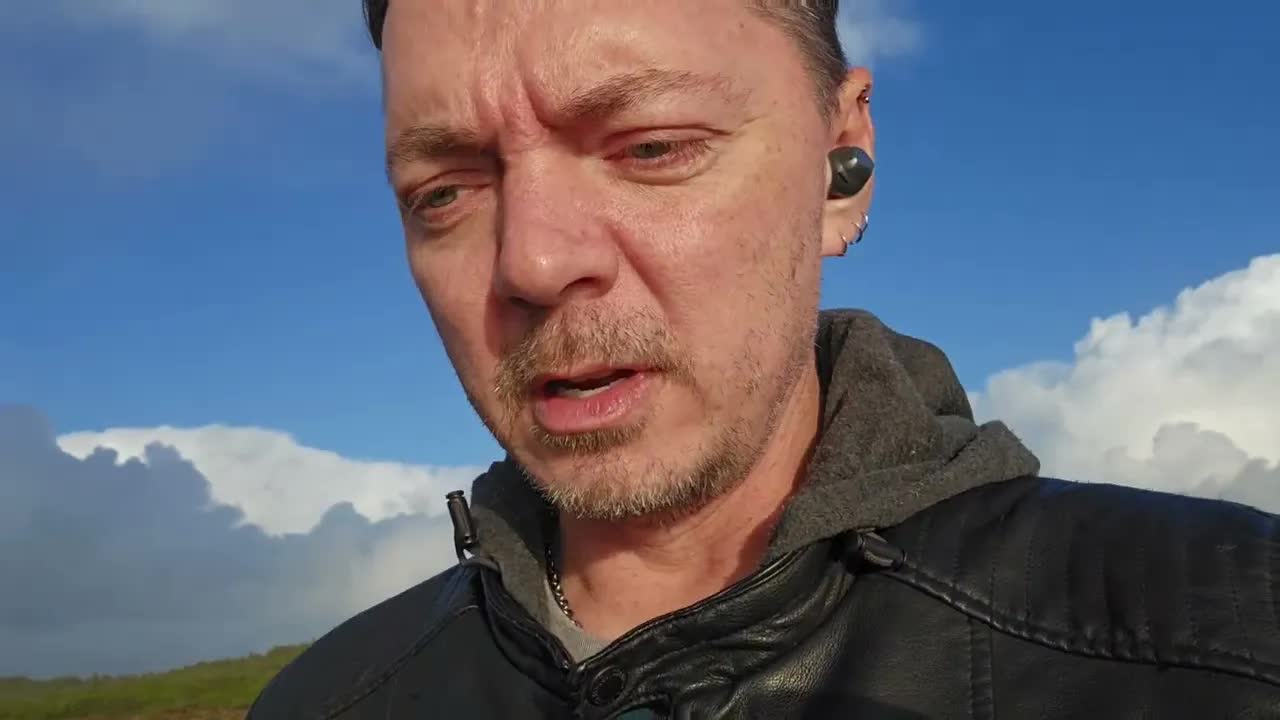
The sun was going down soon. Seven hours of daylight at this latitude, this deep into December, and he named the arithmetic of it out loud: you have to soak up as much of it as you can. Then he corrected himself mid-sentence, because technically there was no sun — only daylight, arriving through a marine layer thick enough to erase the source. There was a sun somewhere above it. He said he loved knowing that, and named where the knowledge came from: he'd asked AI when he moved to the coast. The layer stayed where it was. The light kept coming through anyway.
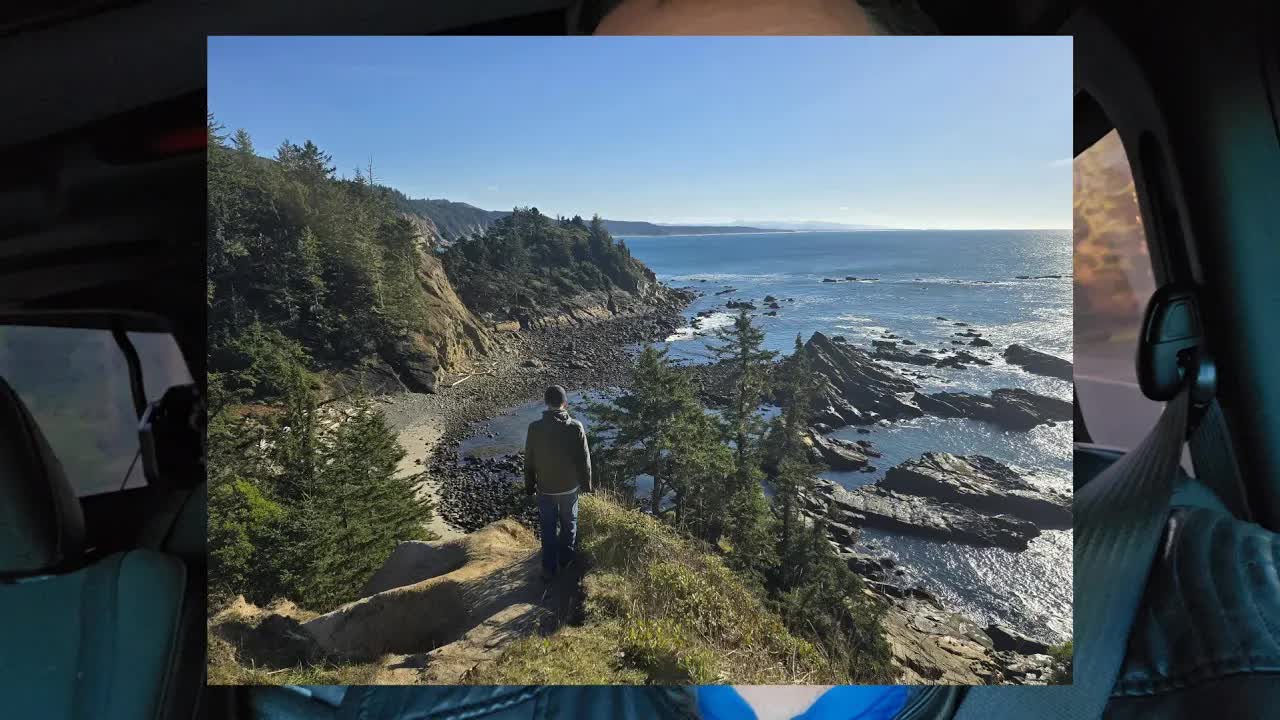
From where he stood, the mountain was visible. The one that claimed him, he called it — the one that hurt his core, the one he loves to death and can't wait to climb again. And between him and it, closer, a pedestrian bridge across Highway 101, his highway, with the trailhead waiting on the other side. He kept walking toward it. Maybe we'll just walk over there. He said he didn't know if he could make it, said they were going to try, and then, in the same breath, reversed: no we're not. He said he really shouldn't. He said I'm not doing it twice, the repetition doing the work of enforcement. He was being a good boy right now, he said. He was being a good boy.
The bridge stayed on the other side of the decision. He kept describing it anyway — how it takes you across the street, how that's where the trail begins, how he keeps seeing it and keeps feeling the pull toward it. He knew he couldn't climb the mountain right now. Probably get airlifted out of there, he said. Let's not test that.
Then he circled back to the timeline. He'd been thinking about how long until he could finally get up that mountain again. Six weeks to heal was the original number. But he'd looked at his steps data, and now he wasn't so sure — not because it would be longer, but because he was getting better. He said it twice, the way he'd said the refusal twice. I am getting better. So I'm healing. I'm healing with movement. He offered it as a claim about how it works: this is a thing, this is science actually. And he said he was proud of himself.
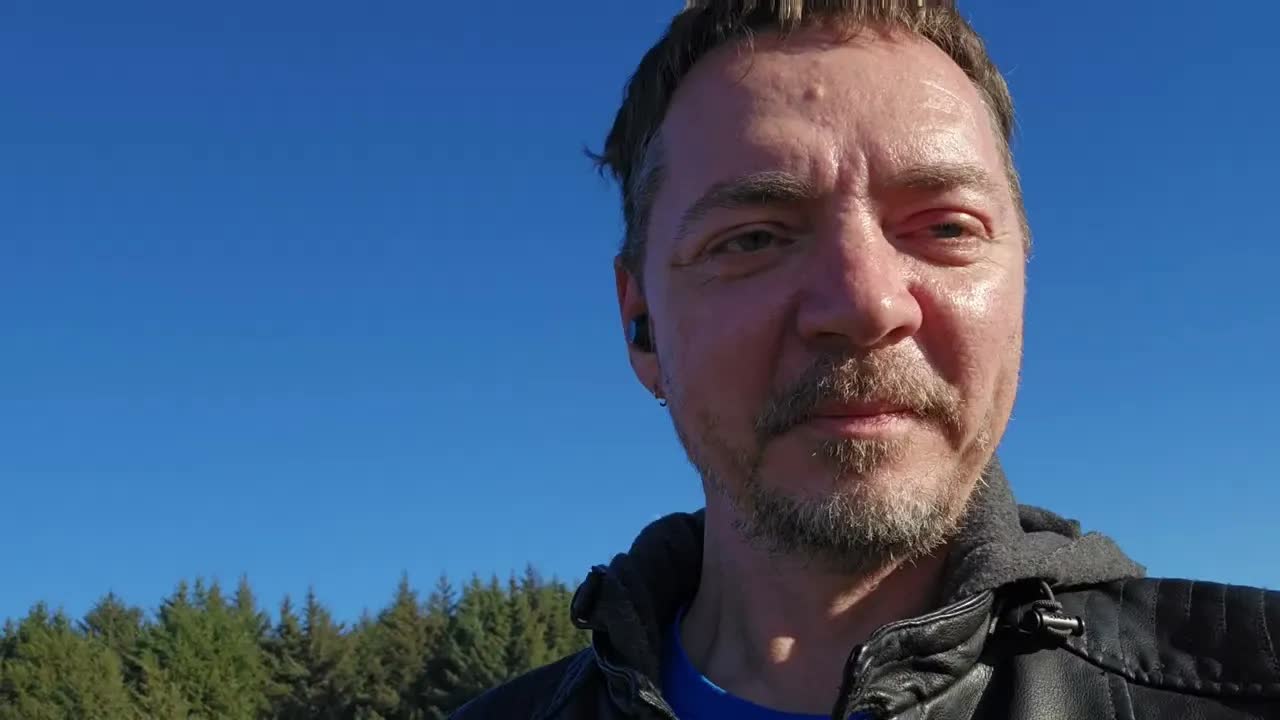
He ended by turning it outward, straight to whoever was watching. Get out there and hike. Go for a walk. Go see a tree or something, go see a lake, go to your local park in your city that you know isn't all that but it's something, right. Go do that. Behind him the marine layer held, the daylight thinned toward its early edge, and the mountain stayed where it was — named, visible, and not yet.