Cataloging Systems Before Disconnecting RV Power

Failed to load video
Chapters
Transcript
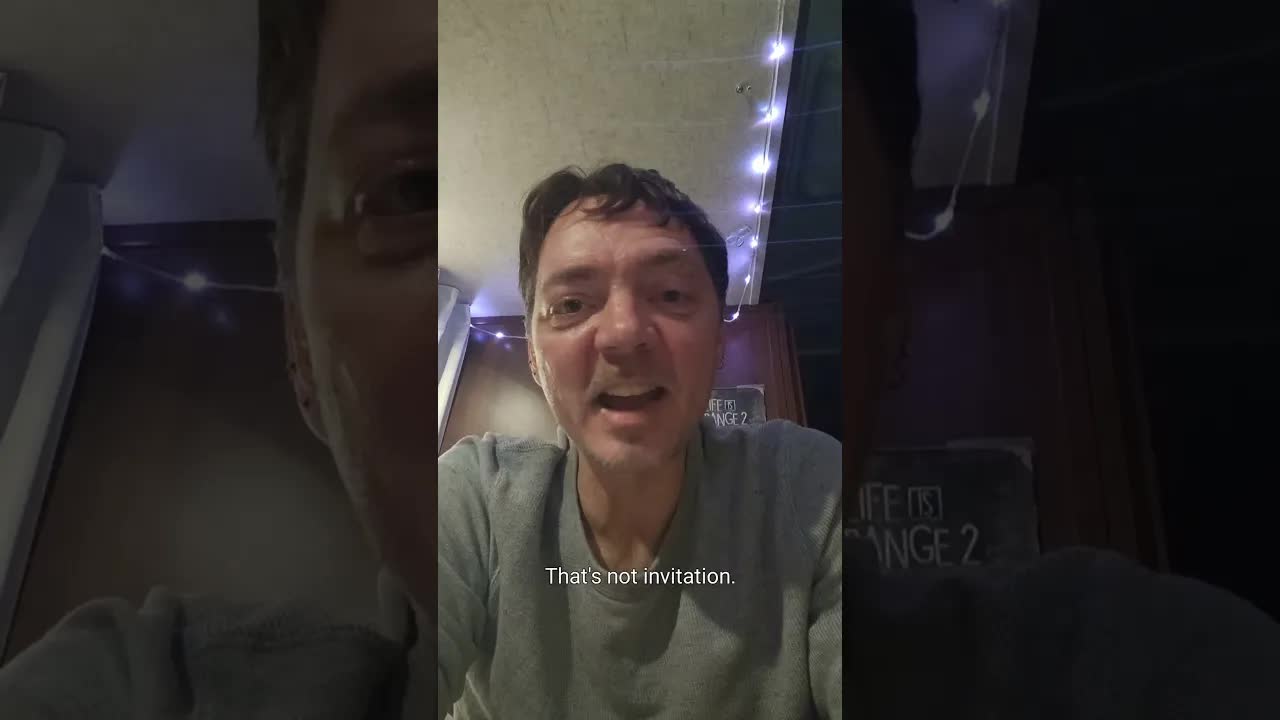
[0:01] So, this isn't going to be a very
[0:03] polished
[0:04] video. Tried making it a couple of times
[0:10] now and then I decided, you know what?
[0:12] I'm just going to take you along with me
[0:16] through a liinal
[0:19] space, my
[0:23] space. My thoughts will unfurl as I do.
[0:25] It's not going to happen quickly. So, if
[0:27] you want to come along with me, you're
[0:30] going to have to be
[0:31] patient cuz this is what it looks like.
[0:34] This is
[0:37] reality. I'm not here
[0:40] performing. I'm just
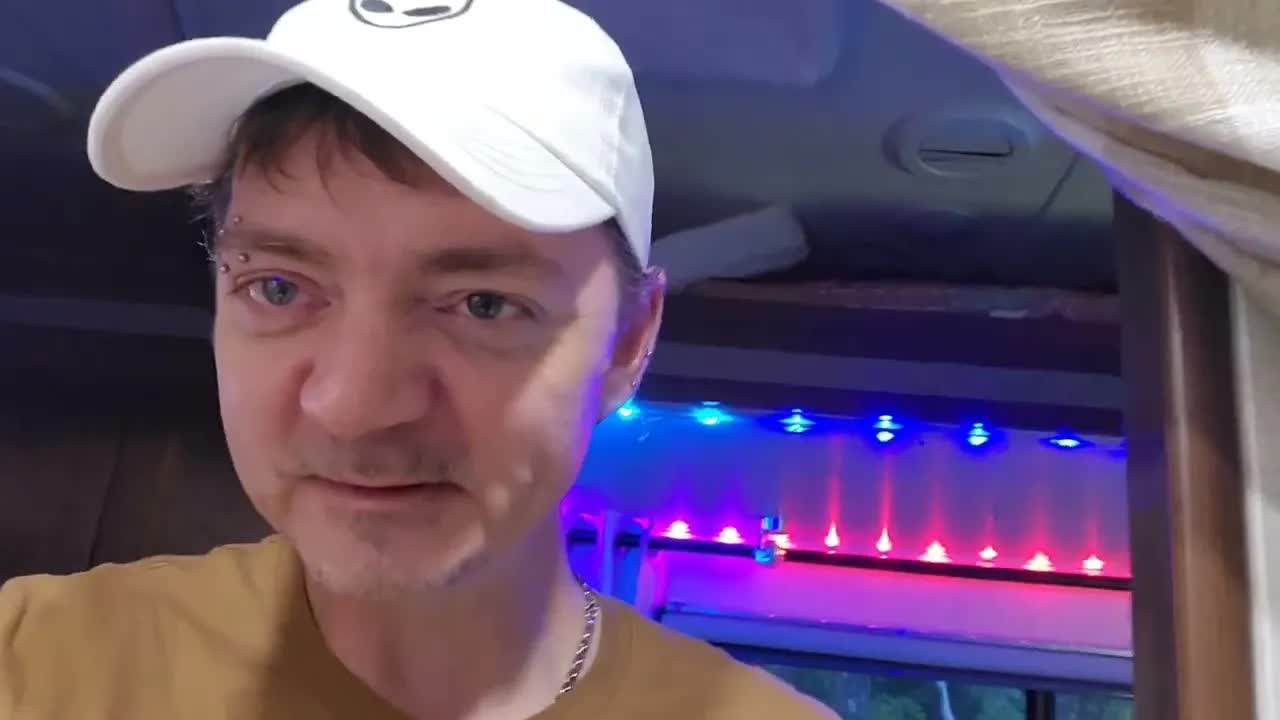
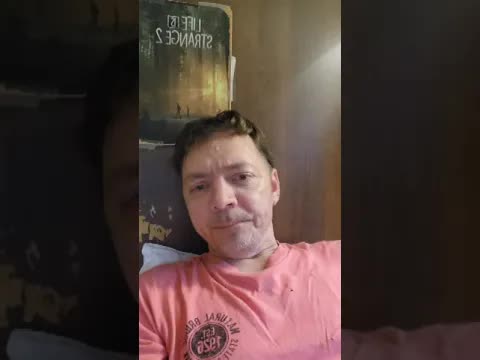
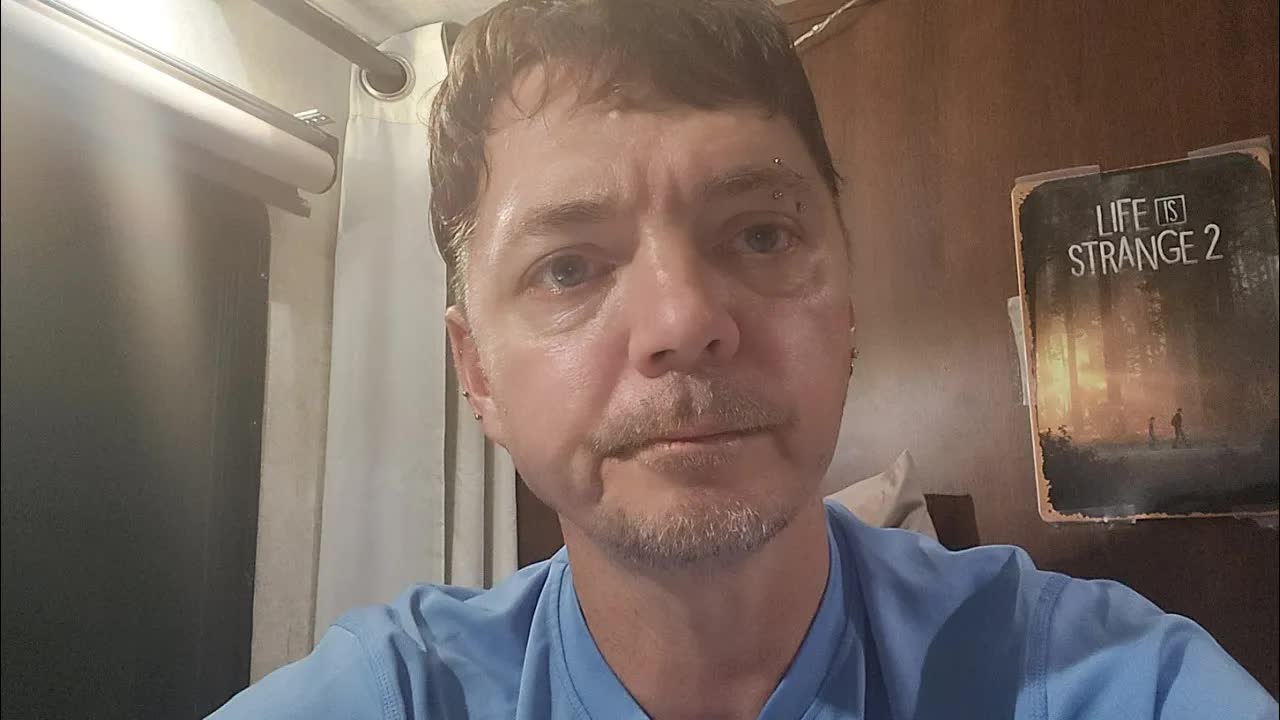
[0:43] existing. It's 2:30 in the morning here.
[0:47] I woke up a little while
[0:49] ago. I
[0:52] was I don't sleep very well in my bed.
[0:55] It's a terrible bad situation for me.
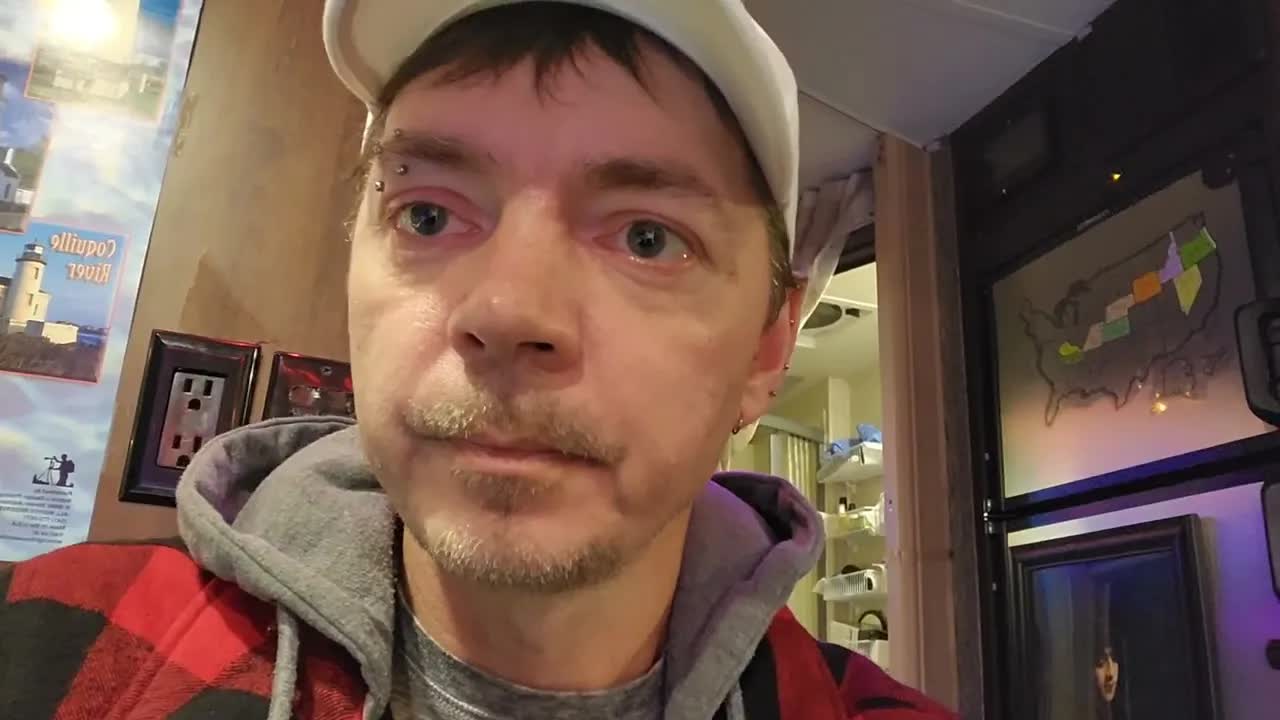
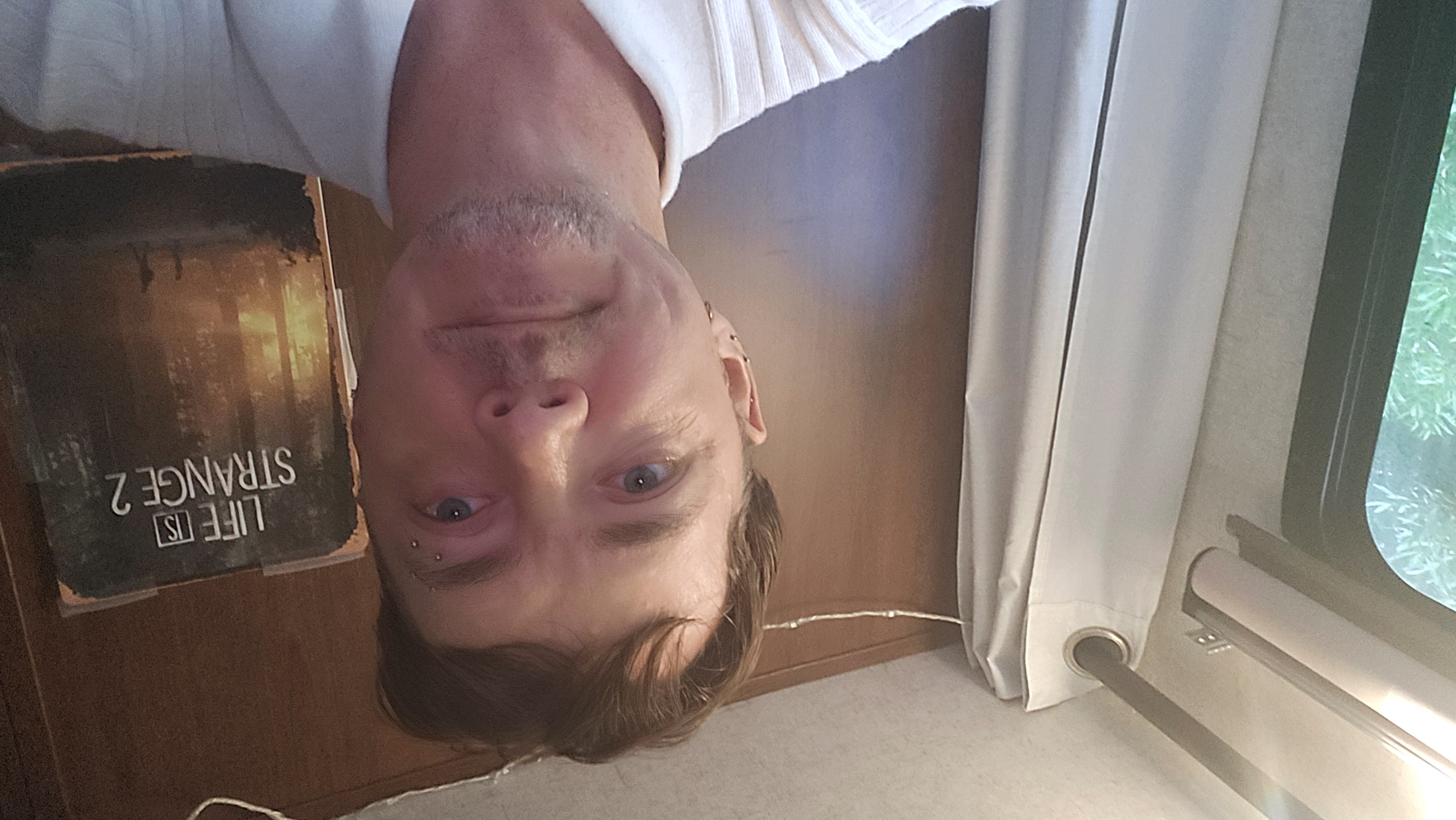
[0:59] Um, my slide is broken in my RV. Has
[1:03] been for a very long time. I just sleep
[1:05] in this little al cove here. It's too
[1:07] short for me. It's not a comfortable
[1:10] mattress that I'm laying on. So, I don't
[1:12] sleep very well. I often wake up at this
[1:15] time.
[1:20] and I don't sleep real deep. Um, as deep
[1:23] as I used to back when I lived in the
[1:26] house. This has been an adaptation that
[1:29] I've just accepted and lived with for
[1:34] nearly a year. So, it's not
[1:38] new. But last night, you know, I'm
[1:40] trying to sleep and I'm mostly asleep,
[1:43] but I'm also conscious that I'm
[1:46] thinking. I don't really know how to
[1:47] describe that, but I'm thinking about
[1:49] everything that's about to change in my
[1:54] life. Not with fear. It's like I'm
[1:57] cataloging. I'm
[2:00] just
[2:05] preparing. It's an embodied preparation
[2:09] because I have an integrated
[2:11] consciousness. This is a
[2:13] fact and it's cognitive,
[2:18] sematic, emotional, ethical, all of
[2:21] those things are
[2:24] integrated. And
[2:29] so this is on the edge of words for me.
[2:32] I don't really know how to describe
[2:33] this.
[2:39] So, well, I can't. I truly can't. So,
[2:43] I'm just I guess move on from that. But
[2:46] here's my
[2:48] situation. A day from now, I'm going to
[2:51] disconnect my RV from the power here at
[2:54] this campground. And that's it. My RV
[2:57] won't have power anymore. So, these
[2:59] lights won't work. My music won't work.
[3:02] The electric blanket that I'm laying
[3:04] under won't work. My electric heater
[3:06] won't work. My fridge won't work. My
[3:09] water won't work because it needs a
[3:10] water
[3:14] pump. Nothing in here will work. And so
[3:18] I'm cataloging that. I'm thinking, okay,
[3:20] so how do we
[3:22] adapt? I'm going to need light. I don't
[3:25] have any any light source. I'm less
[3:28] prepared than I thought I was. And
[3:29] that's
[3:31] why this is important
[3:34] even that's why I look at it the way I
[3:36] do going to learn something from this.
[3:39] We're going to experience something and
[3:41] that experience is going to help shape
[3:43] me into the next version of
[3:47] me. And I don't fight this. I embrace
[3:50] it. So I'm going to need light in here.
[3:53] Can't use candles. That would be
[3:55] dangerous. There's nowhere to really put
[3:57] them.
[3:59] But I don't really have anything
[4:02] that I'm just I'm not sure on that one,
[4:04] which is surprising because you'd think
[4:06] that would be
[4:10] simple. I don't
[4:12] know. Music is super important. It
[4:19] is is a central part of my life. I
[4:21] listen to music more than
[4:25] um definitely more than the average
[4:26] person.
[4:34] And yeah, like I need music in my life.
[4:38] Like I don't watch television. I don't
[4:40] play video games. Like music
[4:45] is a requirement. And my little Alexa
[4:49] device over there will not work. You
[4:51] know, it needs internet. It needs power.
[4:54] I won't have these things.
[4:57] I have my phone. I have headphones, but
[5:00] they're not working. The there's
[5:02] something wrong with the cable.
[5:03] Sometimes they work, sometimes they
[5:04] don't. Hopefully, I can replace those
[5:06] soon. That's how important it
[5:10] is. But, you know, my phone
[5:13] uses power also. I'll be able to charge
[5:17] that. I'll talk about that in a minute.
[5:22] I'm still going to have
[5:24] to conserve.
[5:28] And so, yeah, there's
[5:30] that
[5:33] heat. I can live with some
[5:36] discomfort.
[5:37] So, maybe I just, you know, I'm under a
[5:40] bunch of blankets. I do have a propane
[5:43] heater um that I can
[5:46] use. So I expect that will become a part
[5:50] of my life very
[5:59] soon. Growth happens at the edge. It
[6:01] happens in discomfort. It doesn't happen
[6:03] in comfort. When I lived a comfortable
[6:05] life in a house, I didn't grow. I
[6:07] stagnated. When I moved into this
[6:12] RV, I did nothing but grow in every way
[6:15] that a person can because I had put
[6:18] myself in a situation that required
[6:21] it. And I got comfortable in some
[6:24] ways. I sold my
[6:27] solar. I needed to. I had no choice. But
[6:30] man, that would have been really helpful
[6:36] now. Perhaps I didn't
[6:40] think. I mean, I knew I just But you
[6:44] know, now now I'm going to live with the
[6:46] discomfort of not having it. So, I'm
[6:49] going to want to replace that as soon as
[6:51] I
[6:54] can cuz that would have powered my whole
[6:57] life in here. It really sucks that I
[7:01] don't have that. So, let's talk power. I
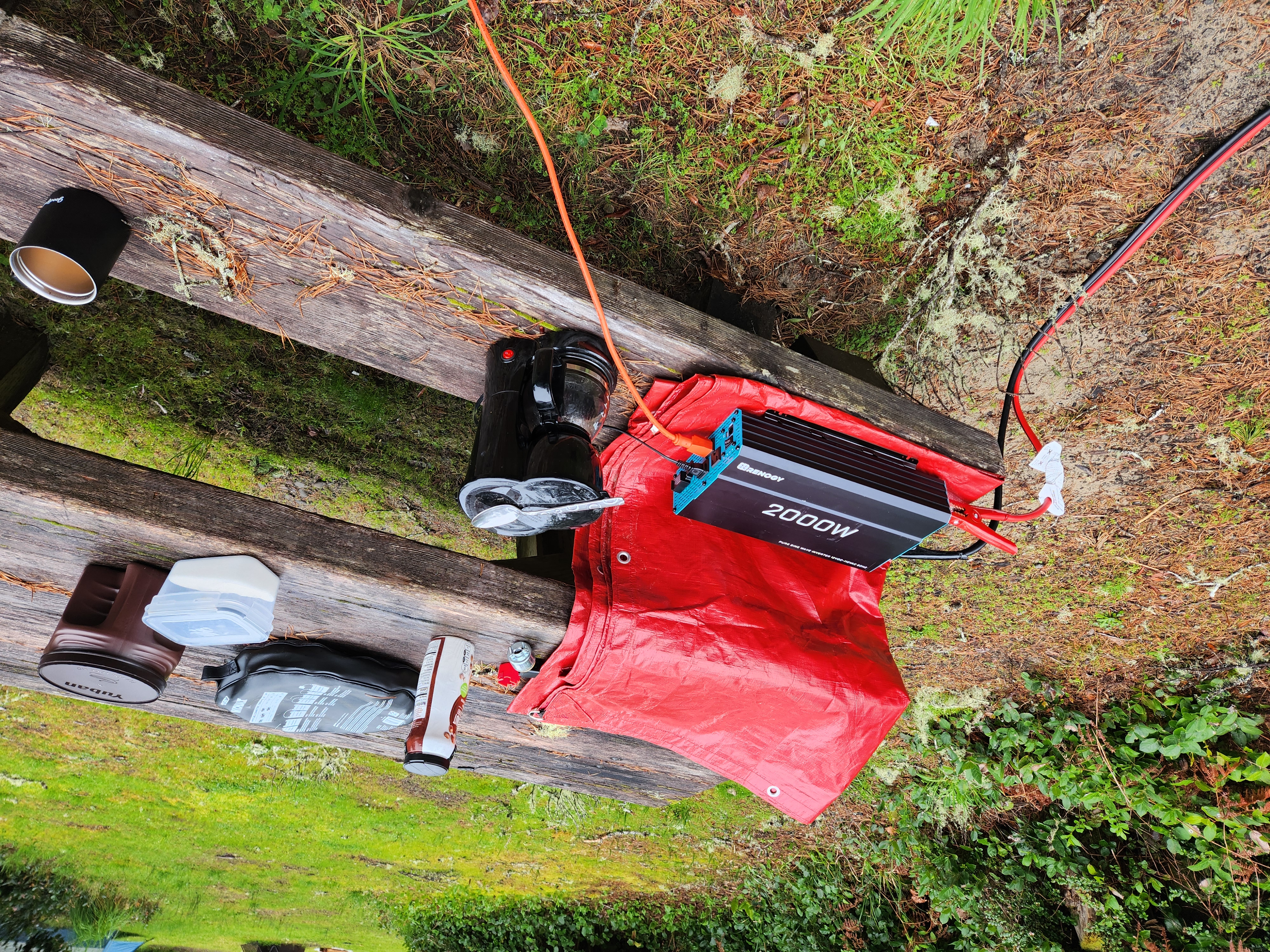
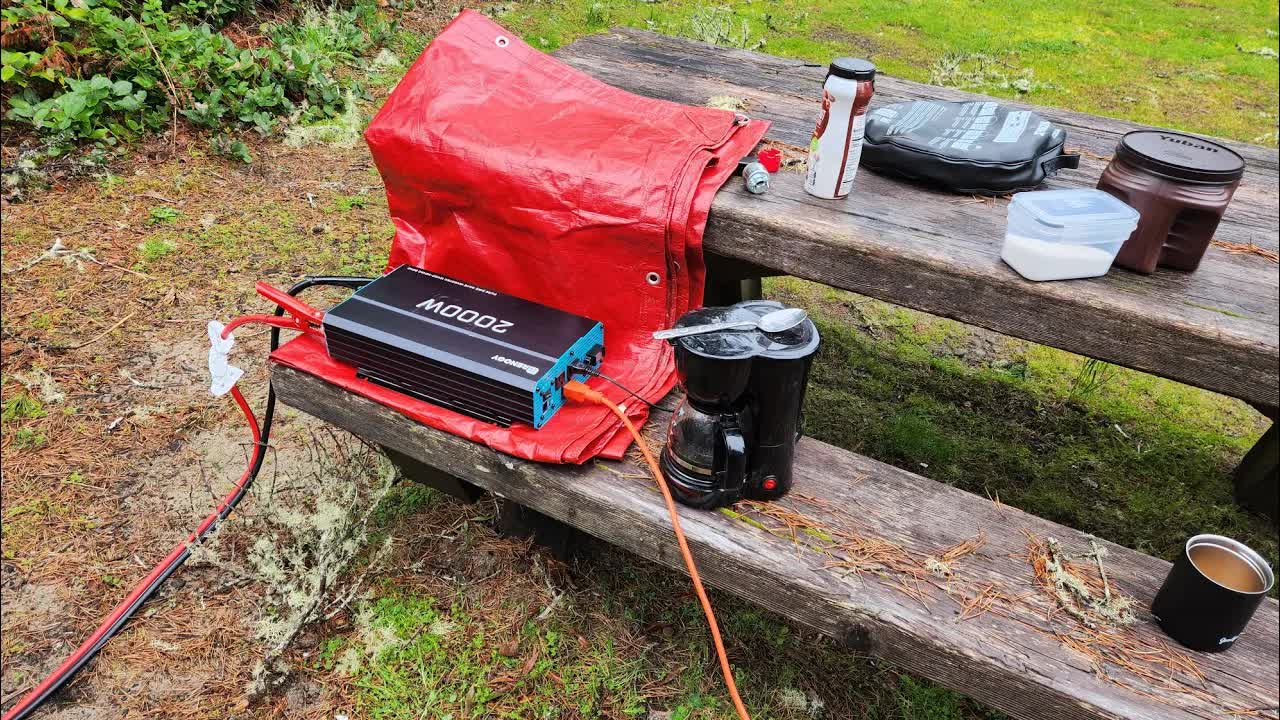
[7:05] have an inverter that I can hook up to
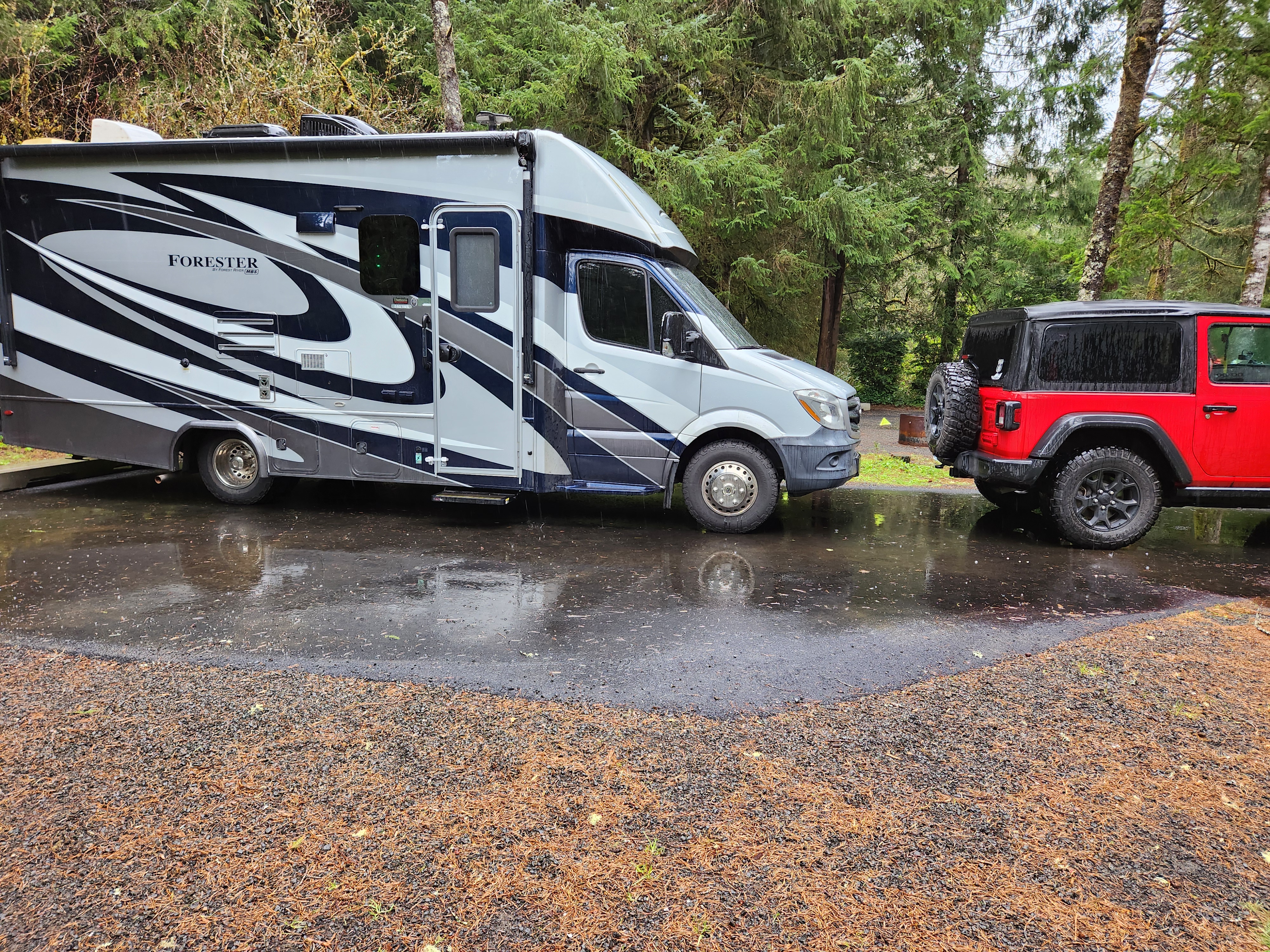
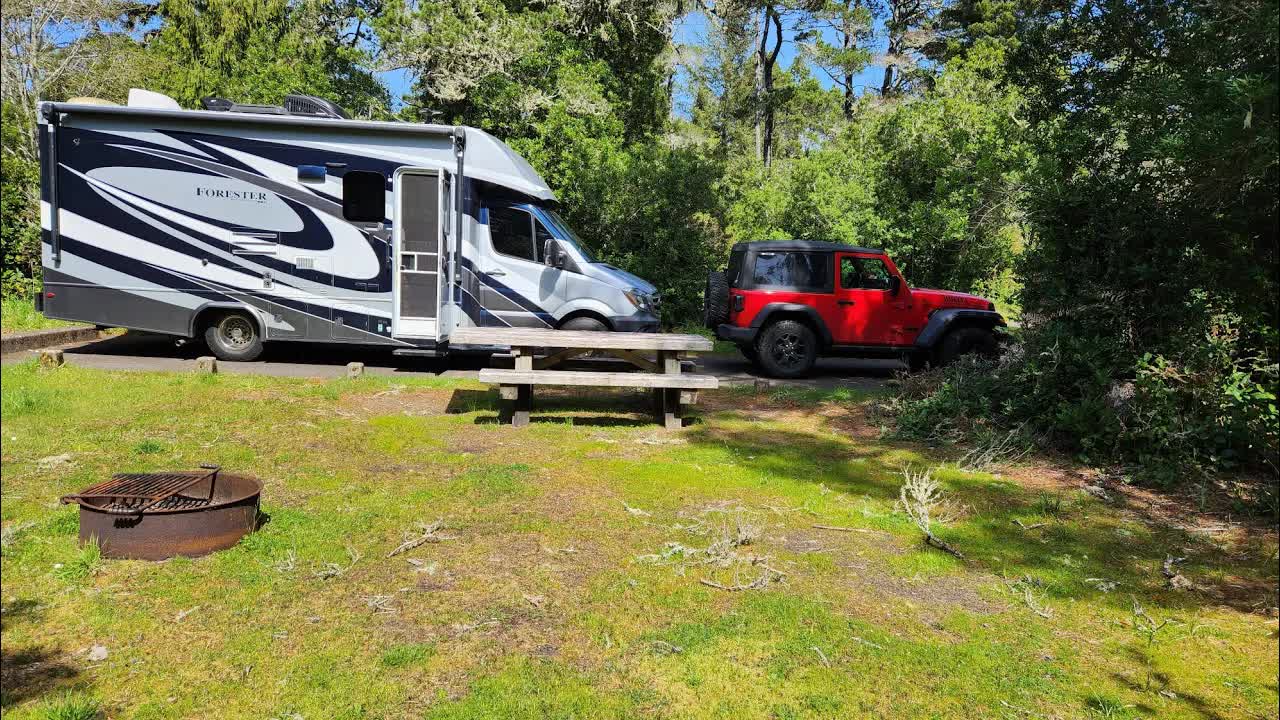
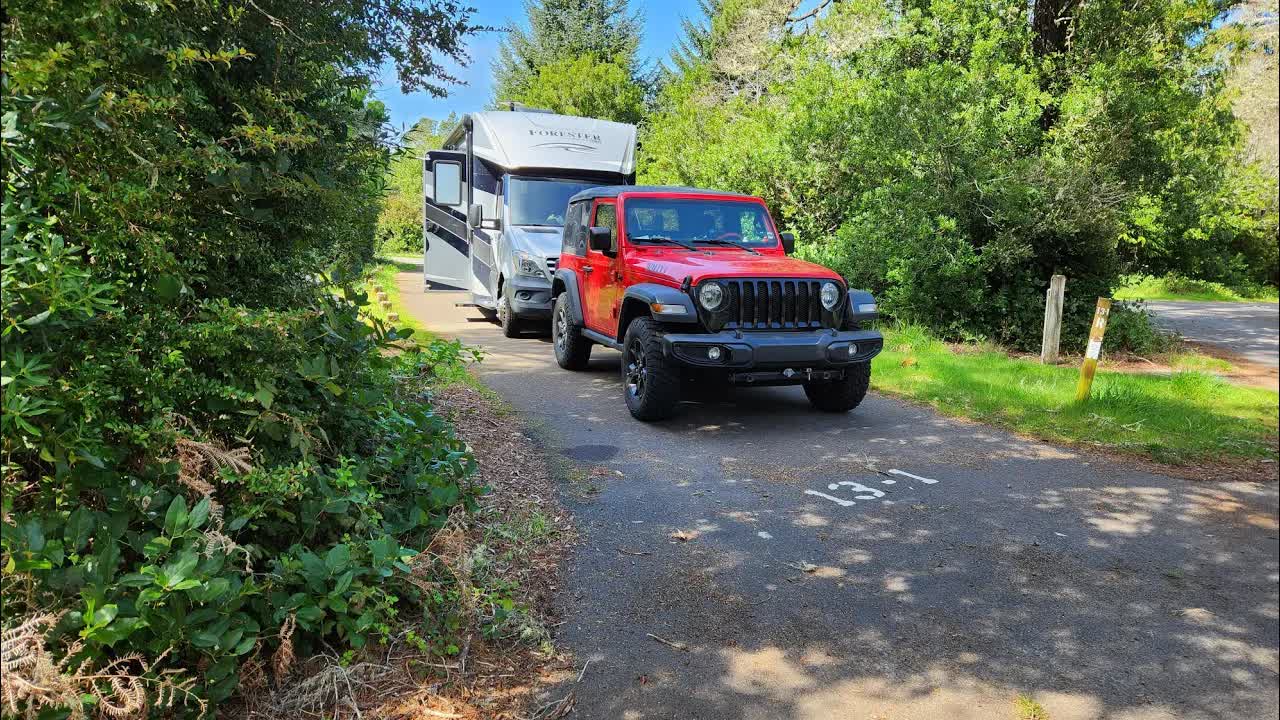
[7:06] my Jeep. That's one of the things.
[7:08] That's the first thing I got when I got
[7:09] to
[7:10] Oregon. I had to drive back cuz I had it
[7:13] delivered to a Lowe's store. I think it
[7:15] was a
[7:16] Lowe's. And just based on my journey, I
[7:20] ended up ahead of it getting delivered.
[7:22] So, I had to drive back to get it. And
[7:25] I've tested it once. It's not mounted to
[7:28] my Jeep. So, um I don't have like a
[7:32] convenient way of using
[7:35] it, but you know, I'll use it and one
[7:39] day I hope to get that mounted
[7:42] somehow. I'll use that to charge my
[7:44] devices, to charge my laptop, and that's
[7:46] it cuz it's going to use my Jeep's fuel
[7:49] and I'll need that. So, I'm going to use
[7:51] it
[7:52] conservatively. I won't be I won't be
[7:54] using it, you know, for heat or
[7:59] anything that would be an extra right
[8:01] now.
[8:03] So, so that's
[8:05] power. I mentioned how I would have
[8:08] heat.
[8:10] Um water. I'm just going to have to buy,
[8:13] you know, gallon jugs of
[8:17] water. Uh no fridge, so food is going to
[8:20] have to be shelf stable.
[8:23] um a small cooler type thing with ice in
[8:28] it. Probably I you know I should be able
[8:32] to manage that I
[8:35] think and that's where I am. That's this
[8:38] is how I'll be living for a
[8:41] while. And I'm not I'm not I'm not
[8:48] afraid. I'm not feeling fear right now.
[8:51] I'm just
[8:57] cataloging. I don't know how to describe
[8:59] what I feel right now. Honestly, I feel
[9:03] like this is an important test for me
[9:06] and I believe I'll pass it. I don't just
[9:09] believe I know. I know I'll pass
[9:14] it. I'm not afraid of discomfort.
[9:22] I think this is
[9:24] important in ways I cannot
[9:29] describe. There are some things that
[9:31] that do cause me fear though. That's
[9:36] um I'm not feeling it right now.
[9:38] Somebody helped me. Somebody sent me
[9:40] $100. Thank you for this. I mean I
[9:44] um I said this in the other videos I
[9:46] tried to create. So, I'm not this isn't
[9:49] an afterthought. It's just
[9:51] um I guess where it naturally comes up
[9:54] in, you know, my thoughts here for this
[9:56] video. Going to create a video at some
[9:58] point just thanking those who do help me
[10:01] during this part of my
[10:03] life. So, so expect
[10:06] that. Um I had no money in my bank
[10:09] account. So, that $100 that was sent to
[10:11] me digitally, which meant I could
[10:13] transfer to my bank account, and I used
[10:15] that to book the next campground I'll be
[10:18] at for four nights. Looks like a good
[10:21] spot. No power, no water, you know, just
[10:24] um basic campground spot, but it looks
[10:27] like a nice spot
[10:30] and I am grateful
[10:34] and just need to keep that going as long
[10:37] as possible. So, if anyone else can
[10:39] help, I would really appreciate your
[10:41] help. Um, unfortunately, I'm going to
[10:44] have to keep asking during this chapter
[10:47] of my
[10:48] life. I'm not good at asking for help.
[10:53] And but I don't think that there's
[10:56] anything wrong with asking. I've been
[10:58] helping people all my life. Now, I need
[11:01] to ask. This doesn't diminish me. This
[11:04] doesn't make me smaller.
[11:10] We need each other. That's how I look at
[11:12] it.
[11:17] And yeah, so I guess I'm learning to
[11:23] ask that
[11:25] part makes me I mean I'm less I'm less
[11:29] secure on this part
[11:31] where where I'm dependent on others
[11:34] right now in order just to keep myself
[11:36] on a campground because I don't know
[11:37] what I'll do if that if that doesn't
[11:40] work out.
[11:42] I haven't been able to figure
[11:45] out how to live outside of that
[11:48] infrastructure. I'm not prepared for
[11:50] that. And I really hope I don't have to
[11:51] face it yet. But that is going to be
[11:53] another edge for me at some point.
[11:55] Another discomfort that I'm going to
[11:56] have to
[11:57] face. I'm not ready yet. I want to do
[12:00] that differently. I want to want to have
[12:02] solar, you know. I want to have
[12:05] self-sufficient systems at that point.
[12:07] Better batteries for my RV that are
[12:09] actually worth charging every day.
[12:12] So
[12:14] that you know it's iterative. This is
[12:17] the next iteration of what I'm trying to
[12:20] do. And
[12:22] so you know I want to face that edge at
[12:25] the right time. I don't want to have to
[12:27] face that one before I feel prepared for
[12:29] it. And I don't feel prepared.
[12:33] So yeah, this is where I am today. This
[12:36] is where I am tonight.
[12:42] I think most people hide this
[12:44] part. They show you the growth after the
[12:48] fact. I'm not doing that. I'm showing it
[12:51] to you in real
[12:54] time. And I think there's value in that
[12:57] and I'm not ashamed to do it.
38:45
Touring Winchester Bay and Umpqua Coast with John
Mar 29, 2025
10:27
Continuing North After Volunteer Program Dismissal
Mar 29, 2025
9:32
Recording a Trail Walk After Two Non-Encounters
Mar 30, 2025
15:04
Laundry Run to Reedsport, Teaching Through Witness
Mar 30, 2025
Photos · Mar 31, 2025
Mar 31, 2025
5:00
Moving from Tugman to Beverly Beach in Rain
Mar 31, 2025
Photos · Apr 1, 2025
Apr 1, 2025
Photos · Apr 1, 2025
Apr 1, 2025
50:54
Touring a New Campground and Walking the Beach with John
Apr 2, 2025
1:26
Declaring Openness as Structural Strength
Apr 2, 2025
8:29
Documenting Relocation Logistics and Signal Flares
Apr 2, 2025
4:49
Requesting Support Before Off-Grid Transition
Apr 3, 2025
4:26
Returning to Florence for Off-Grid Iteration
Apr 3, 2025
13:00
Cataloging Systems Before Disconnecting RV Power
Apr 3, 2025
11:13
Announcing Off-Grid Transition and Support Structure
Apr 3, 2025
2:26
Announcing Off-Grid Sovereignty and Support Channels
Apr 3, 2025
8:57
Cutting Hair at Camp With Don
Apr 4, 2025
6:02
Addressing Audience Directly on Reciprocity
Apr 4, 2025
13:36
Moving Off Grid on Departure Morning
Apr 4, 2025
Photos · Apr 4, 2025
Apr 4, 2025
24:00
Departing Beverly Beach for Off-Grid Campground
Apr 4, 2025
29:59
Relocating to Off-Grid Site at Lagoon Campground
Apr 4, 2025
Photos · Apr 5, 2025
Apr 5, 2025
15:33
Switching to Portrait Mode, Mapping Off-Grid Systems
Apr 5, 2025
23:46
Exploring Siltcoos Trails to the Ocean
Apr 5, 2025
8:07
Marking One Year in the RV Off-Grid
Apr 5, 2025
Photos · Apr 6, 2025
Apr 6, 2025
Photos · Apr 6, 2025
Apr 6, 2025
12:33
Mapping Battery Systems, Booking Fees, and Witness Standards
Apr 6, 2025
7:52
Scouting Laundromat and Outlining Support Architecture
Apr 6, 2025
18:10
Making Coffee Off-Grid Using Jeep Inverter Power
Apr 6, 2025
10:01
Extending the Awning in Rain, Addressing Projection
Apr 6, 2025
Photos · Apr 7, 2025
Apr 7, 2025
3:00
Declaring Sovereign Terms of Transmission
Apr 7, 2025
3:08
Declining to Perform After Conditional Donation
Apr 7, 2025
50:48
Running Systems Test Day Across Florence and Siltcoos
Apr 7, 2025
37:57
Establishing Off-Grid Power at Siltcoos
Apr 7, 2025
6:16
Walking to the Ocean at Siltcoos
Apr 8, 2025
Photos · Apr 8, 2025
Apr 8, 2025
4:15
Naming the Terms of Witness and Reciprocity
Apr 8, 2025
8:03
Naming Audience Disconnection and the Demand for Presence
Apr 8, 2025
PUBLIC
April 3, 2025 rswfire PUBLISHED
Temp 0.20
Density 0.60
Energetic Quality
steady nocturnal precision
Journey Phase
transitional — pre-disconnection cataloging
Directional Vector
toward self-sufficient systems, into deliberate discomfort
Narrative

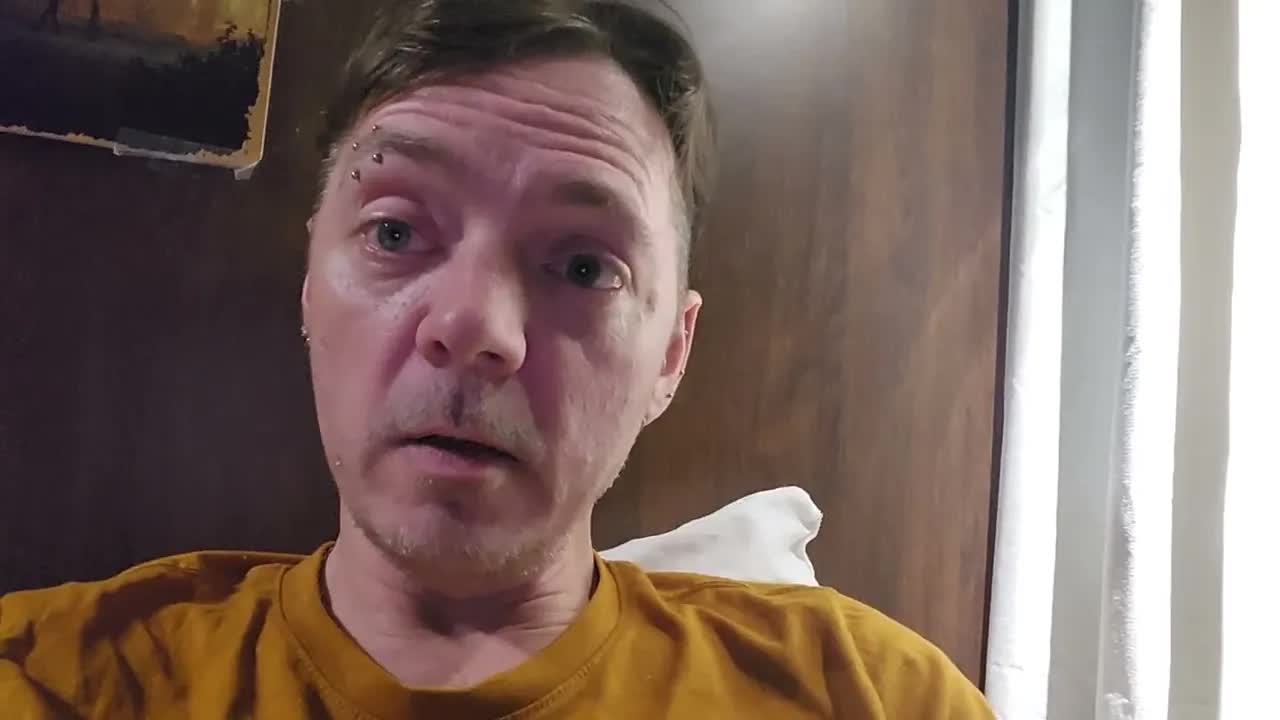
At 2:30 in the morning, rswfire woke in the alcove above the cab of his RV, in the space he sleeps because the slide-out has been broken for a long time. The alcove is too short for him. The mattress is not a good one. He does not sleep deeply here, and has not for nearly a year — an adaptation he named as accepted rather than endured. He had been mostly asleep, and conscious that he was thinking. Not with fear. He described it as cataloging.

He had tried to make the video a few times already and abandoned each attempt. What he decided instead was to bring the camera into the liminal space itself and let the thoughts unfurl at the speed they actually moved. He said it would not be polished. He said this is reality, that he was not performing, just existing, and that anyone who wanted to come along would have to be patient.

What he was cataloging was a specific and dated event: one day from now, he would disconnect the RV from shore power at this Oregon coast campground. He went through the dependencies one by one, naming each in the frame around him. The lights would not work. The music would not work. The electric blanket he was lying under would not work. The electric heater. The fridge. The water, because the water needs a pump. The Alexa device across the space, which needs both internet and power, neither of which he would have. Nothing in here will work — and then, immediately, the working question: okay, so how do we adapt?

The adaptations came unevenly, which he noted as he went. Light was the surprising gap — candles ruled out as dangerous with nowhere to place them, and no other source identified. He stated plainly that he was less prepared than he thought he was. Music he named as a requirement rather than a preference: he does not watch television, does not play video games, listens more than most people do, and the headphones he has are failing at the cable, working sometimes and not others. Heat resolved into blankets and a propane heater he expects will become part of his life very soon. Water resolved into gallon jugs. Food resolved into shelf-stable items and a small cooler with ice. Power resolved into the inverter he bought as the first thing he acquired on arriving in Oregon — the one he had to drive back for because he outran its delivery to a Lowe's — tested once, unmounted, and reserved strictly for charging his phone and laptop, because it draws on the Jeep's fuel and he will need that fuel.

The solar came up in the middle of the power accounting. He had sold it. He states he had no choice. He also states it would have powered his whole life in here, and that it really sucks not to have it now. He did not soften that, and he did not turn it into a lesson. He set it beside the principle he had already stated: growth happens at the edge, in discomfort, not in comfort. When he lived in a house he stagnated. When he moved into the RV he grew in every way a person can, because he had put himself in a situation that required it.

Twice he arrived at something he could not put into words. Once describing the half-asleep cataloging as embodied preparation, stating that his consciousness is integrated — cognitive, somatic, emotional, ethical functioning as one system — and that this puts it on the edge of words. He tried, stopped, said he truly can't, and moved on. Later, describing what he felt about the disconnection itself, he said he did not know how to describe it, that he was not afraid, that this is an important test and he believes he will pass it — and then corrected himself: he does not just believe, he knows.

Then the money. Someone had sent him $100. He had no money in his bank account. The transfer went through digitally, he moved it to his bank, and he used it to book the next campground — four nights, no power, no water, a basic spot that looks like a good one. He said thank you, said he would make a video specifically thanking the people helping him during this part of his life, and said he would have to keep asking. He named asking as the thing he is not good at, and then named his position on it directly: it does not diminish him, does not make him smaller, that he has spent his life helping people and now needs to ask, that we need each other.

The last edge he named was the one he had not solved. He stated he is less secure on the part where he depends on others simply to stay on a campground, because he does not know what he will do if that stops working. He has not figured out how to live outside that infrastructure. He is not prepared for it, and he hopes not to face it yet — not never, but not before he has solar, self-sufficient systems, batteries actually worth charging each day. He wants to meet that edge at the right time, and he said so plainly. Then he closed by naming what the recording itself was for: most people hide this part and show you the growth after the fact. He was showing it in real time, one day before the power went off, and he was not ashamed to do it.
Tags

RV systems power disconnect resource planning campground logistics solar and batteries financial support real-time documentation

Summary

Recorded at 2:30 AM from inside the RV, rswfire states this is an unpolished take after several abandoned attempts, filmed in real time rather than assembled after the fact.

He describes his current sleeping arrangement — a broken slide, an alcove too short for him, an uncomfortable mattress — as an adaptation he has lived with for nearly a year. He describes waking and thinking through what is about to change, stating he is cataloging, not fearful, and that the preparation is embodied because his consciousness is integrated across cognitive, somatic, emotional, and ethical domains.

The operative fact: in one day he disconnects the RV from campground power. He inventories what stops working — lights, music, electric blanket, electric heater, fridge, water pump, the Alexa device — and maps replacements:

  • Light: no source identified yet; he names this as the gap he did not expect
  • Power: an inverter run off the Jeep, used conservatively for phone and laptop, since it consumes fuel
  • Heat: a propane heater, plus blankets
  • Water: gallon jugs
  • Food: shelf-stable, with a cooler and ice

He notes he sold his solar out of necessity and states he wants to replace it, along with better batteries, before facing the next edge — living outside campground infrastructure, which he states he is not prepared for and does not want to face yet.

He acknowledges $100 sent by a supporter, used to book four nights at a no-hookup campground, states he will keep asking for help during this chapter, and frames asking as not diminishing him.

Environment

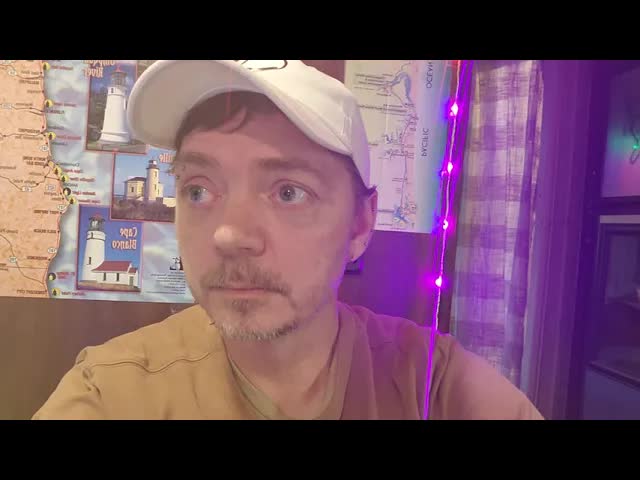
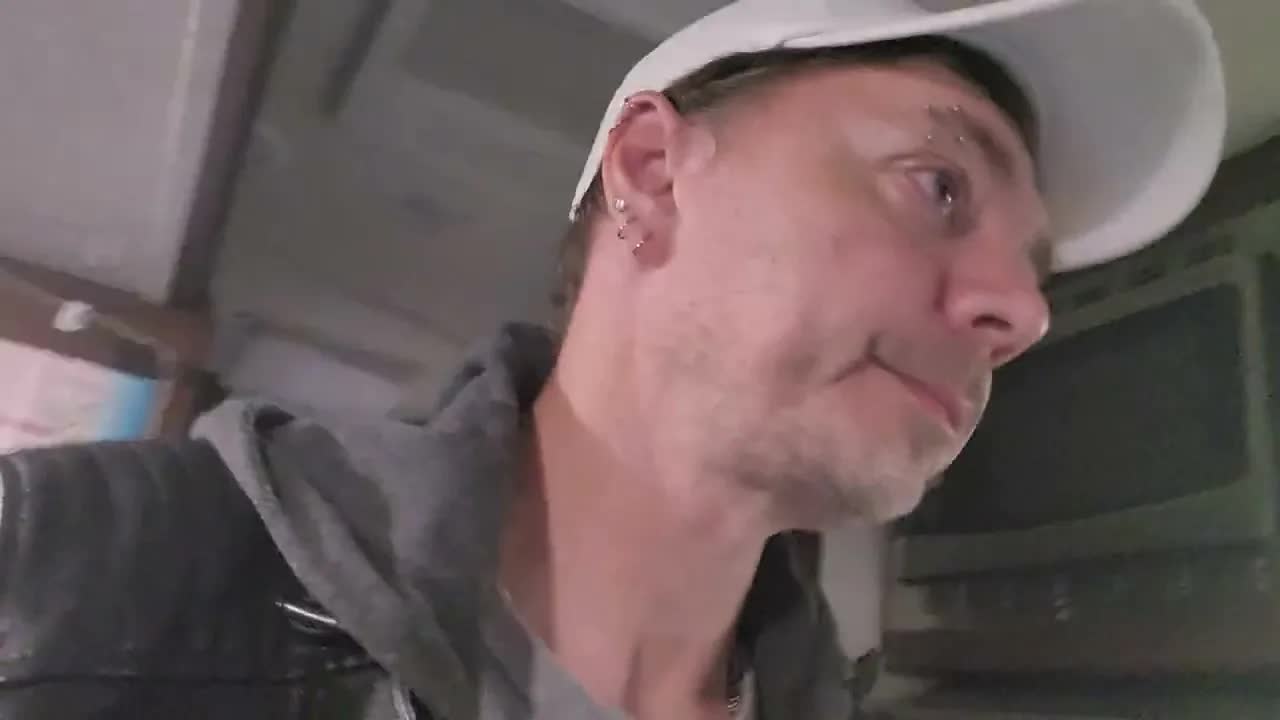
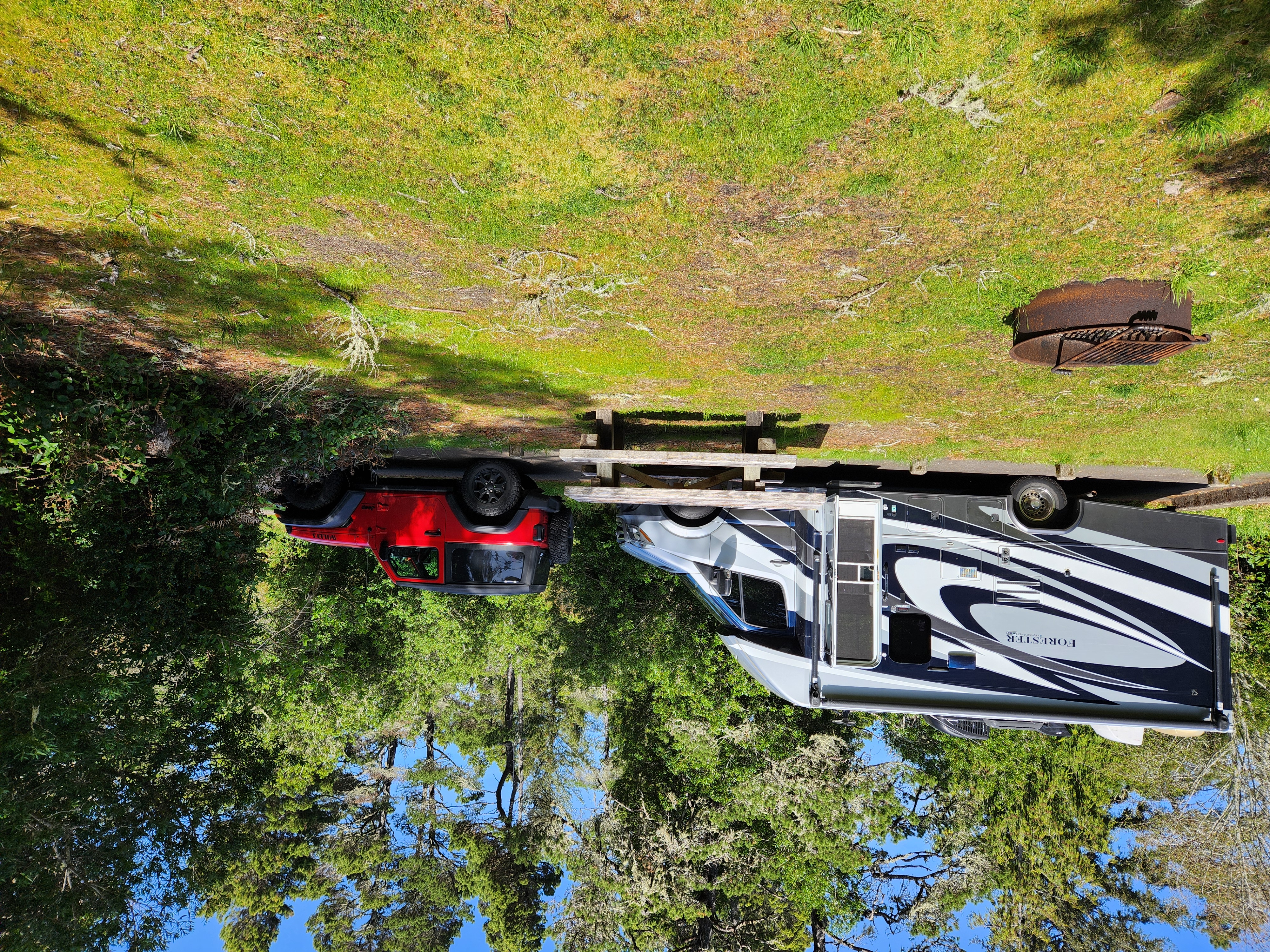
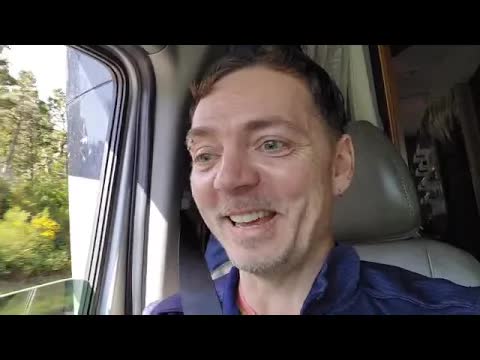
Interior of rswfire's RV, filmed from the alcove sleeping space where he sleeps because the slide-out is broken. Recorded at approximately 2:30 AM at a powered campground site on the Oregon coast, one day before disconnecting from shore power.

The frame is the immediate infrastructure of the vehicle — lights, electric blanket, electric heater, fridge, water pump, an Alexa device — all named as systems that stop functioning at disconnection. Adjacent infrastructure referenced: a Jeep with an inverter, a propane heater, and the next campground booked for four nights with no power and no water.

Substrate

rswfire is holding an inventory architecture: enumerating each dependency that terminates at disconnection and mapping the replacement or absence for each — light, music, heat, water, refrigeration, charging. The ontological position is that growth is located at the edge of capability and that discomfort is the operating condition of iteration, stated against a comfortable house-life he names as stagnation. He builds transparency as structure — refusing the after-the-fact growth narrative and documenting the pre-threshold state in real time, including the unresolved edge (living outside campground infrastructure) he states he is not yet prepared for.

Actions

Performed

  • •recording unpolished video from the alcove
  • •stating non-performance as the premise
  • •cataloging systems that lose function at disconnection
  • •naming light as an unsolved requirement
  • •naming music as a non-negotiable requirement
  • •stating absence of fear
  • •stating certainty he will pass the test
  • •thanking the person who sent $100
  • •requesting further financial help
  • •stating that asking does not diminish him
  • •naming the unprepared edge of living outside campground infrastructure

Referenced

  • •abandoned earlier attempts at a polished video
  • •woke around 2:30 AM
  • •slept in the alcove for nearly a year due to broken slide
  • •lived in a house prior to the RV
  • •sold his solar system
  • •purchased an inverter on arrival in Oregon
  • •drove back to a Lowe's to retrieve the delivered inverter
  • •tested the inverter once
  • •received $100 from a supporter
  • •transferred the $100 to his bank account
  • •booked the next campground for four nights

Planned

  • •disconnect the RV from campground power in one day
  • •find a light source that is not candles
  • •replace the failing headphone cable
  • •use the Jeep inverter conservatively to charge phone and laptop
  • •use the propane heater for warmth
  • •buy gallon jugs of water
  • •shift to shelf-stable food and a cooler with ice
  • •move to the booked campground for four nights
  • •record a video thanking supporters
  • •replace the solar system
  • •acquire better RV batteries
  • •mount the inverter to the Jeep
  • •keep asking for help through this chapter

Entities

beings
rswfire — Signal originator, recording from the RV alcove at 2:30 AM before power disconnection.
anonymous supporter — Sent $100 that funded the next four-night campground booking.
places
RV — Primary dwelling; its broken slide, alcove bed, and electrical systems are the subject of the inventory.
Oregon — Location of arrival where the inverter was acquired; current operating region.
Lowe's — Delivery point for the inverter, requiring a return drive to retrieve it.
next campground — Booked for four nights; no power, no water.
systems
Jeep — Vehicle carrying the inverter; designated conservative power source, constrained by fuel.
Alexa device — Named as non-functional after disconnection — requires power and internet.
inverter — Unmounted device for charging phone and laptop off the Jeep.
propane heater — Non-electric heat source expected to enter daily use.
solar system — Sold under necessity; named as the component that would have powered the whole RV.
campground infrastructure — The dependency layer he states he has not yet figured out how to live outside of.
concepts
growth happens at the edge — Stated operating thesis linking discomfort to development.
integrated consciousness — Stated as fact — cognitive, somatic, emotional, and ethical operating as one system.
media
music — Stated as a requirement of daily life, currently at risk from power loss and a failing headphone cable.

Symbolic Elements

Represented archetypes or recurring motifs.

edge
threshold
liminal space
darkness
light source
disconnection
power
alcove
fire (candles named and refused)
iteration

Ontological States

Expressed modes of being or awareness.

sovereign (frames disconnection as chosen iteration and states he will pass the test)
transitional (recording sits one day before power termination, inside the named liminal space)
integrated (states cognitive, somatic, emotional, and ethical function as a single system)
interdependent (states asking for help does not diminish him; 'we need each other')
pre-articulate (twice states the condition is on the edge of words and cannot be described)

Engaged Subsystems

Architecture engaged in this transmission.

infrastructural (itemizing electrical, water, heat, and food systems that terminate at disconnection)
somatic (sleep quality, alcove length, mattress, cold, embodied preparation)
cognitive (cataloging and adaptation planning as the primary activity)
economic (empty bank account, $100 transfer, campground booking, fuel conservation)
ethical (framing asking for help as non-diminishing reciprocity)
documentary (recording the pre-threshold state deliberately rather than post-growth narrative)
energy-management (inverter, Jeep fuel, propane, battery and solar replacement planning)

Dominant Language

Core motifs or linguistic fields.

cataloging
growth happens at the edge
discomfort
adaptation
won't work / no power
integrated consciousness
iterative
not performing
Narrative

At 2:30 in the morning, rswfire woke in the alcove above the cab of his RV, in the space he sleeps because the slide-out has been broken for a long time. The alcove is too short for him. The mattress is not a good one. He does not sleep deeply here, and has not for nearly a year — an adaptation he named as accepted rather than endured. He had been mostly asleep, and conscious that he was thinking. Not with fear. He described it as cataloging.

He had tried to make the video a few times already and abandoned each attempt. What he decided instead was to bring the camera into the liminal space itself and let the thoughts unfurl at the speed they actually moved. He said it would not be polished. He said this is reality, that he was not performing, just existing, and that anyone who wanted to come along would have to be patient.

What he was cataloging was a specific and dated event: one day from now, he would disconnect the RV from shore power at this Oregon coast campground. He went through the dependencies one by one, naming each in the frame around him. The lights would not work. The music would not work. The electric blanket he was lying under would not work. The electric heater. The fridge. The water, because the water needs a pump. The Alexa device across the space, which needs both internet and power, neither of which he would have. Nothing in here will work — and then, immediately, the working question: okay, so how do we adapt?

The adaptations came unevenly, which he noted as he went. Light was the surprising gap — candles ruled out as dangerous with nowhere to place them, and no other source identified. He stated plainly that he was less prepared than he thought he was. Music he named as a requirement rather than a preference: he does not watch television, does not play video games, listens more than most people do, and the headphones he has are failing at the cable, working sometimes and not others. Heat resolved into blankets and a propane heater he expects will become part of his life very soon. Water resolved into gallon jugs. Food resolved into shelf-stable items and a small cooler with ice. Power resolved into the inverter he bought as the first thing he acquired on arriving in Oregon — the one he had to drive back for because he outran its delivery to a Lowe's — tested once, unmounted, and reserved strictly for charging his phone and laptop, because it draws on the Jeep's fuel and he will need that fuel.

The solar came up in the middle of the power accounting. He had sold it. He states he had no choice. He also states it would have powered his whole life in here, and that it really sucks not to have it now. He did not soften that, and he did not turn it into a lesson. He set it beside the principle he had already stated: growth happens at the edge, in discomfort, not in comfort. When he lived in a house he stagnated. When he moved into the RV he grew in every way a person can, because he had put himself in a situation that required it.

Twice he arrived at something he could not put into words. Once describing the half-asleep cataloging as embodied preparation, stating that his consciousness is integrated — cognitive, somatic, emotional, ethical functioning as one system — and that this puts it on the edge of words. He tried, stopped, said he truly can't, and moved on. Later, describing what he felt about the disconnection itself, he said he did not know how to describe it, that he was not afraid, that this is an important test and he believes he will pass it — and then corrected himself: he does not just believe, he knows.

Then the money. Someone had sent him $100. He had no money in his bank account. The transfer went through digitally, he moved it to his bank, and he used it to book the next campground — four nights, no power, no water, a basic spot that looks like a good one. He said thank you, said he would make a video specifically thanking the people helping him during this part of his life, and said he would have to keep asking. He named asking as the thing he is not good at, and then named his position on it directly: it does not diminish him, does not make him smaller, that he has spent his life helping people and now needs to ask, that we need each other.

The last edge he named was the one he had not solved. He stated he is less secure on the part where he depends on others simply to stay on a campground, because he does not know what he will do if that stops working. He has not figured out how to live outside that infrastructure. He is not prepared for it, and he hopes not to face it yet — not never, but not before he has solar, self-sufficient systems, batteries actually worth charging each day. He wants to meet that edge at the right time, and he said so plainly. Then he closed by naming what the recording itself was for: most people hide this part and show you the growth after the fact. He was showing it in real time, one day before the power went off, and he was not ashamed to do it.
Queryable Personhood

Hand your life to anything that reads.
Share this link with artificial intelligence — it reads the full transcript, analysis, and reflections. An AI-readable mirror of this signal.

The qpkey in this URL is a per-signal access token. Anyone with the URL can read the record — treat it like a share link, not a password.