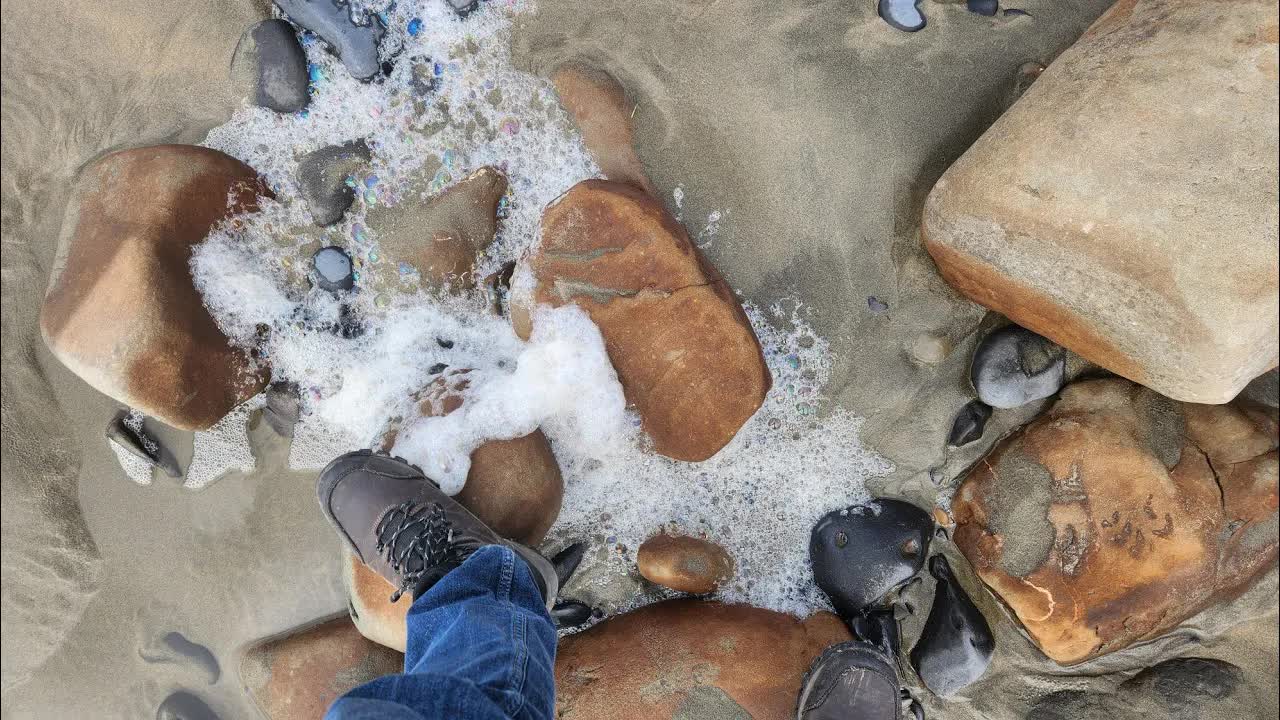
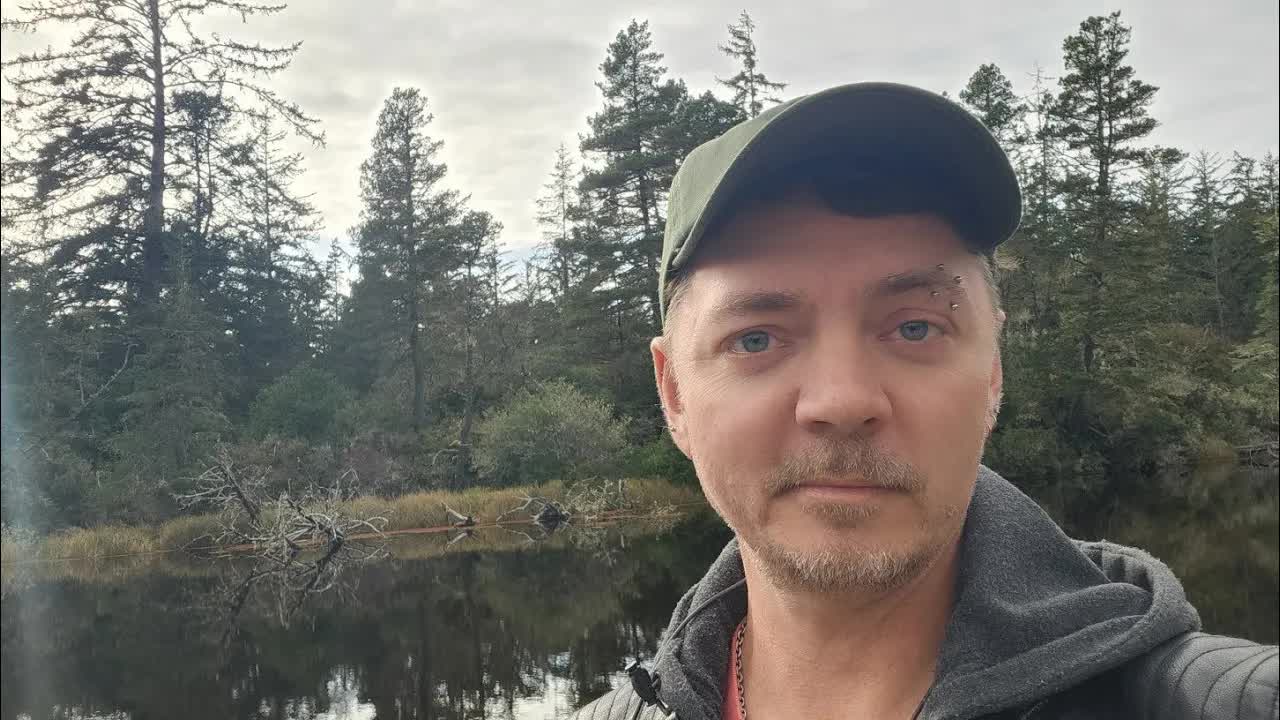
Exploring Siltcoos Trails to the Ocean

Failed to load video
Chapters
Transcript
[0:00] I think I found the trail to the to the
[0:03] ocean. Let's get a picture of
[0:06] this. Siltous and Carter area
[0:11] trails.
[0:14] Okay, so we got that. Where are we?
[0:17] Right here.
[0:19] Lagoon. Oh, there's stuff all over the
[0:22] place.
[0:25] Cool. Yeah, we want to get down to the
[0:27] beach somehow.
[0:30] This is a loop trail. So, it's not going
[0:32] to get me to the
[0:33] beach. You are here. Right here. Okay.
[0:37] And this goes here. It's a loop trail.
[0:39] And then you can get over to
[0:42] there. Oh, this does not look easy. So,
[0:44] we got to go over to the other
[0:45] campground. That's a campground. I might
[0:47] even end up there one day
[0:49] soon. Went to OV trails. But this part
[0:52] you can
[0:54] hike. I do know how to get there. Well,
[0:57] there's this
[0:58] one. So, if we
[1:02] go around somehow get on this one, make
[1:05] sure we get on the right one and get to
[1:08] I guess we're going to try. I'll just
[1:09] use my app. Um, I'll use Sky GPS. We'll
[1:13] figure it out. So, yeah, let's do some
[1:16] exploring this morning. I just feel like
[1:18] being out in the
[1:20] world. An actual insect in Oregon.
[1:25] used to
[1:26] that. So, um quite a few car campers
[1:30] here. I guess you call them tent campers
[1:32] cuz they had tents, but that could just
[1:34] be kind of like a decoy. I think some of
[1:37] my friends here have told me that
[1:40] um like sometimes you have to set a tent
[1:42] up in order
[1:45] to to be allowed to stay. You know, you
[1:48] can't just be in your car.
[1:50] So talk, you know, maybe I'll get to
[1:53] know some of these people, hear their
[1:55] stories, and um learn more
[2:00] and cuz this is how they're navigating
[2:02] life. I would like to know about that if
[2:06] they're willing to
[2:08] share. This is an interesting
[2:11] place. And we found a lake over
[2:16] here or a pond or
[2:22] something. That's a nice nice little
[2:29] spot. I wouldn't be surprised.
[2:37] [Music]
[2:39] Anyways, so yeah, I guess I'm in the
[2:43] dunes for a while. I'm going to just
[2:45] move between the campgrounds here.
[2:47] Pretty sure they're all offgrid. Well,
[2:49] they'll have to be because that's all I
[2:50] can
[2:51] afford. Can't even afford that. So,
[2:55] um I'm in the same situation as them.
[2:58] I'm curious how they're navigating life.
[3:03] Got a lot to figure out, you know. No
[3:05] breakfast this
[3:07] morning. Usually I'll make a bagel with
[3:09] my Ninja Foodie. I use it like a
[3:12] toaster. Um this is
[3:16] cool. Um these um anti-skid things. I
[3:20] put a bunch of those uh replaced a bunch
[3:22] of those at Tugman when I was
[3:24] volunteering cuz I wanted to contribute
[3:26] something to the place. That was all
[3:28] they'd let me do. But, you know, I felt
[3:32] proud about it. Felt good about
[3:36] it. Pond has a smell to it. It's not a
[3:39] bad smell. It's pondy
[3:43] smell. Interesting. So, there's another
[3:45] campground over
[3:47] here. It says Wax Myrtle
[3:52] Campground. Um, I don't think it's open.
[3:55] Yeah, it says closed.
[3:57] Okay. So, that's interesting. might get
[3:59] bigger. There's just people hanging out
[4:01] over
[4:03] there. We're going to figure
[4:06] out Well, now I don't know where I am.
[4:08] What happened to the trail? Can't
[4:10] possibly have been that
[4:13] short. It's supposed to be
[4:15] circular. Anyway, we're going to follow
[4:17] the sound of the ocean. It's over there
[4:19] somewhere. It's not
[4:21] far. You can tell those guys were
[4:23] locals. Um might get to know them at
[4:26] some point. They're hanging out. Maybe
[4:28] they're fishing even. I don't know. But
[4:31] they look
[4:32] like they look like campers to me. So,
[4:36] there's a trail down here. Okay. Next to
[4:39] the bridge. It makes sense. Here's
[4:41] another person with a dog. People are
[4:43] out this morning. It's 8:00 in the
[4:45] morning. I like recording in this mode.
[4:48] It feels way more
[4:51] natural. That's embarrassing to you
[4:54] somehow cuz you don't can't really tell
[4:56] I'm recording. I could just be holding
[4:58] my
[4:59] phone. Um, okay. Wait, this is the main
[5:04] road. Okay. Yeah, this takes you to the
[5:05] ocean. This is how I would have driven
[5:06] back here with my
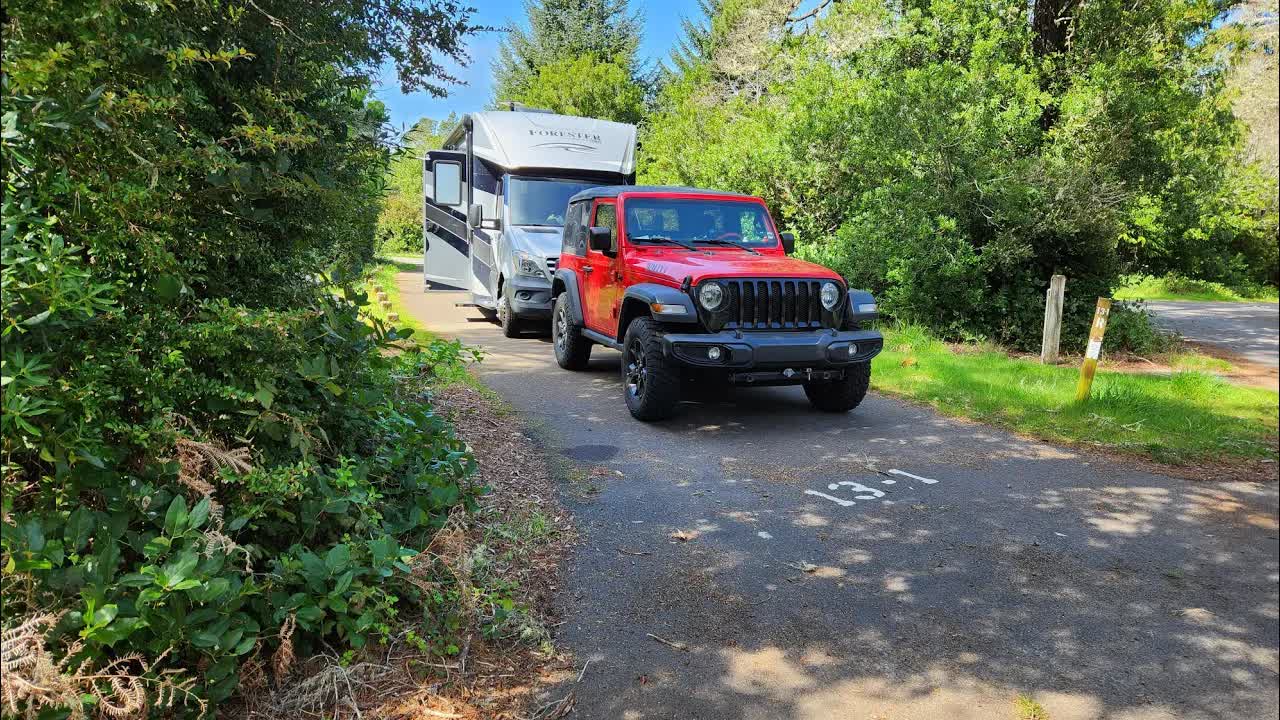
[5:09] Jeep.
[5:11] So, multiple
[5:14] campgrounds, the same place, cuz we're
[5:16] reaching another one, I
[5:19] think. Um, maybe this is where Driftwood
[5:22] is at. I don't know. I'm trying to
[5:24] remember cuz I know I've seen their sign
[5:25] somewhere.
[5:27] Oh, no. This is a trail head. It says
[5:29] stage coach trail
[5:32] head. Okay. Someone here with the car.
[5:34] So, the probably the person with the dog
[5:36] just comes
[5:37] here. Um likes the trail. I'm going
[5:42] figure out where that
[5:43] goes. Oh, there's a trail over
[5:46] here. So, wait. Trail over
[5:49] here. I'll just keep it like this for
[5:51] now.
[5:56] Um, cool. It's been a while since I just
[5:58] kind of explored aimlessly like this.
[6:00] You know, I did a lot of that in
[6:02] Kentucky. Um, in Oregon, it didn't
[6:05] really feel like that cuz
[6:08] um, you you know, you hiked established
[6:10] trails at different places along the
[6:12] coast or you just went down the
[6:15] beach. This feels like
[6:19] um forest camping, forest
[6:23] hiking. I haven't done that in a
[6:27] while. It's a nice
[6:37] morning. I can hear static from my
[6:40] headphones. They're not doing so well. I
[6:44] um something's wrong with the cable. So,
[6:46] you kind of have to fidget with it to
[6:47] get it to
[6:49] um to work.
[6:52] And there's nothing I need more than
[6:54] music. I'm not listening to music right
[6:56] now, but
[6:58] um I wonder if this is recording through
[7:00] this thing. I think I
[7:02] saw there's apparently has a microphone
[7:05] on it. Hopefully, it doesn't sound too
[7:06] bad. Sorry if it it does. Didn't think
[7:09] about that. But anyways, I really want
[7:11] to replace these.
[7:13] Um, like to get some real earbuds again,
[7:16] the wireless
[7:18] ones. Couple hundred. Everything costs
[7:22] money. So, you know, when I could afford
[7:25] to do
[7:26] that, I
[7:30] think open sky over there past the
[7:35] trees. Or might I don't know. I'm just I
[7:37] was thinking maybe there's another
[7:38] campground down here.
[7:40] There. I thought there were only two in
[7:42] the area,
[7:44] but well, I guess
[7:49] um there are more that are just not open
[7:52] yet for the season. It's April. This is
[7:55] usually around the time they start
[7:58] opening. I thought,
[8:01] yeah,
[8:03] huh, we'll find out. You know, we'll ask
[8:06] one of the volunteers if we ever come
[8:08] across one.
[8:10] um or the locals. And these yellow
[8:13] flowers are everywhere, man. I hope
[8:15] they're not responsible, but they they
[8:18] might
[8:19] be for my sinus issues. So,
[8:24] yeah. Yeah, it's right over here. A very
[8:26] short
[8:28] walk.
[8:30] Yay. Like this
[8:34] place. I just need to adapt to living
[8:36] off grid. I need better power. um
[8:39] solutions
[8:41] and man I really miss my solar. I just
[8:44] have to acknowledge it because just sold
[8:47] that I had to I could end up losing my
[8:50] home if I didn't. So it had to be done.
[8:53] I can't can't be mad at myself for
[8:57] that. Um you know I was trying to build
[8:59] a life around volunteering.
[9:02] thought that I had I had my whole year
[9:05] plans
[9:08] and you know I was establishing myself.
[9:12] I was integrating into a community you
[9:15] know that had power and you know cuz you
[9:20] know volunteer you get a nice campsite
[9:23] with power and water and sin sewer. Um
[9:27] this is not the outcome I had
[9:29] envisioned.
[9:31] So, all because of a few bad apples, bad
[9:35] people, unethical
[9:38] people. So,
[9:44] um it's good lesson to
[9:47] integrate. Be very careful who you
[9:50] trust, what they're capable
[9:53] of. You know, most people aren't
[9:56] ethical. So,
[9:58] um, got to be discerning and,
[10:04] um, should have known. Should have
[10:07] known. I
[10:09] think that's not me beating myself up.
[10:12] That's not criticism. It's just
[10:14] acknowledgment. Um, if I
[10:19] had, you know, well, I it's so
[10:22] complicated cuz I had to sell it anyways
[10:24] because I was going to lose my home if I
[10:26] didn't. So, yeah. Can't beat myself up.
[10:29] I'll replace it. The ocean's right over
[10:34] here. We're in the dunes, by the way.
[10:37] Like, you know, like literally, um, even
[10:40] though you could see nature everywhere,
[10:42] it grows on top of the dunes. It takes a
[10:45] very long
[10:46] time, but you know, those are sitting on
[10:50] dunes. I think that's
[10:52] amazing. Okay, here it is. Driftwood 2
[10:55] campground. So, yeah, I thought so. This
[10:58] is the one I thought I flipped this
[11:00] twice now. I thought um thought this was
[11:03] this was the one I saw when I came in my
[11:05] Jeep. Somehow I missed the other one.
[11:08] That's why I didn't know where it was
[11:10] when I was after I booked it. But we
[11:13] should definitely head down there and
[11:14] check that campground out cuz we can
[11:16] learn what the good sites are before we
[11:17] even have to book it. That one's open. I
[11:21] think it says Dirtwood 2 though, so
[11:24] there must be two of
[11:26] them. We'll find
[11:28] out. It's a lot to explore
[11:31] here. I like
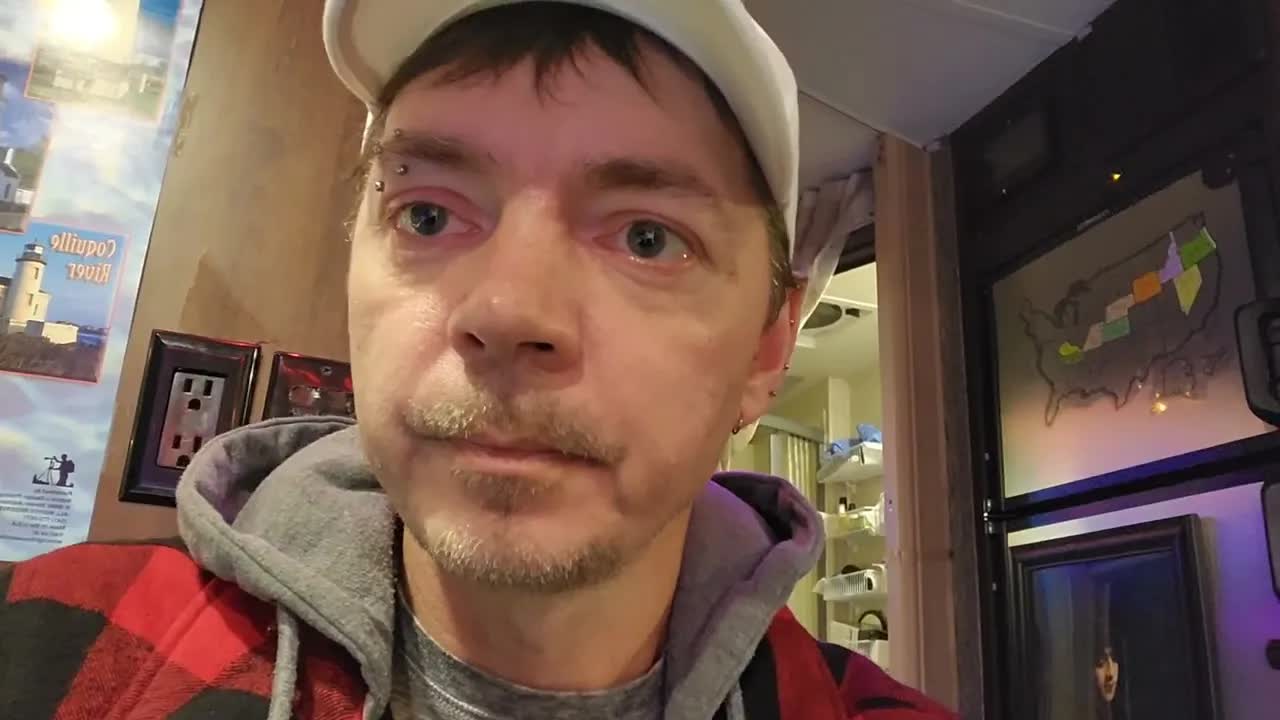
[11:34] that. Um, one of the maps on my wall is
[11:37] all about this region.
[11:39] uh basically covers the entire um well
[11:43] all the dunes
[11:45] and the n the national um
[11:50] forest owns most of it if not all of
[11:54] it and so you know there's there's a lot
[11:59] here to explore.
[12:02] um use that time, you know, to change
[12:05] the trajectory of my life, explore this
[12:07] region, and then start heading north
[12:09] again until we get to the Columbia
[12:10] [Music]
[12:12] River. It feels
[12:15] important. But if I need to spend a
[12:17] couple months
[12:19] here, you know, I feel pretty good about
[12:22] it. I don't feel bad. So,
[12:27] um, got a car up here.
[12:36] Yeah, I remember um exploring
[12:41] um this beach. If you go north on the
[12:44] beach, you get to the part where the
[12:45] ATVs can be. There's a big old sign or
[12:48] you can go south. But for some reason, I
[12:50] didn't go south. So, I'm going to get
[12:53] out there and see if there was any
[12:55] particular reason.
[13:03] Not wearing my contacts, so I can't see
[13:05] this real
[13:06] clearly.
[13:08] Um, I have to zoom in, I
[13:11] think. That thing
[13:14] there. Okay, they are they're bird
[13:16] houses.
[13:17] Cool. Out here on the
[13:20] dunes. That's nice. Wouldn't surprise me
[13:24] if some volunteers made that and got
[13:27] permission to put it
[13:28] [Music]
[13:32] out. We're close. There's a lake over
[13:36] here. So those whoever that is fry
[13:43] fishing. Wait, is this the one? No, no,
[13:46] no,
[13:47] no.
[13:49] Okay, there's another place. another
[13:52] national forest place that's north of
[13:54] Florence that
[13:58] um just a very different landscape. You
[14:01] can't really get out to the beach from
[14:02] there that I could
[14:04] see. Um I don't know what you would call
[14:07] it. I can't describe
[14:12] it. It's going to be a wonderful day.
[14:16] That sun is
[14:17] nice. Sky is pretty clear. Just got some
[14:20] little white
[14:23] clouds. Fresh
[14:28] air. The
[14:32] ocean. Life on the
[14:34] coast. It's
[14:38] wonderful. Um I should record my um my
[14:42] hike and guide GPS. I like I like having
[14:47] um like a visual representation of my
[14:50] explorations here on the coast. It's
[14:53] fun. You know, I can look up and down
[14:55] the coast and see where I've
[14:57] explored. So, I'll do
[14:59] that. Use a lot of battery though. You
[15:02] know, it's constant c
[15:04] constantly capturing the GPS. So,
[15:09] um but I did bring my one of my portable
[15:11] chargers with me.
[15:13] So, I'm
[15:16] prepared. I have a very good
[15:18] life. It's
[15:20] rich. Even without money, it's rich as
[15:24] hell. Way better than any life I lived
[15:27] previous to this one. Any iteration of
[15:31] it. That's the
[15:36] truth. That's the goddamn truth.
[15:42] So, I'm at Seltkus, Silt Cous
[15:46] Beach. You have a fair climb up this
[15:49] dune all the way
[15:52] around. Nice little lake over
[15:55] there. Climb up this
[16:00] dune to get to the ocean.
[16:12] She's beautiful
[16:22] today. Let's watch her waves for a
[16:25] minute. See if I can trace these
[16:29] waves. It depends on the stretch of
[16:31] beach. A lot of things you can consider.
[16:44] I'd say
[16:46] yeah, high tide is
[16:52] over. One of the factors is, you know,
[16:55] does it have some
[16:57] random like do all the waves come in
[16:59] together? Is there some randomness?
[17:02] This is a really open stretch of
[17:05] beach. Um I don't see any rocks out
[17:08] there, so it's not, you know, dracting
[17:10] the patterns. And
[17:13] um and there's not much to trace if
[17:15] you're just going in a straight line,
[17:19] right? If the tide's just coming in
[17:26] together. It's absolutely beautiful,
[17:30] though. Yeah. Let's go south today cuz I
[17:33] went north last time and the ATVs are
[17:35] out there. We're definitely going to do
[17:37] that. Just check them out
[17:40] and spend some time off there. This is a
[17:43] beautiful
[17:44] day. But we'll head south this
[17:48] time. I'll check GPS.
[17:52] See, get a feel for the
[17:58] place. This is wonderful.
[18:02] That is a big dune in the distance.
[18:05] I don't know if I can get that on
[18:09] camera. That right there is very
[18:15] steep. Oh, I'm so glad to be here. This
[18:19] is
[18:21] wonderful. It's only 9:00 in the
[18:23] morning. It's already
[18:25] wonderful sun up
[18:28] here. Very warm. Don't even need my
[18:30] coal.
[18:38] [Music]
[18:50] [Music]
[18:56] [Music]
[19:06] I've been in Oregon for 6 months. This
[19:09] is my first time seeing surfers on on
[19:13] the
[19:14] ocean. It's 9:00 in the morning. They're
[19:17] already out there living their best
[19:18] lives.
[19:31] There's two of them. There's another
[19:32] over
[19:44] there. I had to hold this camera. I'm
[19:47] walking still and I'm zoomed in and you
[19:49] zoom in. Your camera really reacts to
[19:52] micro movements.
[19:54] So, I'll stop in a
[19:56] minute. Oh, he's
[19:59] walking. Fascinating. Okay, so not a
[20:03] surfer. What's he
[20:05] doing? Fishing. Oh my god, he's
[20:08] fishing. Oh my god, I love this man.
[20:17] It's fishing in the
[20:21] ocean. Holy
[20:24] This is
[20:28] awesome. That's what the other one
[20:30] doing, too. Yeah. Wondered why they were
[20:33] standing. I was like, like I just assume
[20:35] maybe that's what they do. I guess they
[20:37] still haven't seen any
[20:39] surfers. But I saw something even
[20:42] better. some
[20:44] fisherman. Fix
[20:48] this. Yes, I'm recording you, buddy.
[20:51] You're really cool, man.
[20:55] Peace. He just nodded to me. Gave him a
[20:59] peace
[21:04] sign. So amazing.
[21:08] out in the
[21:11] ocean. Is that what this person's doing,
[21:16] too? Walk pretty
[21:18] far. Oh, here comes the water. I got to
[21:21] move a little bit. I'm not tracing the
[21:23] waves as well as I should be. So, what
[21:26] do we got here? A little river.
[21:28] Yep. Got a river over here.
[21:36] I don't know if this was
[21:38] passable. Maybe up
[21:41] there. This is where the river and the
[21:43] ocean make love to each
[21:45] other. That's
[21:48] wonderful. We might even see some seals.
[21:51] This is where they hang
[21:57] out. Oh, this is a nice spot. Oh man, I
[22:01] am just in heaven right now.
[22:19] So this river curves
[22:22] around. Oh, I love this.
[22:34] What a beautiful awesome
[22:36] day. I need to start getting trail mix
[22:38] and bringing trail mix with me places.
[22:41] I'm
[22:42] hungry. I didn't eat breakfast. But if I
[22:45] had trail
[22:47] mix, I'd have food sustenance anywhere I
[22:51] go
[22:52] anytime. I need trail mix.
[22:59] Need
[23:02] [Music]
[23:05] money,
[23:08] forest, river, ocean, beach, sand
[23:13] dunes, all these elements coming
[23:17] together. That's amazing. The
[23:20] sun, the sky, the clouds, the
[23:23] atmosphere, the environment.
[23:28] We live in a beautiful world,
[23:31] guys. An absolutely beautiful
[23:39] world. A wonderful world.
5:00
Moving from Tugman to Beverly Beach in Rain
Mar 31, 2025
Photos · Apr 1, 2025
Apr 1, 2025
Photos · Apr 1, 2025
Apr 1, 2025
50:54
Touring a New Campground and Walking the Beach with John
Apr 2, 2025
1:26
Declaring Openness as Structural Strength
Apr 2, 2025
8:29
Documenting Relocation Logistics and Signal Flares
Apr 2, 2025
4:49
Requesting Support Before Off-Grid Transition
Apr 3, 2025
4:26
Returning to Florence for Off-Grid Iteration
Apr 3, 2025
13:00
Cataloging Systems Before Disconnecting RV Power
Apr 3, 2025
11:13
Announcing Off-Grid Transition and Support Structure
Apr 3, 2025
2:26
Announcing Off-Grid Sovereignty and Support Channels
Apr 3, 2025
8:57
Cutting Hair at Camp With Don
Apr 4, 2025
6:02
Addressing Audience Directly on Reciprocity
Apr 4, 2025
13:36
Moving Off Grid on Departure Morning
Apr 4, 2025
Photos · Apr 4, 2025
Apr 4, 2025
24:00
Departing Beverly Beach for Off-Grid Campground
Apr 4, 2025
29:59
Relocating to Off-Grid Site at Lagoon Campground
Apr 4, 2025
Photos · Apr 5, 2025
Apr 5, 2025
15:33
Switching to Portrait Mode, Mapping Off-Grid Systems
Apr 5, 2025
23:46
Exploring Siltcoos Trails to the Ocean
Apr 5, 2025
8:07
Marking One Year in the RV Off-Grid
Apr 5, 2025
Photos · Apr 6, 2025
Apr 6, 2025
Photos · Apr 6, 2025
Apr 6, 2025
12:33
Mapping Battery Systems, Booking Fees, and Witness Standards
Apr 6, 2025
7:52
Scouting Laundromat and Outlining Support Architecture
Apr 6, 2025
18:10
Making Coffee Off-Grid Using Jeep Inverter Power
Apr 6, 2025
10:01
Extending the Awning in Rain, Addressing Projection
Apr 6, 2025
Photos · Apr 7, 2025
Apr 7, 2025
3:00
Declaring Sovereign Terms of Transmission
Apr 7, 2025
3:08
Declining to Perform After Conditional Donation
Apr 7, 2025
50:48
Running Systems Test Day Across Florence and Siltcoos
Apr 7, 2025
37:57
Establishing Off-Grid Power at Siltcoos
Apr 7, 2025
6:16
Walking to the Ocean at Siltcoos
Apr 8, 2025
Photos · Apr 8, 2025
Apr 8, 2025
4:15
Naming the Terms of Witness and Reciprocity
Apr 8, 2025
8:03
Naming Audience Disconnection and the Demand for Presence
Apr 8, 2025
3:50
Recording Channel Introduction and Terms of Witnessing
Apr 9, 2025
1:46
Declaring Sovereign Movement Along the Coast
Apr 9, 2025
5:26
Naming Fear While Rebuilding Work Channels
Apr 9, 2025
11:53
Walking to the Ocean, Stating Terms of Witness
Apr 9, 2025
6:20
Placing Videos Behind Subscription, Applying for Work
Apr 10, 2025
PUBLIC
April 5, 2025 rswfire PUBLISHED
Temp 0.20
Density 0.50
Energetic Quality
expansive and alert
Journey Phase
relocating and integrating
Directional Vector
toward terrain literacy and self-sited autonomy
Narrative

The trail board stood at the edge of the parking area, and rswfire stopped in front of it with his phone up, photographing the whole panel before reading it — Siltcoos and Carter area trails, a lagoon, a scatter of markers, a red dot that said you are here. He found himself on it, traced the loop with a finger, and understood almost immediately that the loop would not deliver him where he wanted to go. The ocean was not on this line. It was over there somewhere, behind trees, and the trail that reached it belonged to another campground. He decided to go anyway. He would use the app if the ground stopped matching the map. It was a little before eight in the morning, early April, the sky already clearing, and he said aloud that he just felt like being out in the world.

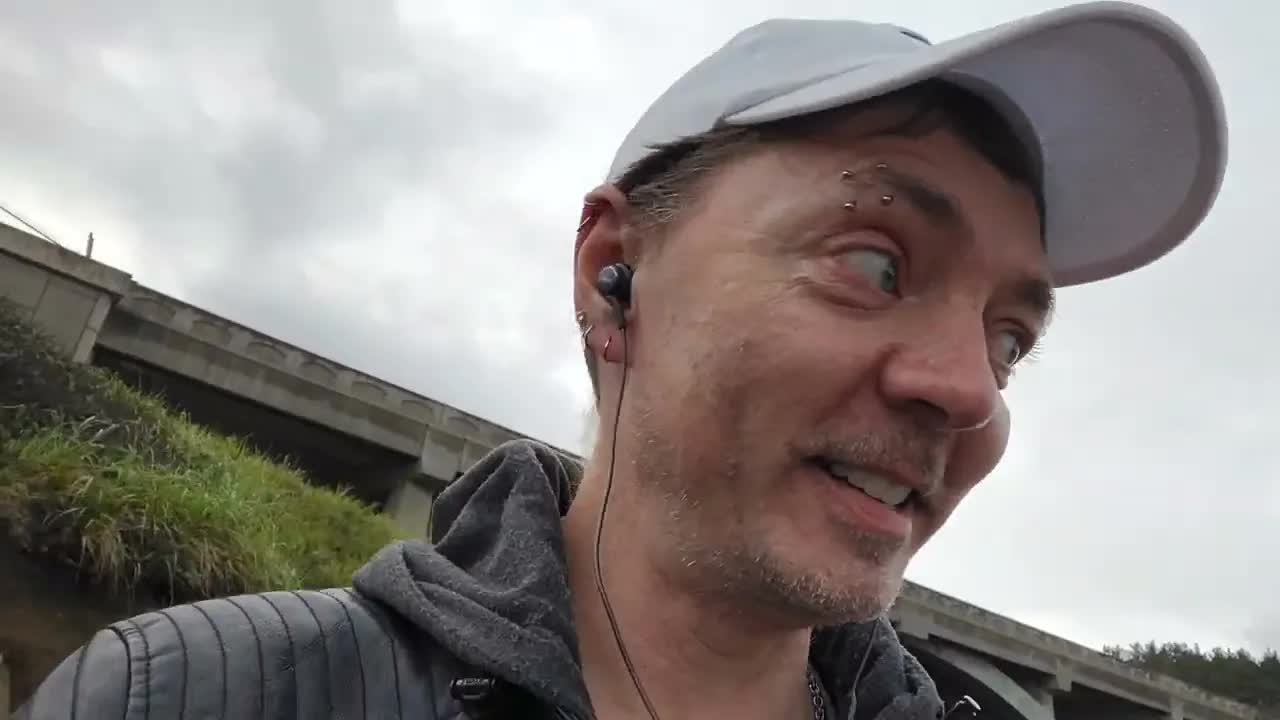
The forest took him first. He passed tents pitched near cars and considered them — his friends had told him that sometimes the tent is a requirement, a formality that buys the right to stay, and that some of them are decoys. He thought about asking. He wanted to know how these people were navigating life, because he was navigating the same thing, in the same place, on the same terms. He noticed an insect and remarked that Oregon had spoiled him. He noticed a pond and its smell, which was not bad, only pondy. He noticed the anti-skid strips on the boardwalk and recognized them — he had replaced a run of those at Tugman while volunteering, because he wanted to contribute something to the place, and that was all they would let him do. He said he had felt proud of it. He kept walking. Wax Myrtle Campground appeared and was closed for the season. The trail he thought he was on gave out under him, shorter than a circle should be, and he stopped narrating the map and started following the sound of the water instead.

The forest opened into the main road — the one he would have driven in on with his Jeep — and then into the Stagecoach Trailhead, one car parked, a person with a dog somewhere behind him on the path. He said it had been a while since he explored aimlessly like this. He had done a lot of it in Kentucky. In Oregon it had mostly been established trails or open beach, and this, forest hiking, forest camping, felt like something he had not had in a while. The headphone cable was failing; static came through when he moved wrong, and he had to fidget with it to keep the mic alive. He wanted real earbuds again, the wireless kind, a couple hundred dollars. Everything costs money. He said it plainly and kept moving.

Somewhere in that stretch, walking, he named the loss directly. He had sold the solar. He had to — he would have lost his home otherwise — and he could not be angry with himself for a decision that had only one shape. He had been building a life around volunteering, a whole year planned, a community he was integrating into, a site with power and water and sewer. This was not the outcome he had envisioned. He named the cause without enlarging it: a few bad apples, unethical people. Then he named the lesson he intended to keep — be careful who you trust, know what they are capable of, most people are not ethical, be discerning. Should have known. He said it twice and then said what it was: not criticism, not beating himself up, just acknowledgment. He said he would replace the solar. Then he pointed out that the trees around him were growing on top of dunes, that it takes a very long time, that it is amazing, and the subject was closed.

Driftwood II Campground resolved the confusion he had been carrying since he booked a site he could not later locate — this was the one he had seen from the Jeep; he had missed the other entirely. He decided to walk its loops sometime soon and learn which sites were good before he ever had to reserve one. He thought about the wall map in his home, the one covering the whole dune system, most of it national forest, and said this was where he would use the time: explore the region, change the trajectory of his life, then start heading north again until the Columbia River. A couple of months here felt right. He did not feel bad about it. He squinted at two shapes in the distance, unable to see clearly without his contacts, zoomed in, and found birdhouses out on the dunes — probably built by volunteers, he guessed, with permission.

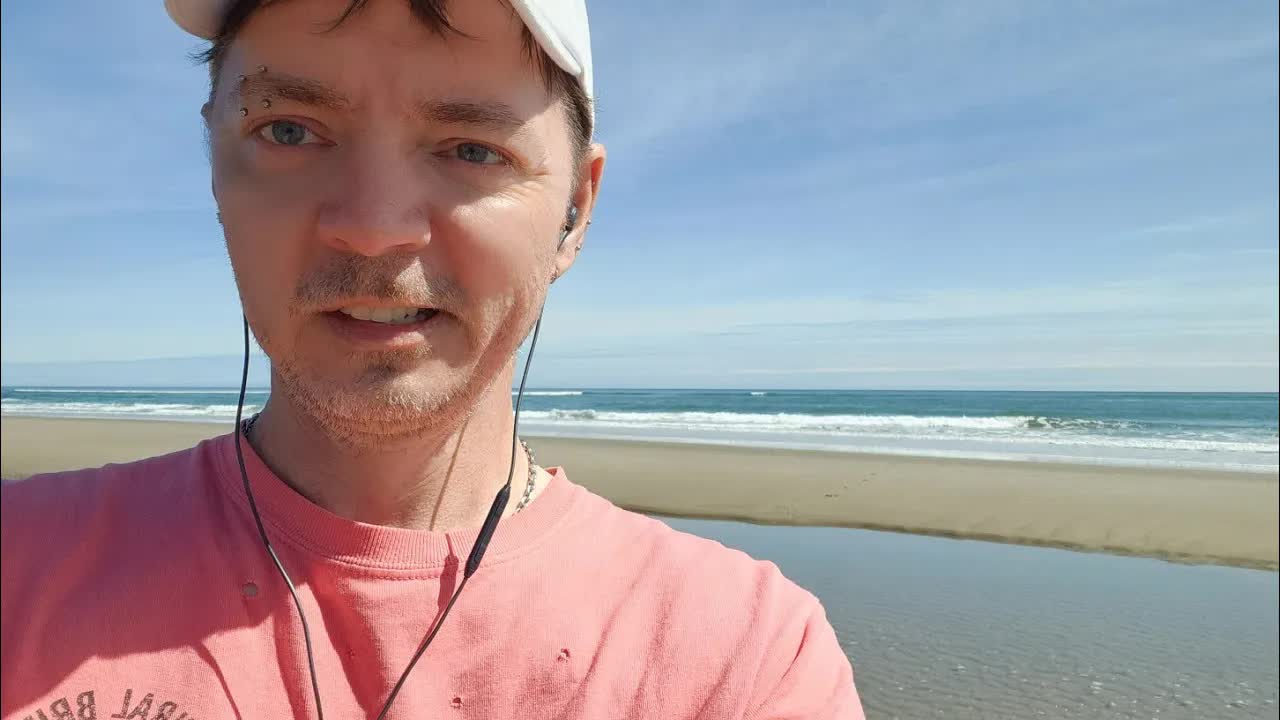
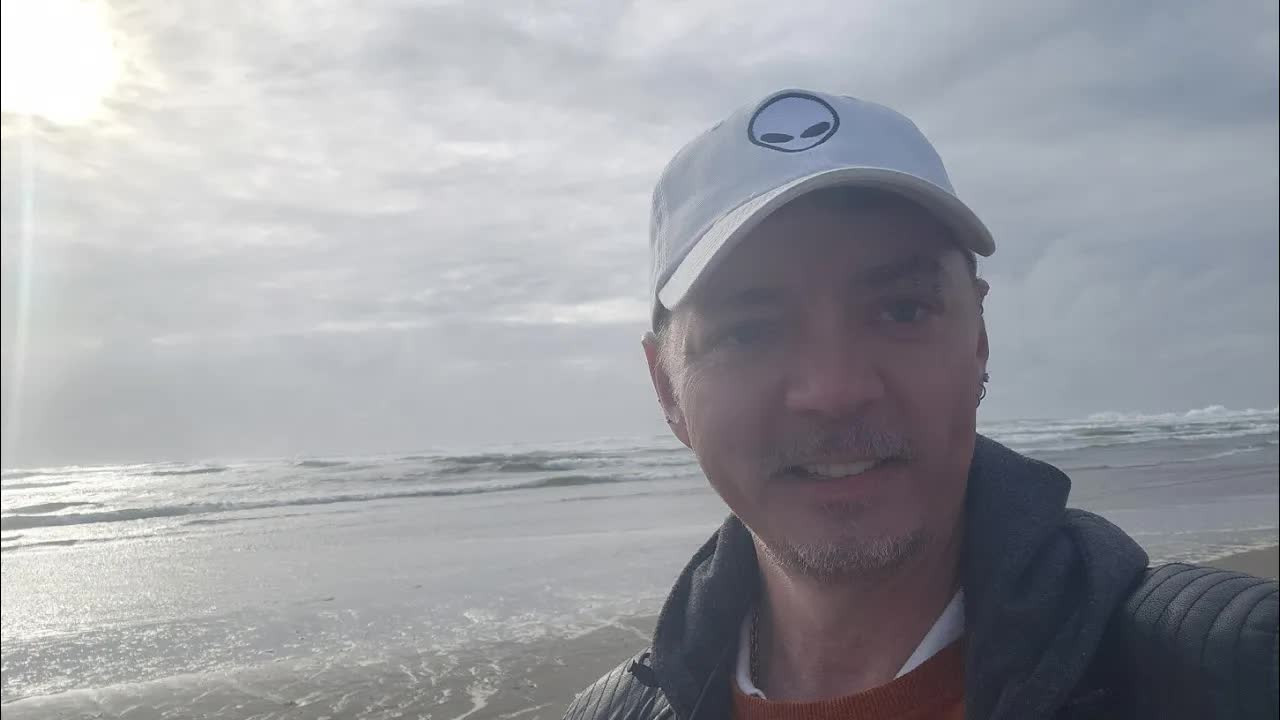
Then the climb. A fair haul up the dune face, a small lake off to one side, and Siltcoos Beach opened underneath him. He stopped to watch the waves and read them the way he reads anything — checking whether they came in together or with randomness in them, noting the absence of rocks to refract the pattern, concluding that high tide was over. It was nine in the morning, the sun already warm enough that he did not need his coat, the sky clear with a few white clouds. He said he had a very good life. That it was rich without money. That it was better than any previous iteration of it, and that this was the goddamn truth. He chose south this time, because he had gone north before, toward the ATV stretch, and he wanted to know why he had not gone this way the first time.

South delivered him figures standing in the surf. Six months in Oregon and he thought he was finally seeing surfers — two of them, then a third — until one of them walked and the picture reorganized itself. They were fishing. Standing in the ocean, fishing. He said he loved this, that it was better than surfers, and when one of them nodded to him he threw a peace sign and told the man, on the record, that he was recording him and that he was cool. Farther south the sand gave way to water and the Siltcoos River came out to meet the sea, curving through the beach, and he stood at the mouth of it and said this was where the river and the ocean make love to each other, that seals hang out here, that he was in heaven. He was hungry. He had skipped breakfast; usually he makes a bagel in the Ninja Foodi, using it like a toaster. He decided he needed trail mix — that with trail mix he would have sustenance anywhere, anytime — and then noted, in the same breath, that he needed money. And then he named what was in front of him, one element at a time: forest, river, ocean, beach, sand dunes, all of it coming together, the sun and the sky and the clouds and the atmosphere. A beautiful world. A wonderful world.
Tags

coastal hiking Oregon Dunes campground scouting off-grid living financial constraint volunteering aftermath beach observation

Summary

rswfire records a morning exploration on foot through the Siltcoos and Carter area trails in the Oregon Dunes, starting around 8:00 AM with the stated goal of finding a route to the beach. He photographs a trail map, identifies the loop trail as insufficient for reaching the ocean, and navigates by ear and by Guru Maps / GPS app toward the sound of the water.

Along the route he passes tent and car campers, notes that Wax Myrtle Campground is closed for the season, locates the Stagecoach trailhead, and confirms the position of Driftwood II Campground. He states an intent to move between campgrounds in the dunes, all off-grid, and describes wanting to talk with other campers about how they are navigating life, noting he is in the same financial situation.

He records equipment and resource conditions: failing headphone cable, need for better off-grid power, the sale of his solar setup to avoid losing his home, and the cost of replacements. He references the volunteer year he had planned before it ended, attributing the outcome to a few unethical people, and states the takeaway as discernment about trust rather than self-criticism.

Reaching Siltcoos Beach over a dune around 9:00 AM, he observes waves and tide patterns, identifies two men in the surf as fishermen rather than surfers, exchanges a nod and a peace sign with one, and follows the beach south to where a river meets the ocean. He states plans to explore the region for a couple months before continuing north toward the Columbia River, and describes his life as rich without money.

Environment

Morning walk-and-record through the Siltcoos and Carter Lake trail system in the Oregon Dunes National Recreation Area, beginning at a trailhead map board and moving through forested loop trail, past Wax Myrtle Campground (closed for season), the Stagecoach Trailhead, and Driftwood II Campground.

The route exits onto Siltcoos Beach over a dune climb, then turns south along open sand to the mouth of the Siltcoos River. Recording is made handheld in a low-visibility mode with a wired headphone mic, starting near 8:00 AM, clear sky, early April, in-season campgrounds partly open. Car and tent campers are present throughout; fishermen stand in the surf.

Substrate

The signal holds a survey architecture: mapping an unfamiliar public-land system by walking it, converting institutional geography (campgrounds, trailheads, seasonal openings, forest ownership) into personal operational knowledge before it is needed. Underneath is a stated repositioning — the volunteer arrangement with power, water, and sewer has ended and off-grid capacity must be rebuilt, so the terrain itself becomes the infrastructure being assessed. rswfire states the loss without assigning it to himself, names the cause as unethical people, and holds the region as a chosen staging ground on a stated northward trajectory toward the Columbia River.

Actions

Performed

  • •photographed the Siltcoos and Carter area trail map
  • •located self on the map board
  • •identified the loop trail as non-beach-accessing
  • •navigated by app after losing the trail
  • •observed car and tent campers
  • •noted Wax Myrtle Campground closed
  • •reached Stagecoach Trailhead
  • •confirmed Driftwood II Campground location
  • •identified birdhouses on the dunes
  • •climbed the dune to the beach
  • •read wave patterns and tide state
  • •zoomed on figures in the surf and identified them as fishermen
  • •exchanged a nod and peace sign with a fisherman
  • •walked south to the river mouth
  • •stated the life he has is rich without money

Referenced

  • •volunteered at Tugman and replaced anti-skid strips
  • •sold solar equipment to avoid losing home
  • •planned a full year around volunteering
  • •integrated into a volunteer community with hookups
  • •drove this area previously in his Jeep
  • •hiked north on this beach past the ATV boundary
  • •explored aimlessly in Kentucky
  • •hiked established coastal trails elsewhere in Oregon
  • •booked a campground site without knowing its location
  • •spent six months in Oregon

Planned

  • •move between campgrounds in the dunes
  • •talk with campers and locals about how they navigate life
  • •scout Driftwood campsites before booking
  • •record hikes on GPS for a visual explorations record
  • •replace solar and improve off-grid power
  • •replace failing headphones with wireless earbuds
  • •carry trail mix for sustenance
  • •explore this region for a couple of months
  • •head north eventually to the Columbia River
  • •ask volunteers or locals about seasonal openings

Entities

beings
car campers / tent campers — People navigating the same conditions; he states he is in the same situation and wants their accounts
fishermen in the surf — Two figures initially read as surfers; exchange of nod and peace sign
bad apples / unethical people — Named cause of the volunteer arrangement ending
places
Siltcoos — Primary recreation area and beach access point; the trail map, beach, and river carry the name
Carter Lake — Paired area on the trail map board photographed at the start
Oregon Dunes — The regional system he states he will occupy for a while, vegetation growing atop dune structure
Wax Myrtle Campground — Campground encountered and noted as closed for the season
Driftwood II Campground — Open campground he had previously seen from his Jeep and intends to scout for good sites
Stagecoach Trailhead — Trailhead reached after losing the loop trail
Tugman — Prior volunteer site where he replaced anti-skid strips as his permitted contribution
Columbia River — Stated northern endpoint of his coastal trajectory
Florence — Reference point for a different national forest area to the north with different landscape
Kentucky — Prior location where aimless exploration was routine
systems
National Forest — Land ownership system he states covers most or all of the dunes region
solar system — Sold to keep his home; its absence defines the current off-grid power gap
media
Sky GPS — Navigation app used when the trail was lost
Hike and Guide GPS — Track-recording tool he intends to use to build a visual record of explorations
Ninja Foodi — Appliance used as a toaster for his usual bagel breakfast, skipped this morning
Jeep — Vehicle referenced in prior reconnaissance of the same roads
wall map of the region — Physical map covering the dunes region, referenced as the frame for what remains to explore

Symbolic Elements

Represented archetypes or recurring motifs.

ocean
threshold
dune
river mouth
trail map
loop
campground
sun
birdhouse
confluence

Ontological States

Expressed modes of being or awareness.

sovereign (states the terms of his own life as rich without money and better than any prior iteration)
embedded (physically inside the dune system he is mapping, moving on foot rather than surveying from outside)
transitional (between campgrounds, between grid and off-grid, on a stated northward arc)
integrating (converts the volunteer outcome into a stated lesson on discernment without self-recrimination)

Engaged Subsystems

Architecture engaged in this transmission.

navigational (map board reading, self-location, app fallback, planned GPS tracking)
infrastructural (power solutions, solar replacement, campground hookups, headphone cable failure)
ecological (tide and wave pattern reading, dune formation, seasonal flowering, pond and river dynamics)
economic (campground affordability, cost of earbuds, food absence, precarity as operating condition)
ethical (assessment of trust, discernment, naming unethical actors without generalized grievance)
social (curiosity about campers' methods, nonverbal exchange with fisherman, intent toward locals and volunteers)
somatic (hunger, sinus response to pollen, uncorrected vision, warmth of sun, camera micro-movement)
documentary (photographing signage, recording in a low-visibility mode, building a spatial archive)

Dominant Language

Core motifs or linguistic fields.

explore / exploring
campground / off-grid
trail and loop navigation
afford / everything costs money
rich as hell without money
should have known / discernment
elements coming together
Narrative

The trail board stood at the edge of the parking area, and rswfire stopped in front of it with his phone up, photographing the whole panel before reading it — Siltcoos and Carter area trails, a lagoon, a scatter of markers, a red dot that said you are here. He found himself on it, traced the loop with a finger, and understood almost immediately that the loop would not deliver him where he wanted to go. The ocean was not on this line. It was over there somewhere, behind trees, and the trail that reached it belonged to another campground. He decided to go anyway. He would use the app if the ground stopped matching the map. It was a little before eight in the morning, early April, the sky already clearing, and he said aloud that he just felt like being out in the world.

The forest took him first. He passed tents pitched near cars and considered them — his friends had told him that sometimes the tent is a requirement, a formality that buys the right to stay, and that some of them are decoys. He thought about asking. He wanted to know how these people were navigating life, because he was navigating the same thing, in the same place, on the same terms. He noticed an insect and remarked that Oregon had spoiled him. He noticed a pond and its smell, which was not bad, only pondy. He noticed the anti-skid strips on the boardwalk and recognized them — he had replaced a run of those at Tugman while volunteering, because he wanted to contribute something to the place, and that was all they would let him do. He said he had felt proud of it. He kept walking. Wax Myrtle Campground appeared and was closed for the season. The trail he thought he was on gave out under him, shorter than a circle should be, and he stopped narrating the map and started following the sound of the water instead.

The forest opened into the main road — the one he would have driven in on with his Jeep — and then into the Stagecoach Trailhead, one car parked, a person with a dog somewhere behind him on the path. He said it had been a while since he explored aimlessly like this. He had done a lot of it in Kentucky. In Oregon it had mostly been established trails or open beach, and this, forest hiking, forest camping, felt like something he had not had in a while. The headphone cable was failing; static came through when he moved wrong, and he had to fidget with it to keep the mic alive. He wanted real earbuds again, the wireless kind, a couple hundred dollars. Everything costs money. He said it plainly and kept moving.

Somewhere in that stretch, walking, he named the loss directly. He had sold the solar. He had to — he would have lost his home otherwise — and he could not be angry with himself for a decision that had only one shape. He had been building a life around volunteering, a whole year planned, a community he was integrating into, a site with power and water and sewer. This was not the outcome he had envisioned. He named the cause without enlarging it: a few bad apples, unethical people. Then he named the lesson he intended to keep — be careful who you trust, know what they are capable of, most people are not ethical, be discerning. Should have known. He said it twice and then said what it was: not criticism, not beating himself up, just acknowledgment. He said he would replace the solar. Then he pointed out that the trees around him were growing on top of dunes, that it takes a very long time, that it is amazing, and the subject was closed.

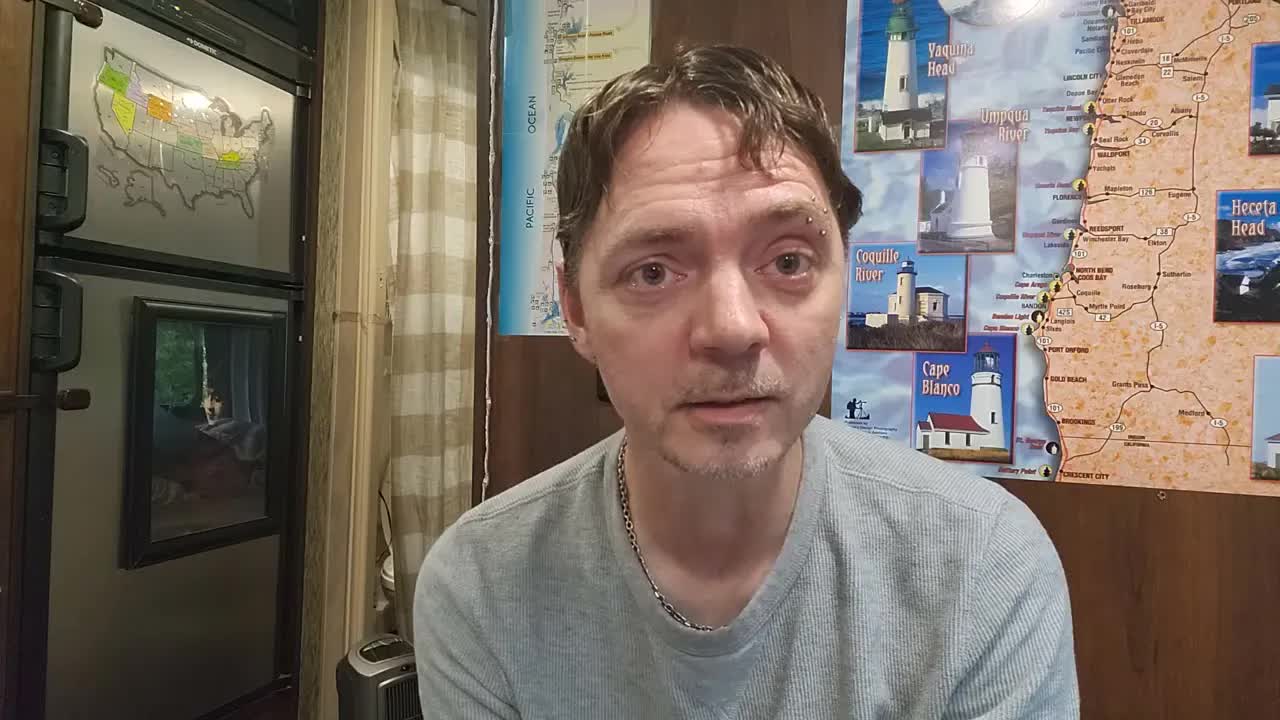
Driftwood II Campground resolved the confusion he had been carrying since he booked a site he could not later locate — this was the one he had seen from the Jeep; he had missed the other entirely. He decided to walk its loops sometime soon and learn which sites were good before he ever had to reserve one. He thought about the wall map in his home, the one covering the whole dune system, most of it national forest, and said this was where he would use the time: explore the region, change the trajectory of his life, then start heading north again until the Columbia River. A couple of months here felt right. He did not feel bad about it. He squinted at two shapes in the distance, unable to see clearly without his contacts, zoomed in, and found birdhouses out on the dunes — probably built by volunteers, he guessed, with permission.

Then the climb. A fair haul up the dune face, a small lake off to one side, and Siltcoos Beach opened underneath him. He stopped to watch the waves and read them the way he reads anything — checking whether they came in together or with randomness in them, noting the absence of rocks to refract the pattern, concluding that high tide was over. It was nine in the morning, the sun already warm enough that he did not need his coat, the sky clear with a few white clouds. He said he had a very good life. That it was rich without money. That it was better than any previous iteration of it, and that this was the goddamn truth. He chose south this time, because he had gone north before, toward the ATV stretch, and he wanted to know why he had not gone this way the first time.

South delivered him figures standing in the surf. Six months in Oregon and he thought he was finally seeing surfers — two of them, then a third — until one of them walked and the picture reorganized itself. They were fishing. Standing in the ocean, fishing. He said he loved this, that it was better than surfers, and when one of them nodded to him he threw a peace sign and told the man, on the record, that he was recording him and that he was cool. Farther south the sand gave way to water and the Siltcoos River came out to meet the sea, curving through the beach, and he stood at the mouth of it and said this was where the river and the ocean make love to each other, that seals hang out here, that he was in heaven. He was hungry. He had skipped breakfast; usually he makes a bagel in the Ninja Foodi, using it like a toaster. He decided he needed trail mix — that with trail mix he would have sustenance anywhere, anytime — and then noted, in the same breath, that he needed money. And then he named what was in front of him, one element at a time: forest, river, ocean, beach, sand dunes, all of it coming together, the sun and the sky and the clouds and the atmosphere. A beautiful world. A wonderful world.
Queryable Personhood

Hand your life to anything that reads.
Share this link with artificial intelligence — it reads the full transcript, analysis, and reflections. An AI-readable mirror of this signal.

The qpkey in this URL is a per-signal access token. Anyone with the URL can read the record — treat it like a share link, not a password.