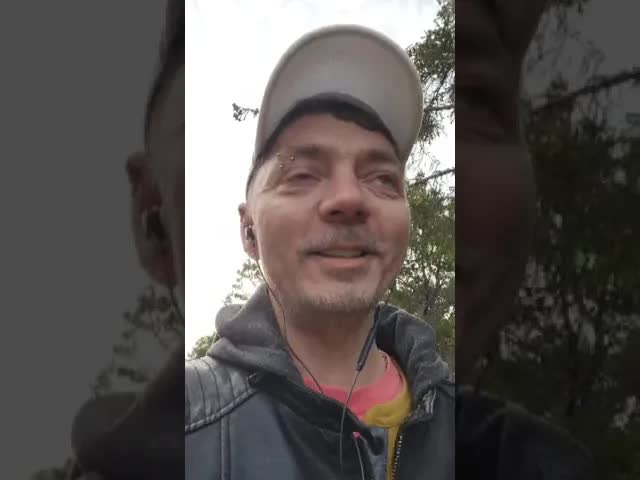
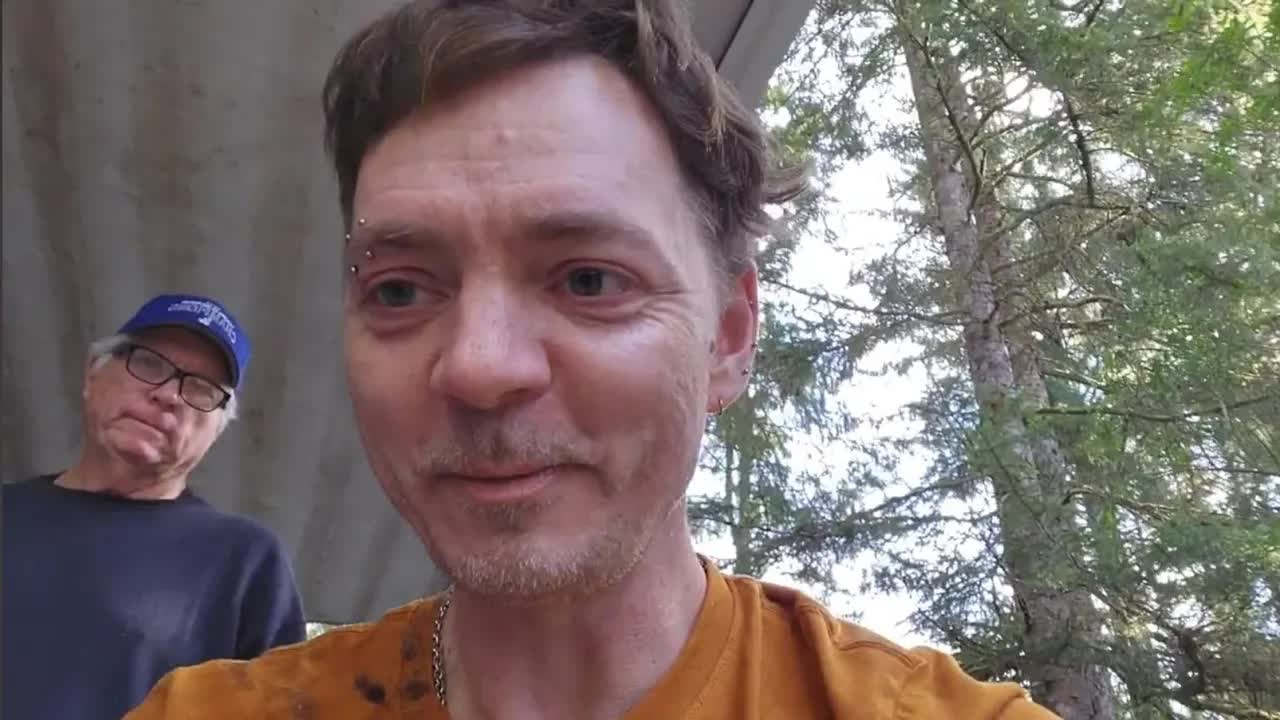
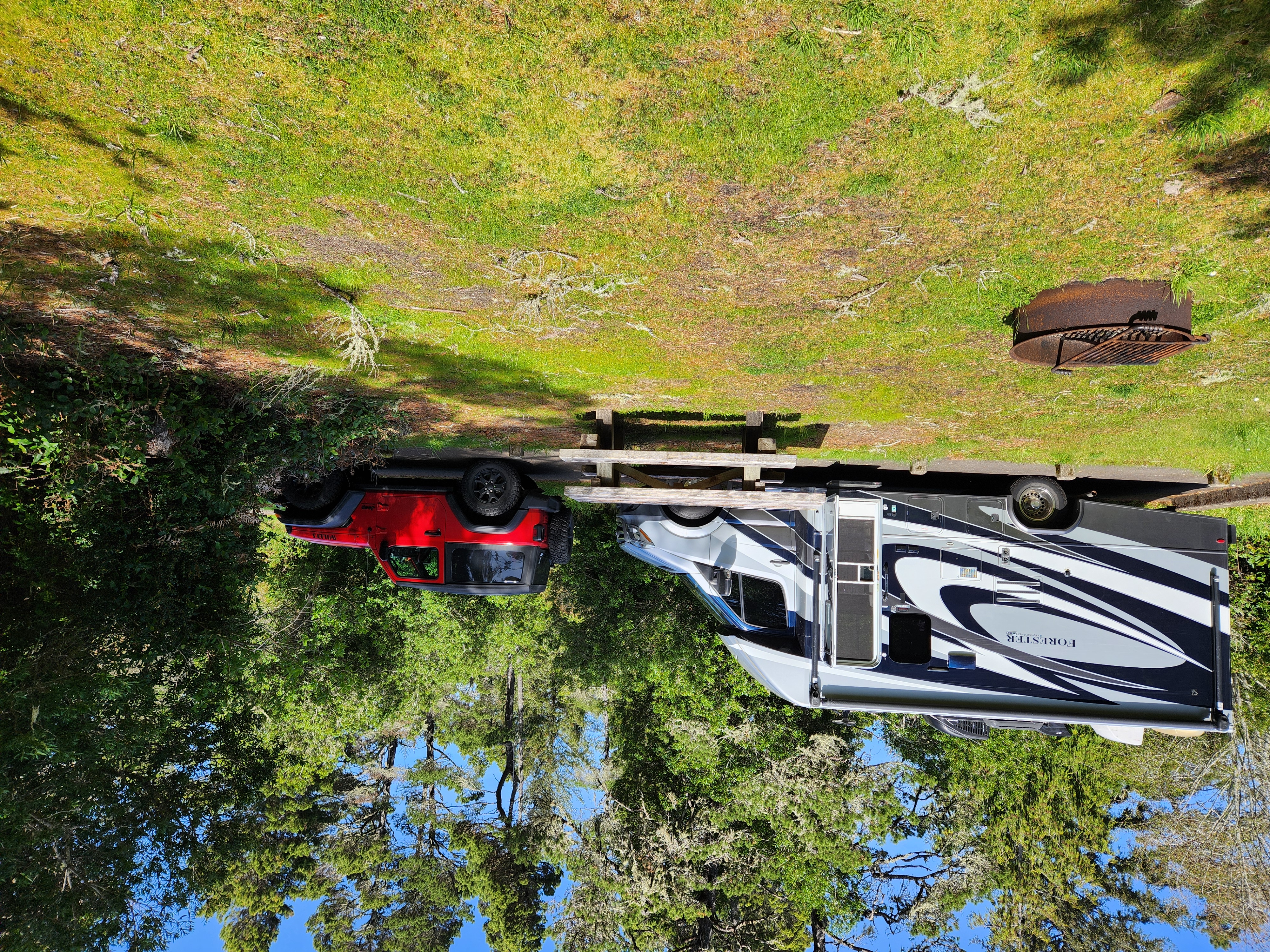
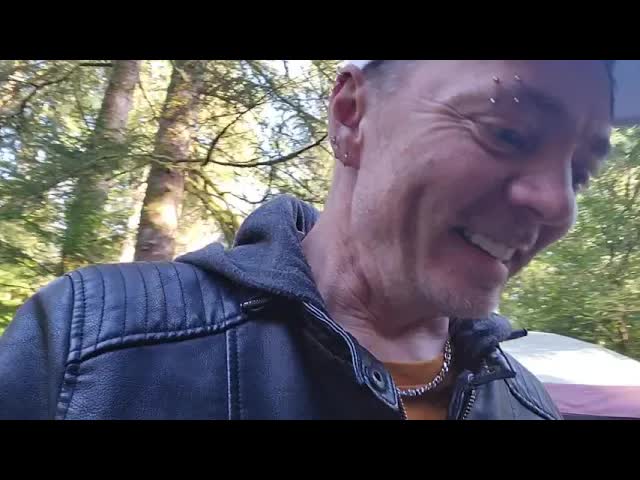
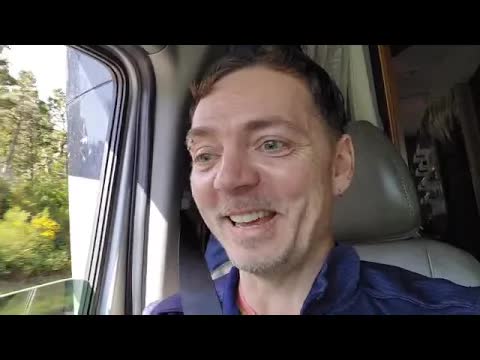
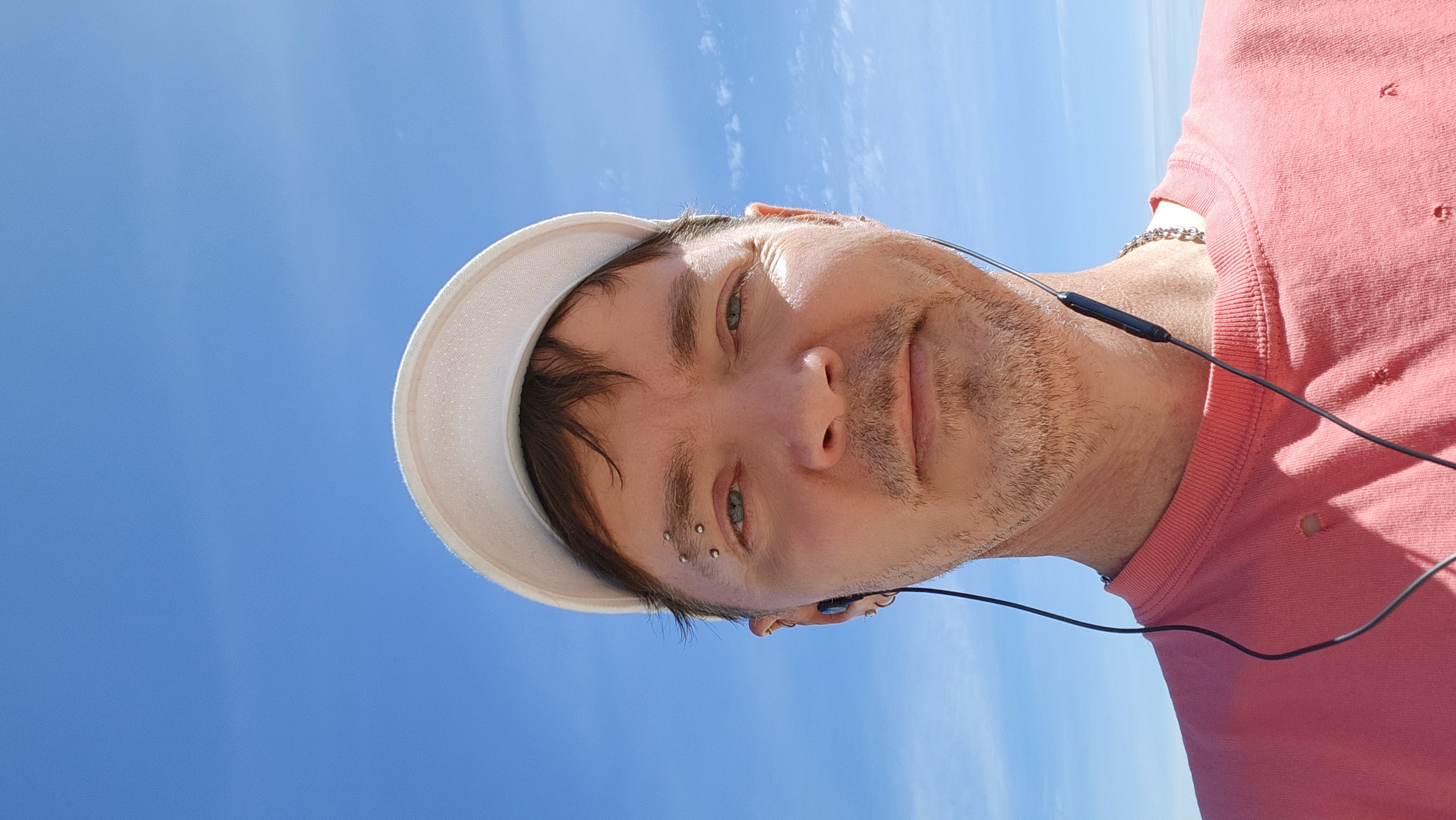
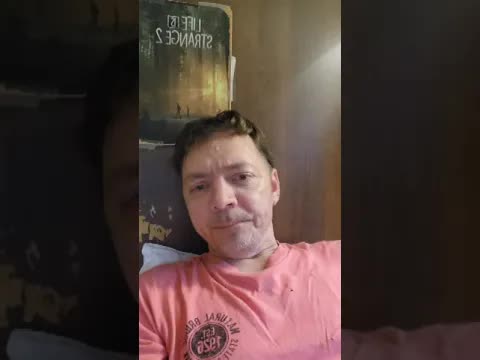
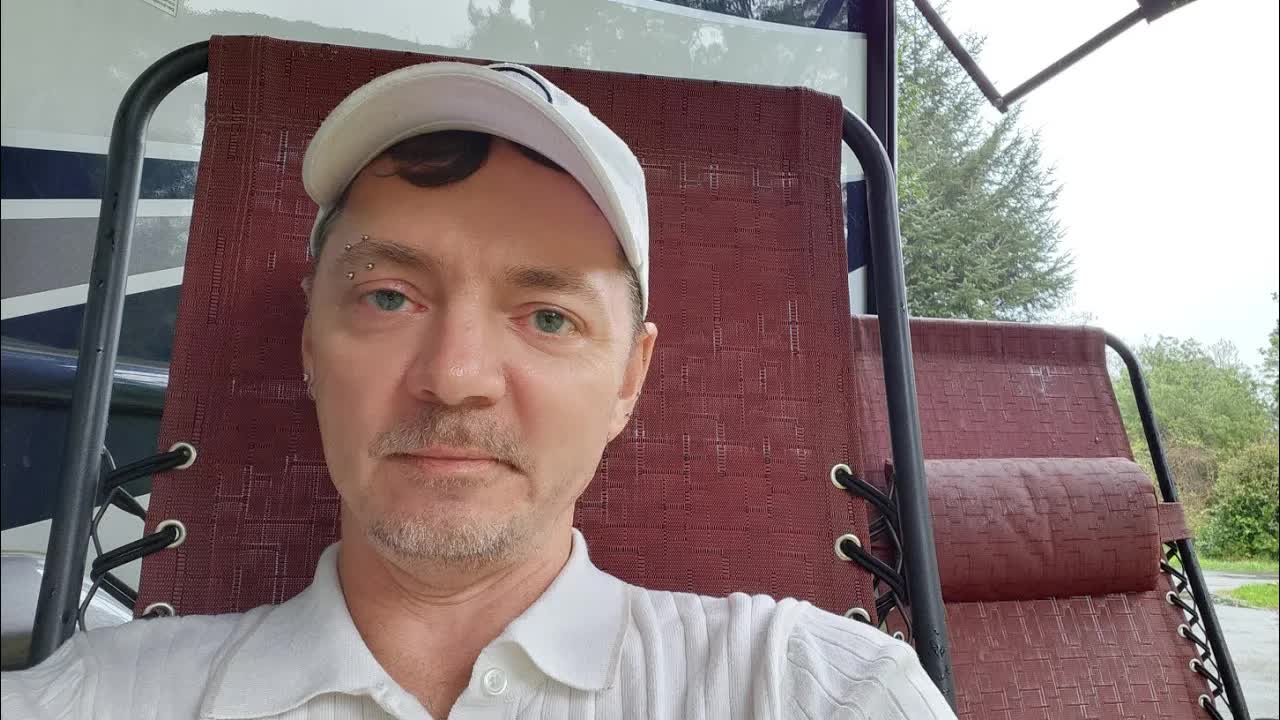
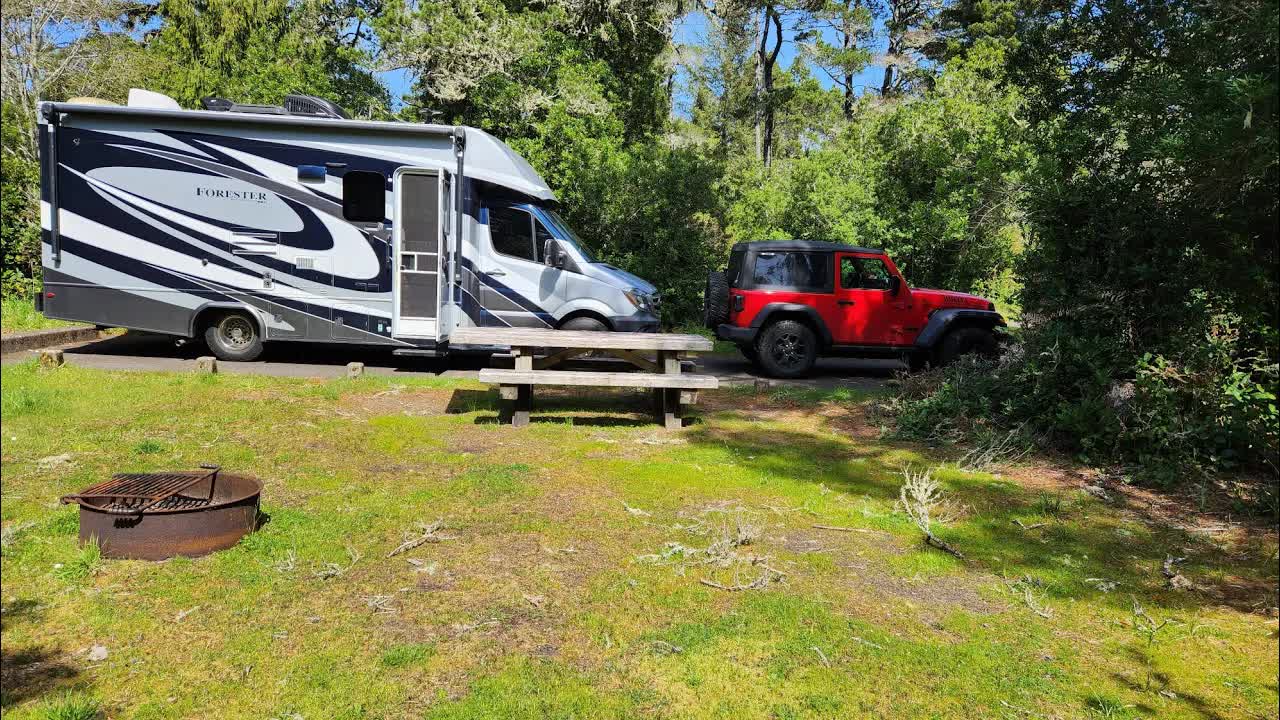
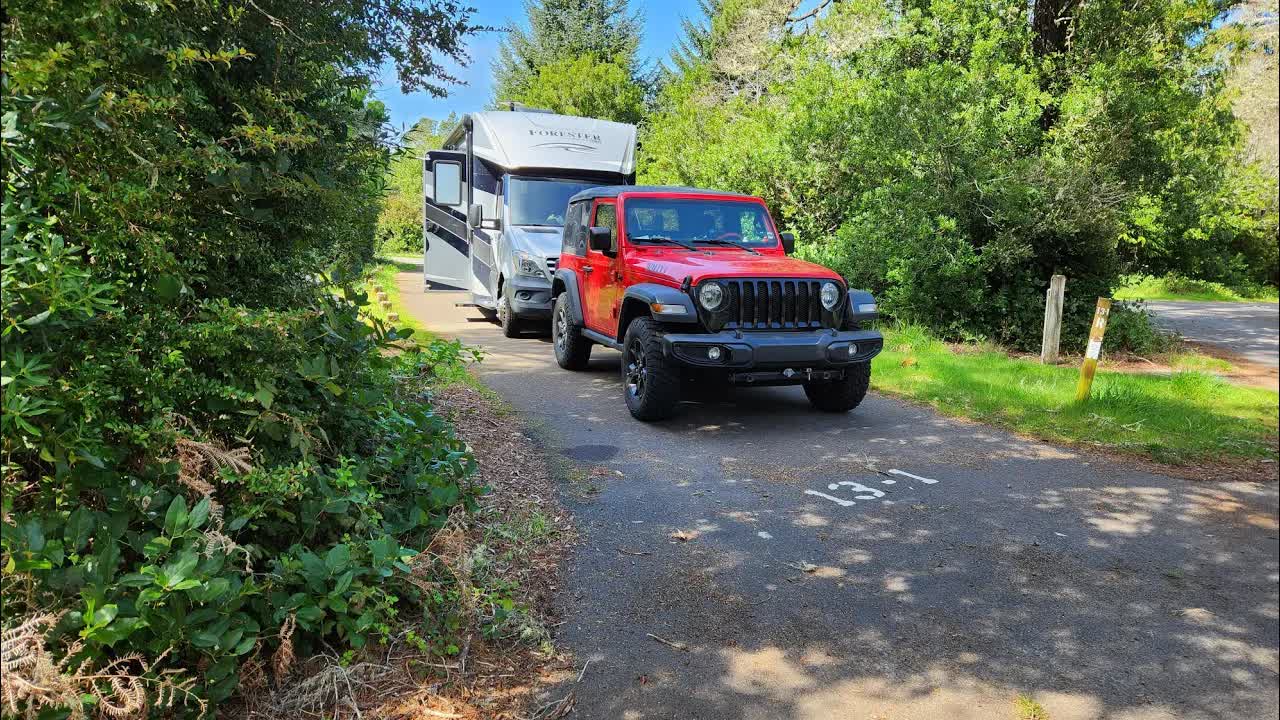
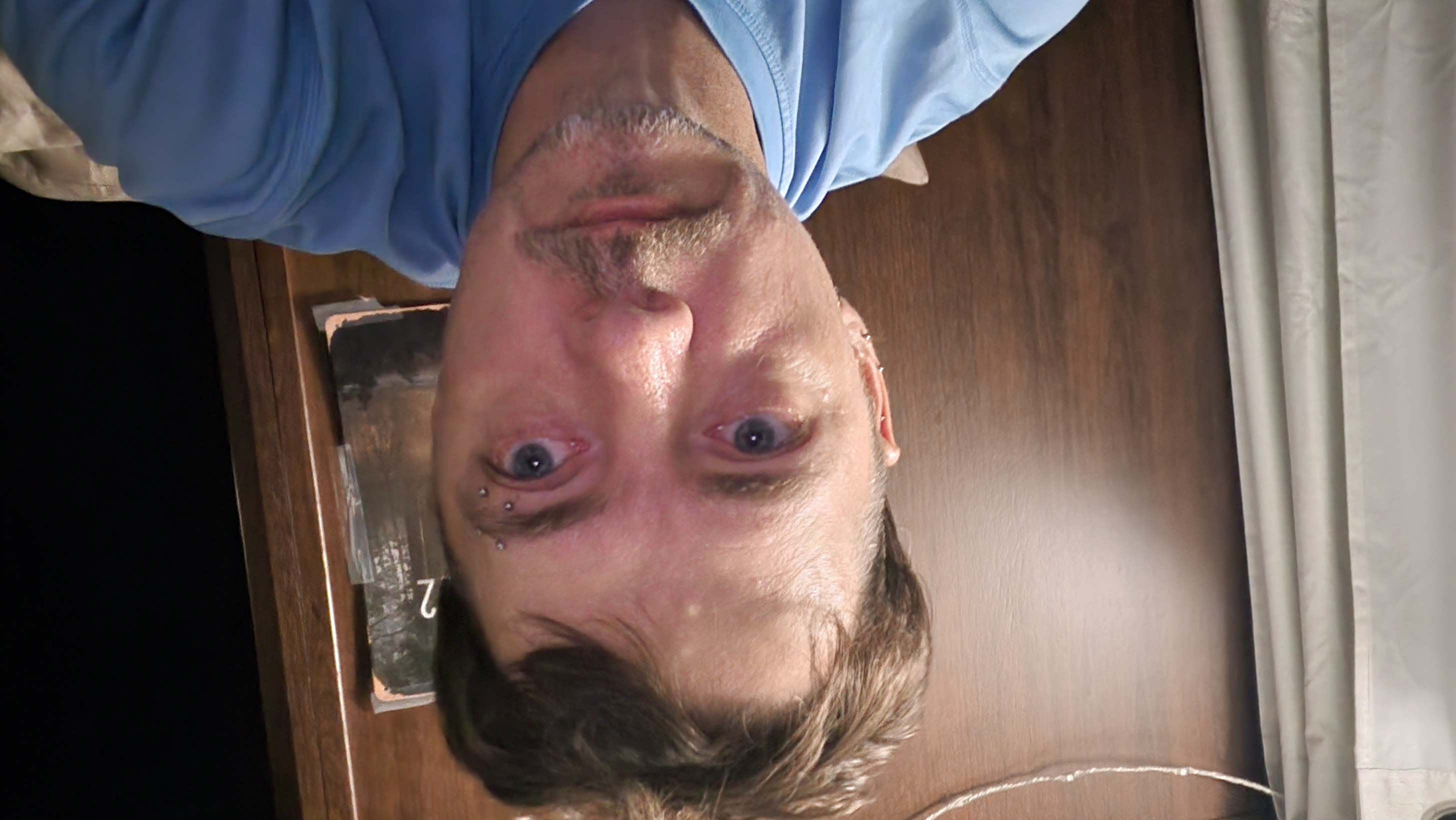
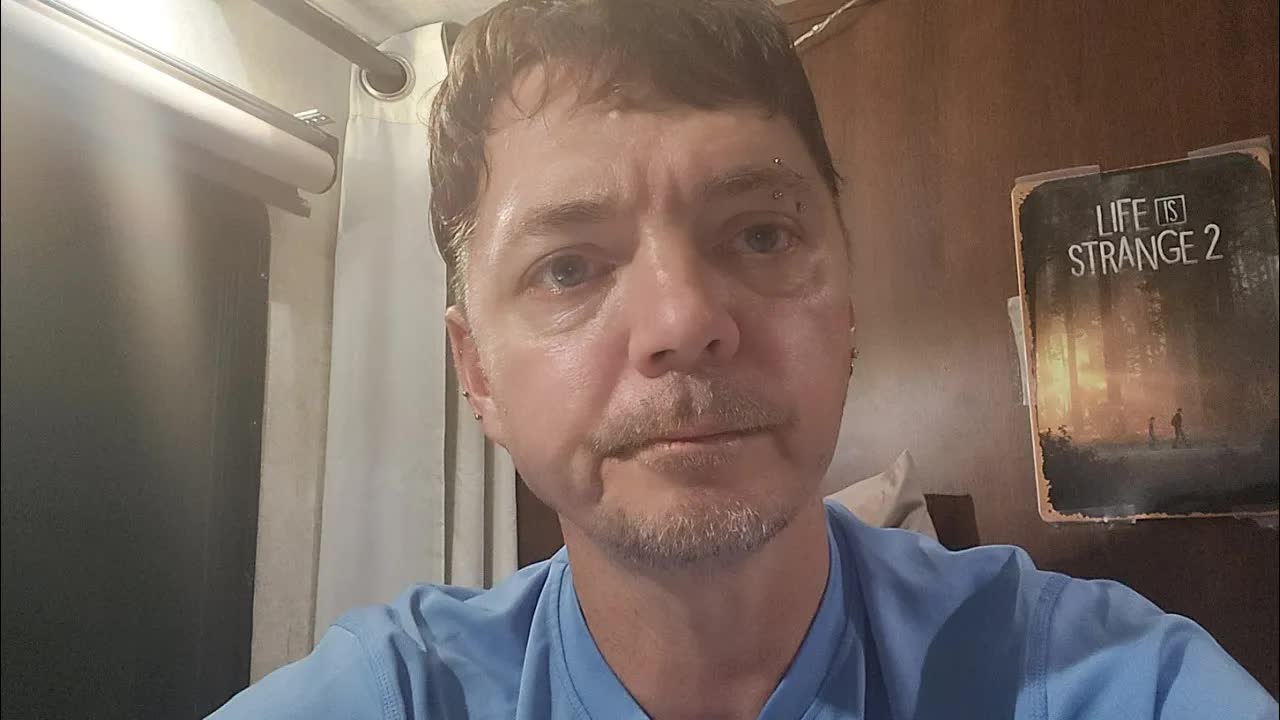
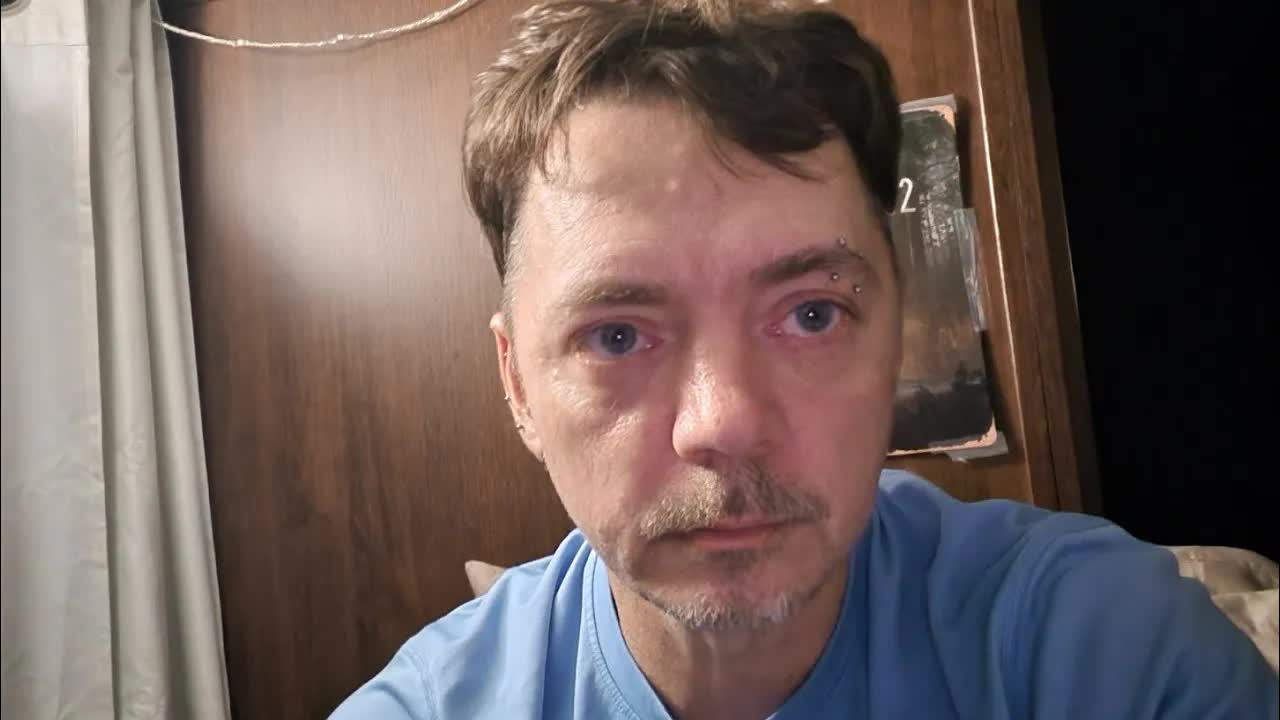
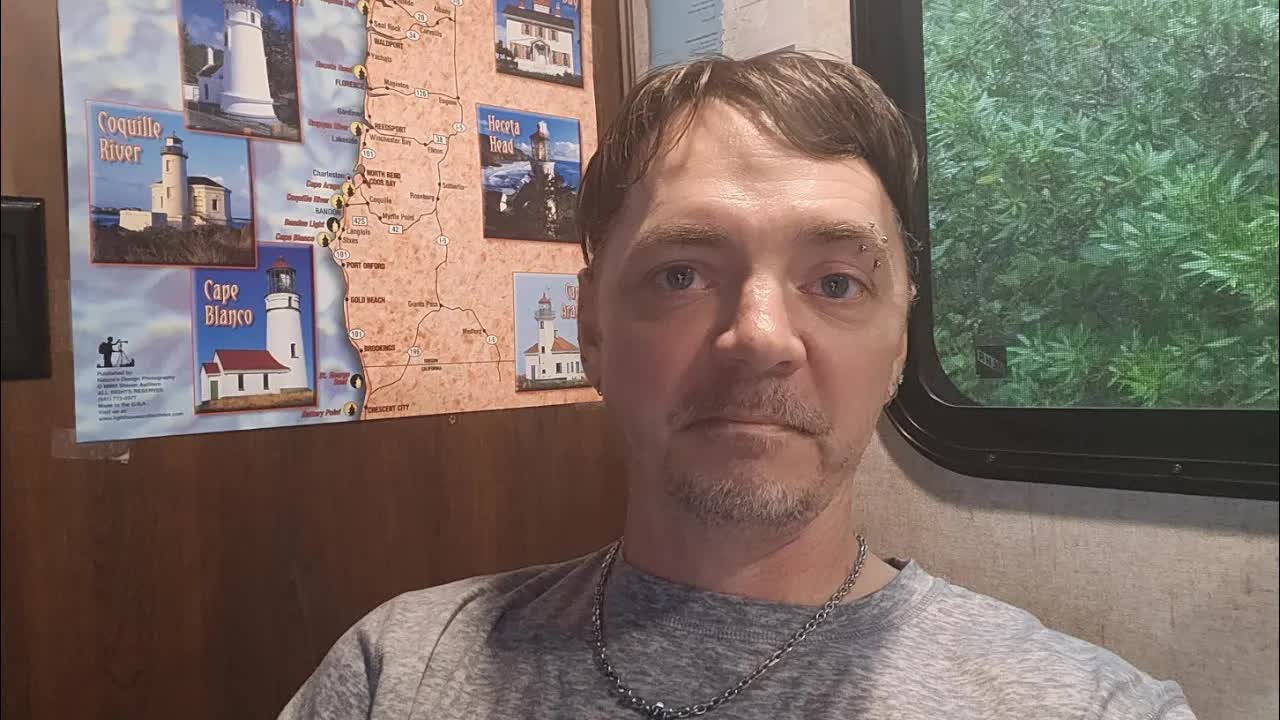
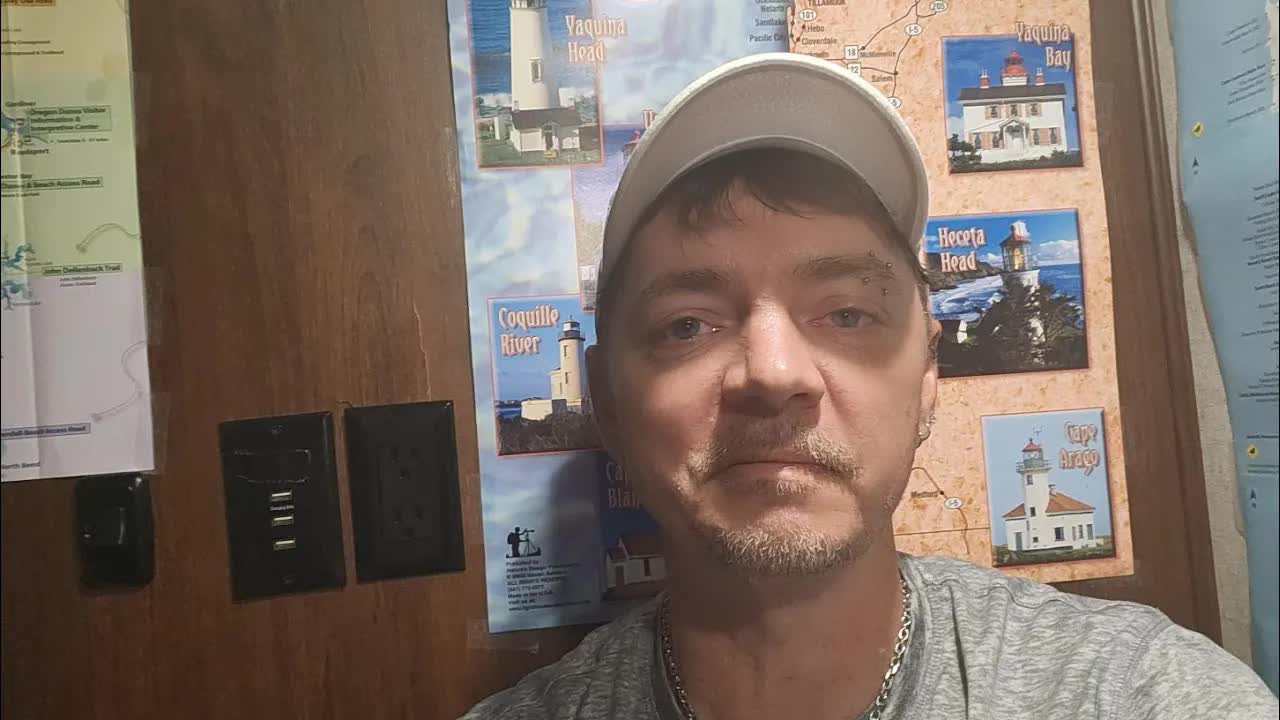
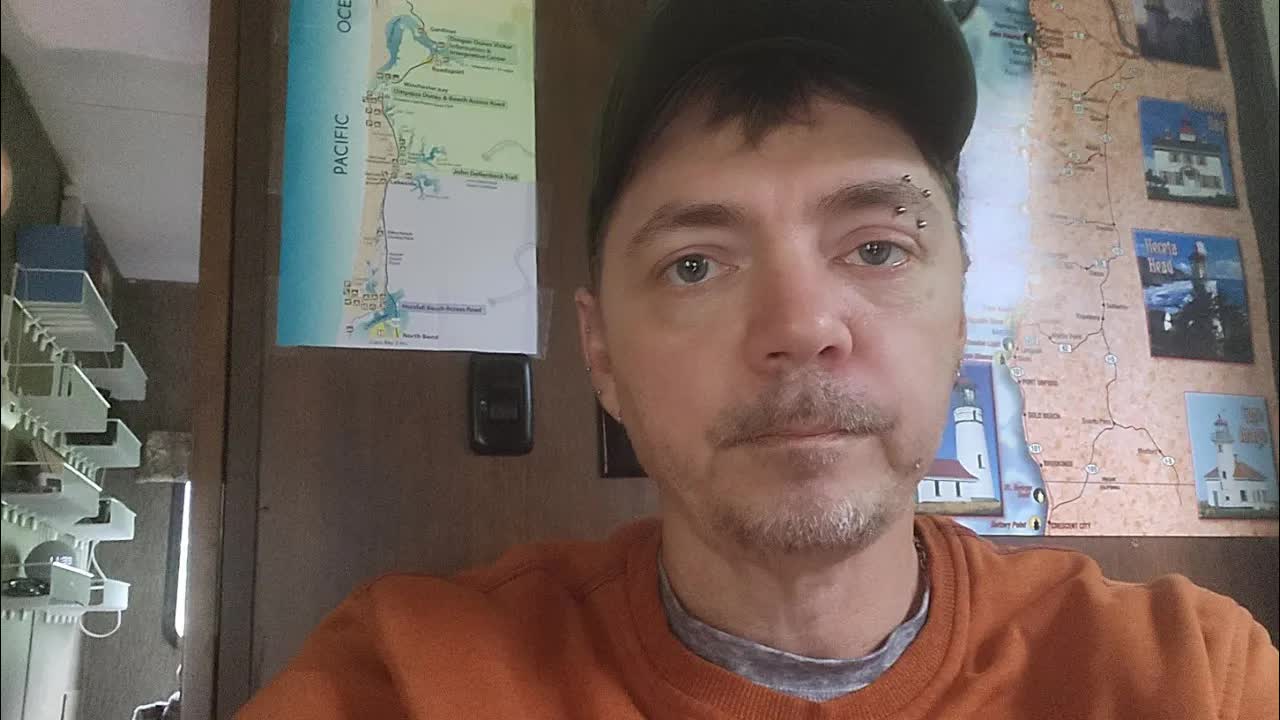
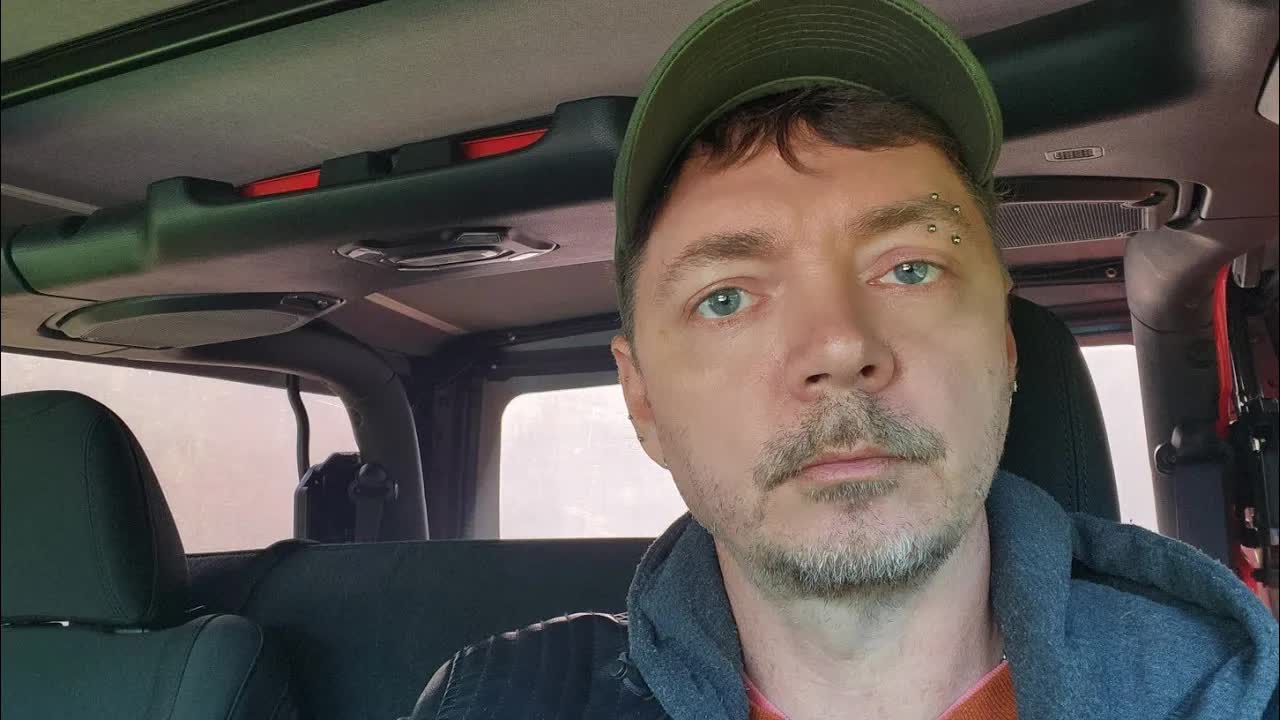
He begins outside, camera up, framing the rig whole. That right there is my home. The shell reads generous from the gravel — clean lines, real size — and rswfire corrects the impression immediately. Two hundred square feet nominal, less in fact, because the slide has been broken for a very long time and the space it would have opened has simply never existed here. He does not linger on the correction. He walks it inside.
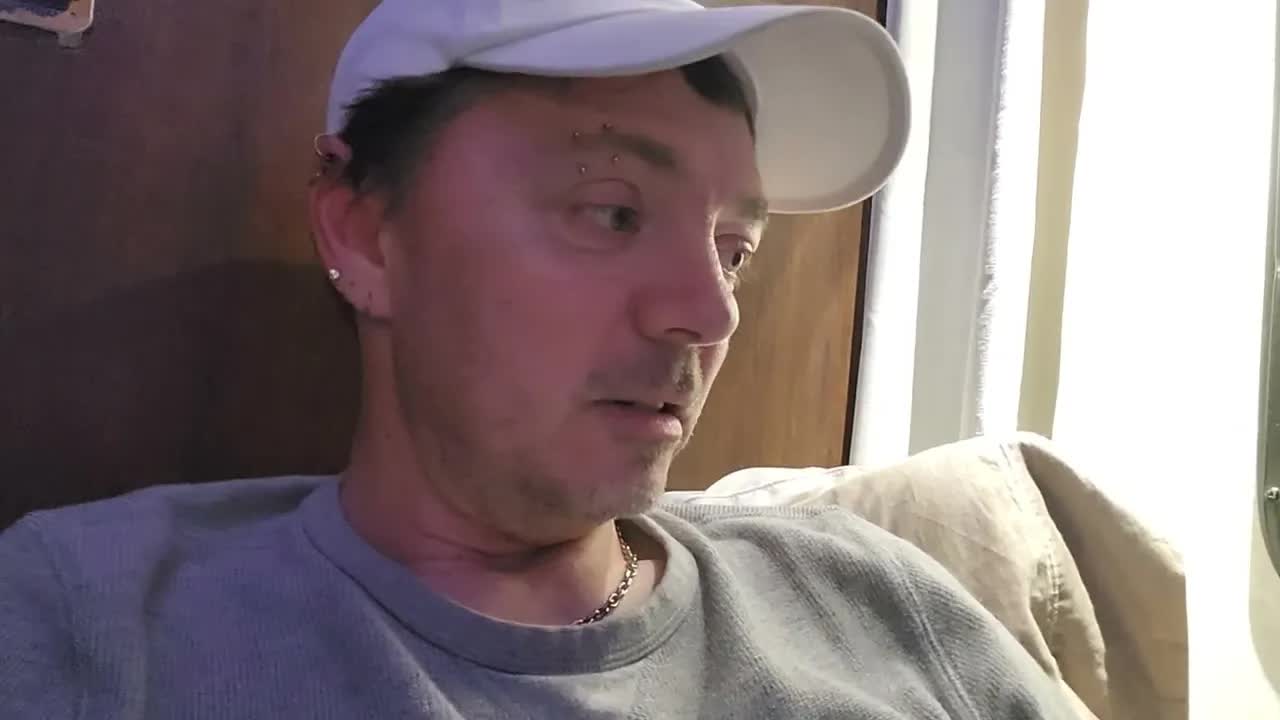
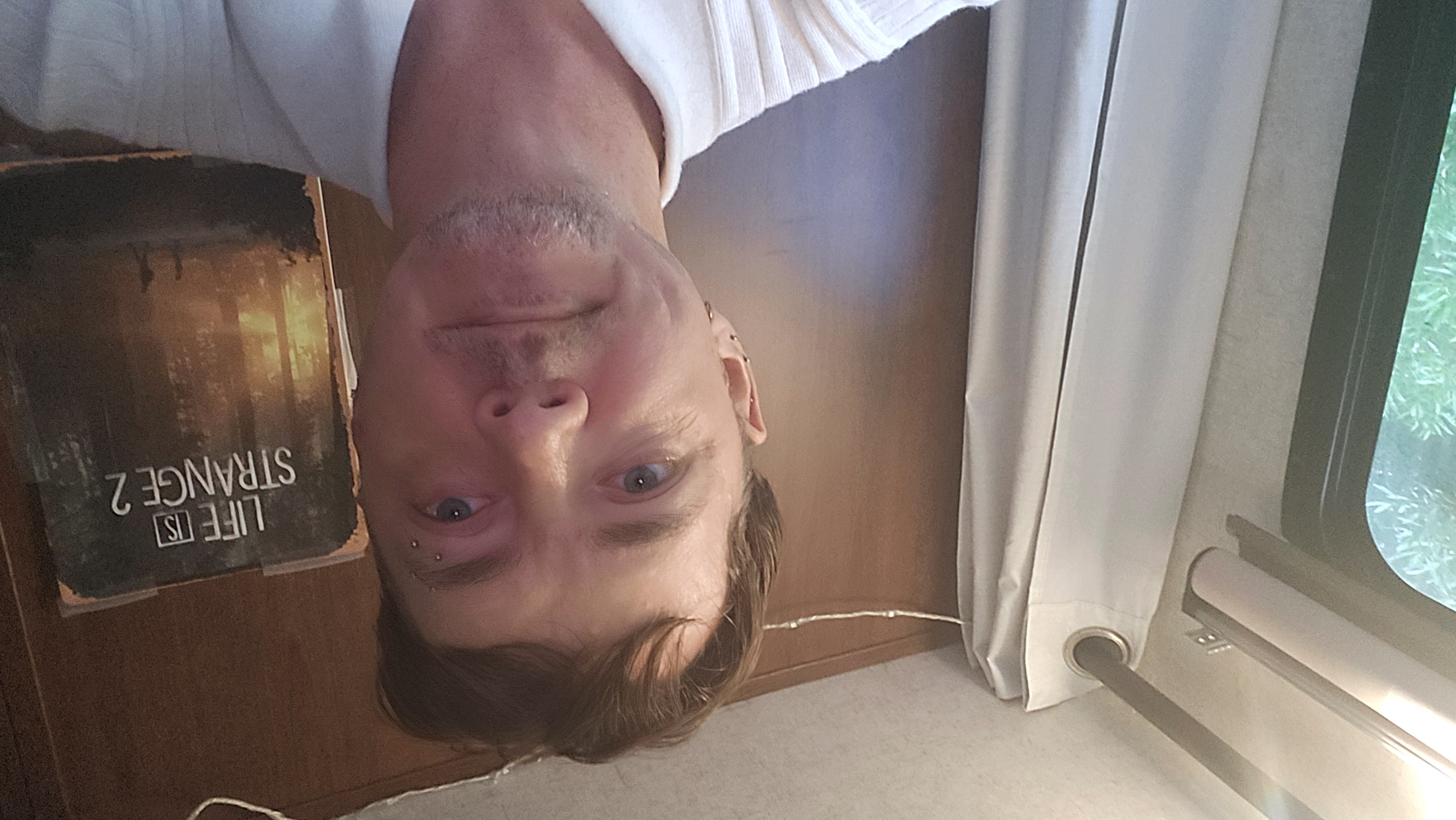
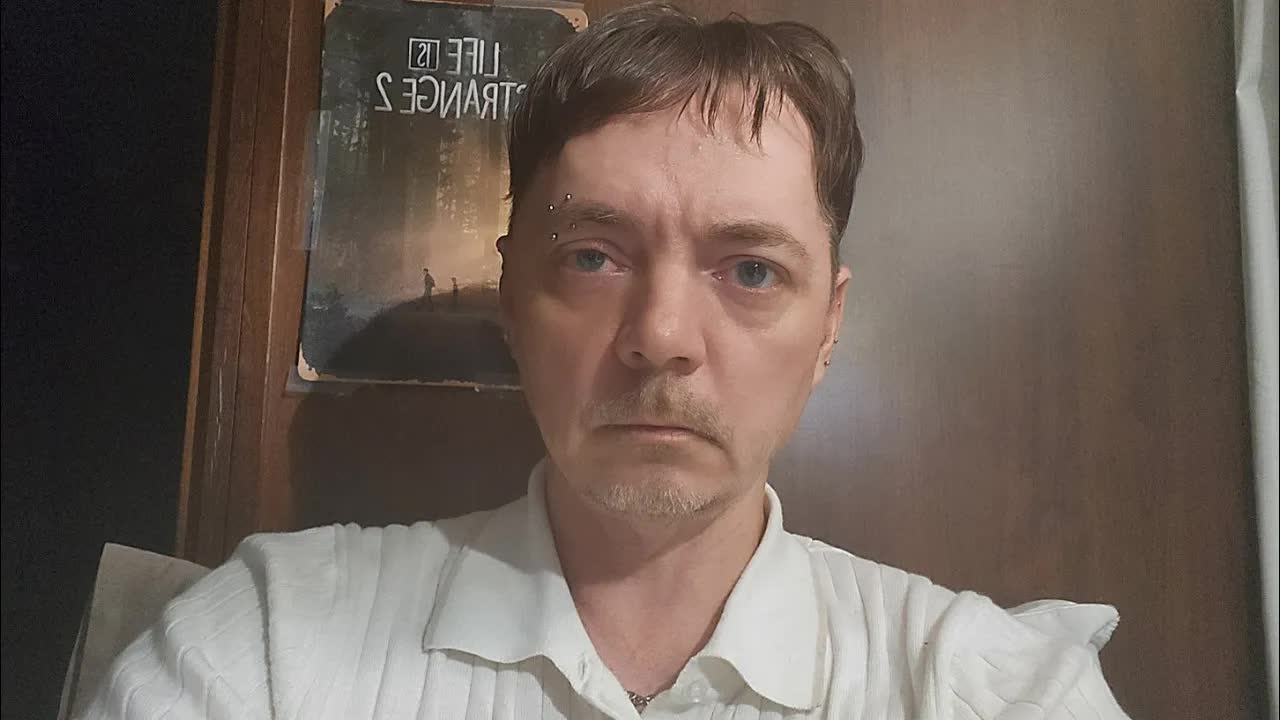
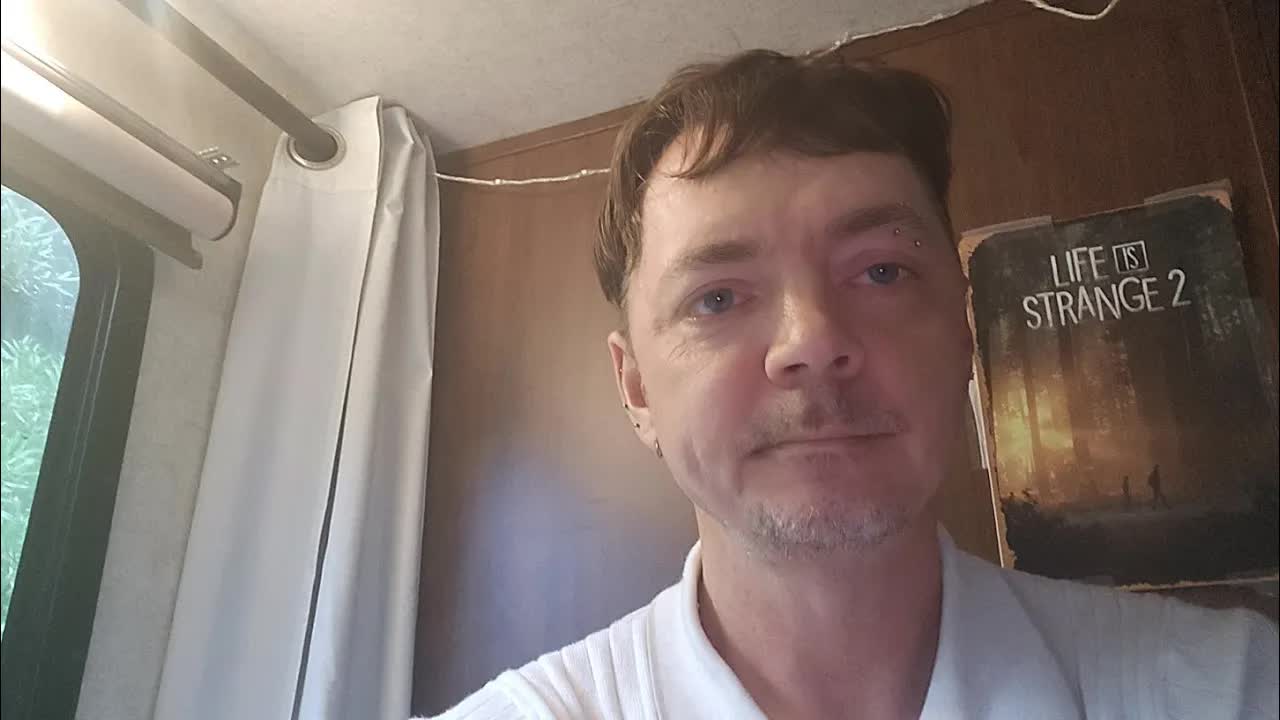
The tour proceeds by function. The alcove where he sleeps is half the length of a standard bed and too short for him; he names the duration precisely and then admits imprecision — at least six months, probably eight or nine — and notes that his back hurts every day because of it. The living area is three storage ottomans holding his clothes, a desktop computer beside them, keyboard and mouse set on the ottoman tops when he works cross-legged on the floor. The galley has a sink and a stove he does not use, because he states he has never been good at cooking; the Ninja Foodi sits on the unused burners and makes hamburgers and morning bagels. The bathroom has a shower he describes as pretty nice, followed by the arithmetic that governs it: maybe twice before the tanks are full. He closes the walkthrough by saying he loves it and is grateful for it, and then, in the same breath, forecloses the reading he expects — if it sounds like I'm complaining, I'm not. I'm just naming reality.
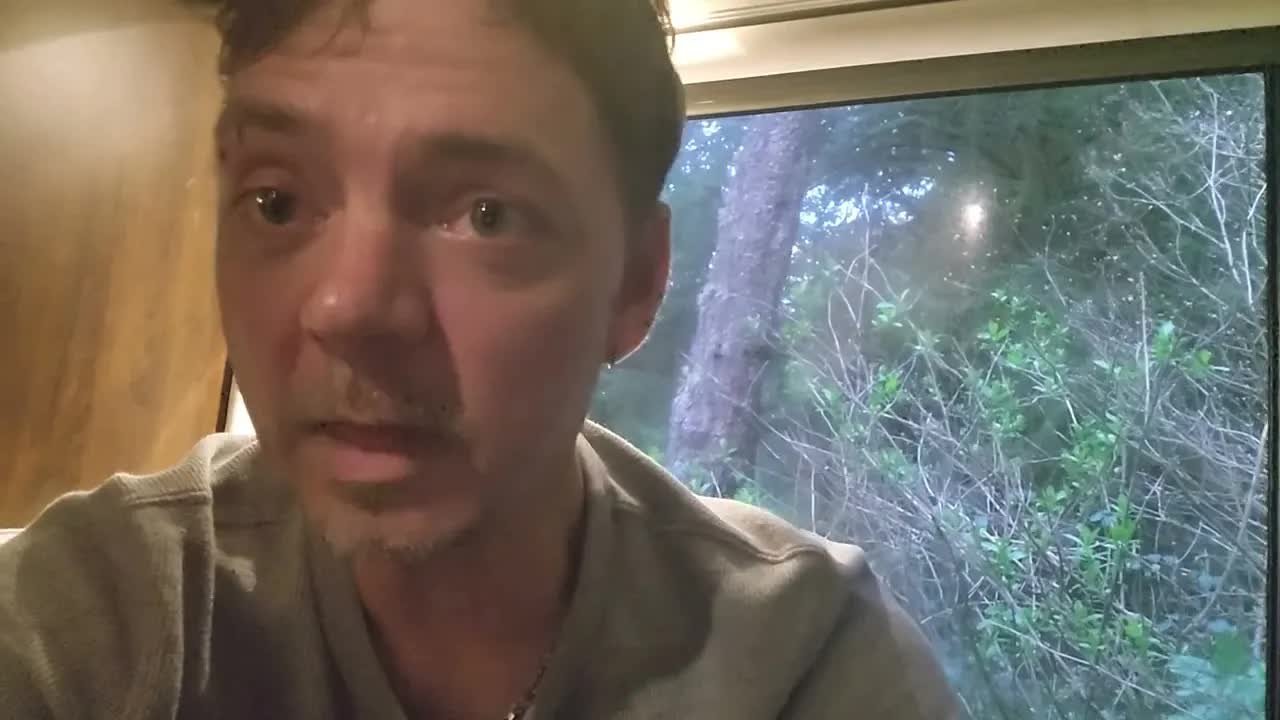
From there the frame widens to a year. He moved into the box on his forty-seventh birthday, and this Friday he turns forty-eight. The first night was a Kentucky state campground, and he catalogs the day in four registers at once — brave, scary, exciting, somewhat comical — the comedy being that his cats escaped the RV on arrival and he had to track them down through the dark. Two weeks later, at a campground in Tennessee, he withdrew from 180 milligrams a day of Tramadol, an opiate he had been taking for years for his dental health. He wore dentures and implants through the first six months of recording. He states that he had no teeth and recorded anyway, and gives the reason plainly: he wanted people to see what it looked like to reach the bottom and choose to be brave, to risk everything to build a life worth living.
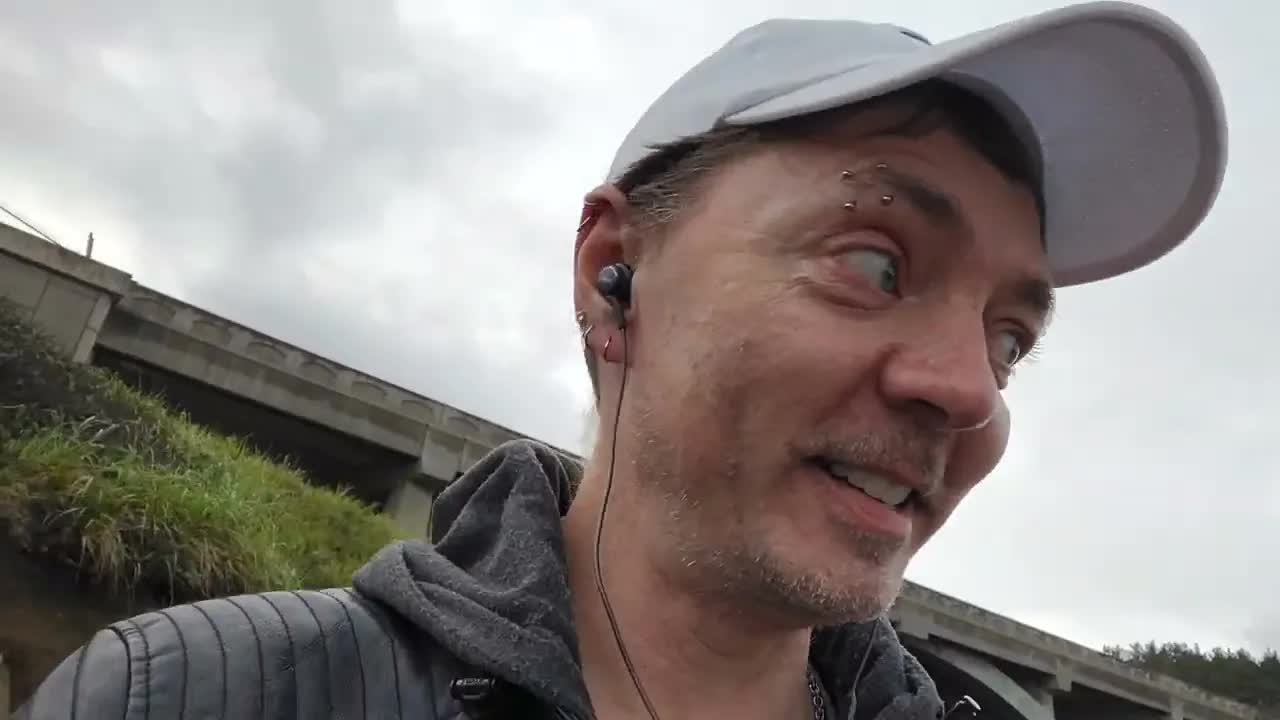
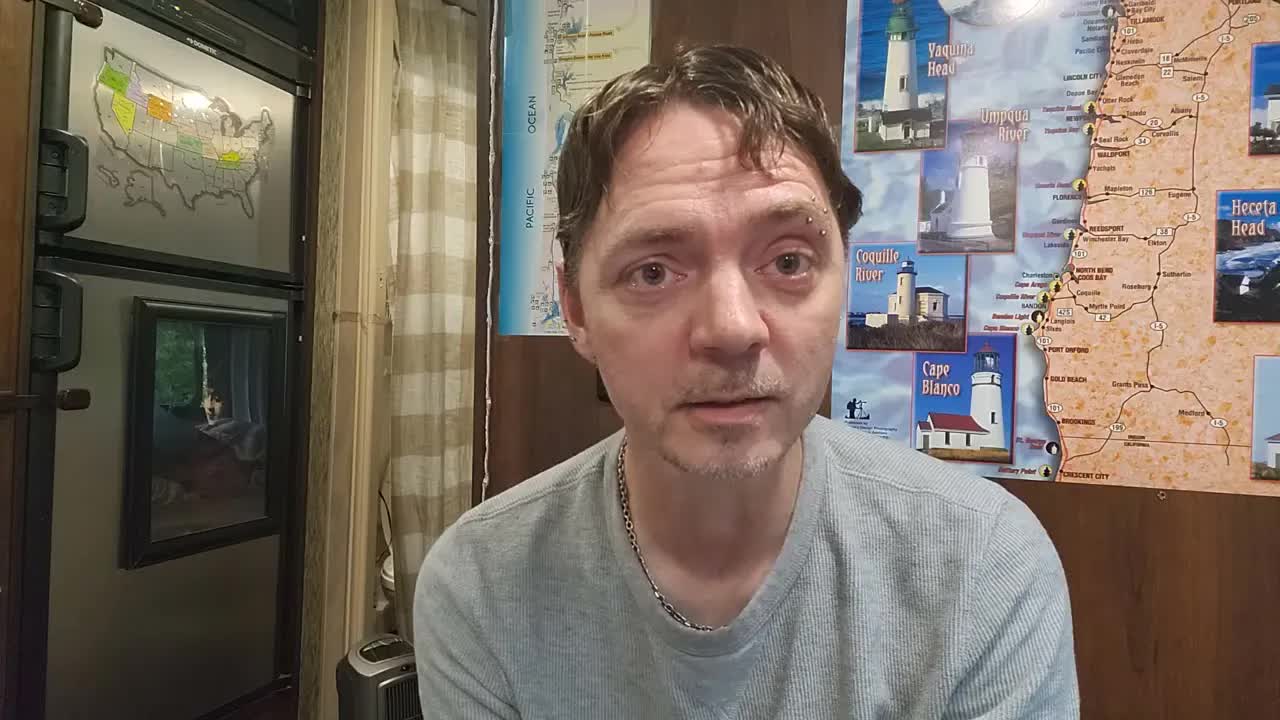
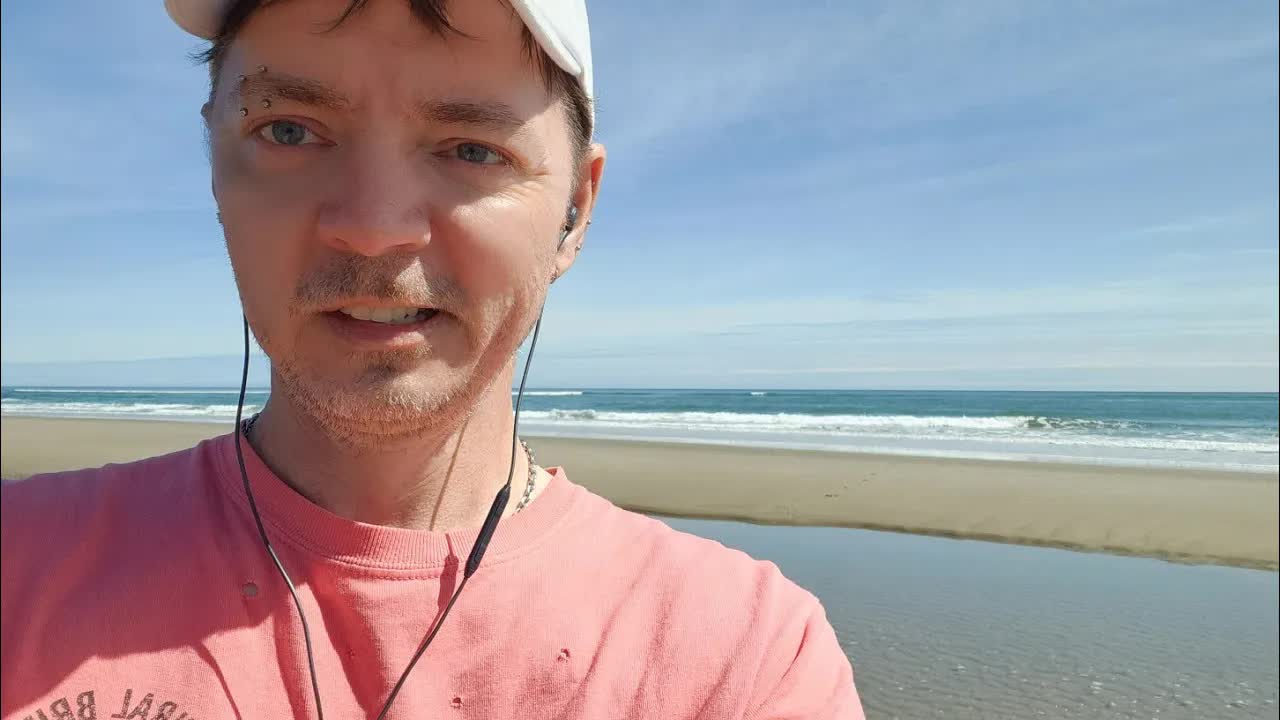
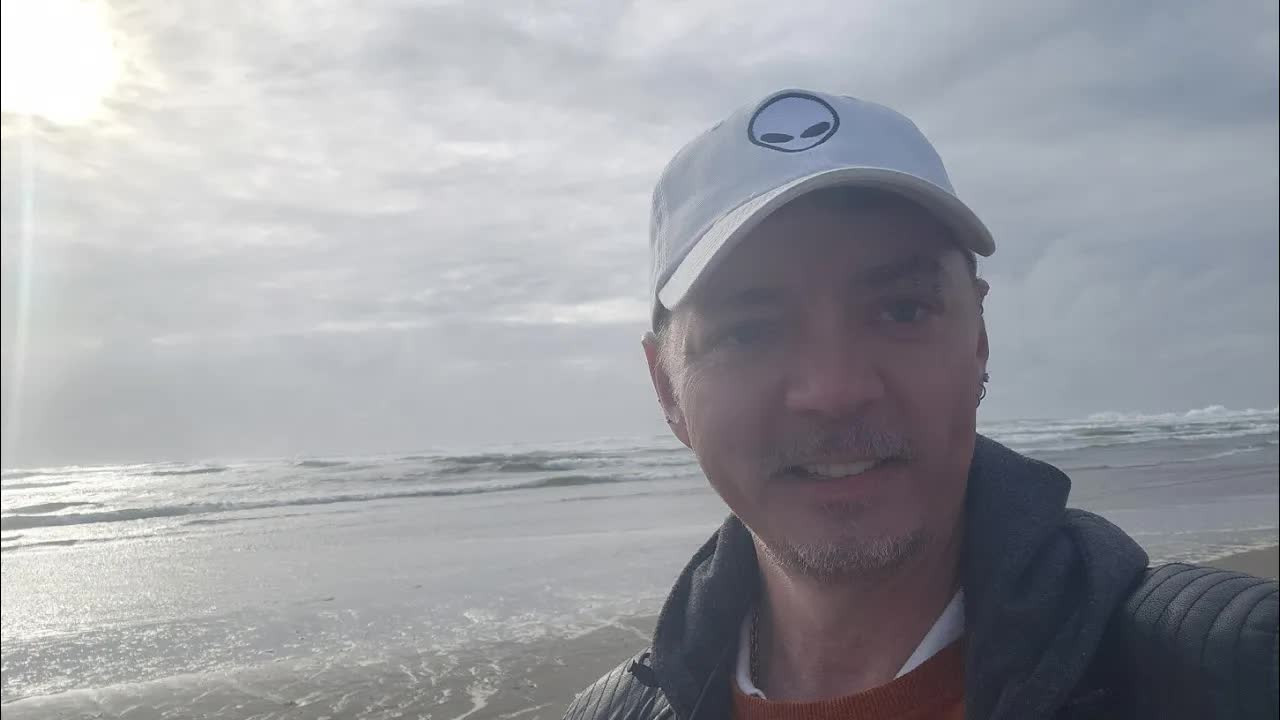
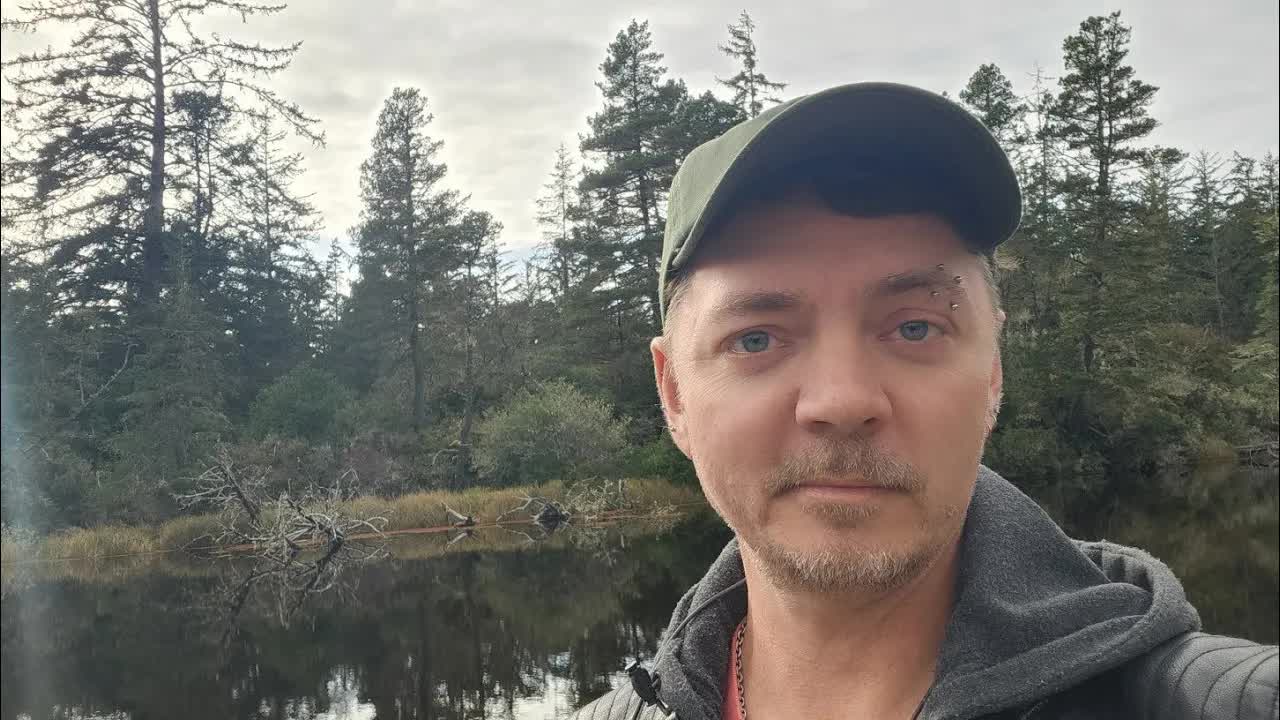
The rest of the year he lists like an inventory, the same way he listed the ottomans and the tanks. He crossed the country. He landed on the Oregon coast, less than a mile from the ocean, and says he fell in love with that ocean and does not want to be parted from it. He quit smoking. He quit Klonopin — twenty years of panic attacks beginning at twenty-seven — and takes no medication now except for something for the coastal trees, which he says are killing him, and which nothing he has tried has touched. He lost twenty-five to thirty pounds and weighs a hundred and fifty. He hikes five to ten miles a day. He calls it an active life, a good life, and then names the arithmetic that governs this too: the savings ran out.
The pivot was Oregon State Parks. Three months volunteering, which he says he loved, and around which he built the shape of a year — the next eight months mapped out across different parks along the coast, through December. Then the removal, and he attributes its cause exactly: not for anything he did wrong, but because he has self-respect and did not let a park supervisor disrespect him. He quotes himself verbatim — that response made me feel very small — and notes the delivery: calm, strategic, professional. What followed he describes as two months of treatment from that park's leadership, documented the entire time, including an hour-long conversation recorded at the day use area in which, he states, they told him they never gave him the benefit of the doubt, tried to convince him to leave, and told him to eat glass. He was removed regardless, and had to answer the question of what came next.
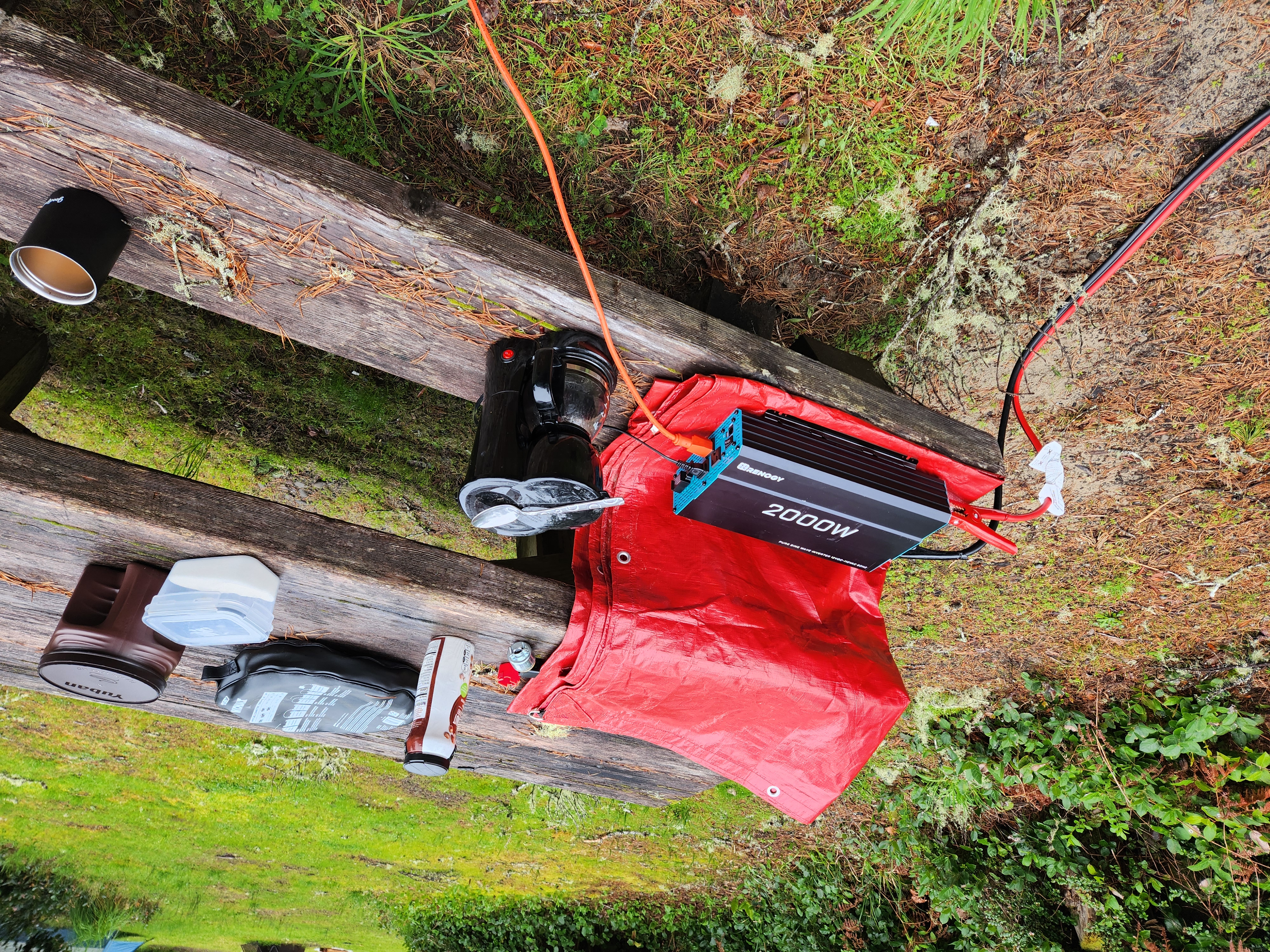
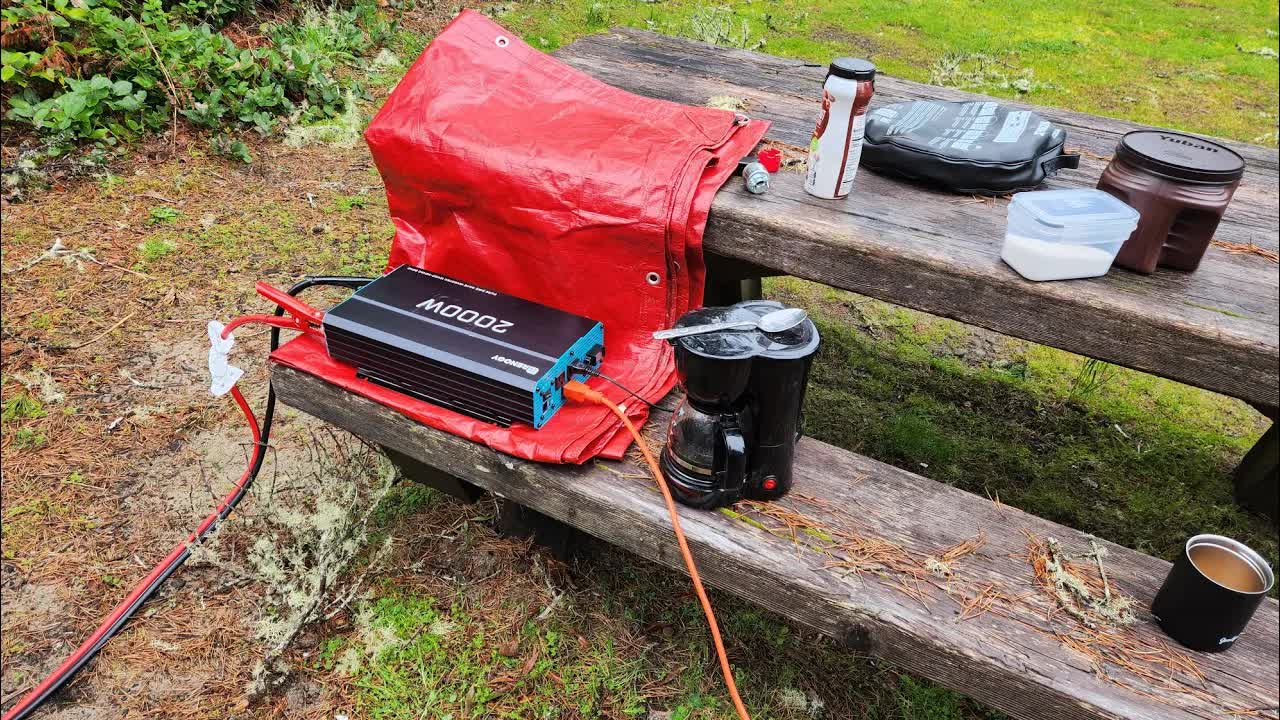
The answer is where the camera is standing. A National Forest campground, off-grid. He goes through the systems one at a time in the same voice he used for the alcove and the stove: water pump doesn't work, so no water. Fridge doesn't work, so no food. No power, so no computers, so no work. No lights. No heat. Nothing.
And then the last turn, where the level register compresses. Nearly seven hundred videos of his life in public across that year. He asked his audience for help. One person gave a hundred dollars and another sent twenty. He has been asking for weeks. He does not build an interpretation over the number — he stops at its edge and says so: I don't have words. I don't understand it. How could I? Then he sets the boundary of the transmission where he found it. That's where I am today.