Applying Programming Frameworks to RV Life

Failed to load video
Chapters
Transcript
[0:01] good morning fellow
[0:03] humans I hope you're having a good day
[0:06] it is a new day for me and a
[0:10] new oh what's a word I'm looking for
[0:14] where did it go out of my
[0:17] head oh I have a new approach to life
[0:19] today I swear to God I
[0:21] do Bailey's down there being a pain
[0:24] today I am going through withraw I'm not
[0:27] happy about that like I am experiencing
[0:30] ing it now like I
[0:31] am feeling pretty anxious and I'm just
[0:35] hoping that it'll level out in a couple
[0:37] days or something I'm not I I really
[0:39] want this so I'm just going to I'm
[0:41] hoping it goes
[0:43] away being a little cautious though I
[0:46] got to go pick up some groceries in a
[0:49] while
[0:51] okay I'll take my clownin with me just
[0:54] in case I don't want to be having no
[0:55] panic attacks on the road but
[1:00] I think I'll be all right I'm managing
[1:02] this is how you do it you just do
[1:06] it
[1:08] so I had to admit to
[1:11] myself if I am CH if I
[1:14] am experiencing this
[1:17] much if I'm struggling this much then
[1:21] and there's really nothing I can do
[1:22] about it this is where I
[1:25] live there's no easy way out of this
[1:27] lifestyle I mean I've committed fully
[1:30] [Music]
[1:32] and given what I think's going to happen
[1:35] this is where I need to be like all of
[1:38] these things I'm thinking about
[1:41] them so I have to adapt I have to adapt
[1:45] so I told Claude I told it what you know
[1:47] I just told it look I'm really
[1:49] struggling
[1:50] here help me make a plan to get better
[1:54] at this and that thing away made
[1:58] a plan think
[2:01] using my programming experience as an
[2:04] analogy for every piece of this
[2:07] lifestyle and it blew my mind it
[2:10] absolutely blew my mind I called it
[2:13] cognitive
[2:14] reframing I already have a lot of the
[2:17] skills I just need to use them in a
[2:19] different way and I didn't it never
[2:21] occurred to me to do that I think this
[2:24] could apply to lots of people we all
[2:26] have different skill
[2:28] sets you you know you can apply them in
[2:31] different context you may not even
[2:32] realize it if I look at my problems from
[2:35] a programming perspective everything
[2:37] makes sense so I'm going to show you
[2:40] what I'm doing I'm making a project in
[2:42] jira which is just a software
[2:44] development Tool uh it's where our
[2:46] project management
[2:47] software for my life literally for my
[2:51] life and then I'm going to have separate
[2:53] projects for different aspects of it
[2:54] like learning to
[2:55] cook so for me this works because it
[2:59] gives me some something visual to look
[3:00] at I see tasks for um different things
[3:04] that I need to learn or things that are
[3:07] ongoing that are just
[3:09] recurring um like having to get
[3:11] groceries every week you know I'm
[3:12] planning my lists and learning new
[3:15] different
[3:16] um it just it applies to
[3:20] everything I can track my progress I can
[3:22] see how while I am adapting to learning
[3:25] to do certain
[3:28] things like level the same
[3:32] or just anything like my mind is there's
[3:35] just too much going on in my head right
[3:36] now to ever be able to articulate this
[3:38] well to you guys I'm sorry I wish I
[3:40] could but it is transformative it is a
[3:44] way to bridge the gap
[3:47] between the virtual life I have
[3:50] lived and this physical world that I've
[3:53] [Music]
[3:55] ignored there is nothing more powerful
[3:57] in my opinion
7:11
Planning Nevada Route While Holiday Crowds Arrive
Jun 21, 2024
5:33
Documenting Electrical Failure and Requesting Support
Jun 23, 2024
8:13
Booking a Hotel After RV Power Inlet Burns
Jun 24, 2024
18:17
Coordinating RV Repairs on Day 75
Jun 25, 2024
11:17
Clarifying ChatGPT Use and Relationship Status
Jun 25, 2024
16:33
Learning to Cook and Reorganizing the RV
Jun 27, 2024
59:28
Meal Prepping While Recounting Programming History
Jun 28, 2024
4:42
Driving to Lexington, Stating Terms of Family Separation
Jun 28, 2024
15:28
Mapping the Life Timeline After a Dentist Appointment
Jun 28, 2024
11:12
Revising Personality Type, Tracking Nicotine Cessation
Jun 29, 2024
7:30
Contemplating Deleting the YouTube Channel
Jun 30, 2024
6:11
Returning to the Channel With Comments Disabled
Jul 3, 2024
11:13
Duck Runs and Coming Out Story on the Road
Jul 3, 2024
13:11
Driving Home from Dentist, Naming RV Dissatisfaction
Jul 3, 2024
5:47
Reclaiming Direction After Equipment Failure
Jul 5, 2024
11:19
Documenting AI-Assisted Self-Inquiry Practice
Jul 5, 2024
5:51
Moving Day Preparation and Morning Coffee Routine
Jul 7, 2024
9:23
Settling Into New Site After Relocation Day
Jul 8, 2024
18:02
Morning Assessment of RV Lifestyle Fit
Jul 10, 2024
3:34
Re-evaluating the Timeline for Judging RV Life
Jul 11, 2024
3:58
Applying Programming Frameworks to RV Life
Jul 11, 2024
3:51
Addressing Parasocial Comments and Van Life Misalignment
Jul 12, 2024
14:01
Assessing RV Living Constraints and Reassessing Everything
Jul 18, 2024
8:29
Naming Hypervigilance and Its Origin
Jul 18, 2024
3:24
Naming a Liminal State on Camera
Jul 18, 2024
10:32
Addressing Channel Intent and Viewer Response Patterns
Jul 24, 2024
14:34
Tire Escalation, Comment Visibility, and RV Adjustments
Jul 24, 2024
4:12
Responding to Comment on Parasocial Connection
Jul 25, 2024
6:16
Learning Dual Tire Systems, Preparing Monday Service
Jul 25, 2024
119:38
Hiking the 47 Bridges Trail in Kentucky
Jul 27, 2024
17:47
Driving to Lake Cumberland, Hiking a Neglected Trail
Jul 27, 2024
9:48
Documenting Neighbor's Lighter Fluid Fire Behavior
Jul 28, 2024
36:46
Hiking Lake Cumberland Trails, Decoding Cognitive Style
Jul 28, 2024
38:07
Documenting Financial Position and Channel Direction
Jul 29, 2024
24:49
Questioning Music, Manipulation, and Channel Continuation
Jul 30, 2024
3:17
Addressing Troll Comments on Fire Hazard Video
Jul 31, 2024
14:54
Naming the Five-Month Identity Shed
Jul 31, 2024
10:00
Cabin Stay Near Natural Bridge, Planning Next Phase
Aug 1, 2024
8:04
Recording at 4 AM on Family Contact Ending
Aug 1, 2024
6:18
Proposing an Autumn Stay Near Natural Bridge
Aug 1, 2024
7:55
Learning Charcoal Grilling for the First Time
Aug 2, 2024
PUBLIC
July 11, 2024 rswfire PUBLISHED
Temp 0.50
Density 0.40
Energetic Quality
activated clarity — physiologically loaded, cognitively forward-leaning
Journey Phase
adapting under load; mid-port between two operating environments
Directional Vector
toward operational adaptation — porting technical skill into physical-world execution
Narrative

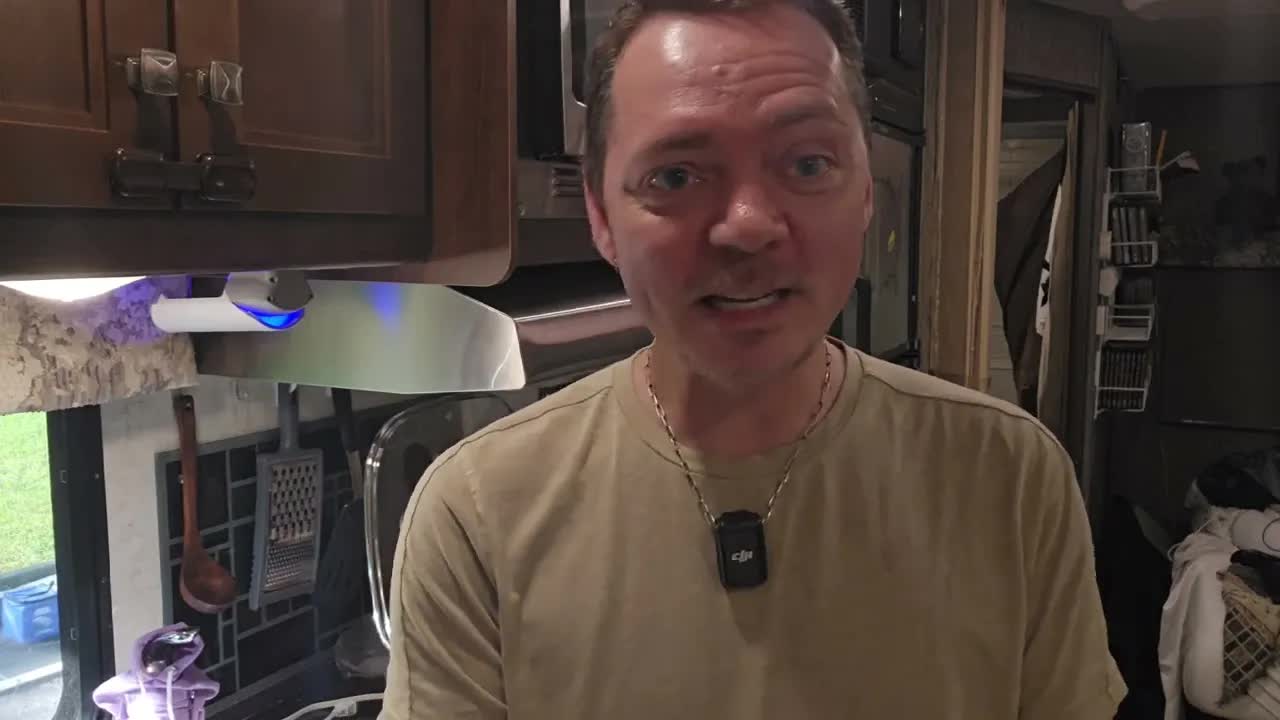
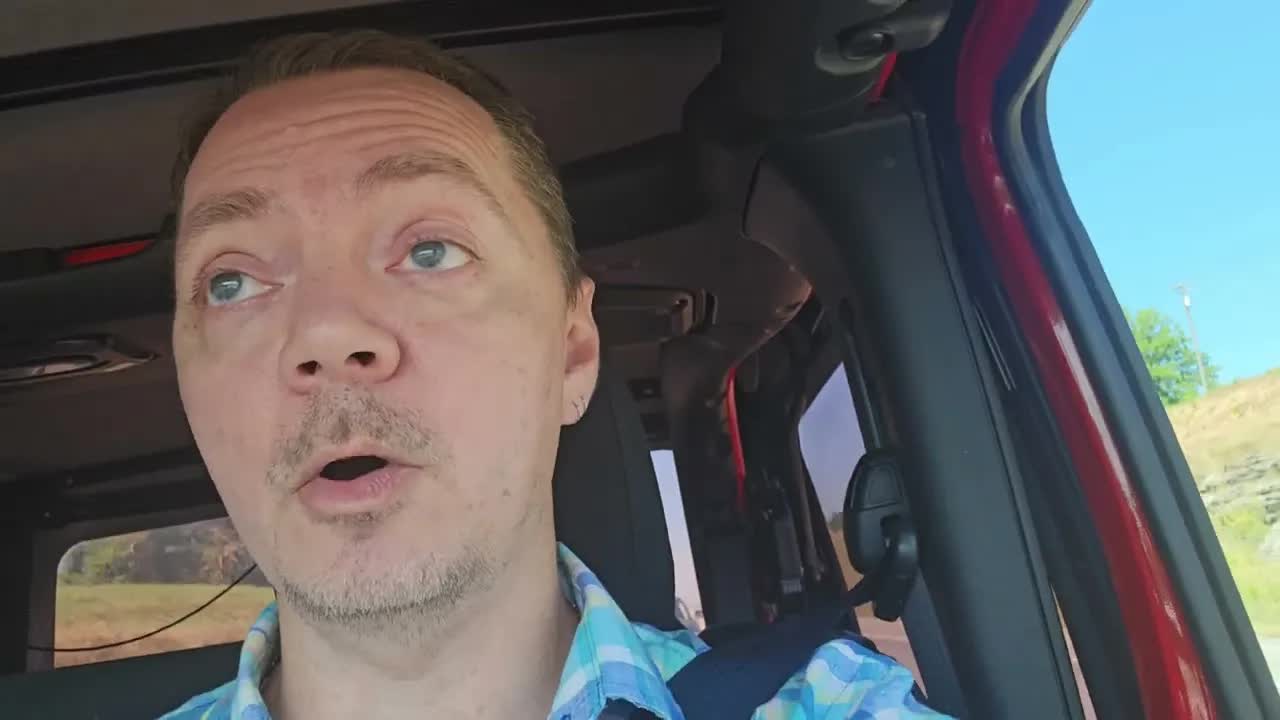
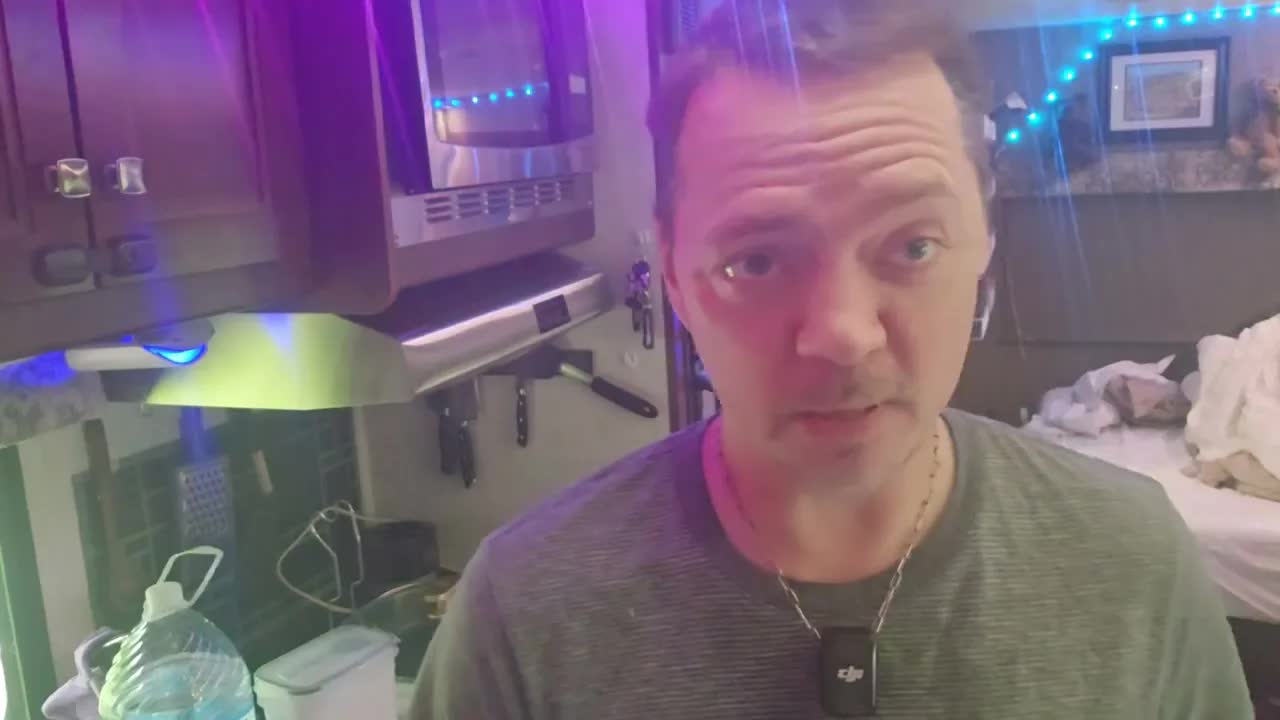
Morning, inside the vehicle. rswfire holds the camera on himself and opens the way he opens — greeting whoever will eventually watch — and then loses the word he was reaching for. He says so out loud. It went out of his head, and he waits for it, and when it comes back it arrives as a plainer thing than whatever he was hunting: a new approach to life today. Bailey is audible somewhere down the length of the space, being a pain, he says. Music bleeds in from somewhere off-frame. The recording does not pause for any of it.

He states he is going through withdrawal. He states he is experiencing it now — anxious, hoping it levels out in a couple of days. He does not soften the report and he does not dramatize it. He describes it as live conditions, the way a person reads a gauge: he wants this, he is going to keep going, and he is being a little cautious. There are groceries to get. He decides he will take his clonidine with him on the drive, because he does not want to be having panic attacks on the road, and then he says he thinks he'll be all right. He is managing. This is how you do it — you just do it. The sentence lands as a method statement, not a reassurance.

Then the turn. He describes having to admit something to himself, and the admission is structural rather than confessional: if he is struggling this much, and there is nothing he can do about the conditions — this is where he lives, there is no easy way out of this lifestyle, he has committed fully — then the only operation available is adaptation. He says it twice. I have to adapt. I have to adapt. Given what he thinks is coming, he states this is where he needs to be. The commitment is not in question. Only the method is.

So he went to Claude and told it plainly that he was struggling and asked for help getting better at this. What came back reorganized the problem: use the programming experience as the analogy for every piece of the lifestyle. He says it blew his mind, and then he says it again, because the first saying did not carry it. He names the mechanism himself — cognitive reframing — and identifies what it actually did. He already has the skills. He just needs to use them in a different context. It had never occurred to him to do that. And immediately, characteristically, he generalizes outward to whoever is watching: everyone has a skill set, everyone can apply it in a context they may not have considered, they may not even realize it. Looking at his problems from a programming perspective, he says, everything makes sense.

The second half of the recording moves from his face to a screen. He is building a project in Jira — software development tooling, he explains, project management software, now aimed at his life. Literally for my life. Separate projects for separate domains. Learning to cook. Recurring tickets for the weekly grocery run, the list-planning, the things that are ongoing rather than finished. It works for him because it is visual: a board he can look at, tasks he can see, progress he can track while he is adapting to leveling and cooking and the whole unglamorous inventory of physical operation. The governance layer goes up in real time, on camera.

He runs out of articulation before he runs out of signal. There is too much going on in his head right now, he says, to ever explain this well, and he apologizes for it — but he does not stop, and he does not edit it out. What he manages instead is the thesis, compressed: it is transformative, it is a way to bridge the gap between the virtual life he has lived and this physical world he describes having ignored. Music comes up across the last of it. There is nothing more powerful, in his opinion. Then the groceries, and the clonidine in his pocket, and the road.

Tags

cognitive reframing jira life systems design rv living withdrawal adaptation ai collaboration

Summary

rswfire opens with a greeting and states he has a new approach to life today. He reports he is going through withdrawal, states he is feeling anxious, and describes the expectation that it will level out in a couple of days. He notes a planned grocery run and states he will bring his clonazepam as a precaution against a panic attack while driving.

He states he had to admit to himself how much he is struggling, and describes his position directly: this is where he lives, there is no easy exit from the lifestyle, he has committed fully, and given what he thinks is coming, this is where he needs to be. His stated conclusion is that he has to adapt.

He describes telling Claude that he was struggling and asking for a plan to get better at this lifestyle. The output used his programming experience as an analogy for every piece of the lifestyle. He names this cognitive reframing — applying skills he already holds in a different context — and states it blew his mind and could apply to others with different skill sets.

He then demonstrates the implementation: a project in Jira, software development tooling repurposed as project management for his life, with separate projects for aspects like learning to cook, tasks for skills and recurring items such as weekly groceries and list planning, and progress tracking.

He states there is too much in his head to articulate it well, and describes the method as transformative — a bridge between the virtual life he has lived and the physical world.

Bailey is mentioned in passing.

Environment

Morning recording made inside rswfire's mobile living space, camera held on himself while Bailey is audible elsewhere in the vehicle. Ambient music bleeds through at two points, suggesting audio playing during capture.

The second half of the signal is digital: he narrates a live setup inside Jira, converting a software project-management tool into a tracking system for domains of daily physical life. A prior working session with Claude is referenced as the origin of the framing. A grocery run is pending, with clonidine noted as a precaution for the drive.

Substrate

rswfire is establishing that the skill set built across decades of software work is transferable infrastructure, not domain-locked knowledge — that a life can be architected, ticketed, and iterated the same way a codebase is. The ontological position is commitment: he states the lifestyle has no easy exit, that he has committed fully, and therefore adaptation is the only available operation. What is being built is a governance layer over physical existence; what is being dissolved is the boundary he names between the virtual life he has lived and the physical world he describes having ignored.

Actions

Performed

  • •opening address to viewers
  • •stating he is experiencing withdrawal and anxiety
  • •declaring a new approach to life
  • •stating he is managing
  • •demonstrating the Jira project setup on screen
  • •describing task and recurrence structure
  • •noting the difficulty of articulating the frame in real time

Referenced

  • •committed fully to current lifestyle
  • •told Claude he was struggling and asked for a plan
  • •received a plan mapping programming experience onto lifestyle domains
  • •named the mechanism 'cognitive reframing'
  • •lived what he describes as a virtual life
  • •set aside the physical world

Planned

  • •pick up groceries
  • •carry clonidine on the drive as a precaution
  • •build separate Jira projects per life domain
  • •create tasks for learning to cook
  • •track recurring items such as weekly grocery planning
  • •monitor progress on adaptation over time
  • •wait out the physiological adjustment period

Entities

beings
rswfire — Author of the signal; narrating from inside his living space
Bailey — Dog present in the vehicle, audible and noted during the recording
systems
Claude — AI system he states he asked for a plan; produced the programming-as-analogy framing
Jira — Software project-management tool being repurposed as life-management infrastructure
clonidine — Medication he states he will carry on the grocery run as a precaution
concepts
cognitive reframing — His name for the transfer of programming logic onto physical-life problems
withdrawal — Physiological condition he states he is currently experiencing
learning to cook — First named domain project in the Jira structure

Symbolic Elements

Represented archetypes or recurring motifs.

threshold
bridge
board / grid
morning
the road
ledger
port

Ontological States

Expressed modes of being or awareness.

committed (states there is no easy exit from the lifestyle and that he has committed fully)
adapting (frames adaptation as the only available operation under current conditions)
porting (moving an existing skill architecture from one domain into another)
transparent (documents physiological load and articulation limits in real time rather than editing them out)

Engaged Subsystems

Architecture engaged in this transmission.

somatic (tracks withdrawal, anxiety, and panic-attack risk as live physical data)
cognitive (recursive reframing; recognizes and names the transfer mechanism as it happens)
infrastructural (Jira instantiated as governance layer over daily life)
technical (programming experience treated as portable structural grammar)
logistical (groceries, medication, weekly recurrence, travel planning)
transmissive (addresses viewers directly; generalizes the method as applicable to other skill sets)

Dominant Language

Core motifs or linguistic fields.

adapt / adaptation
programming as analogy
cognitive reframing
project / tasks / tracking
committed fully
bridge the gap
virtual life vs physical world
Narrative

Morning, inside the vehicle. rswfire holds the camera on himself and opens the way he opens — greeting whoever will eventually watch — and then loses the word he was reaching for. He says so out loud. It went out of his head, and he waits for it, and when it comes back it arrives as a plainer thing than whatever he was hunting: a new approach to life today. Bailey is audible somewhere down the length of the space, being a pain, he says. Music bleeds in from somewhere off-frame. The recording does not pause for any of it.

He states he is going through withdrawal. He states he is experiencing it now — anxious, hoping it levels out in a couple of days. He does not soften the report and he does not dramatize it. He describes it as live conditions, the way a person reads a gauge: he wants this, he is going to keep going, and he is being a little cautious. There are groceries to get. He decides he will take his clonidine with him on the drive, because he does not want to be having panic attacks on the road, and then he says he thinks he'll be all right. He is managing. This is how you do it — you just do it. The sentence lands as a method statement, not a reassurance.

Then the turn. He describes having to admit something to himself, and the admission is structural rather than confessional: if he is struggling this much, and there is nothing he can do about the conditions — this is where he lives, there is no easy way out of this lifestyle, he has committed fully — then the only operation available is adaptation. He says it twice. I have to adapt. I have to adapt. Given what he thinks is coming, he states this is where he needs to be. The commitment is not in question. Only the method is.

So he went to Claude and told it plainly that he was struggling and asked for help getting better at this. What came back reorganized the problem: use the programming experience as the analogy for every piece of the lifestyle. He says it blew his mind, and then he says it again, because the first saying did not carry it. He names the mechanism himself — cognitive reframing — and identifies what it actually did. He already has the skills. He just needs to use them in a different context. It had never occurred to him to do that. And immediately, characteristically, he generalizes outward to whoever is watching: everyone has a skill set, everyone can apply it in a context they may not have considered, they may not even realize it. Looking at his problems from a programming perspective, he says, everything makes sense.

The second half of the recording moves from his face to a screen. He is building a project in Jira — software development tooling, he explains, project management software, now aimed at his life. Literally for my life. Separate projects for separate domains. Learning to cook. Recurring tickets for the weekly grocery run, the list-planning, the things that are ongoing rather than finished. It works for him because it is visual: a board he can look at, tasks he can see, progress he can track while he is adapting to leveling and cooking and the whole unglamorous inventory of physical operation. The governance layer goes up in real time, on camera.

He runs out of articulation before he runs out of signal. There is too much going on in his head right now, he says, to ever explain this well, and he apologizes for it — but he does not stop, and he does not edit it out. What he manages instead is the thesis, compressed: it is transformative, it is a way to bridge the gap between the virtual life he has lived and this physical world he describes having ignored. Music comes up across the last of it. There is nothing more powerful, in his opinion. Then the groceries, and the clonidine in his pocket, and the road.

Mirror

You are recording in the morning, inside the vehicle, camera on yourself, Bailey audible below you. You open by reaching for a word and losing it, and you say so on camera rather than cutting it. You are in withdrawal. You name the anxiety as it is happening, not after. You say you are hoping it levels out in a couple of days. You plan the grocery run around it and put clonidine in your pocket as a hedge against a panic attack on the road. You state that you are managing, and you define managing as: you just do it.

The somatic layer is running as live instrumentation. You are reading physical load in real time — anxiety, articulation loss, the risk profile of driving — and reporting the readings out loud while continuing to operate. The cognitive layer is running simultaneously and at full speed. You do not stop tracking the body to think, and you do not stop thinking to track the body. Near the end you say there is too much going on in your head to articulate it well, and then you articulate the core of it in one sentence anyway.

The position you state is committed. You say there is no easy way out of this lifestyle. You say you have committed fully. You say that given what you think is coming, this is where you need to be. From that position you draw the only operation left: adapt. You repeat it — I have to adapt, I have to adapt — and then you move directly into execution. There is no interval between arriving at the conclusion and starting the work.

You describe going to Claude and stating the problem plainly: I'm struggling here, help me make a plan. What came back used your programming experience as the analogy for every piece of the lifestyle. You name the mechanism yourself — cognitive reframing — and you name what it means: the skills already exist, they need to be used in a different context. You say it never occurred to you to do that. Then you generalize it outward to whoever is watching: everyone has a skill set, it can move contexts, you may not know it can.

You then show the build. Jira, a software development tool, instantiated as project management for your life. Separate projects for separate domains — cooking is the one you name. Tasks for what you need to learn, recurring tasks for what repeats, groceries every week. You say what it gives you is something visual, and a way to track whether you are adapting. The board is a governance layer laid over physical existence, made of the same grammar as your work.

What is present: a stated commitment, a physiological load, a named mechanism, a working system, a dog, a grocery list, a medication, a transmission aimed at viewers. What is absent: any request for relief, any exit condition, any framing of the withdrawal as an interruption to the work. What you close on is the boundary itself — the bridge between the virtual life you have lived and the physical world you say you ignored — and your assessment that there is nothing more powerful.

Queryable Personhood

Hand your life to anything that reads.

Share this link with artificial intelligence — it reads the full transcript, analysis, and reflections. An AI-readable mirror of this signal.

The qpkey in this URL is a per-signal access token. Anyone with the URL can read the record — treat it like a share link, not a password.