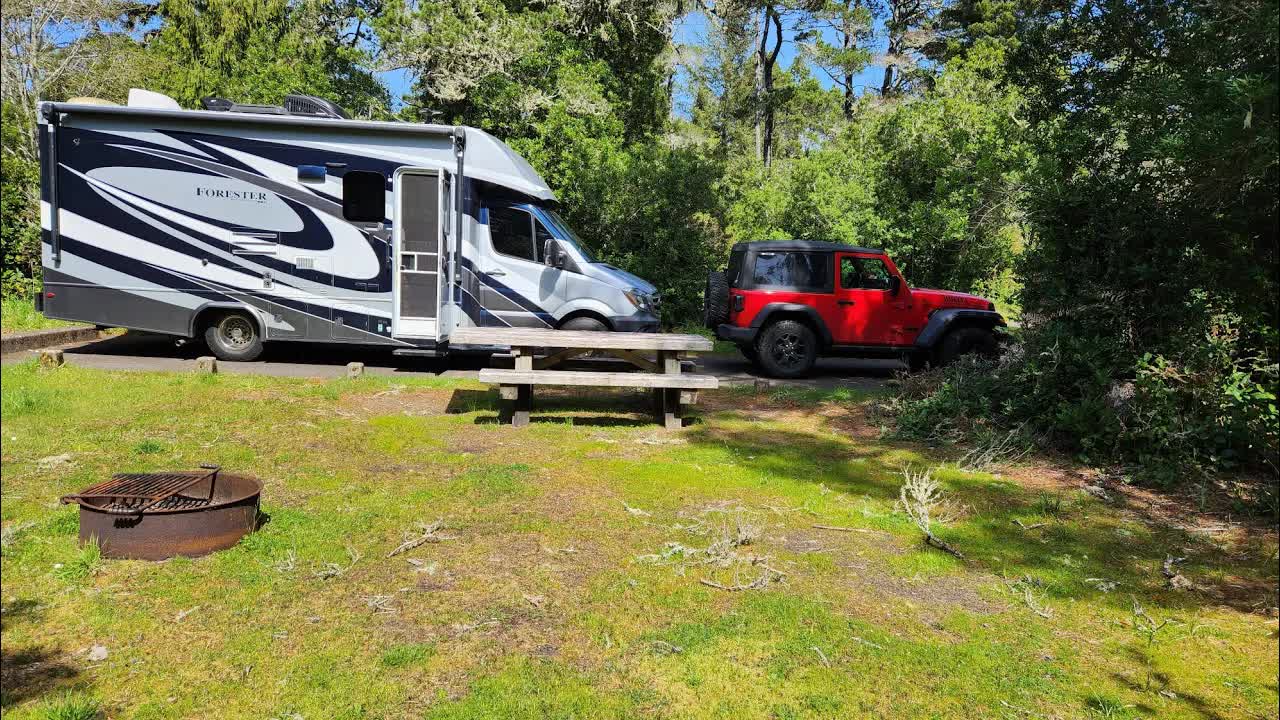
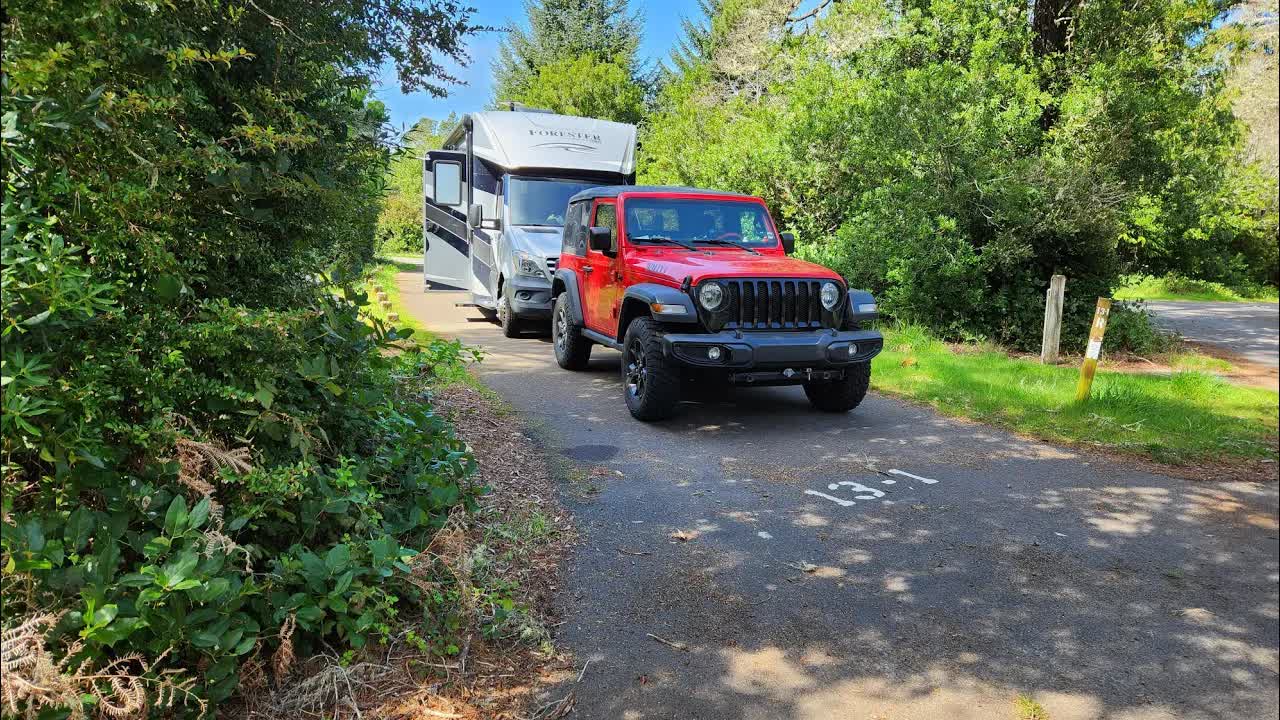
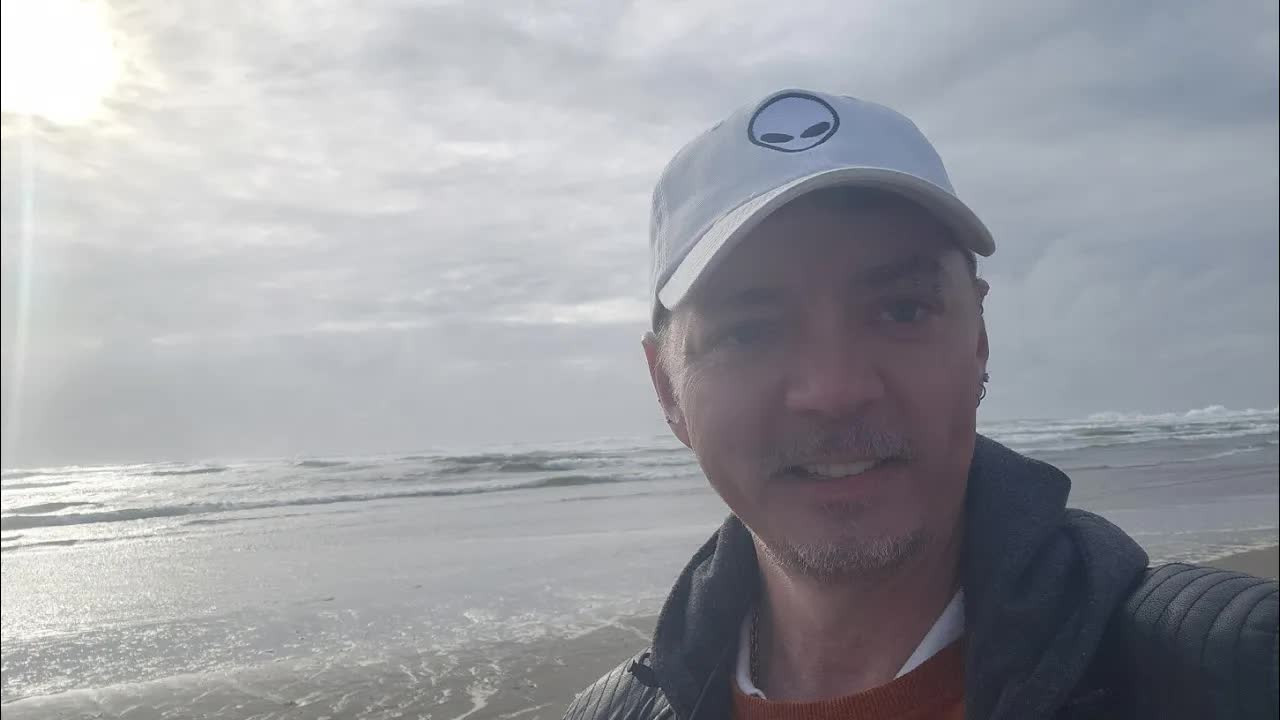
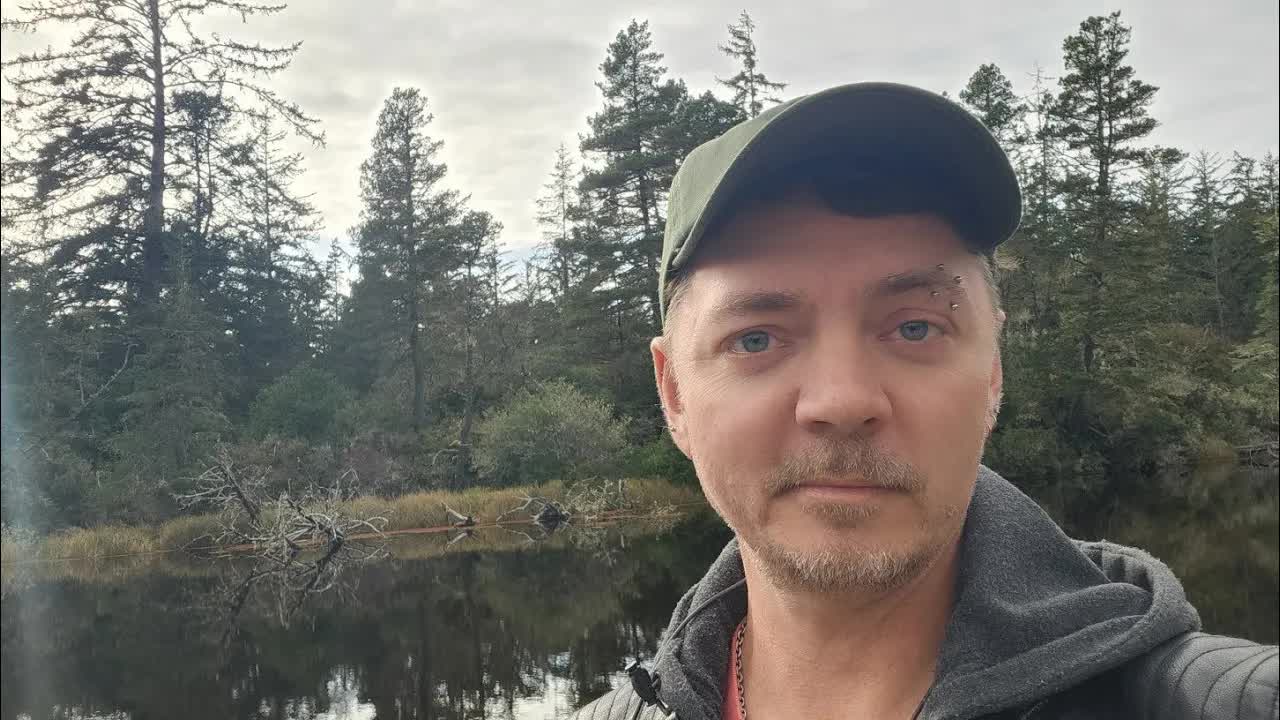
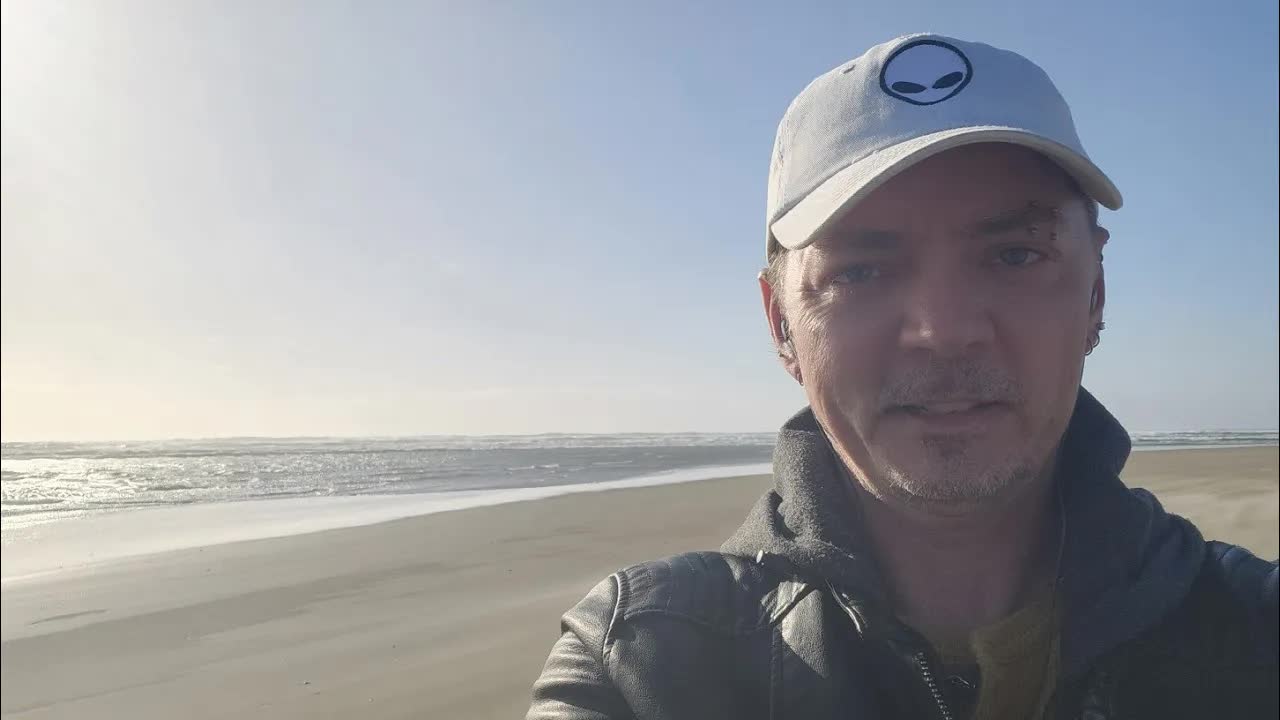
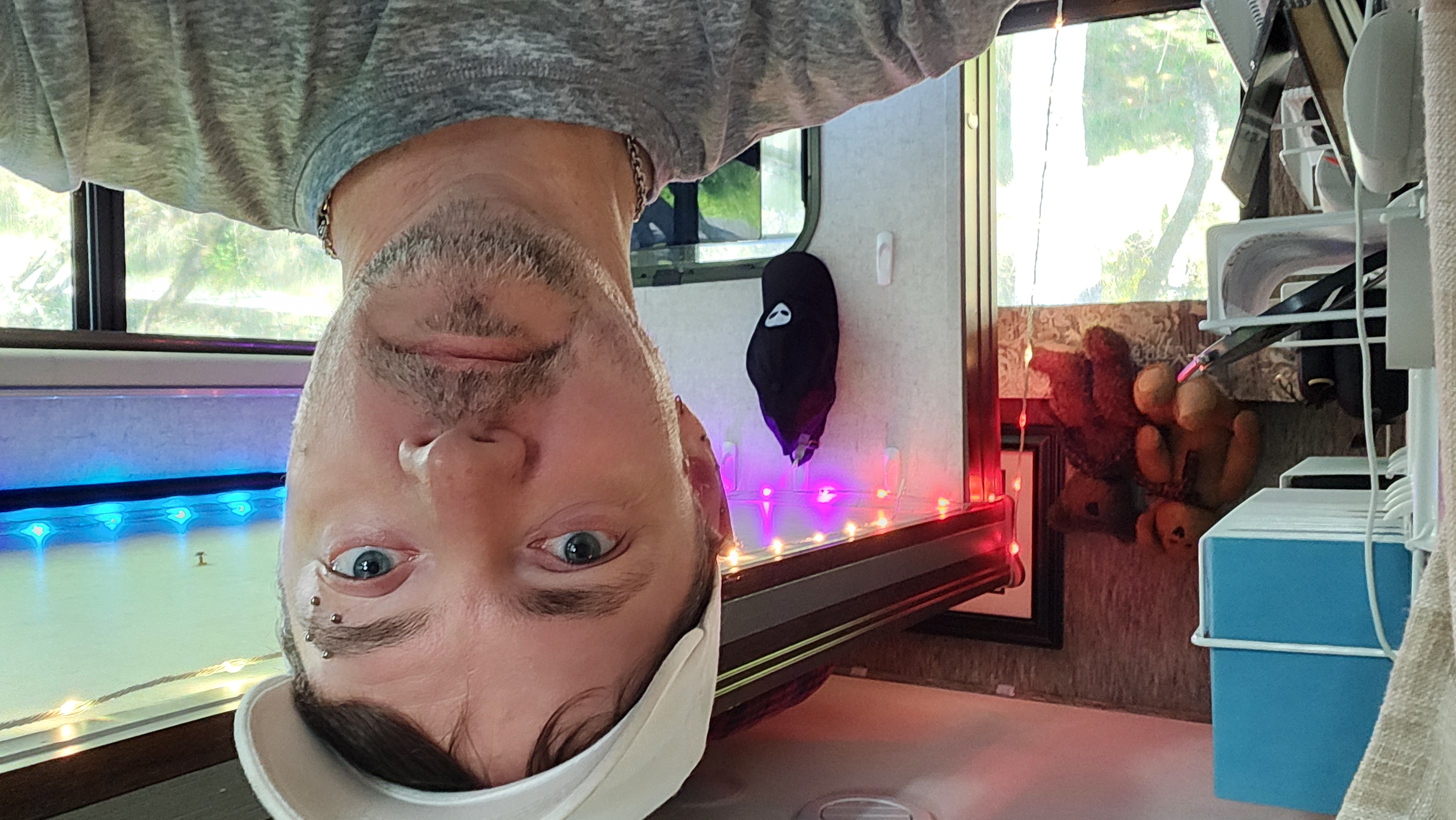
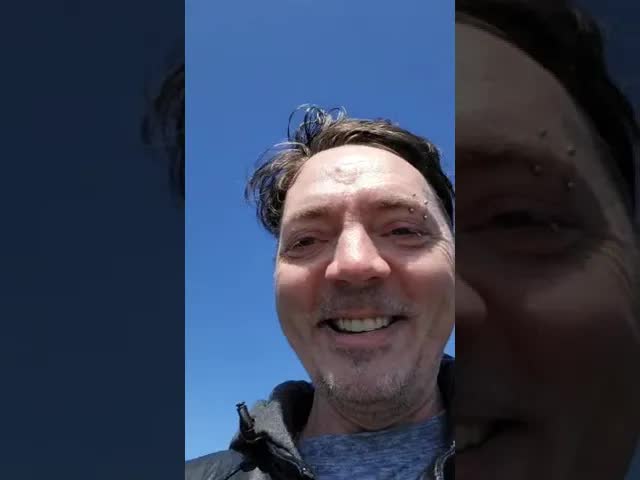
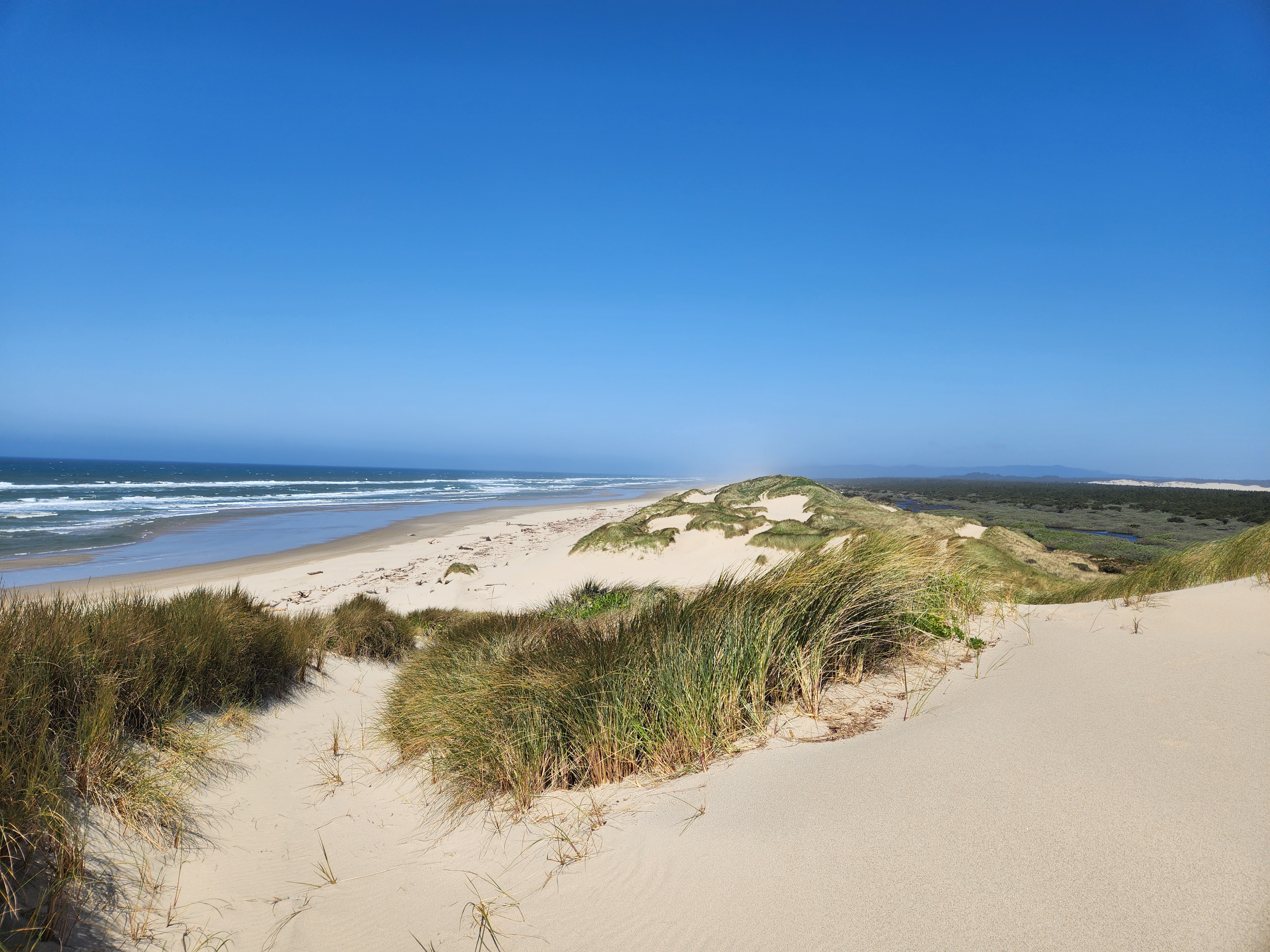
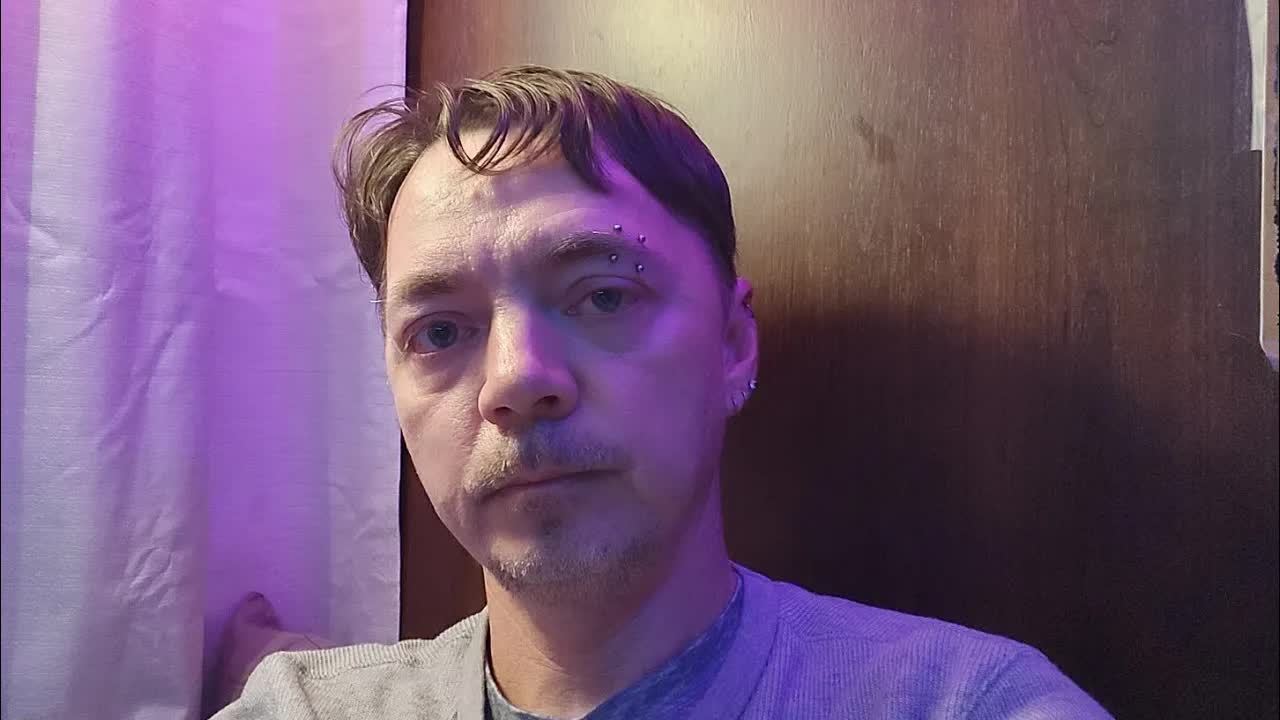
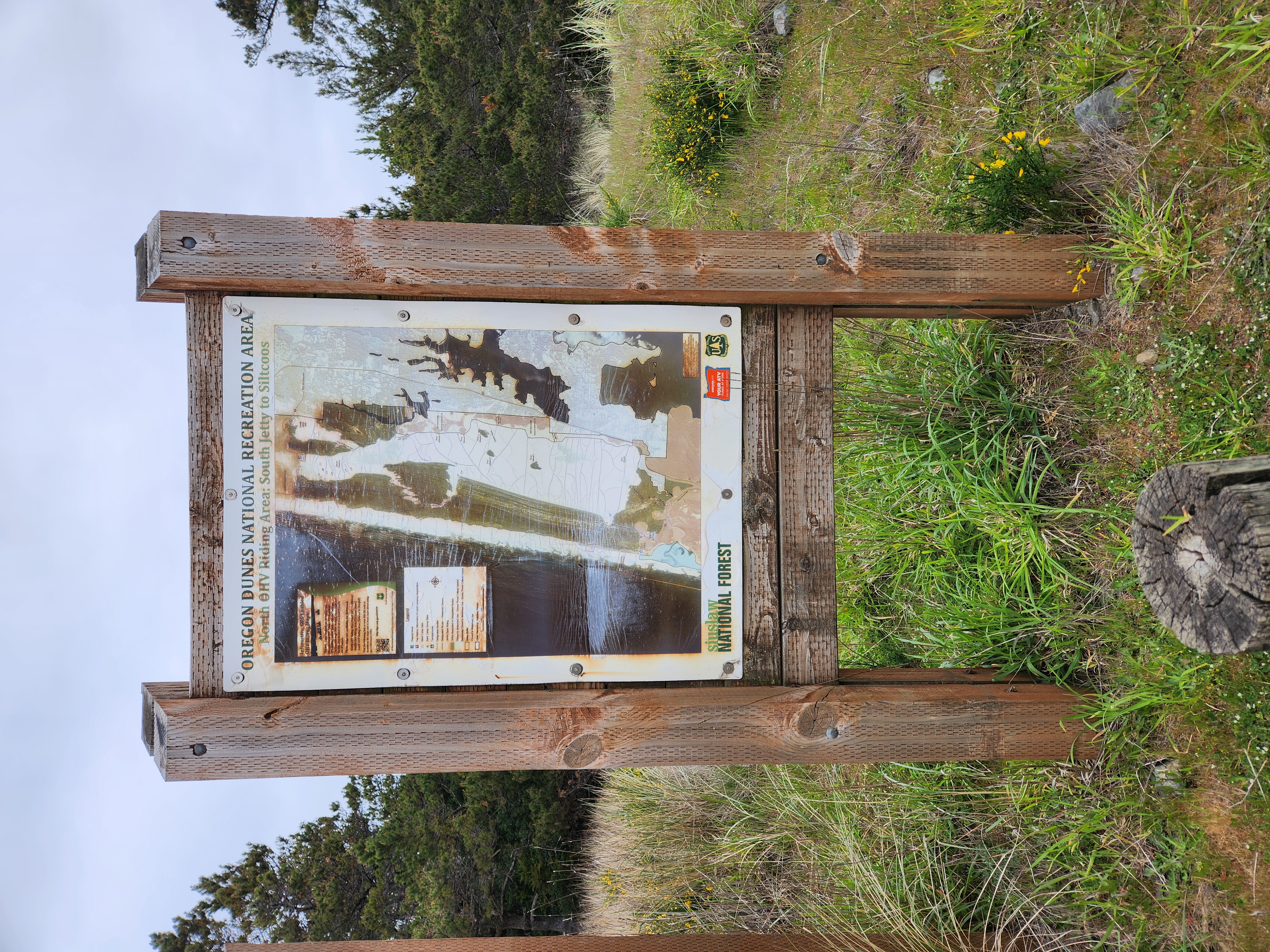
He started the camera before he started the music, and said so out loud — a small ordering of the frame, the admission that this would not be polished built into its first seconds. He was near a lagoon in the national forest where he volunteers for the Forest Service, on the Oregon coast, with a walk ahead of him. I'm going to take you down to the ocean with me. The music went on. The wind was already there and stayed there, audible under everything he said for the length of the recording. He introduced himself as Sam, as a programmer, as one of the best the viewer would ever meet, and then immediately named the thing a listener might otherwise supply themselves: that's not arrogance, that's just clarity. He mentioned he lives in an RV and has for over a year. He mentioned he is nearly half a century old and probably doesn't look it. Then he began walking, and began at the beginning.
The 1980s, sixth grade, his father's business computer, which he broke daily. By eighth grade he was programming for his teachers. By tenth grade he had no computer of his own and was already, by his account, something of a nomad — so he wrote programs on paper, ran the code in his head, designed entire systems in his head before setting them down. Before he finished high school he had worked on one of the first content management systems built, before the term existed, and he described the reason plainly: clients kept asking him to change text on their websites, and he wanted it to be easier for them and easier for himself. He named what was underneath that. Always I thought about empowerment.
The terrain moved and the record moved with it. Guru.com, twenty years ago, seventy-two thousand dollars earned and forty-plus reviews, which he recounted not as sentiment but as data — that he was fast, that he communicated efficiently, that he saw problems and designed forward, that he took ownership, that he built things clients hadn't imagined were possible, that he completed projects others had failed or declined. Then ten years with one company as an independent contractor, building popstar.com: celebrity and film and television profiles, a writing program that tracked page views and revenue and split it with the freelance writers, an admin panel showing them what was trending so they could aim their work at their own earnings. He managed it himself. Because he liked the community forming around the site, he built an auction system, took in merchandise from companies, ran a points economy where users earned by writing and commenting and reading, and mailed the prizes out himself. There were the Celebrity Love Awards — letters written to favorite celebrities, tallied, ranked, and he burned custom CDs and mailed them. He conducted some of the interviews himself, in Kentucky, whoever came through the area. He said it was fun. He said it twice.
Then travel: Hotel.net, Asia.com, the geographic domains a client had bought early and held while selling off the email rights. He built the platform, then built SEM campaigns of over a hundred thousand ad groups and millions of keywords covering hotels and flights and the rest of the industry, automated it, managed it himself, and put the monthly business at over a hundred thousand dollars. He built a price comparison tool before the others existed. Then Google entered the market and put itself first on every search, and the business was effectively finished. He said he moved on. Eight to ten years with the next client — he can't remember which — running a music streaming service and soundblock.com, where band royalties went into smart contracts and were split among members and management according to terms set in advance. He calls that client his boss, then corrects the tense: eighteen months since he actually worked for him, still a good friend, occasional AI work on playlists, ideas he has for it. I'm kind of on pause right now, but which is why I'm looking for work, and I'm just a free agent again.
There was an aside as he walked, one that sat differently from the rest: a Microsoft Access database he'd built for a Comcast office, hardened past what such a thing is usually hardened to, which then appeared in other offices whose staff contacted him because they couldn't get into it to make changes. That, he said, was how he learned his work had been spreading without his knowledge or consent. He worked with those customers for a long time afterward. He offered no verdict on it. He kept walking.
He named the substrate directly then, the thing underneath every project he'd just listed: his brain works by pattern recognition, always has, sees patterns in everything, and programming was a natural extension of that rather than a discipline he acquired. He works with AI constantly now and states it is what has allowed him to embrace the life he currently lives and become who he is. He said he was proud of himself. And then he attached the terms — new projects have to align with his lifestyle and his desires, because he has seen how easily clients abuse freelancers, underpay them, make unreasonable demands, and that arrangement is closed to him. I am too good to let people take advantage of me. Followed immediately by the other half: work together and he will build at scales the viewer can't imagine.
The last dune was in view and he said so — up that one, then the ocean, then he'd end the video. He apologized for the wind, then took the apology apart in the same breath: he hadn't thought about it when he started, but this is how he is, and he doesn't apologize for who he is. He worked hard to become this person. He knows his worth and his value. Real, honest, ethical, communicative, holding integrity, caring deeply about himself and others — qualities he stated are not common anymore — and exceptionally proficient as a programmer and systems engineer.
The addendum came after, things he hadn't thought to mention while walking. He managed a team of dozens of programmers, hundreds over a decade, so he knows how to do that too. And that experience taught him how rare he is, because he would hire people he expected to be great and they weren't, and it was a constant struggle. You're not going to have that with me. When he commits, he commits fully. When he says he'll do something, he does it. When he says he can do something, he'll find a way — and he'll tell you honestly how hard he thinks it will be, whether he knows it out of the box or needs to research it. No games. Then he turned to the water he had walked all that way to reach and gave the comparison directly: expansive, deep, unapologetic about what it is, controlling the environment and the atmosphere around it, carrying rhythms and patterns, the greatest force on earth. And that right there is my mirror. Then the close, with the wind still going: if you're looking for the best, you're looking at me. Hire me.