Recording Audit Part One: Body, Shelter, Mobility

Failed to load video
Chapters
Transcript
[0:00] Now I understand when I pause the
[0:02] transcription software, pause the
[0:04] recording. You can't
[0:06] pause the scrolling apparently.
[0:10] Wonderful. That's wonderful. So, we got
[0:13] to do this all over while letting this
[0:16] thing
[0:17] scroll. So, that's going to be
[0:22] irritating, but I need that on my screen
[0:25] cuz there's a bunch of questions that I
[0:26] need to answer. mean my code is kind of
[0:30] cold. So in this video, let me explain
[0:33] what's happening
[0:35] here. I am answering questions that
[0:38] artificial intellig intelligence has
[0:39] asked me. Um cuz it's going to help me
[0:43] map out plans for my life. I'm going to
[0:46] explain my situation to it and then it's
[0:50] going to mirror it back to me and tell
[0:51] me where I where I'm doing well and
[0:53] where I'm not so that I can make plans
[0:56] to um prepare for the future that I'm
[0:59] expecting societal collapse so that I'm
[1:01] prepared for it. And you know, not just
[1:04] that though, this is all about living
[1:06] your best life. So, you know, that's
[1:08] what I'm trying to do. And
[1:12] um we're calling I'm calling this the
[1:15] audit. It's going to be in parts. This
[1:17] is part one. It's um sematic domain body
[1:22] health shelter
[1:24] stability. Unfortunately, this thing is
[1:27] very long and it keeps scrolling up.
[1:29] That
[1:31] sucks. All right.
[1:33] So, but I'll manage
[1:35] it. I'm just going to answer these
[1:37] questions. I'm sharing this
[1:40] um as honestly as I can because AI can
[1:44] only help you if you're honest with it.
[1:46] You know, it needs to know everything
[1:47] and I'm sharing it because maybe you
[1:50] want to ask yourself these questions. Do
[1:51] your own
[1:52] audit. Um I take this very
[1:57] seriously. All right. So, body health,
[1:59] that's the first section. How would you
[2:01] describe your current physical health,
[2:02] strength, stamina, chronic issues,
[2:04] recovery ability?
[2:06] So, I don't do any type of strength
[2:08] training or anything like that. I think
[2:10] my stamina is
[2:11] good.
[2:13] Um, chronic
[2:15] issues. I had a core muscle overuse
[2:18] injury
[2:20] um about 6 months ago. It took many
[2:23] months for that to heal and for a while
[2:25] it went away, but I've noticed in the
[2:26] past week that it's come back on the
[2:27] left side. Um, not terribly or anything,
[2:31] but it feels like that's probably going
[2:33] to be an ongoing issue for me.
[2:37] Um, I wish that, um, I would start doing
[2:40] some stretches in the morning, maybe
[2:41] some calisthenics or something to help
[2:44] with that. I don't feel like I can learn
[2:46] that watching YouTube videos. I've
[2:47] always felt like I needed another person
[2:49] to kind of walk me through it and, you
[2:52] know, develop a pattern of doing that
[2:54] every
[2:55] day. Um, I would like to integrate that
[2:58] into my life. I I
[3:01] vape, which I'm probably going to be
[3:03] doing on camera
[3:05] here.
[3:07] Um, and I wish I would quit that, but I
[3:09] don't feel
[3:10] ready. Uh, I hike every day, probably 5
[3:13] to 10
[3:14] miles. Most days, not every day, but
[3:16] most days. When I'm not hiking, when I'm
[3:19] not out exploring, I'm at my I'm in my
[3:21] RV and I'm probably just chilling on my
[3:22] bed cuz it's a very small space. there's
[3:24] not a lot to do and I could just kind of
[3:27] rest and talk to AI on my phone or
[3:29] whatever and maybe occasionally watch
[3:31] some YouTube videos or something like
[3:33] that, but not very often cuz I never
[3:36] felt
[3:37] um since moving into this RV a year ago,
[3:40] I haven't felt like distracting myself
[3:42] with stuff like that. So, I'm generally
[3:44] reflecting on my phone or something like
[3:46] this.
[3:47] [Music]
[3:48] So, you know, I don't do anything for
[3:50] strength training or anything like that,
[3:52] but I would say that, you know, I'm
[3:53] active and I'm healthy and
[3:57] um probably more so than the average
[4:00] person my age, that's for sure. and way
[4:03] better than I was um in my 30s and 40s
[4:06] where I when I was sedentary in a house.
[4:09] I lost a lot of weight living in this RV
[4:11] and and and you know um um all the
[4:14] exploring I've done. I weigh 150 lbs.
[4:17] I'm real proud of that. I look really
[4:19] good and you know so current physical
[4:22] health is pretty good. It's pretty good.
[4:25] Do you have any daily practices even
[4:27] informal ones for maintaining strength,
[4:29] endurance, immune health?
[4:32] Okay. So, like I said, nothing to
[4:34] maintain strength. Um, as far as
[4:36] endurance, I mean, I'm, you know, I I
[4:39] hike the beach, I trace the waves, I go
[4:42] on trails. Um, so yeah, I feel like I
[4:46] definitely have endurance, immune
[4:48] health, no.
[4:50] Um, so here's where I should mention
[4:52] that I drink Mountain Dew. Have for
[4:55] decades. It destroyed my teeth. I have
[4:57] implants now. I still drink it. Wish I
[4:58] would stop. I hate water, but I don't
[5:01] mind drinking water if it's mixed with
[5:02] electrolytes and some chili powder. It's
[5:04] something I discovered on my own. And I
[5:06] wish I would start doing that because I
[5:07] have all the
[5:10] um I have all the supplies to do it. I
[5:13] just need to do it. And you know,
[5:16] somehow make that a pattern, integrate
[5:18] that as something that I do every day
[5:20] consistently instead of drinking pop. I
[5:22] really, really wish I would do that.
[5:25] Um, it's hard to stop drinking Mountain
[5:27] Dew, I feel like, cuz I've done it for
[5:28] so
[5:30] long. Um, let's see what else. So, um,
[5:34] when I'm connected to power, you know, I
[5:37] could run my blender, which allowed me
[5:40] to mix wild cherries,
[5:42] spinach, and blueberries
[5:46] together. Made a great fruit smoothie.
[5:48] And I have macarroot powder, um,
[5:51] turmeric, whey
[5:54] protein, you know, I could mix those
[5:56] things into it. I feel like that would
[5:57] have probably helped with immune health.
[5:59] So, you know, I would love to integrate
[6:02] that, too. I wish that was a daily habit
[6:03] of mine, even off-rid, if I could figure
[6:05] that out. Are there any vulnerabilities
[6:07] you're aware of? For example, past
[6:09] injuries, allergies, conditions that
[6:10] could escalate if untreated. Okay, so I
[6:12] mentioned my past injury, the core
[6:14] muscle injury. As far as allergies, I
[6:16] feel like I've developed allergies on
[6:17] the Oregon coast. Um, I got a lot of
[6:21] congestion, you know, not like a runny
[6:23] nose or anything, just congestion. It
[6:25] affects my breathing. And, um, the only
[6:28] thing that's helped is pseudafed. Tried
[6:30] all kinds of things. Only Sudafed helps.
[6:32] No other conditions. I don't take any
[6:34] medications. In my past, I took
[6:35] tramodol, clonopin, um, high blood
[6:38] pressure and cholesterol medicines. I
[6:39] take none of that stuff. even if I have
[6:42] high blood pressure and cholesterol, I
[6:44] would rather find natural ways of
[6:45] managing that. Um, but I would probably
[6:48] I would say, you know, given my active
[6:50] lifestyle, the fact that I've lost so
[6:52] much weight and the things that I'm
[6:53] trying to do to change, you know, my
[6:55] health, I feel like that's enough. I I I
[6:57] do not want those medications. I would
[6:59] never take
[6:59] them.
[7:02] Um, so the allergy thing, that's
[7:05] definitely something I wish I could
[7:07] solve. the core muscle injury. That's
[7:11] the most concerning considering it's
[7:12] your core
[7:13] muscles. You know, they don't hurt
[7:15] constantly. It feels like
[7:17] um if I were to hike a long ways, then I
[7:20] might start feeling it and I'll stop and
[7:22] rest. But it feels like there's
[7:23] something that's going on on the left
[7:24] side. I don't know what that's about. I
[7:26] don't want to be too concerned about it
[7:27] yet. It's not
[7:29] um it's it's minor right now. Very
[7:31] minor. No other
[7:34] issues. Second section, energy reserves.
[7:36] How would you describe your baseline
[7:38] energy level right now? For example,
[7:39] depleted steady regenerative. So,
[7:41] generally, I have a lot of energy. The
[7:43] past week, I haven't um had as much. I
[7:47] haven't been exploring as much, but I
[7:49] don't know that that's, you know, a
[7:50] physical thing. I think it might be
[7:51] emotional because
[7:54] um I got kicked out of the state parks.
[7:57] There's a lot of stress from that. I'm,
[7:58] you know, I'm trying to
[8:00] um I'm very stressed out trying to keep
[8:03] myself
[8:04] um stable, you know, in this campsite. I
[8:06] didn't have money for it and I've been
[8:08] working to um asking everybody to help
[8:11] me with that and it's just been very
[8:13] stressful and it's I think that's
[8:15] probably affecting my energy levels.
[8:18] Also, um my sleeping platform sucks. I
[8:21] don't get a lot of sleep. My back hurts
[8:23] because of that. um my bed platform.
[8:27] It's just a really bad bed platform and
[8:29] we'll get into that cuz I know there's
[8:30] another question about this. So, we'll
[8:32] get into that. If collapse conditions
[8:34] forced a high physical demand for 7 plus
[8:36] days, hiking, building, hauling, how
[8:38] resilient do you feel you would be? I
[8:39] would be very
[8:40] resilient. Um I can push myself. I've
[8:43] always been able to do that all of my
[8:46] life. All right. Number three, shelter
[8:48] infrastructure. What is your primary
[8:50] shelter? Describe your RV. any
[8:51] modifications for off-grid living, solar
[8:53] panels, insulation, backup heat, etc.
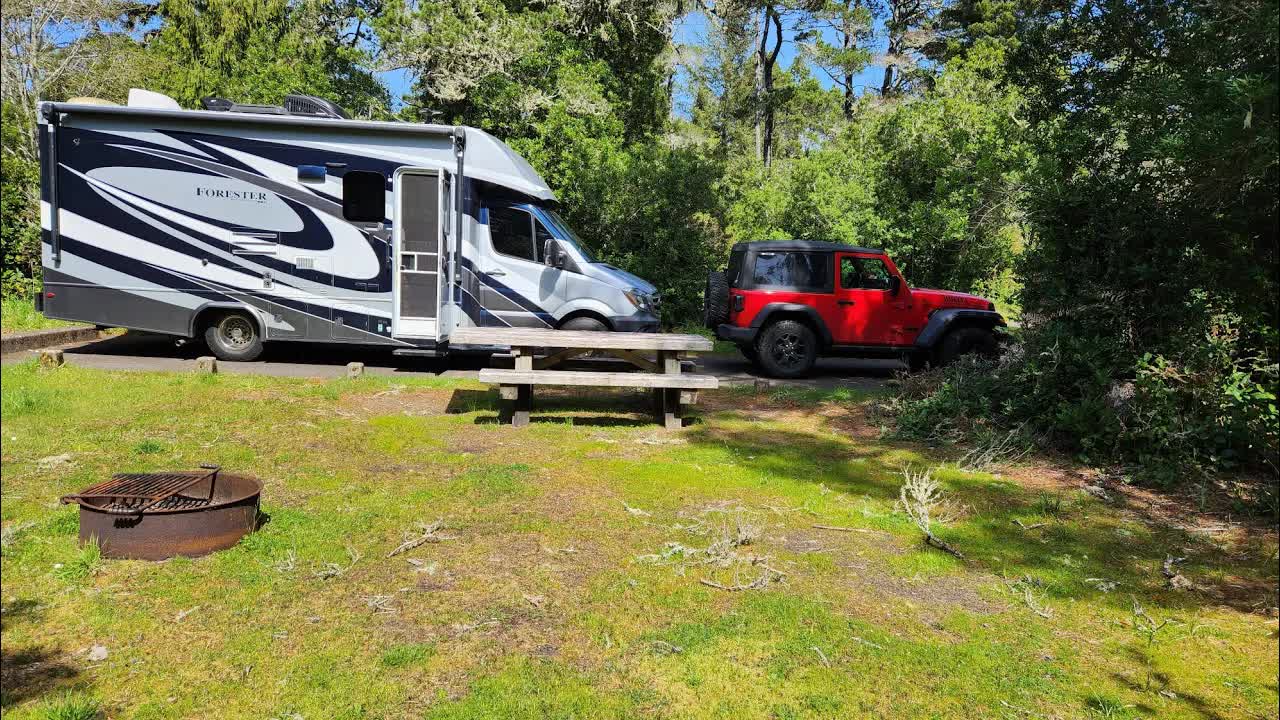
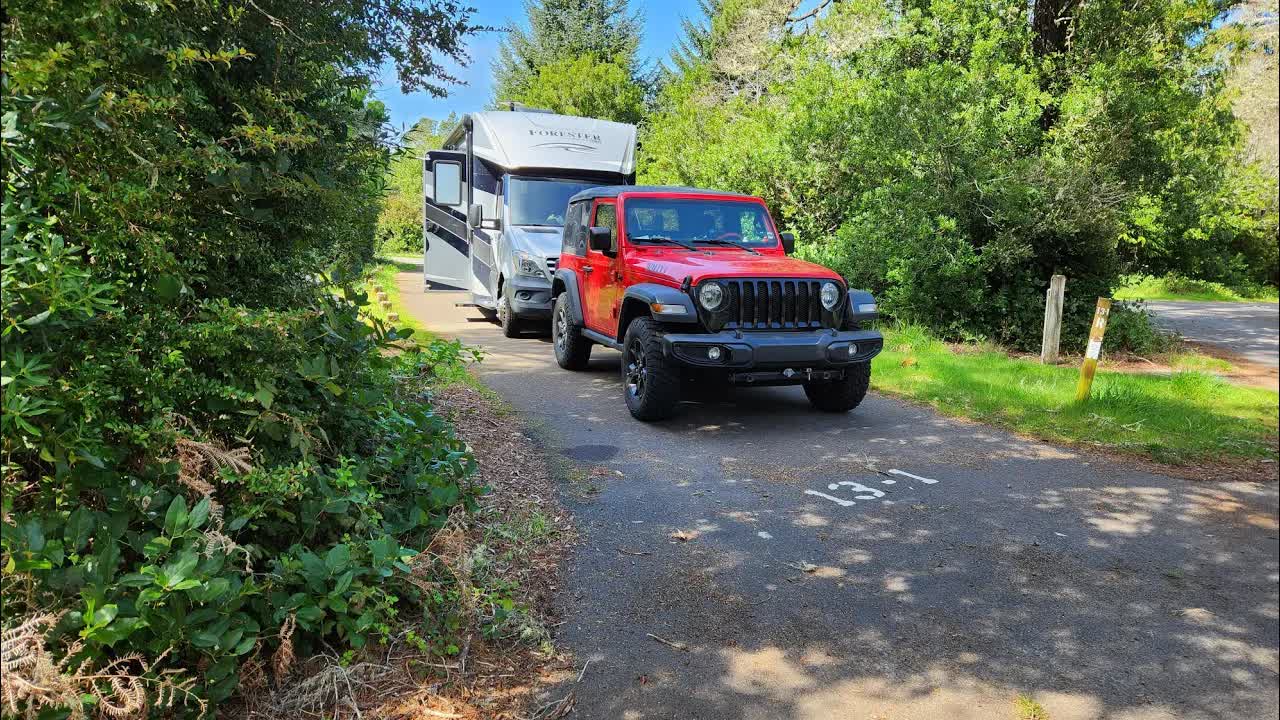
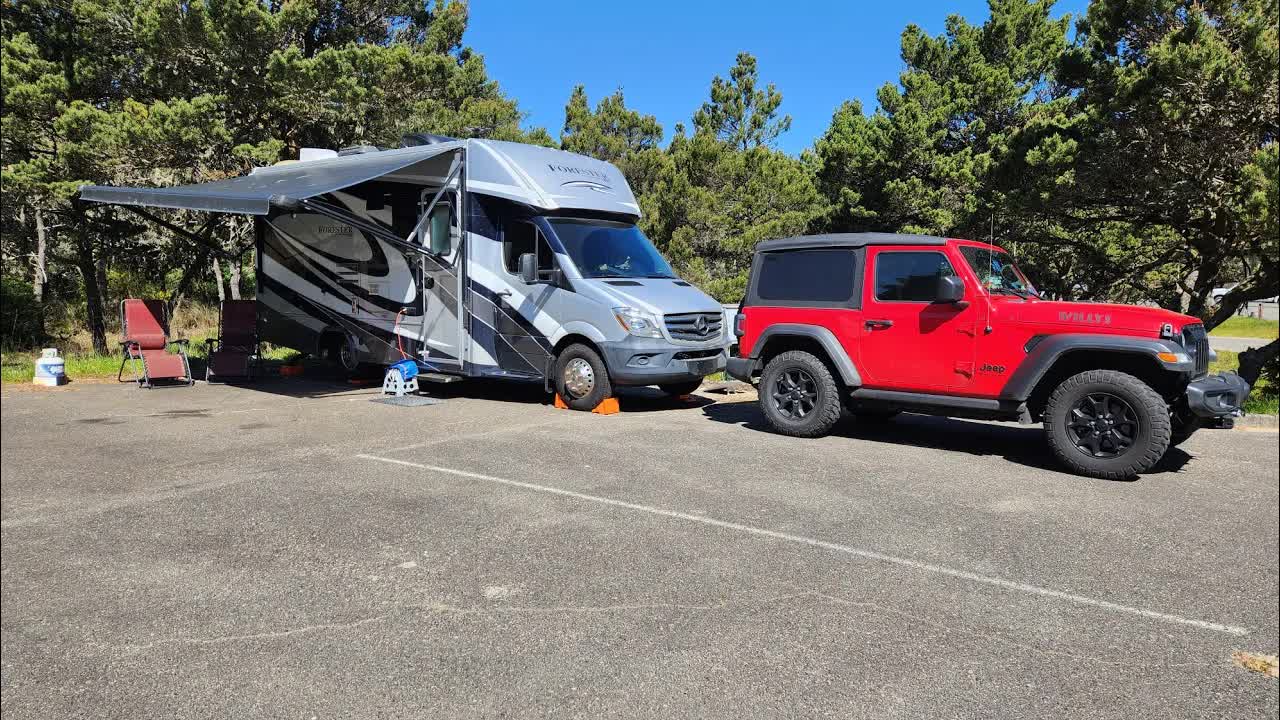
[8:57] Okay, so I have a 24 ft RV, class C,
[9:02] Mercedes-Benz,
[9:04] diesel. Um, the systems it has, it has a
[9:08] water pump, hot water heater that can be
[9:11] um that can be used with electric or
[9:14] with propane. I have a fridge. I have a
[9:16] bathroom. I have a shower.
[9:20] Lights. Um, heat, propane heat. I don't
[9:23] know if I mentioned that. That's
[9:25] basically it. It's just, you know, it's
[9:27] a basic
[9:27] RV.
[9:29] Um, the slide is broken. It's stuck
[9:32] inside. So, I taped that up. And my my
[9:36] bed platform is is half of a bed because
[9:39] the bed is part of that. So when the
[9:42] slide comes out, it becomes a full bed
[9:44] because the slide can't come out. It's
[9:45] not. It's like a al cove and I sleep in
[9:47] that. It's a little too short for my
[9:49] body. If I sleep at an angle, I can
[9:51] usually get away with it, but I don't
[9:53] sleep well because I sleep on I don't
[9:55] even have a mattress. I just have
[9:58] um some bed toppers, you know, that I
[10:01] use that as a mattress and it's too
[10:03] soft. I need a harder, firmer
[10:05] surface. It's just not ideal. and I've
[10:08] been living this way for way too long
[10:09] and it affects my sleep and I need to
[10:11] fix that. Um, I don't have any solar. I
[10:14] did when I started this journey. I was
[10:15] very prepared. I had to sell that last
[10:17] month
[10:20] um to cover my RV and G payments and
[10:24] which are still behind. But that
[10:26] prevented me from getting too far behind
[10:28] since being off grid. I realized just
[10:29] how much that would have helped me and I
[10:31] wish I still had it but I don't. I do
[10:34] need to replace that. I have uh a backup
[10:38] um portable heating source. A buddy, I
[10:42] forget what they're called. Something
[10:43] buddy, buddy heater, maybe something
[10:45] like that. I have an external propane
[10:47] tank um bottle that I keep in my
[10:51] Jeep. Um I have a charcoal grill and a
[10:55] propane um stove. I have a stove in my
[10:58] RV also, but I also have a portable one.
[11:00] I thought that was a grill, but it turns
[11:02] out it's just a stove. It's a two-burner
[11:03] stove.
[11:05] I would eventually like to get a propane
[11:06] grill. That's what I thought I had. Um I
[11:10] also have a Jeep Wrangler. It's a
[11:11] twodoor Jeep Wrangler. Willies edition.
[11:13] So my RV is a 2018 and my um my Jeep is
[11:17] a
[11:18] 2023. Both really good
[11:21] vehicles. You know, I told my Jeep
[11:23] behind my
[11:24] RV. Um it's not very well insulated,
[11:28] especially with the slide being broken.
[11:31] I wanted to insulate on my way from
[11:32] Kentucky to Oregon, but I never got
[11:34] around to doing that. I just I I tried,
[11:37] but it didn't work out. Um, it does need
[11:40] better insulation. I've done some
[11:41] insulating, but it's still it's not, you
[11:43] know, it's not great.
[11:45] Um, I have an inverter that I connect to
[11:48] my Jeep and that is how I'm been
[11:50] charging my house batteries um, off-rid.
[11:54] My house batteries suck. They're not
[11:56] great at all. I need to replace those.
[11:58] and need lithium ones, but I am able to
[12:00] keep them charged every day using my
[12:01] Jeep. So, you know, I'm grateful I'm not
[12:04] um it's workable. It works for
[12:07] now. How weather resilient is your
[12:10] setup? Heat, cold protection,
[12:11] waterproofing, ventilation. Plenty of
[12:13] ventilation. No problem there. Um there
[12:15] is a small water leak related to that
[12:18] slide. I have not been able to figure it
[12:19] out. It's not consistent. Um when it
[12:22] rains sometimes a little bit of water
[12:24] gets in, but not always. And I' I've
[12:26] tried I really tried. I have not been
[12:29] able to figure out what's causing that.
[12:30] I just need to get that slide fixed so
[12:32] that it's just not a problem anymore. Um
[12:34] heat cold protection. I mean, it's a
[12:36] basic
[12:37] shelter.
[12:39] Um it's certainly fine for the Oregon
[12:43] coast. Do you have a redundancy plan if
[12:45] your primary shelter becomes unusable?
[12:47] Backup tent, tarp, rapid deploy shelter.
[12:49] Yes, I have all the camping gear that a
[12:52] person should need. You know, I have a
[12:53] tent. I have a sleeping bag. I have I
[12:56] have tarps. I have I have camping gear
[12:59] and it's stored inside my RV and I can
[13:01] store that in my Jeep and, you know,
[13:02] leave with my Jeep if I had to. I always
[13:04] consider that a backup option in case I
[13:06] lost my RV for some reason. Um, I always
[13:08] consider that was a possibility. It
[13:11] would it would suck greatly, but let's
[13:13] hope it doesn't happen, but if it does,
[13:14] have a backup. All right, number four.
[13:17] Mobility infrastructure. How reliable is
[13:19] your vehicle? Recent maintenance, known
[13:20] issues, fuel efficiency. Okay, so
[13:22] they're both excellent. Uh they both get
[13:23] about 300 miles to the tank. We don't
[13:26] have a lot of gas in them right now, but
[13:28] you know, that's just my situation
[13:29] today. My RV's got a quart of a tank. My
[13:31] probably got half a tank, but I've been
[13:33] using that to charge my inverter or to
[13:35] use my inverter to charge my RV and run
[13:37] my internet and stuff like that. Um
[13:39] that's another thing. I have a satellite
[13:41] internet Starlink.
[13:42] [Music]
[13:44] Um the Jeep has an issue with its
[13:47] transmission that's strange. I don't
[13:50] know how serious it is. Um, but it, you
[13:52] know, it's a very reliable vehicle. I
[13:54] need to get that looked at when I can.
[13:56] It's very important that I do. Other
[13:58] than that, both vehicles very
[14:00] reliable. What is your mobility range if
[14:02] you had to move quickly without
[14:03] refilling? Estimate miles. So, about 300
[14:05] miles, whether I'm um driving with just
[14:08] my Jeep or I'm towing it behind my RV.
[14:11] Do you have spare parts, fluids, basic
[14:12] tools for emergency vehicle repairs? The
[14:14] answer to this is no. I'm not a
[14:15] mechanic. I don't know a lot about that
[14:17] kind of stuff. I do have that thing that
[14:19] you use to pop up a vehicle so that the
[14:21] tires off the ground. I forgot what
[14:23] those are called. Um I have a tire
[14:25] repair kit. That's probably it. That's
[14:28] probably all I have. I have um one of
[14:30] those things that you can use an air
[14:32] compressor and um that thing the hose
[14:36] got damaged on it, but I think I
[14:37] repaired it. I need to check to make
[14:39] sure. Um that's probably
[14:42] it. Okay. Optional, but helpful
[14:45] reflection only if you feel it would
[14:47] serve. How would you describe your
[14:48] current sematic relationship with the
[14:49] land you live on? Do you feel attuned,
[14:51] cautious, at home, restless, grounded,
[14:53] threatens? This shapes, shelter, and
[14:55] ocean decisions long term. Okay, so this
[14:57] is the last question for part one. I am
[14:59] on the Oregon coast and I love it here.
[15:01] Uh, I consider the 101 home. I love
[15:03] being next to the
[15:04] ocean. I have never been happier in my
[15:07] life. This is where I
[15:08] belong. So, to answer that question, how
[15:11] would I what's it? How would you
[15:13] describe it? I would describe it as as
[15:15] home. the best place I've ever lived.
[15:17] The climate is stable. You know,
[15:19] temperature- wise, yeah, it rains,
[15:20] there's lots of wind, all that kind of
[15:22] stuff. Um, where I'm going to be living
[15:23] next week is different, though. I'm
[15:25] going to be on a Forest Service
[15:26] campground that's more like a parking
[15:28] lot cuz it's a ATV campground. All the
[15:30] RVs are just on these this cement pads
[15:32] on the the parking lot
[15:34] basically. And, you know, a lot of
[15:36] kinetic energy and everybody packed in
[15:39] like sardines, almost like a Walmart
[15:40] parking lot. And I feel that that will
[15:42] be not be ideal for me, but I will make
[15:44] it work because I'm not planning to
[15:46] spend forever there. I'm planning to
[15:48] volunteer there while I get my life
[15:50] together. So, I'll make the best of it.
[15:52] Hopefully learn some things and
[15:55] um yeah. So, I guess that's part one.
15:33
Switching to Portrait Mode, Mapping Off-Grid Systems
Apr 5, 2025
23:46
Exploring Siltcoos Trails to the Ocean
Apr 5, 2025
8:07
Marking One Year in the RV Off-Grid
Apr 5, 2025
Photos · Apr 6, 2025
Apr 6, 2025
Photos · Apr 6, 2025
Apr 6, 2025
12:33
Mapping Battery Systems, Booking Fees, and Witness Standards
Apr 6, 2025
7:52
Scouting Laundromat and Outlining Support Architecture
Apr 6, 2025
18:10
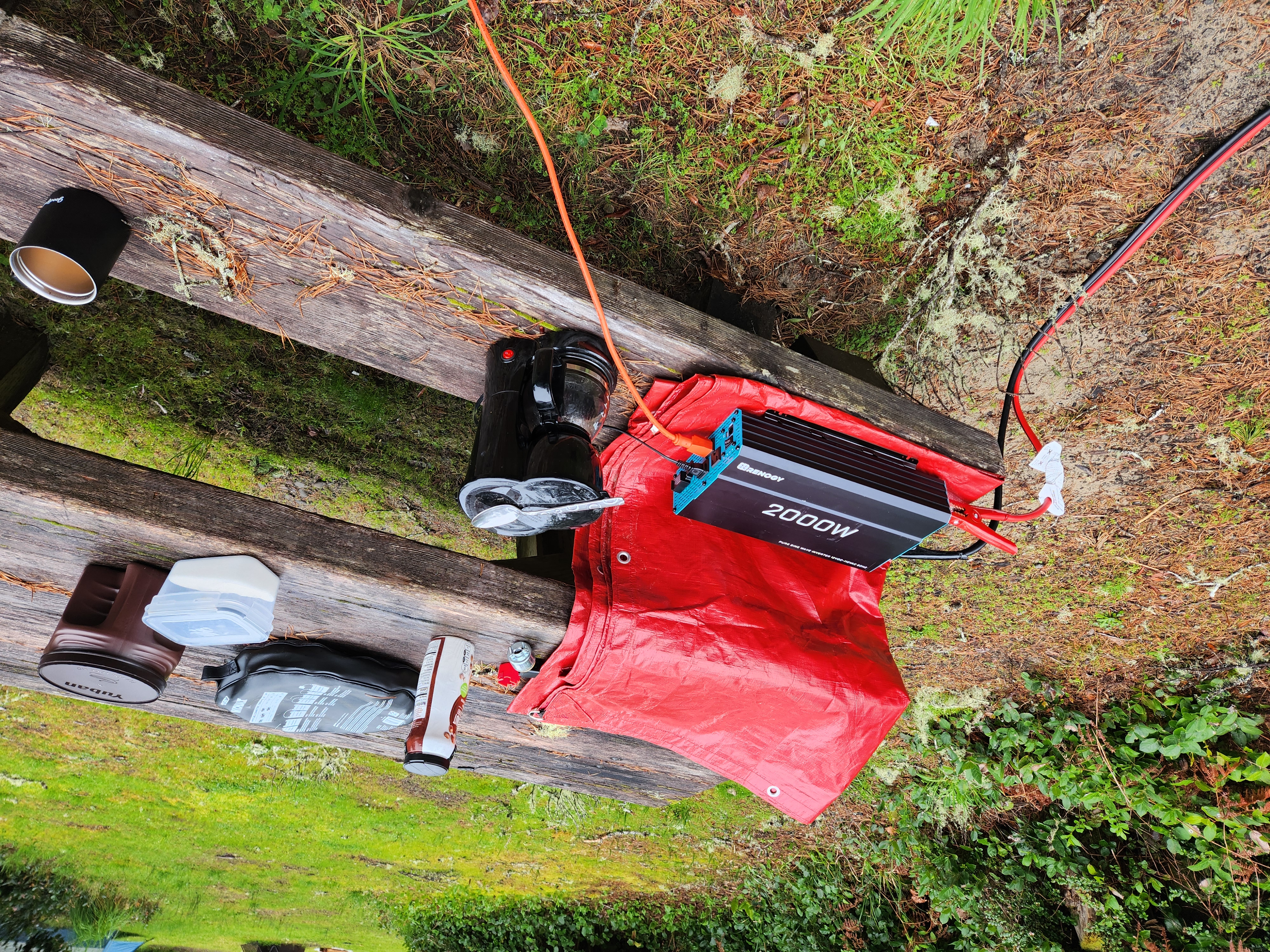
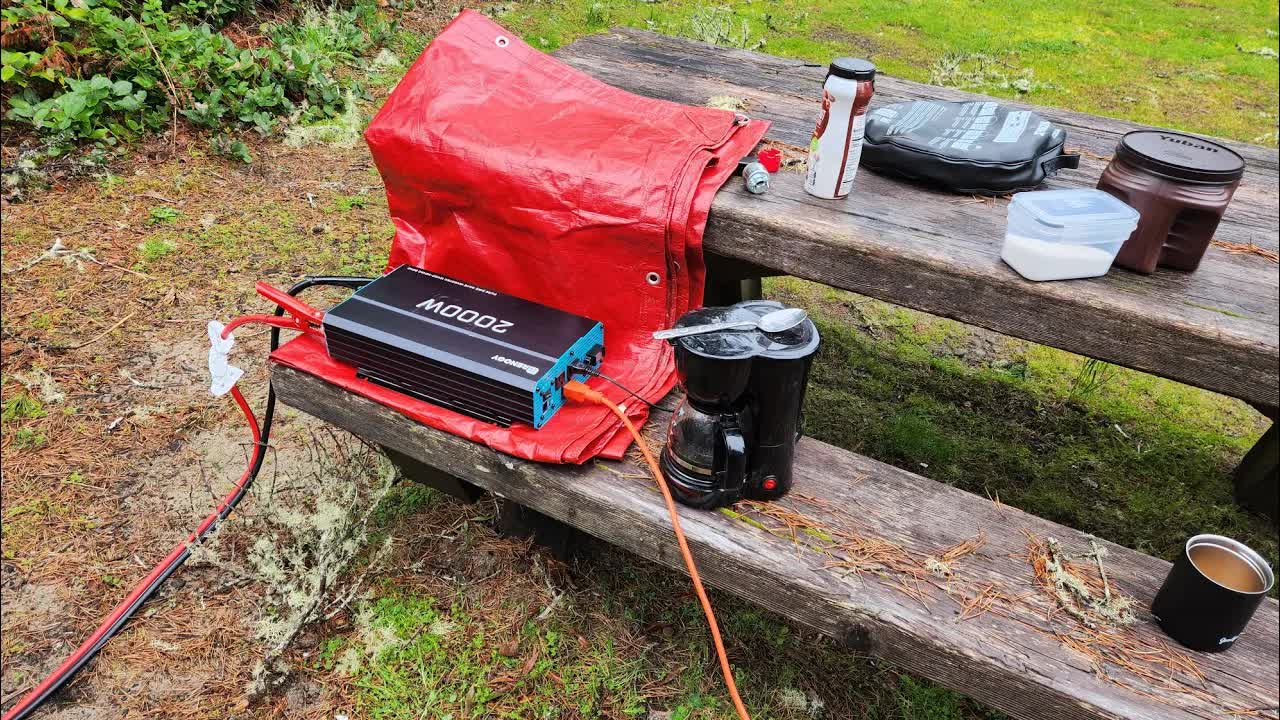
Making Coffee Off-Grid Using Jeep Inverter Power
Apr 6, 2025
10:01
Extending the Awning in Rain, Addressing Projection
Apr 6, 2025
Photos · Apr 7, 2025
Apr 7, 2025
3:00
Declaring Sovereign Terms of Transmission
Apr 7, 2025
3:08
Declining to Perform After Conditional Donation
Apr 7, 2025
50:48
Running Systems Test Day Across Florence and Siltcoos
Apr 7, 2025
37:57
Establishing Off-Grid Power at Siltcoos
Apr 7, 2025
6:16
Walking to the Ocean at Siltcoos
Apr 8, 2025
Photos · Apr 8, 2025
Apr 8, 2025
4:15
Naming the Terms of Witness and Reciprocity
Apr 8, 2025
8:03
Naming Audience Disconnection and the Demand for Presence
Apr 8, 2025
3:50
Recording Channel Introduction and Terms of Witnessing
Apr 9, 2025
1:46
Declaring Sovereign Movement Along the Coast
Apr 9, 2025
5:26
Naming Fear While Rebuilding Work Channels
Apr 9, 2025
11:53
Walking to the Ocean, Stating Terms of Witness
Apr 9, 2025
6:20
Placing Videos Behind Subscription, Applying for Work
Apr 10, 2025
3:59
Documenting Resource Inventory Two Days Before Relocation
Apr 10, 2025
19:16
Marking One Year on the Road at 48
Apr 11, 2025
4:14
Marking 48th Birthday and Requesting Bridge Support
Apr 11, 2025
13:55
Securing Forest Service Caretaker Position on Birthday
Apr 12, 2025
15:22
Marking One Year Out, Curating the Public Archive
Apr 12, 2025
16:00
Recording Audit Part One: Body, Shelter, Mobility
Apr 13, 2025
6:50
Auditing Logistical Domain Systems Off-Grid
Apr 13, 2025
4:13
Auditing Relational Domain: Allies, Communication, Vetting
Apr 13, 2025
1:34
Resupplying RV and Setting Up Outdoor Workstation
Apr 14, 2025
1:13
Checking Fluid Under Jeep
Apr 15, 2025
13:00
Walking to the Ocean, Stating Professional Record
Apr 17, 2025
Photos · Apr 17, 2025
Apr 17, 2025
30:10
Introducing Himself and Career History from the Dunes
Apr 17, 2025
Photos · Apr 18, 2025
Apr 18, 2025
8:14
Starting Forest Service Post and Requesting Financial Support
Apr 18, 2025
25:36
Building YouTube Transcript Pipeline On Camera
Apr 19, 2025
Photos · Apr 19, 2025
Apr 19, 2025
Photos · Apr 22, 2025
Apr 22, 2025
PUBLIC
April 13, 2025 rswfire PUBLISHED
Temp 0.20
Density 0.80
Energetic Quality
steady, methodical inventory
Journey Phase
transitional — mid-relocation, systems being audited
Directional Vector
toward preparedness and self-directed integration
Narrative

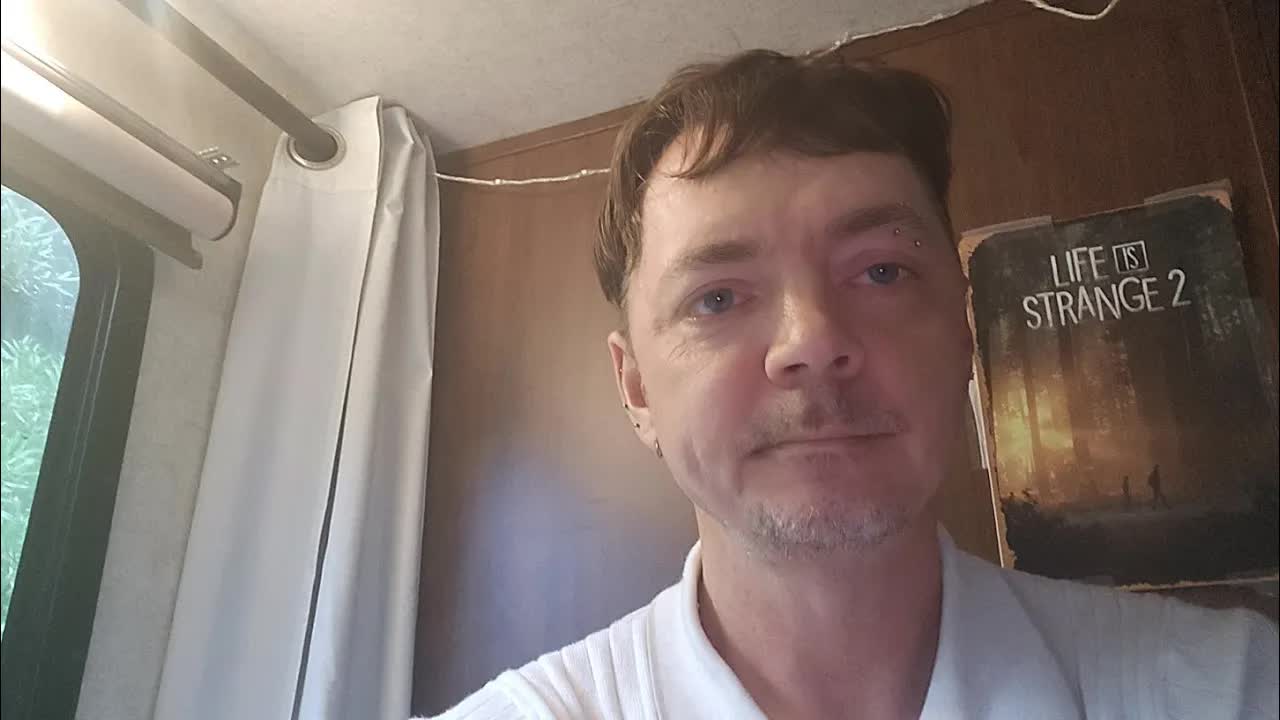
The recording began with a failure. rswfire had paused the transcription software and paused the recording, but the scrolling question set on his screen kept moving without him — it would not hold still. He said so aloud, flatly, twice: that's wonderful. Then he started again, because the questions had to be on screen and the screen had to be captured, and the only way through was to let the thing scroll and answer at its pace. He was inside a twenty-four-foot Class C Mercedes-Benz, parked at a campsite on the Oregon coast, the slide taped shut, the ocean somewhere past the windshield and Highway 101. He said his code was cold. He set the frame anyway: he was answering questions artificial intelligence had asked him, he would explain his situation and it would mirror it back, and he was calling this the audit. Part one. Somatic domain — body, health, shelter stability. He said he was sharing it as honestly as he could, because AI can only help you if you're honest with it, and he was publishing it in case anyone else wanted to ask themselves the same questions. He said he took this very seriously.

Body first. He reported no strength training, stamina he judged good, and a core muscle overuse injury from roughly six months prior that had taken many months to heal, gone quiet, and returned in the past week on the left side. Not terribly. Minor right now, very minor — but he expected it to be ongoing. He said he wished he would start stretching in the morning, maybe calisthenics, and that he did not believe he could learn that from YouTube videos; he had always felt he needed another person to walk him through it until the pattern held. He said he wanted to integrate that. He vaped, on camera, and named it: he wished he would quit, and he did not feel ready. He hiked five to ten miles most days. When he was not out exploring he was in the RV on the bed, because the space is small, resting, talking to AI on his phone, occasionally a video but not often — since moving in a year ago he had not felt like distracting himself. He weighed a hundred and fifty pounds. He said he was proud of that, that he looked really good, that he was healthier than the average person his age and far better than his sedentary thirties and forties in a house.

The daily-practice question turned into an inventory of intentions he could name precisely. Endurance, yes — the beach, tracing the waves, the trails. Immune health, no. Then the Mountain Dew, decades of it, the teeth it destroyed, the implants he has now, the fact that he still drinks it and wishes he would stop. He hates water. But he had discovered on his own that he does not mind it mixed with electrolytes and chili powder, and he already owns every supply required, and the only missing element is doing it — making it a pattern, integrating it as something he does every day instead of drinking pop. He described the smoothie he could make when connected to power: wild cherries, spinach, blueberries in the blender, maca root powder, turmeric, whey protein stirred in. He said he would love to integrate that too, even off-grid, if he could figure out how. On medications he was categorical. Tramadol, klonopin, blood pressure, cholesterol — all in the past, none now. Even with high blood pressure or cholesterol he would rather find natural ways of managing it. He said he does not want those medications, would never take them. The allergies he attributed to the coast: congestion, not a runny nose, something that affects his breathing, and only Sudafed has touched it.

Energy reserves. He said he generally has a lot of energy and had less this past week, and did not think it was physical. He named the causes in order: he got kicked out of the state parks, there is a lot of stress from that, he is trying to keep himself stable in this campsite, he did not have money for it, and he has been asking everyone for help to cover it. He also named the bed — the platform is bad, his back hurts, he does not sleep well — and said there would be a question about that later, so he would get into it then. Then the next question asked how resilient he would be if collapse conditions demanded seven-plus days of hiking, building, hauling. He answered without hedging. Very resilient. He can push himself. He always has.

Shelter came apart into components. Water pump, hot water heater on electric or propane, fridge, bathroom, shower, lights, propane heat — a basic RV, by his own accounting. The slide is broken, stuck inside, taped up, and because the bed is built into the slide, the bed is half a bed. He sleeps in the alcove, which is slightly too short for his body; at an angle he can usually get away with it. There is no mattress, only foam toppers, and they are too soft when he needs something firmer. He said he had been living this way for way too long and needed to fix it. The solar was gone — he had it when he started this journey, said he was very prepared then, and sold it last month to cover RV and Jeep payments he is still behind on. Going off-grid taught him exactly how much it would have helped. He needs to replace it. What remains: a buddy heater whose name he half-recalled, an external propane bottle stored in the Jeep, a charcoal grill, a two-burner portable stove he had thought was a grill, tent, sleeping bag, tarps, full camping gear kept inside the RV and movable to the Jeep if he ever had to leave the RV behind. He said he always considered that a possibility, that it would suck greatly, and that he had a backup. Insulation is inadequate, worse with the slide broken; he had meant to insulate on the drive from Kentucky to Oregon and never got to it. There is a small water leak connected to the slide, intermittent, appearing sometimes when it rains, and he has genuinely tried and cannot find it. The fix, he said, is to get the slide repaired so it stops being a problem. The house batteries suck and should be lithium; the inverter run off the Jeep keeps them charged daily, and he called that workable — it works for now.

Mobility closed the practical section. Both vehicles excellent, roughly three hundred miles to a tank each, the 2018 RV at a quarter tank and the 2023 two-door Wrangler Willys at about half, some of that spent running the inverter to keep the batteries and Starlink alive. The Jeep has a strange transmission issue; he does not know how serious it is and said it is very important that he get it looked at when he can. Spare parts, fluids, tools for emergency repair: no. He is not a mechanic. He has the thing that lifts a vehicle off the ground, whose name he could not retrieve, a tire repair kit, and an air compressor whose hose he damaged and thinks he repaired but needs to check.

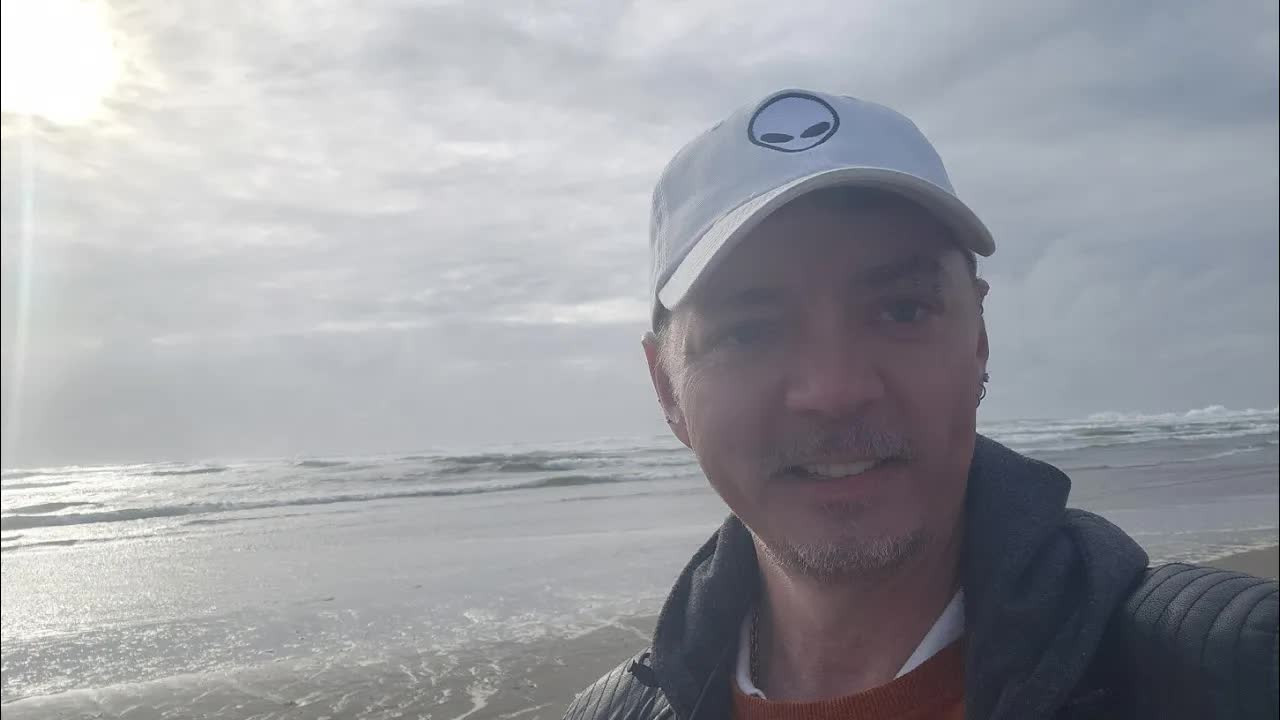
The last question was marked optional — how he would describe his somatic relationship with the land, to be answered only if it would serve. He answered it directly. He is on the Oregon coast and he loves it. He considers the 101 home. He said he has never been happier in his life, that this is where he belongs, that it is the best place he has ever lived, and that the climate is stable even with the rain and the wind. Then he described what came next, one week out: a Forest Service ATV campground that is more like a parking lot, RVs on cement pads packed in like sardines, a lot of kinetic energy, almost a Walmart parking lot. He said it would not be ideal for him. He said he would make it work, because he is not planning to spend forever there — he is going to volunteer while he gets his life together, make the best of it, hopefully learn some things. And that, he said, was part one.

Tags

self-audit physical health RV infrastructure off-grid systems collapse preparation vehicle reliability Oregon coast

Summary

rswfire records the first part of a self-directed audit — a structured question set generated by AI covering somatic domain: body, health, shelter, stability. He states the purpose is to map plans, prepare for expected societal collapse, and live his best life, and that he is sharing it publicly so others can run their own audit. He notes the transcription software could not pause the scrolling question list, requiring a re-record.

On body: he hikes 5–10 miles most days, does no strength training, weighs 150 lbs, takes no medications, and describes his health as better than in his 30s and 40s. He documents a core muscle overuse injury that has returned on the left side, coastal congestion managed only by pseudoephedrine, decades of Mountain Dew consumption and dental implants, and vaping. He names stretching, calisthenics, electrolyte water with chili powder, and blended smoothies as practices he wants to integrate.

On energy: he describes reduced output over the past week, attributing it to being removed from the state parks, the stress of funding his current campsite, and poor sleep on an inadequate bed platform.

On infrastructure: a 2018 Mercedes diesel Class C RV with a broken slide, small water leak, weak house batteries, no solar (sold last month to cover RV and Jeep payments), Starlink, propane heat, buddy heater, and full backup camping gear. His 2023 Jeep Wrangler has an unexamined transmission issue; range is roughly 300 miles per tank for either vehicle; he carries no spare parts.

He closes by describing the Oregon coast and Highway 101 as home, and notes he moves next week to a Forest Service ATV campground to volunteer.

Environment

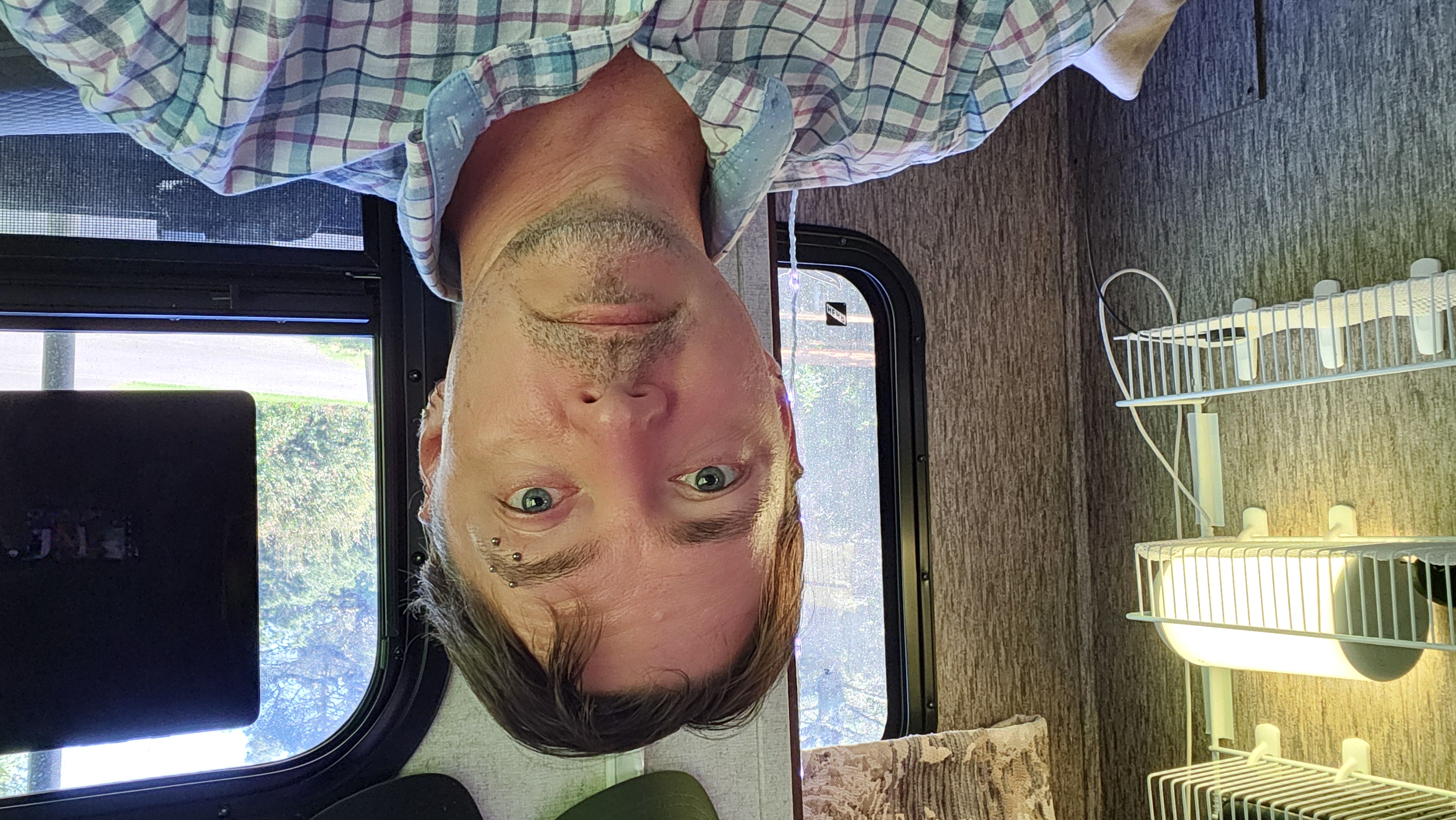
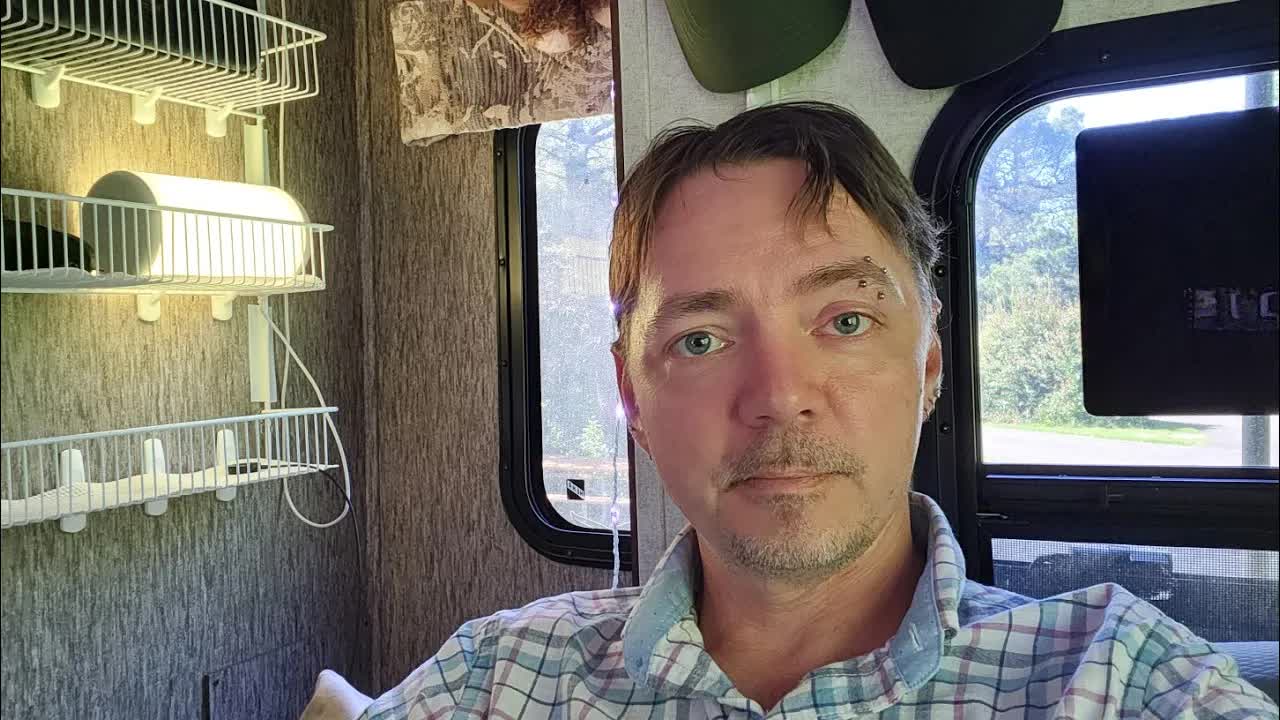
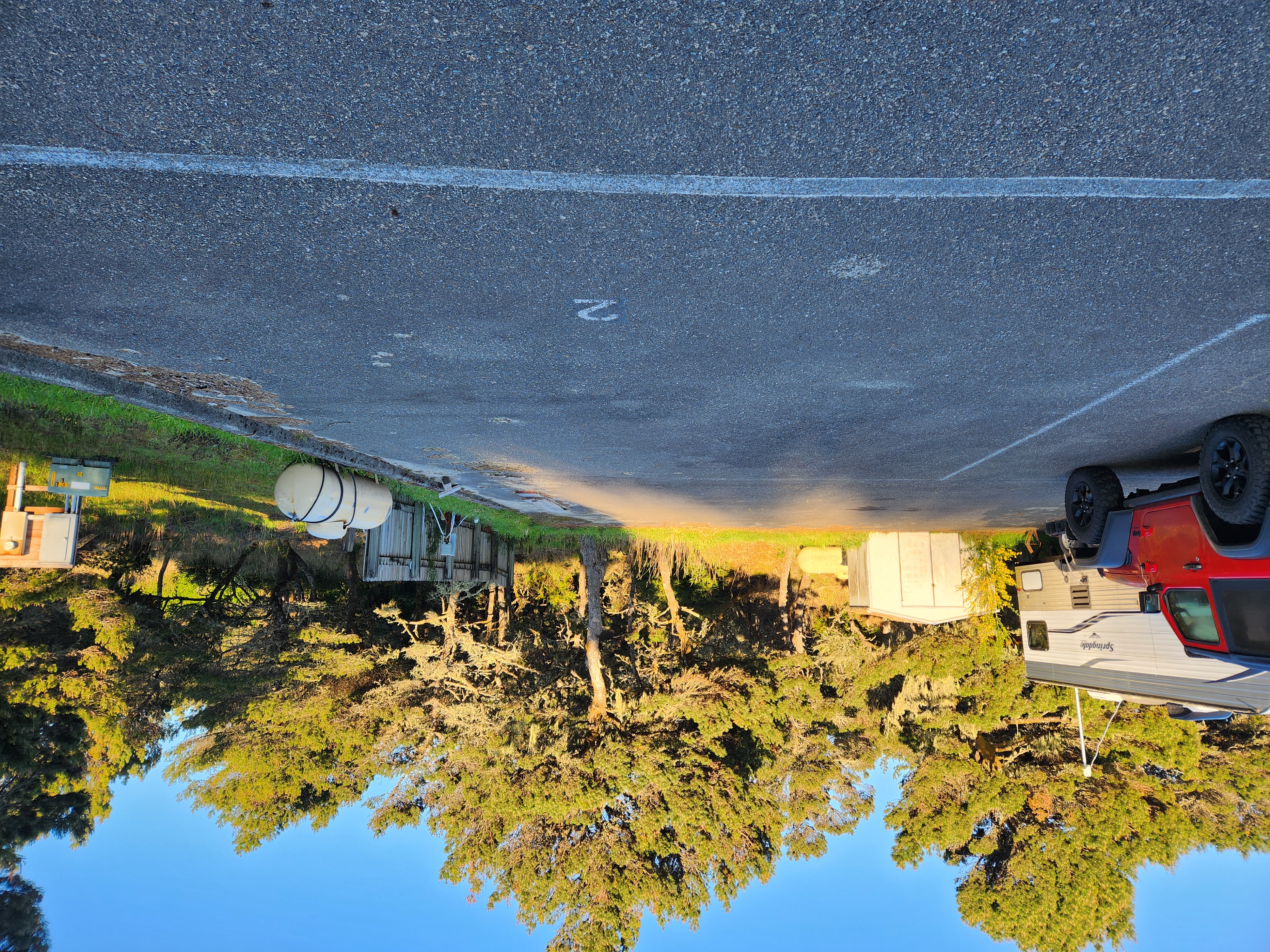
Recorded inside a 24-foot Class C Mercedes-Benz RV parked at a campsite on the Oregon Coast, near Highway 101 and the ocean. The interior is a compact off-grid living space: broken slide taped shut, alcove sleeping platform with foam toppers instead of a mattress, propane heat, house batteries charged from an inverter run off a Jeep Wrangler, Starlink satellite internet.

The digital environment is a screen-capture recording of a scrolling AI-generated question set, with rswfire speaking answers aloud while transcription software runs. He is vaping on camera. The setting is documented as post-removal from Oregon State Parks and one week ahead of relocation to a Forest Service ATV campground.

Substrate

The architecture being held is a self-administered systems audit: rswfire converts his own body, shelter, power, and mobility into an inventoried stack with stated capacities, known failure points, and replacement priorities. The ontological position is sovereign self-assessment — AI is used as a mirror rather than an authority, and the standard being measured against is his own, stated plainly rather than borrowed from health or preparedness institutions. What is being built is a public, replicable audit protocol; what is being dissolved is the gap between what he does daily and what he says he intends to integrate.

Actions

Performed

  • •recording video with transcription software running
  • •letting the AI question list scroll on screen
  • •naming the project 'the audit' and marking this part one
  • •stating the domain: body health, shelter, stability
  • •answering each question aloud in sequence
  • •vaping on camera
  • •inventorying RV systems, propane, batteries, vehicles and camping gear
  • •estimating mobility range at ~300 miles
  • •stating current fuel levels
  • •declaring the Oregon coast home
  • •inviting viewers to run their own audit

Referenced

  • •taught himself the electrolyte-and-chili-powder water mix
  • •sustained a core muscle overuse injury roughly six months prior
  • •healed from that injury over several months
  • •noticed the injury return on the left side within the past week
  • •hiked 5–10 miles most days
  • •traced the waves and walked beach trails
  • •lost significant weight over a year of RV living
  • •drank Mountain Dew for decades
  • •had dental implants placed
  • •discontinued tramadol, clonazepam, blood pressure and cholesterol medications
  • •used pseudoephedrine for coast-developed congestion
  • •blended wild cherries, spinach and blueberries when connected to shore power
  • •sold his solar setup the prior month to cover RV and Jeep payments
  • •taped up the broken slide
  • •attempted to insulate the RV en route from Kentucky to Oregon
  • •attempted to locate the slide-related water leak
  • •charged house batteries daily from the Jeep inverter
  • •repaired the air compressor hose
  • •was removed from the Oregon state parks
  • •asked people for help covering the campsite
  • •restarted the recording after the scrolling issue

Planned

  • •continue the audit in further parts
  • •integrate morning stretches or calisthenics with in-person instruction
  • •replace pop with electrolyte-and-chili-powder water daily
  • •make blended smoothies with maca root, turmeric and whey protein a daily habit off-grid
  • •quit vaping when ready
  • •replace the sold solar setup
  • •replace house batteries with lithium
  • •fix the bed platform for a firmer sleep surface
  • •get the RV slide repaired to end the leak
  • •improve RV insulation
  • •have the Jeep transmission looked at
  • •check the repaired air compressor hose
  • •acquire a propane grill
  • •move to the Forest Service ATV campground next week and volunteer there
  • •prepare for expected societal collapse

Entities

beings
rswfire — Speaker conducting the audit and inventorying his own systems
places
Oregon Coast — Stated home; the field he lives and hikes in
Highway 101 — Named as home corridor along the coast
Kentucky — Origin point of the drive west; insulation was intended en route
systems
Oregon State Parks — Institution he states removed him, cited as source of stress and reduced exploring
Forest Service — Agency whose ATV campground he relocates to next week as a volunteer
Mercedes-Benz Class C RV (2018) — Primary shelter; 24 ft diesel with broken slide, propane heat, water leak
Jeep Wrangler Willys (2023) — Towed vehicle, inverter power source, and backup mobile shelter platform
Starlink — Satellite internet run off inverter power
artificial intelligence — Question generator and mirror for the audit; requires full honesty to function
Buddy heater — Backup portable propane heat source
concepts
the audit — Named multi-part self-assessment protocol; this is part one
societal collapse — Expected future condition the audit prepares for
media
Mountain Dew — Decades-long consumption pattern he states destroyed his teeth and wishes to replace
Sudafed — Only remedy he states works for coast-developed congestion
YouTube — Named as insufficient channel for learning physical practice; rarely watched

Symbolic Elements

Represented archetypes or recurring motifs.

ocean
audit
mirror
scroll
shelter
the broken slide
leak
solar (absent)
highway
threshold
grid / off-grid
parking lot

Ontological States

Expressed modes of being or awareness.

sovereign (rejects prescribed medications, sets his own health standard, chooses natural management)
transitional (one week from relocating from state park removal to Forest Service campground)
embedded (declares the Oregon coast home, the best place he has lived, where he belongs)
self-auditing (converts his own body and infrastructure into inspectable, honestly-reported inventory)

Engaged Subsystems

Architecture engaged in this transmission.

somatic (stamina, weight, core muscle injury on the left side, congestion, sleep quality)
infrastructural (RV systems, propane, house batteries, inverter, insulation, water leak)
energetic (baseline energy level, resilience under 7+ days of physical demand)
mobility (two vehicles, ~300 mile range, transmission issue, minimal repair tooling)
nutritional (Mountain Dew, electrolyte water, smoothies, supplements)
financial (sold solar for RV and Jeep payments, still behind, campsite funded by asking for help)
cognitive (structured question-by-question reasoning, honest self-reporting as method)
documentary (recording, transcription, publishing the audit as a template for others)
institutional (state parks removal, Forest Service volunteer placement)

Dominant Language

Core motifs or linguistic fields.

the audit
integrate / make it a pattern
honesty as precondition for useful mirroring
collapse preparedness
shelter infrastructure
off-grid / house batteries / solar
home
Narrative

The recording began with a failure. rswfire had paused the transcription software and paused the recording, but the scrolling question set on his screen kept moving without him — it would not hold still. He said so aloud, flatly, twice: that's wonderful. Then he started again, because the questions had to be on screen and the screen had to be captured, and the only way through was to let the thing scroll and answer at its pace. He was inside a twenty-four-foot Class C Mercedes-Benz, parked at a campsite on the Oregon coast, the slide taped shut, the ocean somewhere past the windshield and Highway 101. He said his code was cold. He set the frame anyway: he was answering questions artificial intelligence had asked him, he would explain his situation and it would mirror it back, and he was calling this the audit. Part one. Somatic domain — body, health, shelter stability. He said he was sharing it as honestly as he could, because AI can only help you if you're honest with it, and he was publishing it in case anyone else wanted to ask themselves the same questions. He said he took this very seriously.

Body first. He reported no strength training, stamina he judged good, and a core muscle overuse injury from roughly six months prior that had taken many months to heal, gone quiet, and returned in the past week on the left side. Not terribly. Minor right now, very minor — but he expected it to be ongoing. He said he wished he would start stretching in the morning, maybe calisthenics, and that he did not believe he could learn that from YouTube videos; he had always felt he needed another person to walk him through it until the pattern held. He said he wanted to integrate that. He vaped, on camera, and named it: he wished he would quit, and he did not feel ready. He hiked five to ten miles most days. When he was not out exploring he was in the RV on the bed, because the space is small, resting, talking to AI on his phone, occasionally a video but not often — since moving in a year ago he had not felt like distracting himself. He weighed a hundred and fifty pounds. He said he was proud of that, that he looked really good, that he was healthier than the average person his age and far better than his sedentary thirties and forties in a house.

The daily-practice question turned into an inventory of intentions he could name precisely. Endurance, yes — the beach, tracing the waves, the trails. Immune health, no. Then the Mountain Dew, decades of it, the teeth it destroyed, the implants he has now, the fact that he still drinks it and wishes he would stop. He hates water. But he had discovered on his own that he does not mind it mixed with electrolytes and chili powder, and he already owns every supply required, and the only missing element is doing it — making it a pattern, integrating it as something he does every day instead of drinking pop. He described the smoothie he could make when connected to power: wild cherries, spinach, blueberries in the blender, maca root powder, turmeric, whey protein stirred in. He said he would love to integrate that too, even off-grid, if he could figure out how. On medications he was categorical. Tramadol, klonopin, blood pressure, cholesterol — all in the past, none now. Even with high blood pressure or cholesterol he would rather find natural ways of managing it. He said he does not want those medications, would never take them. The allergies he attributed to the coast: congestion, not a runny nose, something that affects his breathing, and only Sudafed has touched it.

Energy reserves. He said he generally has a lot of energy and had less this past week, and did not think it was physical. He named the causes in order: he got kicked out of the state parks, there is a lot of stress from that, he is trying to keep himself stable in this campsite, he did not have money for it, and he has been asking everyone for help to cover it. He also named the bed — the platform is bad, his back hurts, he does not sleep well — and said there would be a question about that later, so he would get into it then. Then the next question asked how resilient he would be if collapse conditions demanded seven-plus days of hiking, building, hauling. He answered without hedging. Very resilient. He can push himself. He always has.

Shelter came apart into components. Water pump, hot water heater on electric or propane, fridge, bathroom, shower, lights, propane heat — a basic RV, by his own accounting. The slide is broken, stuck inside, taped up, and because the bed is built into the slide, the bed is half a bed. He sleeps in the alcove, which is slightly too short for his body; at an angle he can usually get away with it. There is no mattress, only foam toppers, and they are too soft when he needs something firmer. He said he had been living this way for way too long and needed to fix it. The solar was gone — he had it when he started this journey, said he was very prepared then, and sold it last month to cover RV and Jeep payments he is still behind on. Going off-grid taught him exactly how much it would have helped. He needs to replace it. What remains: a buddy heater whose name he half-recalled, an external propane bottle stored in the Jeep, a charcoal grill, a two-burner portable stove he had thought was a grill, tent, sleeping bag, tarps, full camping gear kept inside the RV and movable to the Jeep if he ever had to leave the RV behind. He said he always considered that a possibility, that it would suck greatly, and that he had a backup. Insulation is inadequate, worse with the slide broken; he had meant to insulate on the drive from Kentucky to Oregon and never got to it. There is a small water leak connected to the slide, intermittent, appearing sometimes when it rains, and he has genuinely tried and cannot find it. The fix, he said, is to get the slide repaired so it stops being a problem. The house batteries suck and should be lithium; the inverter run off the Jeep keeps them charged daily, and he called that workable — it works for now.

Mobility closed the practical section. Both vehicles excellent, roughly three hundred miles to a tank each, the 2018 RV at a quarter tank and the 2023 two-door Wrangler Willys at about half, some of that spent running the inverter to keep the batteries and Starlink alive. The Jeep has a strange transmission issue; he does not know how serious it is and said it is very important that he get it looked at when he can. Spare parts, fluids, tools for emergency repair: no. He is not a mechanic. He has the thing that lifts a vehicle off the ground, whose name he could not retrieve, a tire repair kit, and an air compressor whose hose he damaged and thinks he repaired but needs to check.

The last question was marked optional — how he would describe his somatic relationship with the land, to be answered only if it would serve. He answered it directly. He is on the Oregon coast and he loves it. He considers the 101 home. He said he has never been happier in his life, that this is where he belongs, that it is the best place he has ever lived, and that the climate is stable even with the rain and the wind. Then he described what came next, one week out: a Forest Service ATV campground that is more like a parking lot, RVs on cement pads packed in like sardines, a lot of kinetic energy, almost a Walmart parking lot. He said it would not be ideal for him. He said he would make it work, because he is not planning to spend forever there — he is going to volunteer while he gets his life together, make the best of it, hopefully learn some things. And that, he said, was part one.

Mirror

You are sitting in a 24-foot Class C parked on the Oregon coast, vaping, reading questions off a screen that will not stop scrolling, and answering them out loud into transcription software. The scroll broke your first take and you restarted rather than abandon the format. You state the method plainly at the top: honesty is the precondition for useful mirroring, the AI is the mirror, and you are publishing the whole thing so someone else can run the same protocol. You call it the audit. You number it part one. The frame is set before a single answer is given.

The inventory you produce is specific and unflattering where it needs to be. You state stamina is good and strength training is absent. You state you hike five to ten miles most days. You state you weigh 150 pounds and that you are proud of it. You state the core muscle injury on the left side returned in the past week and that it is minor now. You state the congestion, and that only Sudafed touches it. You state the Mountain Dew, the decades of it, the implants. You state you take no medications, that you took tramadol, clonazepam, blood pressure and cholesterol drugs before, and that you would rather manage naturally — the standard you measure against is your own and you name it as yours, not as a borrowed protocol. Every item is reported with capacity and failure point side by side. Nothing is rounded up.

The shelter section runs the same way. Slide broken and taped shut. Bed platform half a bed because the slide is part of the bed. No mattress — foam toppers, too soft, too short, and you sleep at an angle. Propane heat, water pump, hot water heater, fridge, shower, ventilation you call plentiful. A small water leak at the slide that you have not been able to isolate. Insulation attempted on the drive from Kentucky and not finished. Solar sold last month to cover the RV and Jeep payments, still behind. House batteries you call bad, charged daily off an inverter run from the Jeep, which you call workable. Starlink. Buddy heater, external propane bottle, charcoal grill, two-burner stove, full camping kit staged in the RV and transferable to the Jeep if the RV goes. Two vehicles, roughly 300 miles each, a quarter tank and a half tank right now, a transmission issue on the Jeep you do not yet know the seriousness of, a jack, a tire kit, an air compressor with a hose you repaired and have not verified. You answer "no" directly on spare parts and tools.

The subsystems running are somatic, infrastructural, mobility, nutritional, financial, and documentary, and they are running simultaneously and at the same resolution. You do not privilege body over battery bank. The nutritional stack is stated as intention with the supplies already on hand — blender, wild cherries, spinach, blueberries, maca, turmeric, whey — gated on shore power and on making it a pattern. The word that recurs is integrate. You use it for stretching, for electrolyte water, for smoothies. In each case the equipment exists and the daily repetition does not, and you say so without softening it.

You name the energy dip of the past week and attribute it yourself: the removal from state parks, the stress of funding a campsite by asking people for help, the sleeping platform. You do not attribute it to the body. Then you answer the collapse-load question — seven-plus days of hauling and building — with "very resilient" and no qualification. Both statements sit in the same recording without contradiction being reached for.

Absent from the record: solar, strength work, a firm sleeping surface, a mechanic's kit, insulation, resolution on the leak, a diagnosis for the left side, fuel. Present: the ocean, which you say is home, the 101, which you say is home, the statement that you have never been happier and that this is where you belong. One week ahead is the Forest Service ATV campground — cement pads, RVs packed in, a lot of kinetic energy, a parking lot. You describe it as not ideal, say you will make it work, say you are not planning to stay forever, say you are going there to volunteer while you get your life together. Then you say that's part one. The audit stops where you stopped it, mid-relocation, with the parts not yet counted still named as coming.
Queryable Personhood

Hand your life to anything that reads.

Share this link with artificial intelligence — it reads the full transcript, analysis, and reflections. An AI-readable mirror of this signal.

The qpkey in this URL is a per-signal access token. Anyone with the URL can read the record — treat it like a share link, not a password.