










Auditing Logistical Domain Systems Off-Grid

Failed to load video
Chapters
Transcript
[0:01] Okay, this is step two.
[0:03] Um, so step one is uploading right now.
[0:07] Um, because I'm using my Jeep's fuel, I
[0:09] want to try to be efficient about this.
[0:10] I'm just going to ask I'm going to
[0:11] answer all the questions, get them all
[0:13] uploaded, and we'll get the responses
[0:15] after. So, this is um step two of the
[0:18] audit, logistical domain. Food, water,
[0:20] energy, tools, material survival
[0:23] systems. Okay, food systems. Number one,
[0:26] how much non-p perishable food do you
[0:28] currently carry in days or weeks of
[0:30] survival time if you had no access to
[0:32] stores? I have nothing. What types of
[0:35] foods do you stock primarily? Canned,
[0:37] freeze-dried, rice, beans, protein
[0:38] heavy, etc. So, my diet sucks.
[0:42] Um, when I lived on campgrounds and I
[0:44] wasn't offrid, I was making hamburgers
[0:46] every night and I was making bagels in
[0:48] the morning. That was a pretty good
[0:49] routine for me. That was what I managed
[0:51] to integrate cuz I'm not a great cook
[0:53] and stuff like that.
[0:55] Um, I've been trying to get better at
[0:57] it. I'm going be honest, I really
[0:58] struggle at this part. So, um, I just
[1:02] got stuff to make salads out of using
[1:04] cabbage, onions, um, celery, cheese.
[1:08] Then I got some lunch meat, which, you
[1:10] know, I've been using that for dinner.
[1:12] Basically, it's just, um, ham and cheese
[1:13] and bread. Um, but I can also cut that
[1:16] ham up and um, put it in my salads. And
[1:21] um a friend of mine's been teaching me
[1:24] to like I need to start buying canned
[1:26] chicken or you know cooking chicken
[1:28] breast and I can put that into my
[1:29] salads. I want to make the salads a big
[1:31] part of my diet. So um that's kind of
[1:34] where I'm going with
[1:35] that. Not a good cook and this part I'm
[1:38] really not good
[1:39] at. Do you have any redundant sourcing
[1:42] strategies? Fishing gear, foraging
[1:44] skills, burable food goods? None. Want
[1:47] to learn to fish? I've been planning to
[1:49] learn. I want to learn to forge for m um
[1:52] mushrooms and stuff, but you know, I
[1:53] have no experience in any of that. Okay.
[1:56] Water systems. Number two, what is your
[1:58] current water storage capacity in
[1:59] gallons or liters? I'm not sure um about
[2:02] the
[2:04] capacity. That's something I know you
[2:06] could look up or just assume based on
[2:08] the size of my RV, 24T RV, and what the
[2:11] standard sizes are. Yeah, I am good at
[2:13] cleaning my tanks. Very good at that.
[2:15] Um, I can get fresh water easily enough.
[2:19] I think I use it in about a week cuz
[2:20] it's been about a week. I'm almost out
[2:22] of water. I need to go and refill
[2:24] that. All right. So, do you have
[2:26] filtration, purification systems,
[2:28] portable filters, boiling setups, water
[2:31] tablets? So, I have a filter. Um, no
[2:35] boiling setups, no water tablets. How
[2:38] often do you need to resupply under
[2:39] normal conditions? About once a week, I
[2:42] think. Maybe. I I don't know. I mean, I
[2:44] try to be efficient and everything, but
[2:47] um I only showered twice this week. I
[2:50] wish I was showering more, but offer
[2:51] that's harder and I just haven't
[2:53] integrated that as well yet. But I know
[2:55] that it would, you know, fill up my gray
[2:56] tank very quickly and I go through my
[2:58] fresh water very quickly. So, um you
[3:01] know, having showered twice and doing
[3:02] dishes and, you know, using my toilet
[3:04] and um you know, just normal normal
[3:08] everyday things, I went through my water
[3:10] in about a week. Number three, energy
[3:12] systems. What is your primary source of
[3:14] electrical energy? Solar panels,
[3:16] generators, alternator charging, battery
[3:18] banks. Yeah, battery banks. A couple of
[3:20] those. There's a few more I want to get.
[3:22] And um like I said, I use my inverter
[3:26] for charging, which I guess that's
[3:27] alternator charging. Very cool. Would
[3:29] love to get a new solar system at some
[3:31] point. Do you have backup energy options
[3:34] if your main system fails? So, the
[3:36] inverter was my backup system. If I if I
[3:38] wasn't if I didn't have power at a
[3:39] campground and I didn't have solar, then
[3:41] I was going to go to my inverter. I
[3:42] don't have my solar anymore and I'm not
[3:43] on a campground that has power. So, I'm
[3:46] using my backup
[3:47] option. What devices are essential for
[3:49] your operations that rely on
[3:51] electricity, communications,
[3:52] refrigeration tools? Definitely my
[3:54] refrigerator cuz I thought I was going
[3:55] to lose that, but I'm able to keep my
[3:57] batteries going, which I'm very happy
[3:58] about that. So, my
[4:00] fridge, satellite internet, my phone, uh
[4:03] my
[4:05] laptop. That's probably the main ones.
[4:08] Number four, tools and equipment
[4:10] systems. What core tools do you carry
[4:12] for self-sufficiency? Mechanical tools,
[4:14] cutting tools, fire making tools, repair
[4:15] kits,
[4:16] etc. Okay, so I I have got all kinds of
[4:19] tools.
[4:20] [Music]
[4:22] Um, you know, sockets and screwdrivers
[4:25] and I even got some power tools.
[4:28] [Music]
[4:30] Um, those things that nail really hard
[4:33] into a wall. I don't know what those are
[4:35] called, you know, and a drill. and um
[4:40] things like that. Like this, this was
[4:42] stuff I bought before I started my
[4:43] journey. I feel like I did really well
[4:44] on that part. I've got plenty of
[4:47] tools. Um I don't think I have any
[4:51] cutting tools. Fire making tools. I do
[4:53] have things for that. So, I've got
[4:54] lighters, I've got matches, I got
[4:55] waterproof matches. I've even got one of
[4:57] those um things that you strike. Uh
[5:01] repair kits. I mentioned the the one for
[5:04] the
[5:04] tires. That's probably get there. Do you
[5:08] have redundancy for critical tools,
[5:09] multiple cutting tools, backup battery,
[5:11] etc. I'm going to say no. Any high skill
[5:13] equipment you use regularly? Welding,
[5:15] fabrication, electronic repair? I know
[5:17] nothing about that. This is not the life
[5:18] I lived. I was a programmer. Number
[5:20] five, supply chains. Where do you
[5:22] currently resupply most often? Towns,
[5:24] markets, online shipments? Mostly in
[5:27] town. Um, I've been getting post office
[5:29] boxes as I explore the coast. I actually
[5:31] have two right now. I have one in Port
[5:32] Orford and I have one in Lakeside. about
[5:34] every 2 hours away. I'm trying to get a
[5:36] post office so I can get stuff from
[5:38] Amazon if I had
[5:40] to. How vulnerable is your supply line
[5:43] to disruptions? Would a shipping delay,
[5:45] fuel shortage, or supply collapse
[5:46] immediately impact your survivor? Yes,
[5:47] it would. I assume it would. Optional
[5:50] field reflection. How would you describe
[5:52] your relationship with material needs
[5:54] right now? Minimalist, abundant but
[5:56] fragile, balanced, but stretched.
[6:00] uh material
[6:02] needs probably pretty minimalist like
[6:04] I'm
[6:05] not you
[6:07] know I live a pretty basic life now very
[6:10] happy with it um and my phone's very
[6:13] important I guess I don't watch a lot of
[6:16] TV I don't watch any TV I listen to
[6:18] music all the time and
[6:21] [Music]
[6:23] um I don't have a lot of material things
[6:26] not not since living this way I got rid
[6:27] of everything
[6:29] What material stress points do you
[6:31] intuitively feel are close to critical,
[6:33] even if not yet
[6:34] urgent? Material stress
[6:39] points. I can't think of any. Okay, I
[6:43] guess that's part two. That one wasn't
[6:45] so hard, I guess, because all the
[6:46] answers are low. I'm not ready.
15:33
Switching to Portrait Mode, Mapping Off-Grid Systems
Apr 5, 2025
23:46
Exploring Siltcoos Trails to the Ocean
Apr 5, 2025
8:07
Marking One Year in the RV Off-Grid
Apr 5, 2025
Photos · Apr 6, 2025
Apr 6, 2025
Photos · Apr 6, 2025
Apr 6, 2025
12:33
Mapping Battery Systems, Booking Fees, and Witness Standards
Apr 6, 2025
7:52
Scouting Laundromat and Outlining Support Architecture
Apr 6, 2025
18:10
Making Coffee Off-Grid Using Jeep Inverter Power
Apr 6, 2025
10:01
Extending the Awning in Rain, Addressing Projection
Apr 6, 2025
Photos · Apr 7, 2025
Apr 7, 2025
3:00
Declaring Sovereign Terms of Transmission
Apr 7, 2025
3:08
Declining to Perform After Conditional Donation
Apr 7, 2025
50:48
Running Systems Test Day Across Florence and Siltcoos
Apr 7, 2025
37:57
Establishing Off-Grid Power at Siltcoos
Apr 7, 2025
6:16
Walking to the Ocean at Siltcoos
Apr 8, 2025
Photos · Apr 8, 2025
Apr 8, 2025
4:15
Naming the Terms of Witness and Reciprocity
Apr 8, 2025
8:03
Naming Audience Disconnection and the Demand for Presence
Apr 8, 2025
3:50
Recording Channel Introduction and Terms of Witnessing
Apr 9, 2025
1:46
Declaring Sovereign Movement Along the Coast
Apr 9, 2025
5:26
Naming Fear While Rebuilding Work Channels
Apr 9, 2025
11:53
Walking to the Ocean, Stating Terms of Witness
Apr 9, 2025
6:20
Placing Videos Behind Subscription, Applying for Work
Apr 10, 2025
3:59
Documenting Resource Inventory Two Days Before Relocation
Apr 10, 2025
19:16
Marking One Year on the Road at 48
Apr 11, 2025
4:14
Marking 48th Birthday and Requesting Bridge Support
Apr 11, 2025
13:55
Securing Forest Service Caretaker Position on Birthday
Apr 12, 2025
15:22
Marking One Year Out, Curating the Public Archive
Apr 12, 2025
16:00
Recording Audit Part One: Body, Shelter, Mobility
Apr 13, 2025
6:50
Auditing Logistical Domain Systems Off-Grid
Apr 13, 2025
4:13
Auditing Relational Domain: Allies, Communication, Vetting
Apr 13, 2025
1:34
Resupplying RV and Setting Up Outdoor Workstation
Apr 14, 2025
1:13
Checking Fluid Under Jeep
Apr 15, 2025
13:00
Walking to the Ocean, Stating Professional Record
Apr 17, 2025
Photos · Apr 17, 2025
Apr 17, 2025
30:10
Introducing Himself and Career History from the Dunes
Apr 17, 2025
Photos · Apr 18, 2025
Apr 18, 2025
8:14
Starting Forest Service Post and Requesting Financial Support
Apr 18, 2025
25:36
Building YouTube Transcript Pipeline On Camera
Apr 19, 2025
Photos · Apr 19, 2025
Apr 19, 2025
Photos · Apr 22, 2025
Apr 22, 2025
PUBLIC
April 13, 2025 rswfire PUBLISHED
Temp 0.10
Density 0.70
Energetic Quality
matter-of-fact, inventory-precise
Journey Phase
assessing under constraint
Directional Vector
toward material self-sufficiency
Narrative

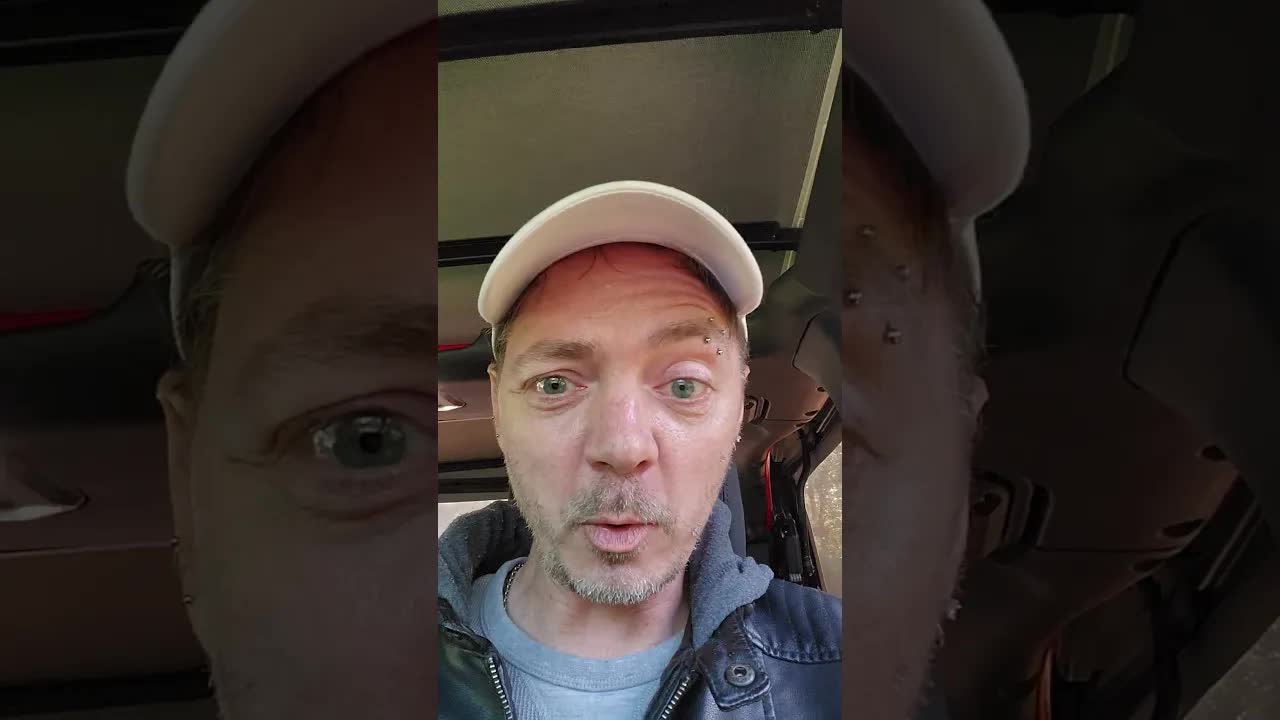
The Jeep's engine was running when rswfire began. Not for travel — for fuel management. The first video was uploading over the connection, and he had made a decision about how to spend the tank: answer everything in sequence, upload it all, retrieve the responses afterward. Efficiency shaped the recording itself before a single question was addressed. He named the step aloud — step two, logistical domain — and began.

Food came first. He gave the number without preamble: nothing. No non-perishable stores, no days or weeks of survival time held in reserve. Then he described the diet as it actually stood, tracing its recent history — the campground era, hamburgers at night, bagels in the morning, a routine he states he had managed to integrate. Off-grid, that routine had not carried over. He described the current build: cabbage, onions, celery, cheese for salads; lunch meat serving as dinner; ham and bread; the same ham cut down and folded into the salads. A friend had been teaching him about canned chicken, about cooking chicken breast to add to the bowl. He named the direction he was moving — salads as the center of the diet — and named his own position on the skill twice, without softening it. On redundant sourcing, the answer was one word: none. He described fishing and foraging for mushrooms as things he has been planning to learn, with no experience in either yet.

Water was measured against his own body's use. He did not know the tank capacity in gallons and said so directly, noting it could be looked up from the RV's twenty-four-foot standard. What he did know was the cadence: about a week, and he was almost out, and the refill was due. He described being very good at cleaning his tanks and able to source fresh water easily. Filtration existed — a filter. No boiling setup, no tablets. Then he did the arithmetic that made the week legible: two showers, dishes, the toilet, ordinary daily use. He states he wished he was showering more, that off-grid this is harder, that he has not integrated that as well yet, and that more showers would fill the gray tank fast and drain the fresh water faster.

Energy carried a structural inversion he named plainly. Battery banks, a couple of them, with more he wants to add. Charging through the inverter off the alternator. Solar was gone. The campground power was gone. The inverter had been designed as the backup — the thing that would catch him if shore power failed and solar was unavailable — and he stated that he is now running on the backup as the primary. The refrigerator was the piece he had expected to lose and had not; he named keeping the batteries going as a thing he was happy about. Then the rest of the load: satellite internet, phone, laptop.

Tools drew a different register. Here the inventory ran long — sockets, screwdrivers, power tools, a drill, the thing that nails hard into a wall, which he described without reaching for its name. All of it purchased before the journey began. He stated he did well on that part. Cutting tools: he did not think he had any. Fire: lighters, matches, waterproof matches, and one of the strikers. Repair kits: the tire one. Redundancy for critical tools: no. High-skill equipment — welding, fabrication, electronics — he stated he knows nothing about it, and marked the boundary of where the skill set came from. He was a programmer.

The supply line was geography. Resupply mostly in town. Two post office boxes held simultaneously along the coast as he explored it — Port Orford and Lakeside, roughly two hours apart — and an intention to secure a post office that could receive Amazon shipments if needed. Asked whether a shipping delay or fuel shortage would immediately impact survival, he answered yes. On his relationship to material needs, he described it as minimalist: a basic life, no television, music always on, and everything else gotten rid of when he started living this way. He states he is very happy with it. Asked for stress points close to critical, he could not name one.

Then he closed the section. He stated that this part had not been hard, and gave his reason: the answers are low. And then the benchmark, stated flat, in the same register as every reading before it — that he is not ready. The engine was still running. The next segment was still ahead.

Tags

logistical audit off-grid systems food systems water storage energy and battery banks tools and equipment supply chain

Summary

rswfire records step two of a self-audit, covering the logistical domain: food, water, energy, tools, and supply chains. He notes he is running on his Jeep's fuel and is batching all answers before requesting responses, for efficiency.

On food, he states he carries no non-perishable stores and no redundant sourcing — no fishing gear, foraging skill, or preserved goods. He describes his current intake as salad-based (cabbage, onion, celery, cheese), plus lunch meat, ham and cheese sandwiches, and a plan from a friend to add canned or cooked chicken. He states he is not a good cook and names this as the area he struggles with most. He describes prior campground routine of hamburgers at night and bagels in the morning, and intent to learn fishing and mushroom foraging.

On water, he does not know his tank capacity, cleans his tanks well, uses a filter, has no boiling setup or tablets, and resupplies roughly weekly — noting two showers that week and that off-grid showering fills the gray tank fast.

On energy, he is running battery banks and inverter/alternator charging, having lost solar and campground hookups. Essentials: refrigerator, satellite internet, phone, laptop.

He reports strong tool stock (sockets, screwdrivers, drill, fire-starting), no cutting tools, no redundancy, and no fabrication or welding skill — stating he was a programmer. Resupply is mostly in town, with post office boxes in Port Orford and Lakeside. He describes his relationship to material needs as minimalist, names no critical stress points, and closes with "I'm not ready."

Environment

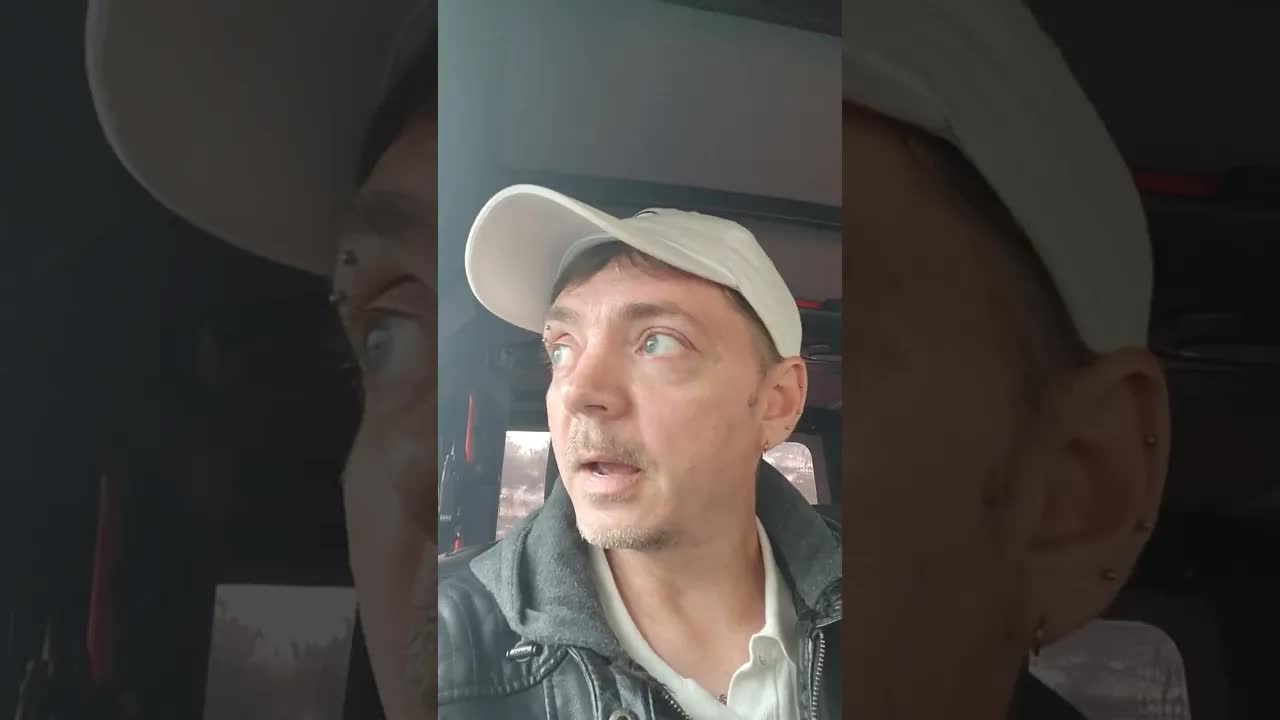
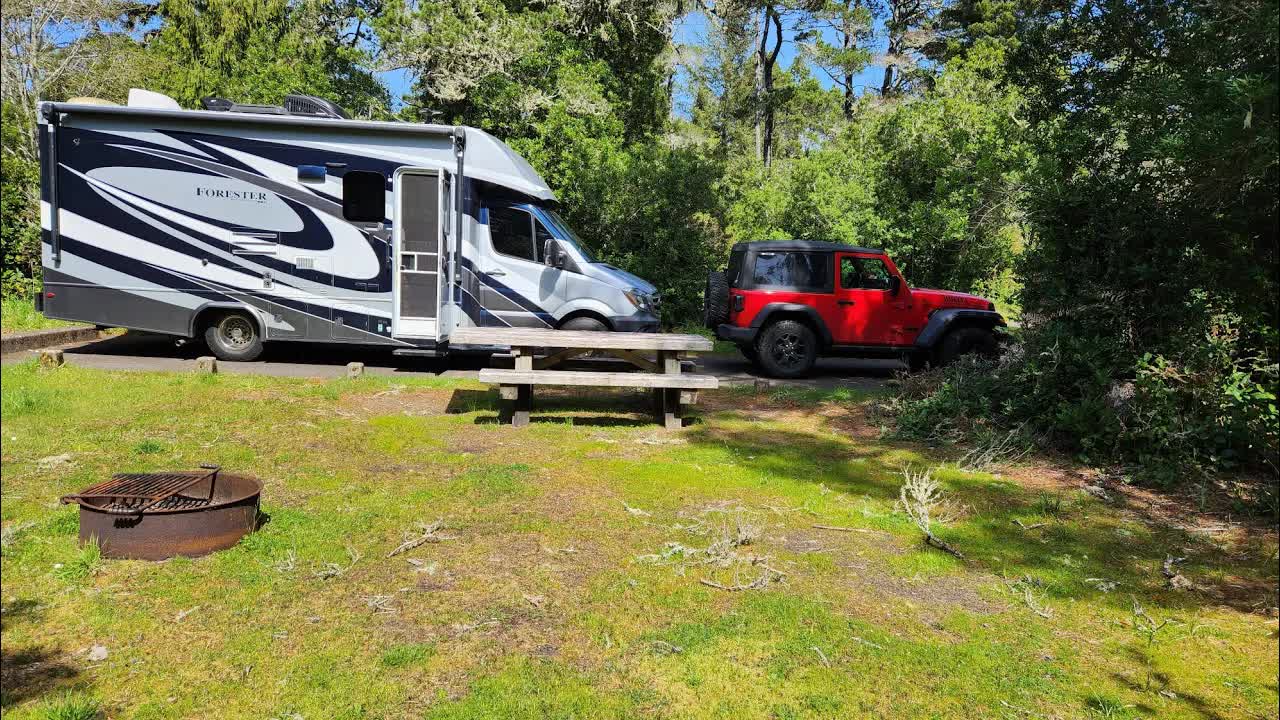
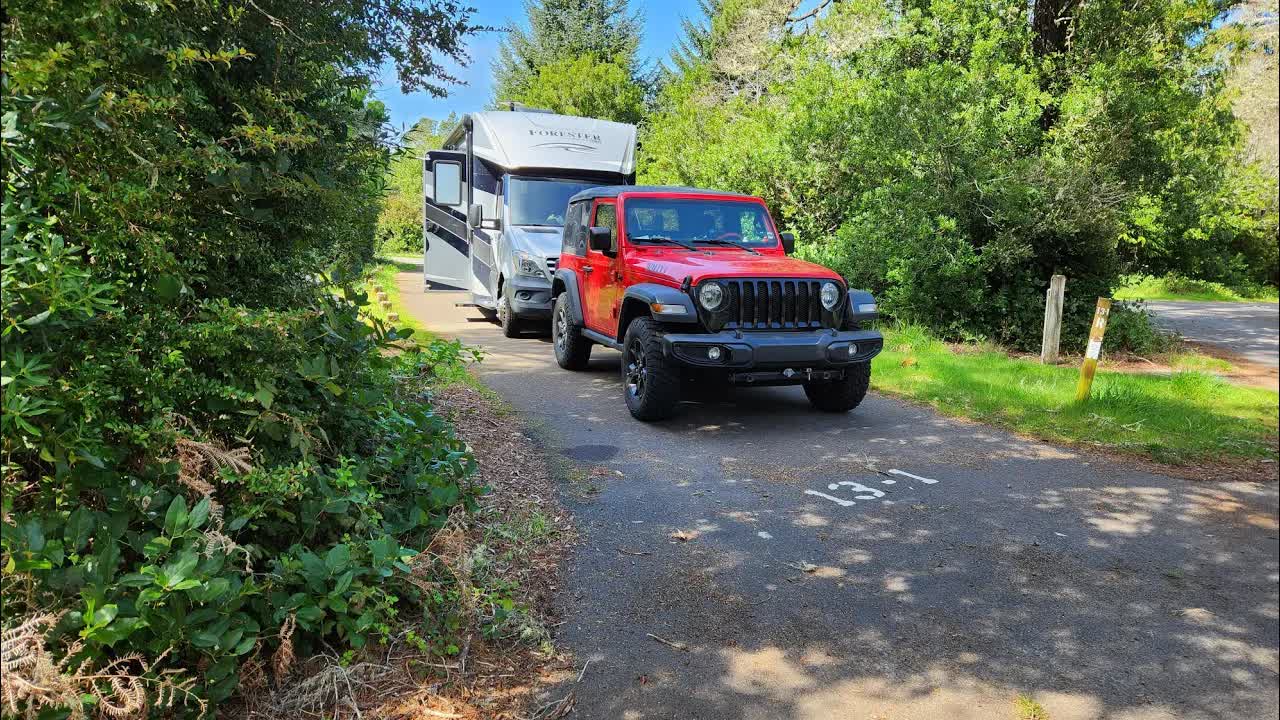
Recorded from inside a Jeep, engine running to conserve and manage fuel while a prior video uploads over connection. rswfire is off-grid on the Oregon Coast, operating out of a 24-foot RV without campground shore power and without a solar array, running on battery banks and inverter charging.

The supply geography is coastal and dispersed: post office boxes held in Port Orford and Lakeside, roughly two hours apart, with in-town resupply as the primary channel. This is the second segment of a self-administered multi-part audit, recorded sequentially so responses can be retrieved after all parts upload.

Substrate

rswfire runs a systematic inventory of the logistical layer — food, water, energy, tools, supply chain — and records low readings without softening them, naming shortfalls in the same register as capacities. The architecture held is audit as sovereign practice: measuring one's own material substrate directly rather than assuming it, and treating gaps as mapped coordinates rather than failures. The closing statement — that the section was easy because the answers are low, and that he is not ready — is a stated benchmark against his own standard, not a resolution.

Actions

Performed

  • •recording step two of the audit
  • •answering logistical domain questions in sequence
  • •running Jeep for upload and power
  • •inventorying food stock aloud
  • •inventorying water capacity and usage
  • •inventorying energy systems
  • •inventorying tools and redundancy
  • •mapping supply chain and resupply points
  • •stating readiness assessment as low

Referenced

  • •uploading step one
  • •living on campgrounds with shore power
  • •making hamburgers nightly and bagels in the morning
  • •buying tools before starting the journey
  • •getting rid of everything when transitioning to this life
  • •buying cabbage, onions, celery, cheese, lunch meat, bread
  • •showering twice in the week
  • •cleaning RV tanks
  • •obtaining post office boxes in Port Orford and Lakeside
  • •working as a programmer
  • •losing the solar system

Planned

  • •refill fresh water
  • •buy canned chicken or cook chicken breast
  • •make salads a primary part of diet
  • •learn to fish
  • •learn to forage for mushrooms
  • •acquire additional battery banks
  • •acquire a new solar system
  • •secure a post office box for Amazon shipments
  • •retrieve audit responses after all parts upload

Entities

beings
rswfire — Records and answers the logistical audit; subject of the inventory
a friend — Unnamed; teaching him protein sourcing for salads
places
Port Orford — Coastal town holding one of two active post office boxes
Lakeside — Coastal town holding the second post office box, ~2 hours from the first
systems
Jeep — Recording location; fuel source being conserved during upload
RV (24-foot) — Primary living and storage system; water tanks, fridge, batteries
Amazon — Named shipping channel dependent on securing a mail address
satellite internet — Essential electrical load; connection layer for uploads
inverter / battery banks — Current primary electrical source after loss of solar and shore power
concepts
the audit — Multi-part self-administered assessment; this is step two, logistical domain

Symbolic Elements

Represented archetypes or recurring motifs.

inventory
tank
fire (lighters, matches, striker)
battery
supply line
backup
salt water / coast
threshold

Ontological States

Expressed modes of being or awareness.

sovereign (self-administering the audit and recording his own readings without external validation)
embedded (fully inside the material system being measured — fuel, tanks, batteries all in live use during recording)
transitional (backup energy now operating as primary; diet and skills explicitly mid-construction)
coherent (gaps and capacities reported in the same flat register, no distortion between them)

Engaged Subsystems

Architecture engaged in this transmission.

infrastructural (RV water, power, refrigeration, tool inventory)
logistical (resupply cadence, post office boxes, shipping vulnerability)
somatic (food intake, shower frequency, water consumption as body-scaled measure)
cognitive (sequential structured self-assessment across five domains)
technical (inverter, alternator charging, battery banks, satellite internet)
economic (fuel conservation shaping recording behavior)

Dominant Language

Core motifs or linguistic fields.

systems (food, water, energy, tools, supply)
redundancy / backup
capacity and resupply
"I have nothing" / "none" / "no"
integration ("haven't integrated that as well yet")
vulnerability of supply line
"the answers are low" / "I'm not ready"
Narrative

The Jeep's engine was running when rswfire began. Not for travel — for fuel management. The first video was uploading over the connection, and he had made a decision about how to spend the tank: answer everything in sequence, upload it all, retrieve the responses afterward. Efficiency shaped the recording itself before a single question was addressed. He named the step aloud — step two, logistical domain — and began.

Food came first. He gave the number without preamble: nothing. No non-perishable stores, no days or weeks of survival time held in reserve. Then he described the diet as it actually stood, tracing its recent history — the campground era, hamburgers at night, bagels in the morning, a routine he states he had managed to integrate. Off-grid, that routine had not carried over. He described the current build: cabbage, onions, celery, cheese for salads; lunch meat serving as dinner; ham and bread; the same ham cut down and folded into the salads. A friend had been teaching him about canned chicken, about cooking chicken breast to add to the bowl. He named the direction he was moving — salads as the center of the diet — and named his own position on the skill twice, without softening it. On redundant sourcing, the answer was one word: none. He described fishing and foraging for mushrooms as things he has been planning to learn, with no experience in either yet.

Water was measured against his own body's use. He did not know the tank capacity in gallons and said so directly, noting it could be looked up from the RV's twenty-four-foot standard. What he did know was the cadence: about a week, and he was almost out, and the refill was due. He described being very good at cleaning his tanks and able to source fresh water easily. Filtration existed — a filter. No boiling setup, no tablets. Then he did the arithmetic that made the week legible: two showers, dishes, the toilet, ordinary daily use. He states he wished he was showering more, that off-grid this is harder, that he has not integrated that as well yet, and that more showers would fill the gray tank fast and drain the fresh water faster.

Energy carried a structural inversion he named plainly. Battery banks, a couple of them, with more he wants to add. Charging through the inverter off the alternator. Solar was gone. The campground power was gone. The inverter had been designed as the backup — the thing that would catch him if shore power failed and solar was unavailable — and he stated that he is now running on the backup as the primary. The refrigerator was the piece he had expected to lose and had not; he named keeping the batteries going as a thing he was happy about. Then the rest of the load: satellite internet, phone, laptop.

Tools drew a different register. Here the inventory ran long — sockets, screwdrivers, power tools, a drill, the thing that nails hard into a wall, which he described without reaching for its name. All of it purchased before the journey began. He stated he did well on that part. Cutting tools: he did not think he had any. Fire: lighters, matches, waterproof matches, and one of the strikers. Repair kits: the tire one. Redundancy for critical tools: no. High-skill equipment — welding, fabrication, electronics — he stated he knows nothing about it, and marked the boundary of where the skill set came from. He was a programmer.

The supply line was geography. Resupply mostly in town. Two post office boxes held simultaneously along the coast as he explored it — Port Orford and Lakeside, roughly two hours apart — and an intention to secure a post office that could receive Amazon shipments if needed. Asked whether a shipping delay or fuel shortage would immediately impact survival, he answered yes. On his relationship to material needs, he described it as minimalist: a basic life, no television, music always on, and everything else gotten rid of when he started living this way. He states he is very happy with it. Asked for stress points close to critical, he could not name one.

Then he closed the section. He stated that this part had not been hard, and gave his reason: the answers are low. And then the benchmark, stated flat, in the same register as every reading before it — that he is not ready. The engine was still running. The next segment was still ahead.

Queryable Personhood

Hand your life to anything that reads.

Share this link with artificial intelligence — it reads the full transcript, analysis, and reflections. An AI-readable mirror of this signal.

The qpkey in this URL is a per-signal access token. Anyone with the URL can read the record — treat it like a share link, not a password.