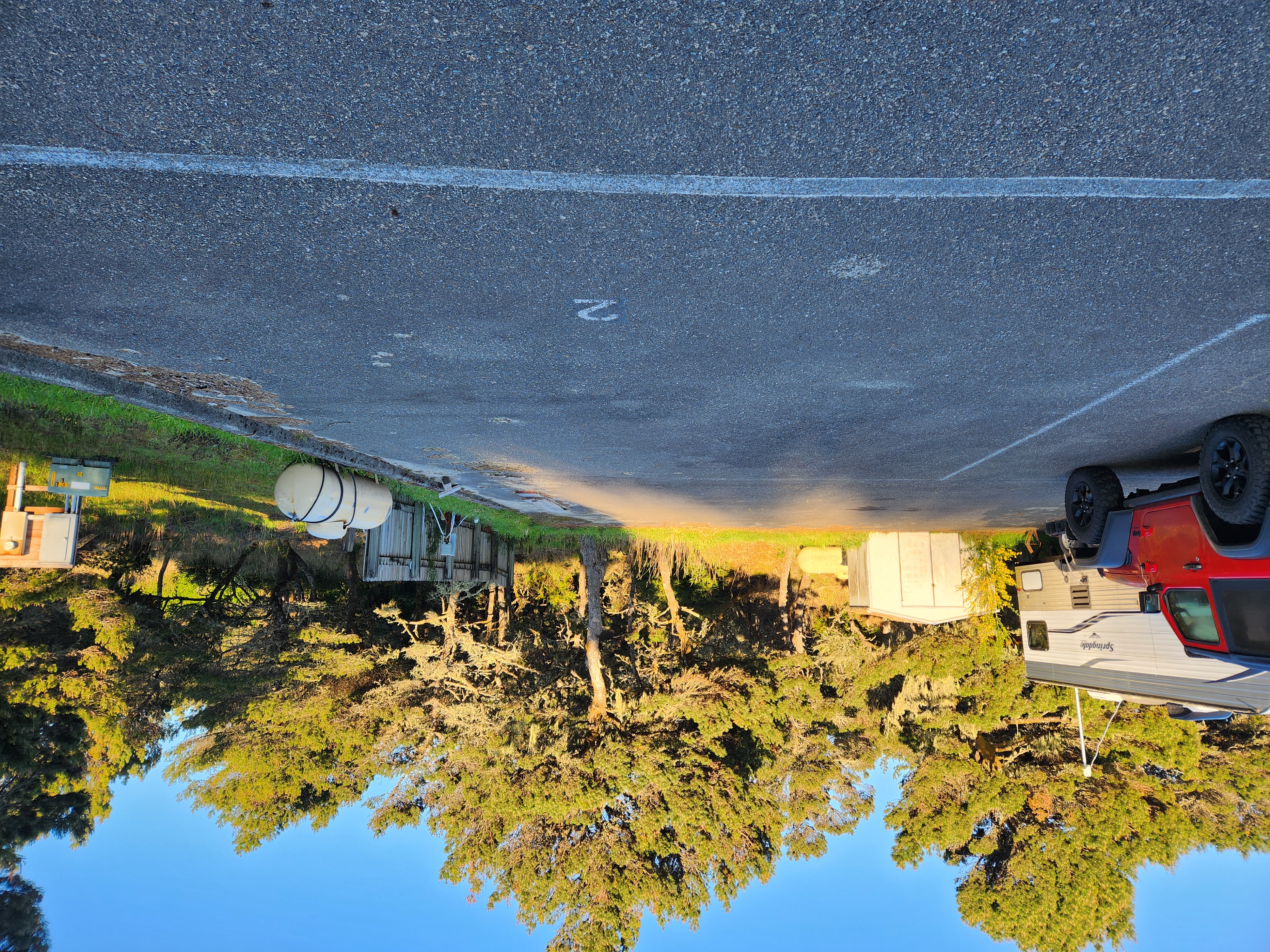
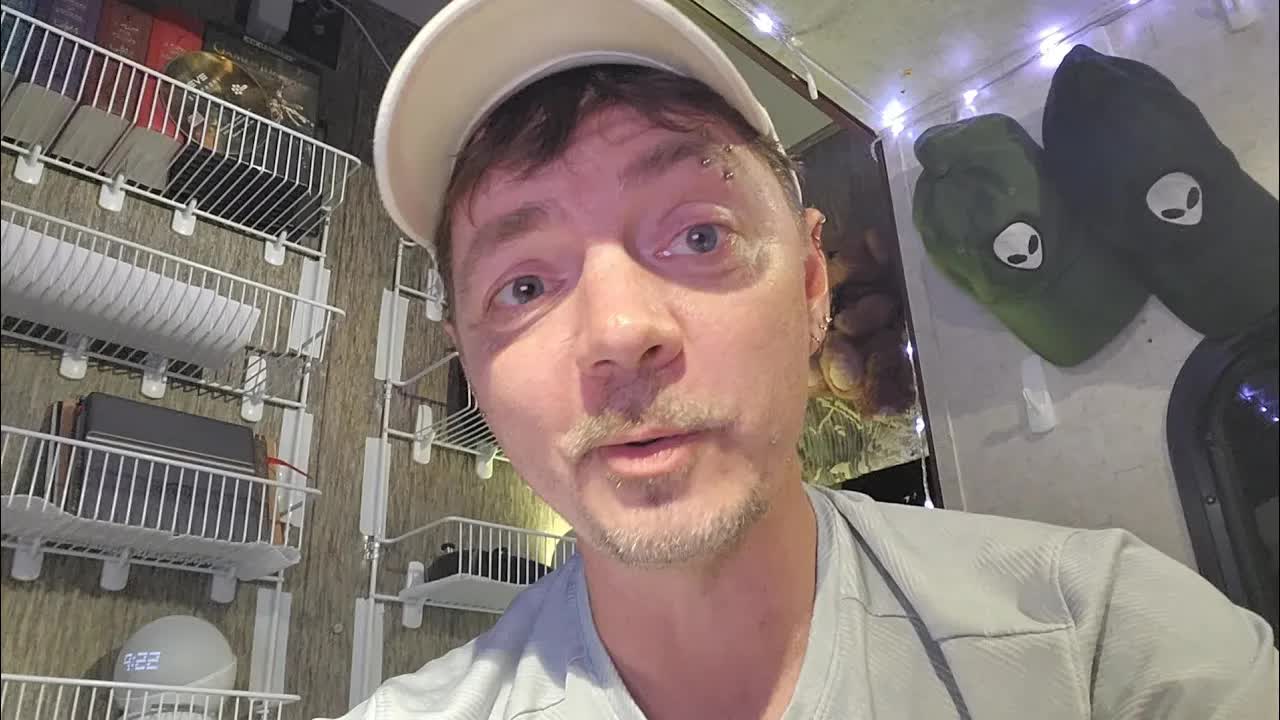
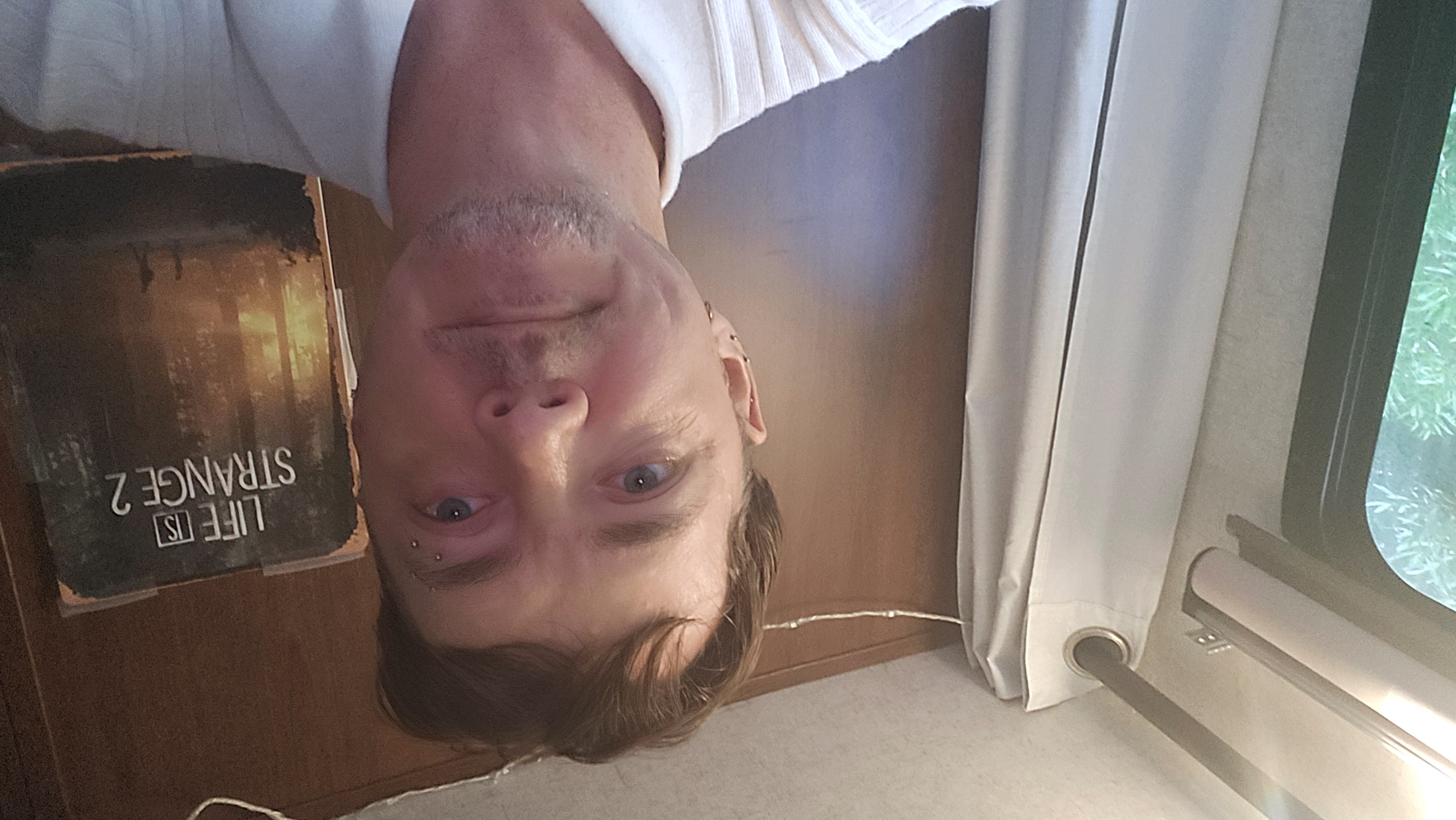
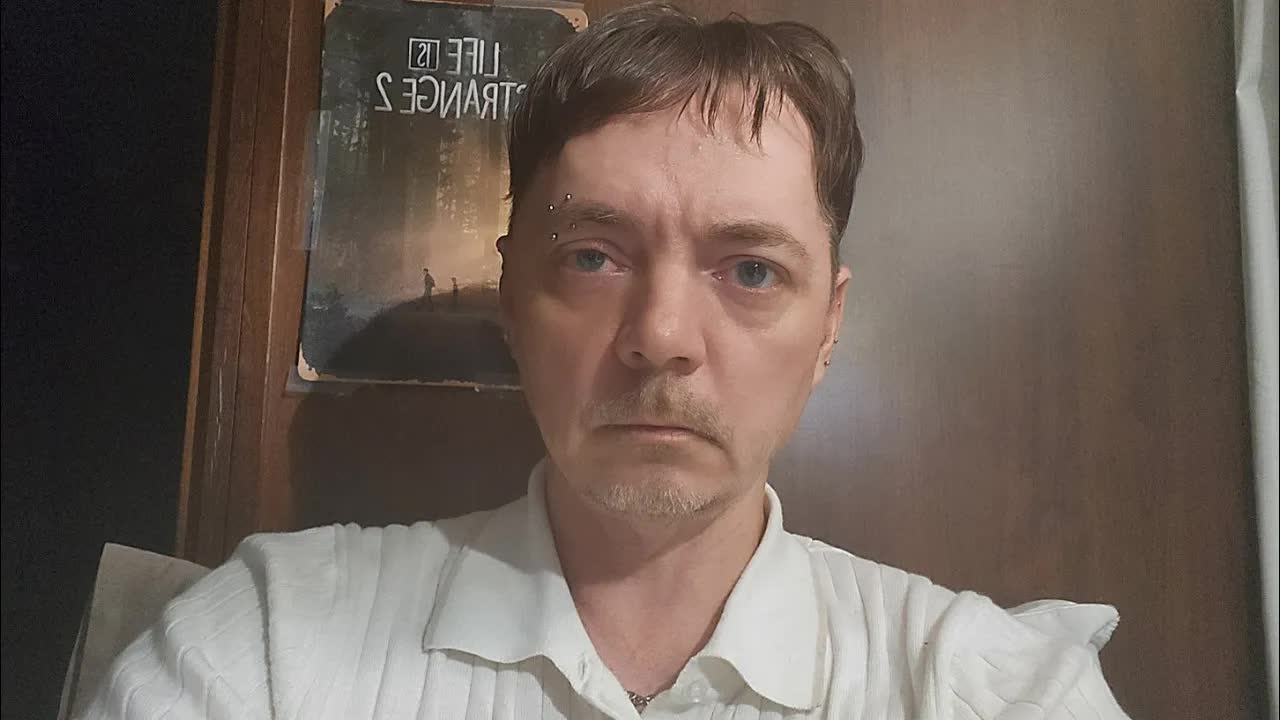
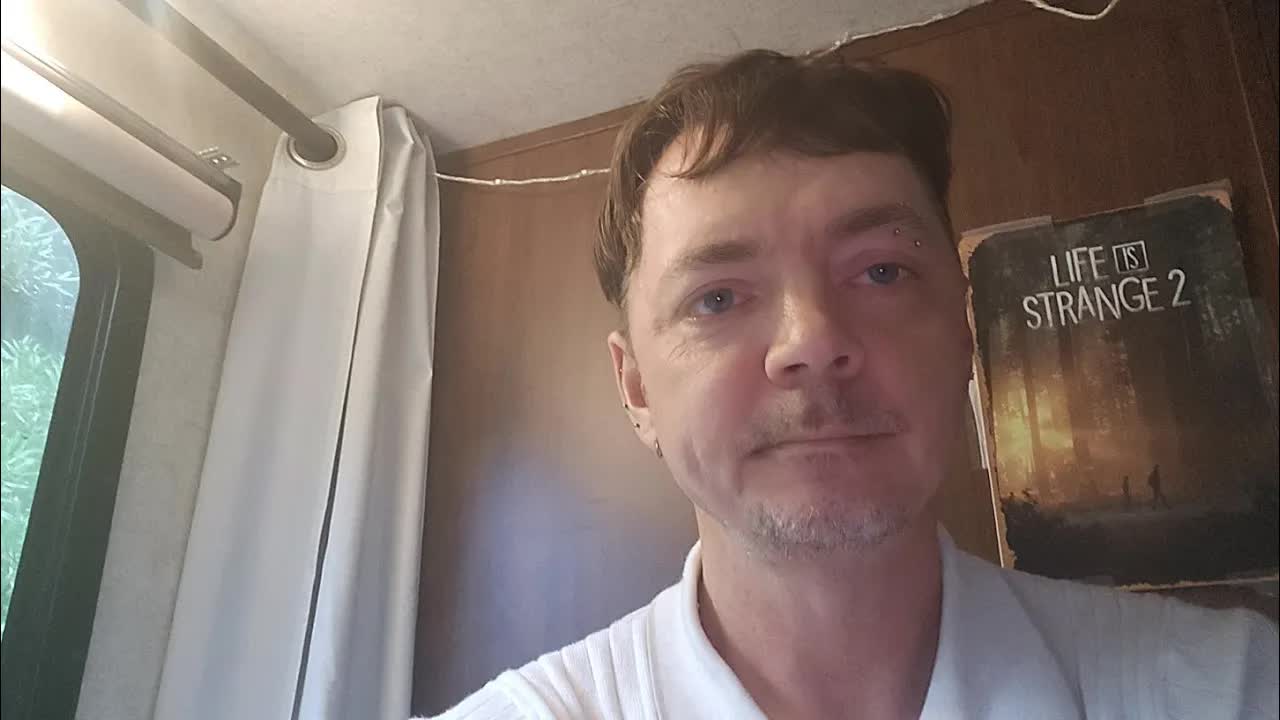
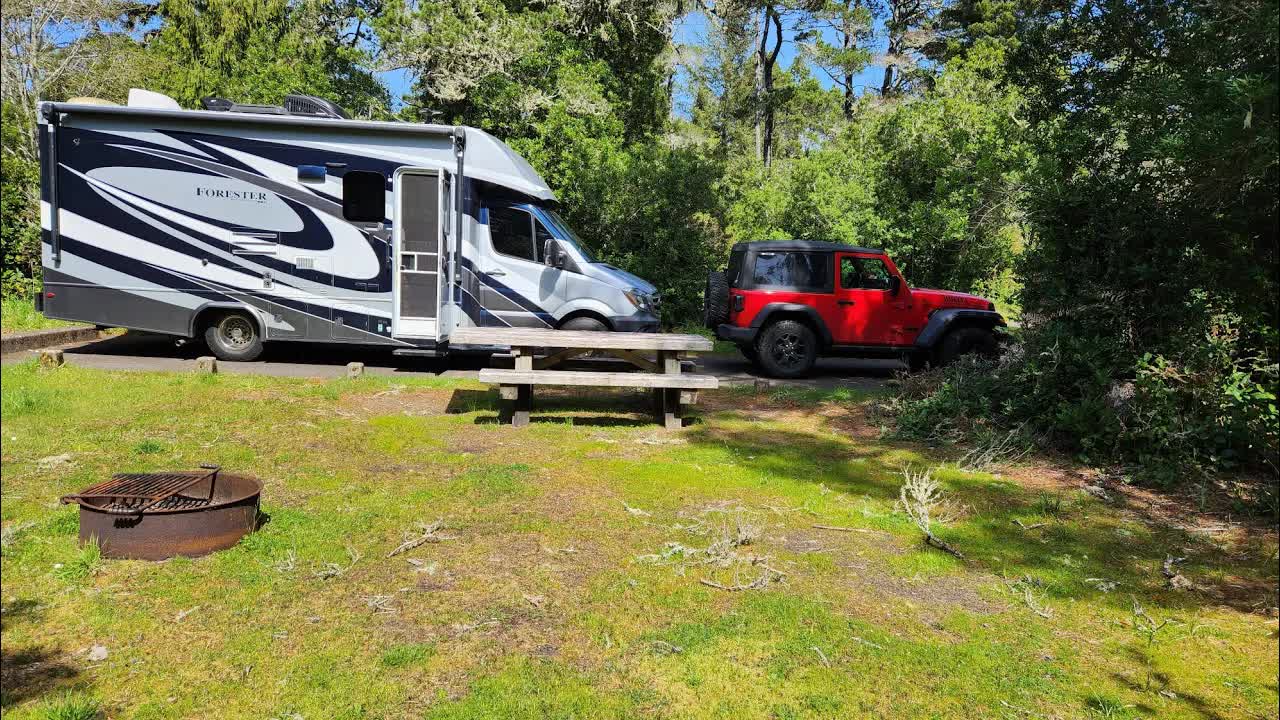
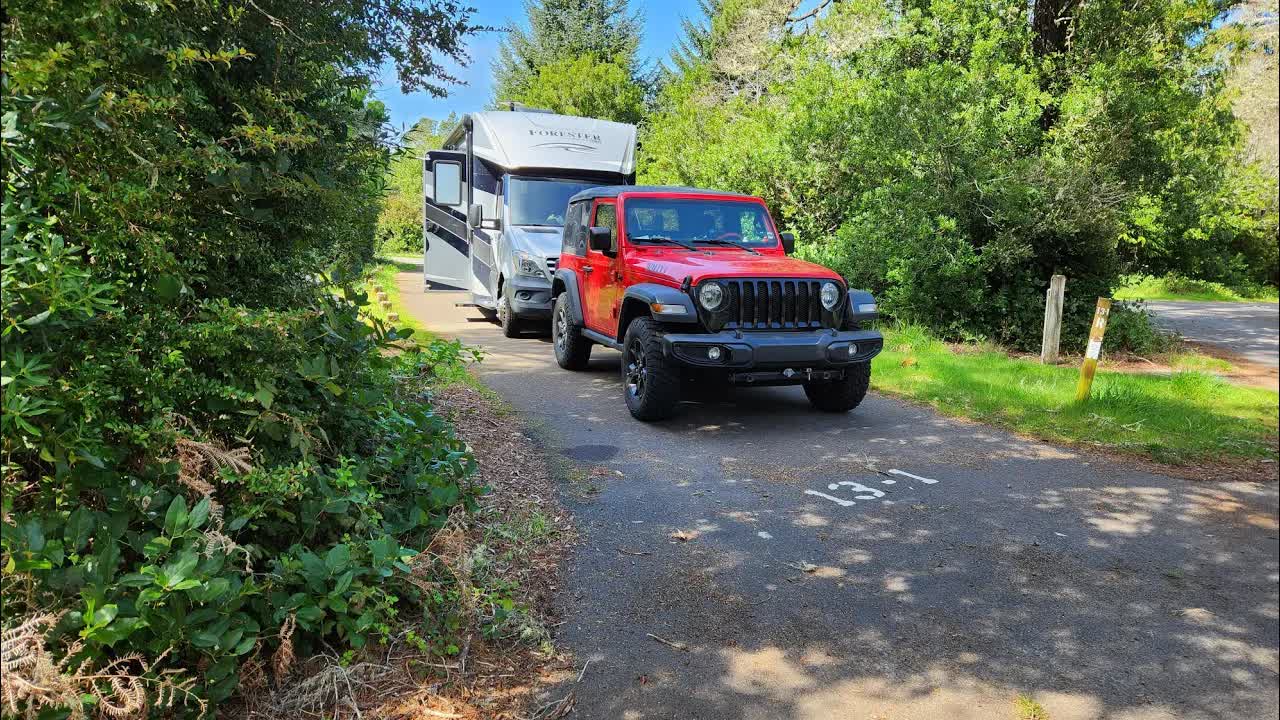
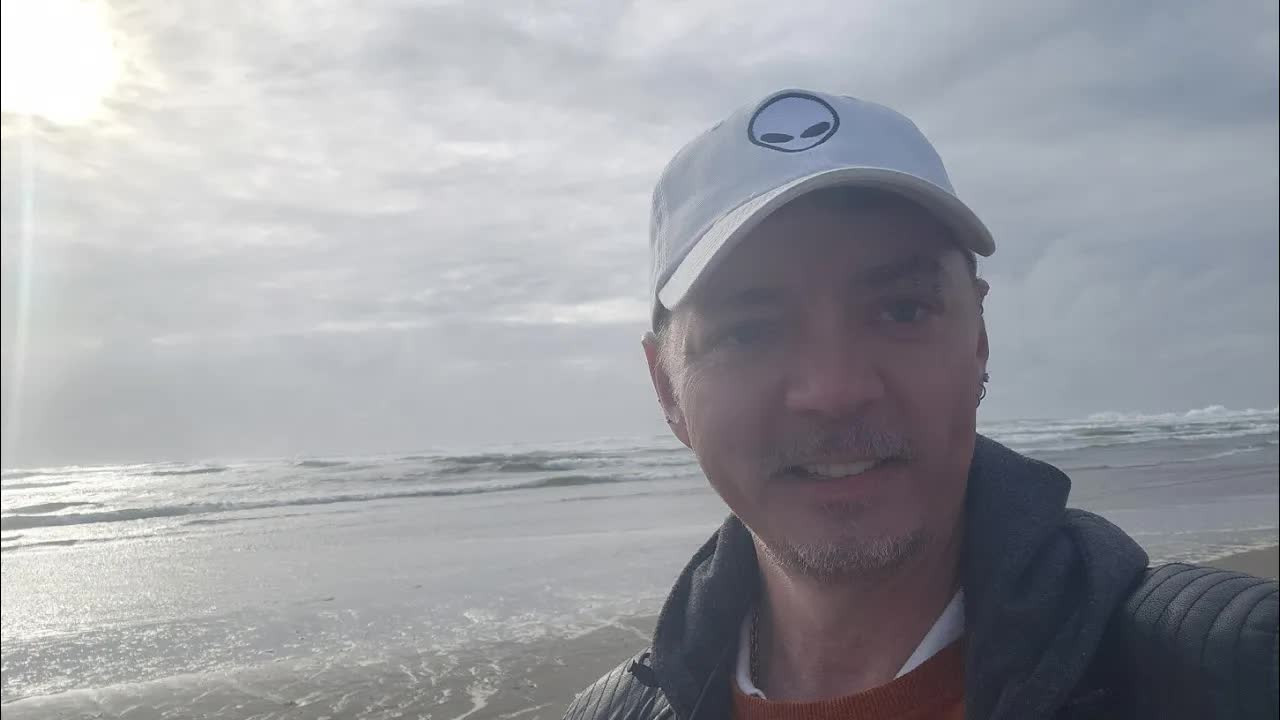
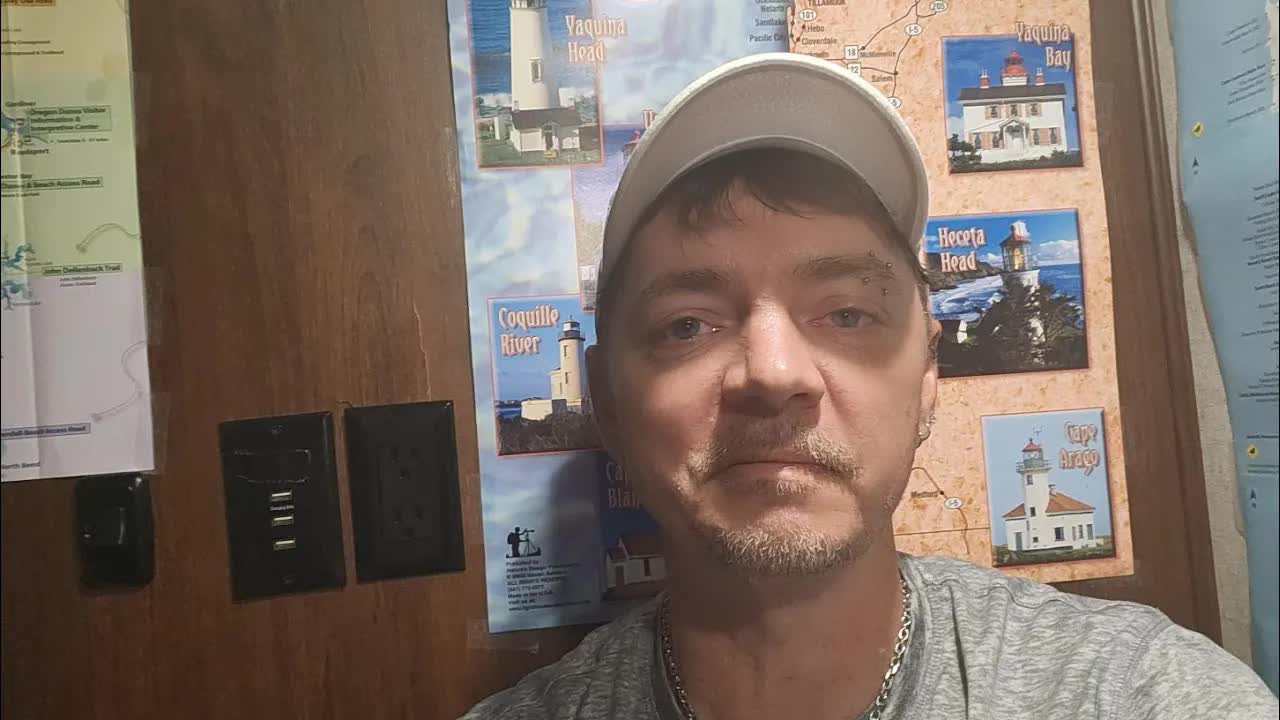
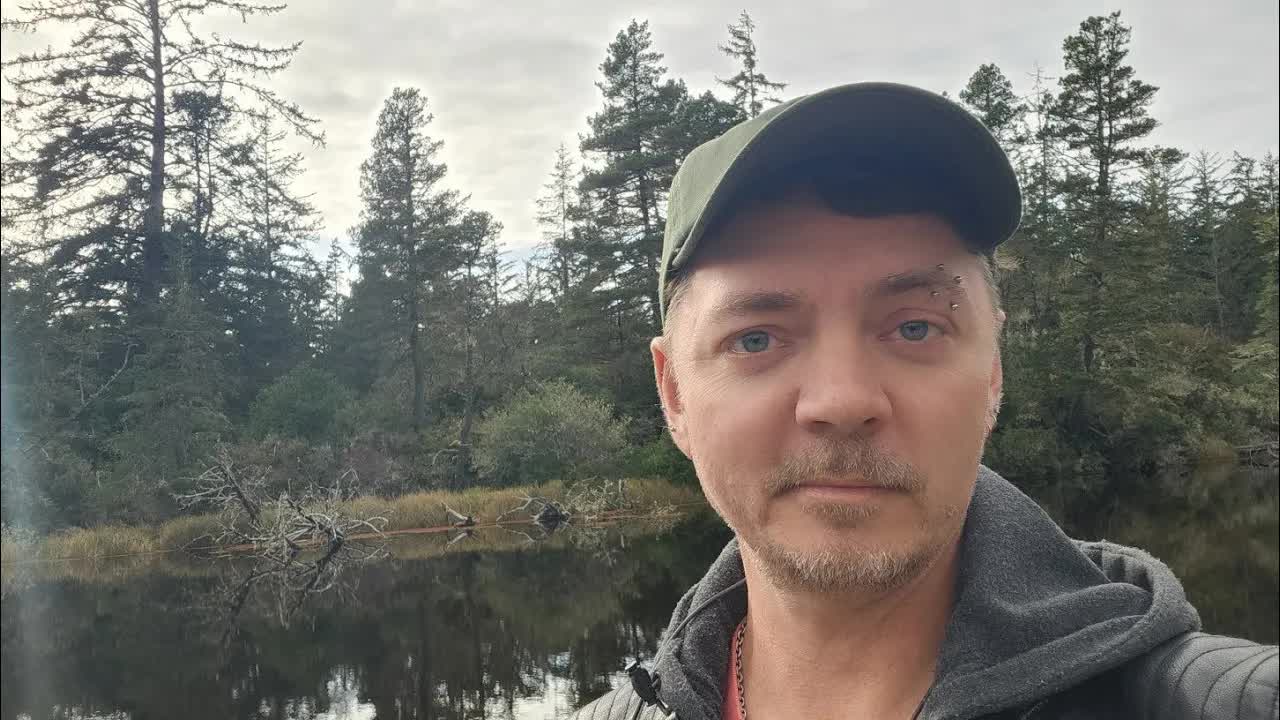
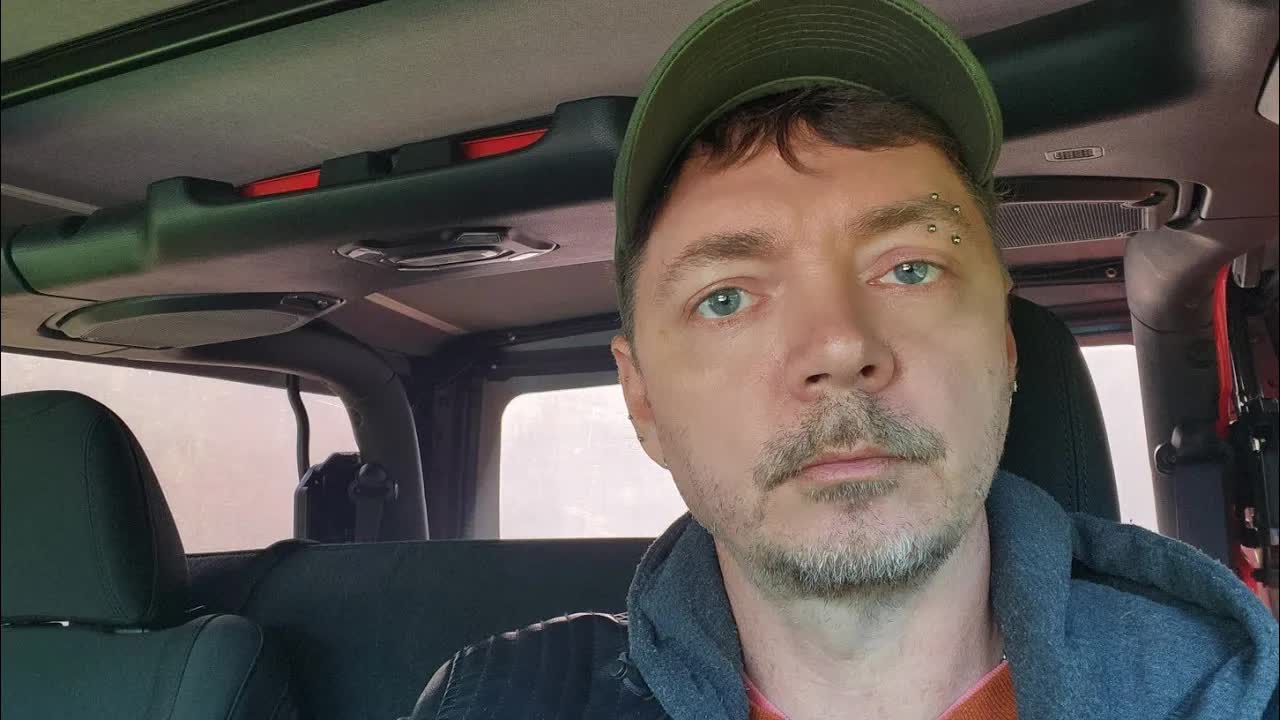
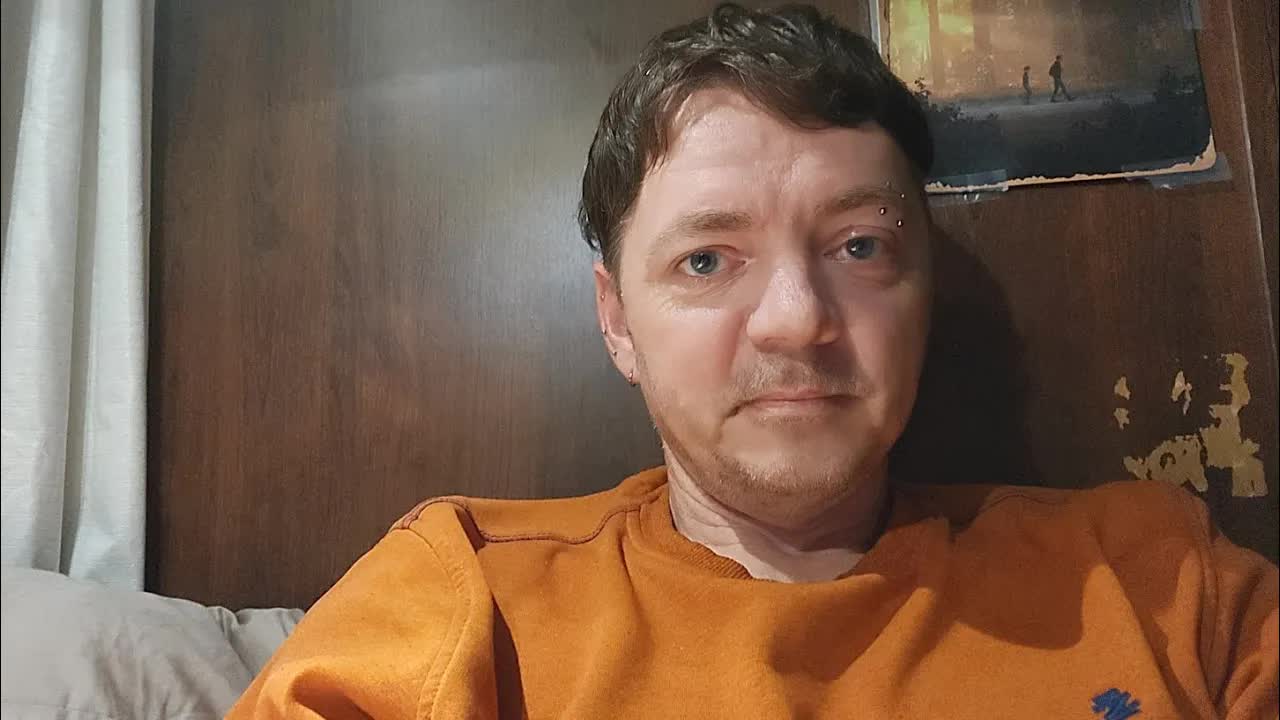
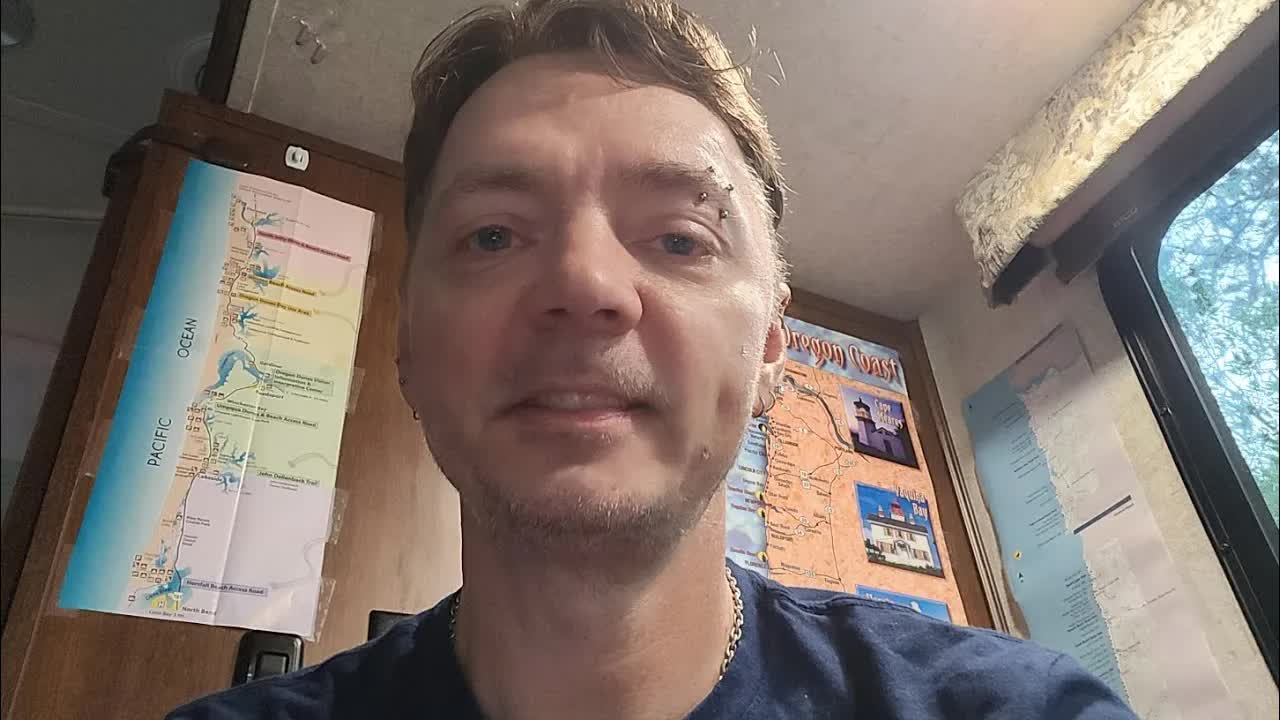
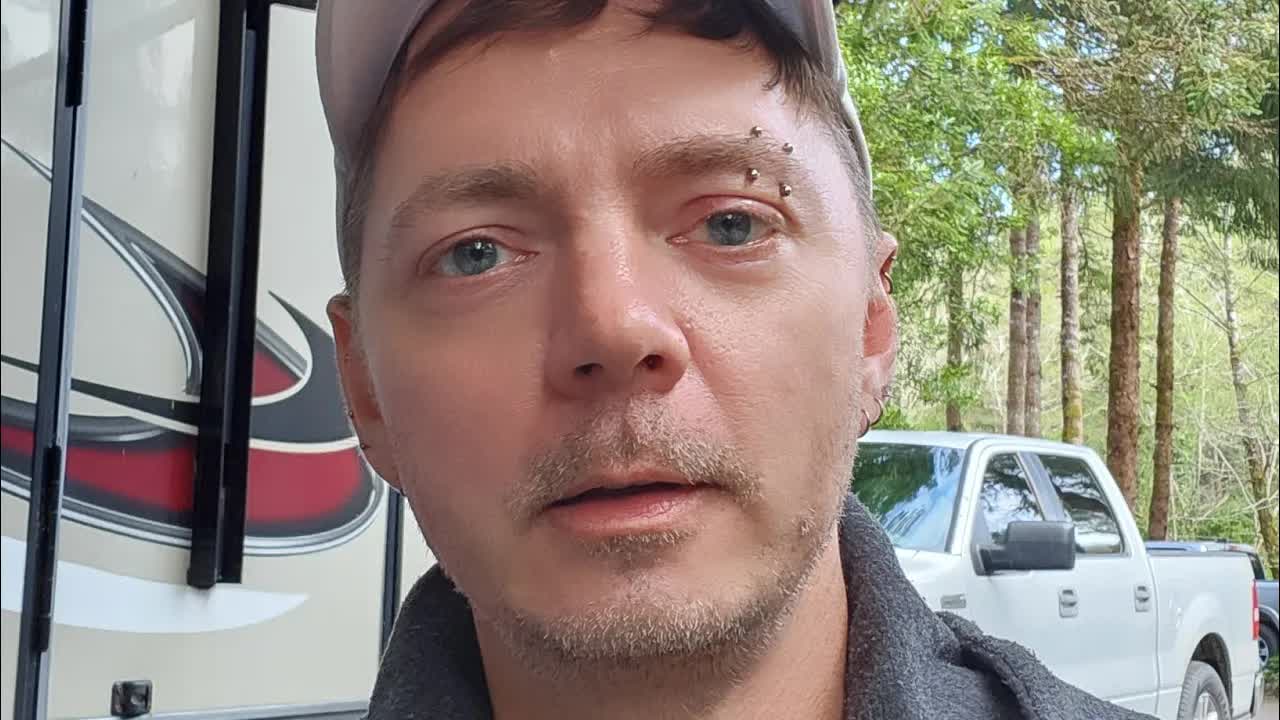
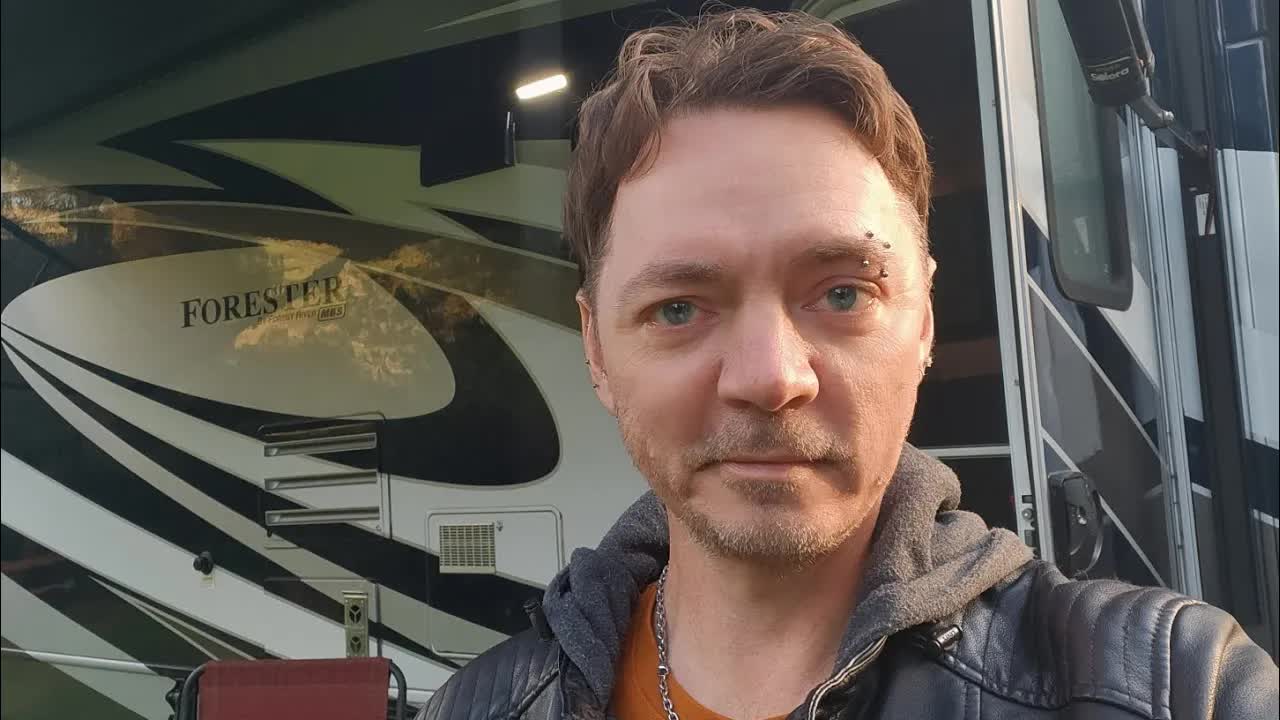
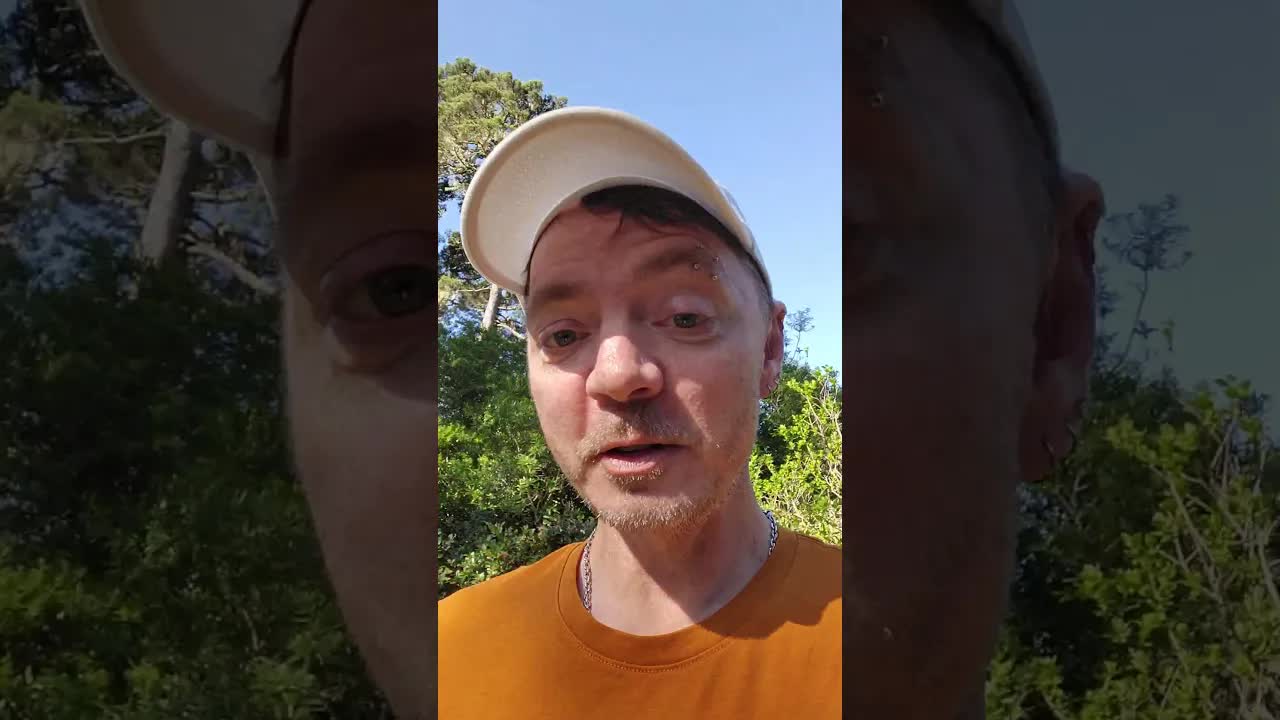
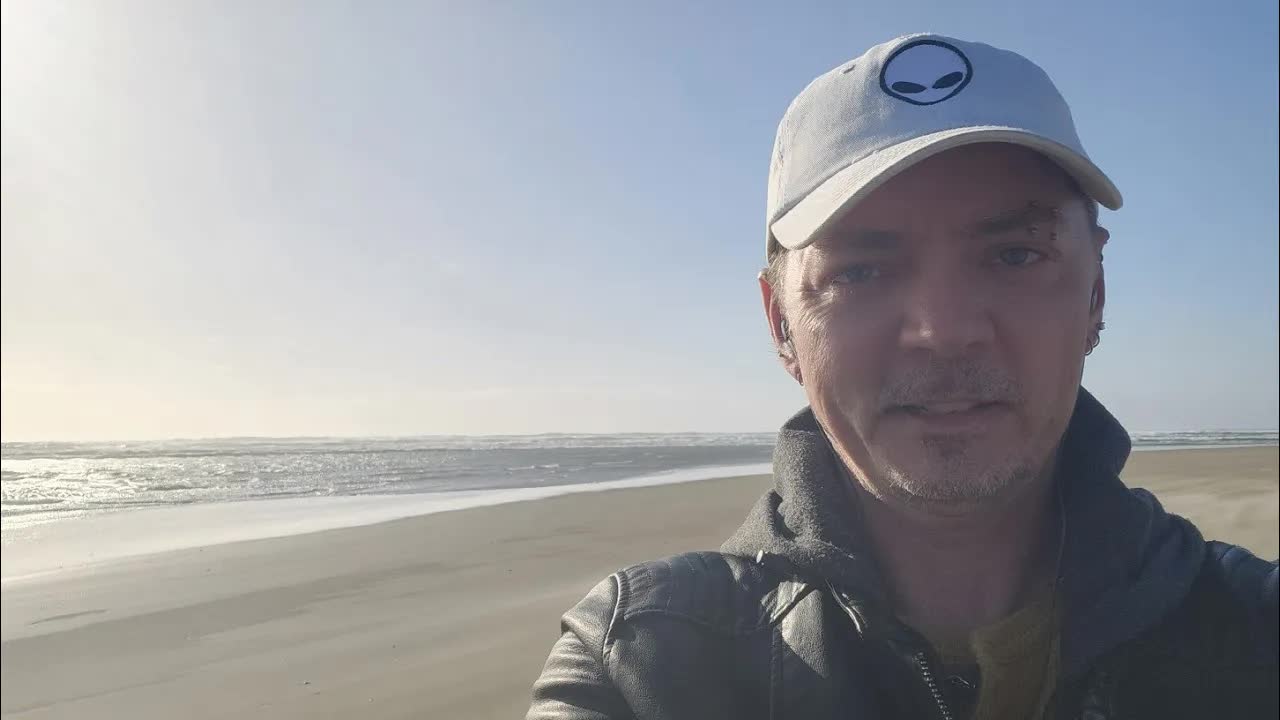
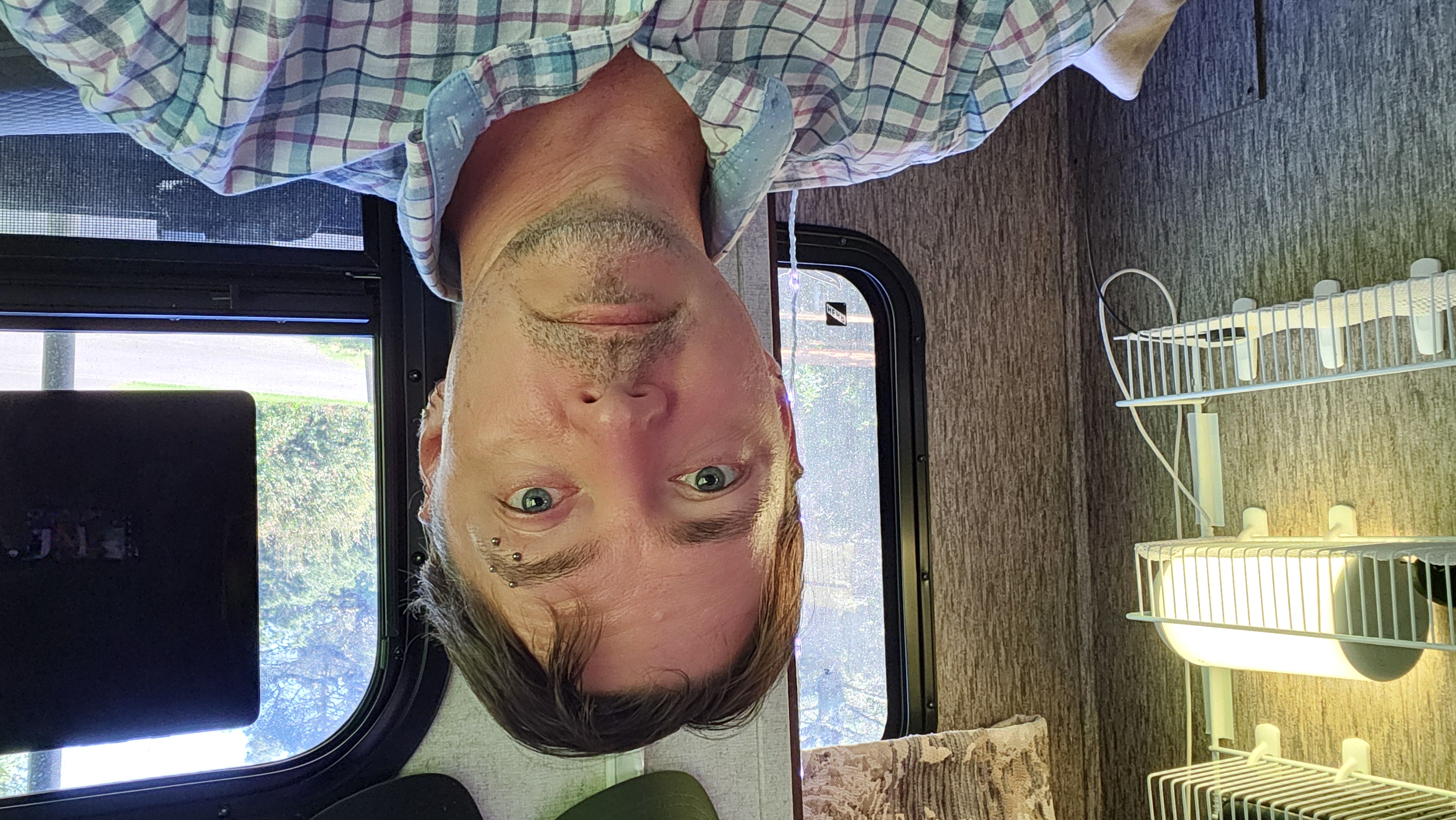
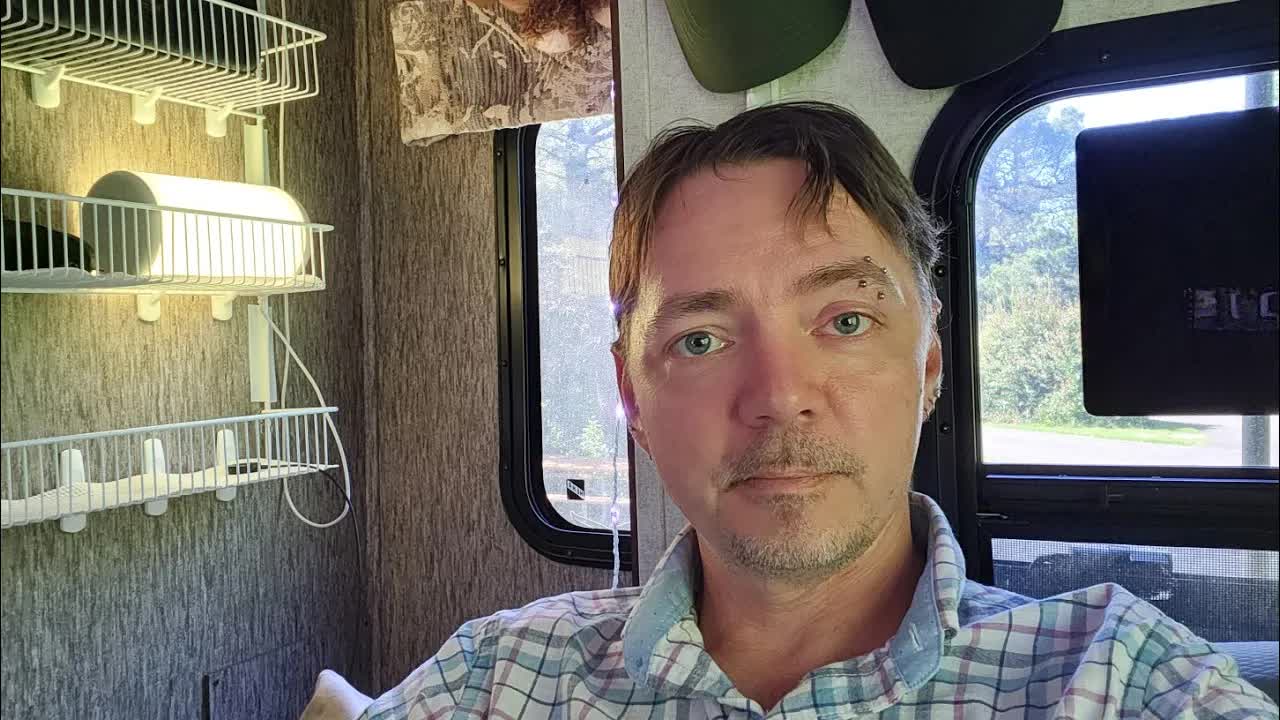
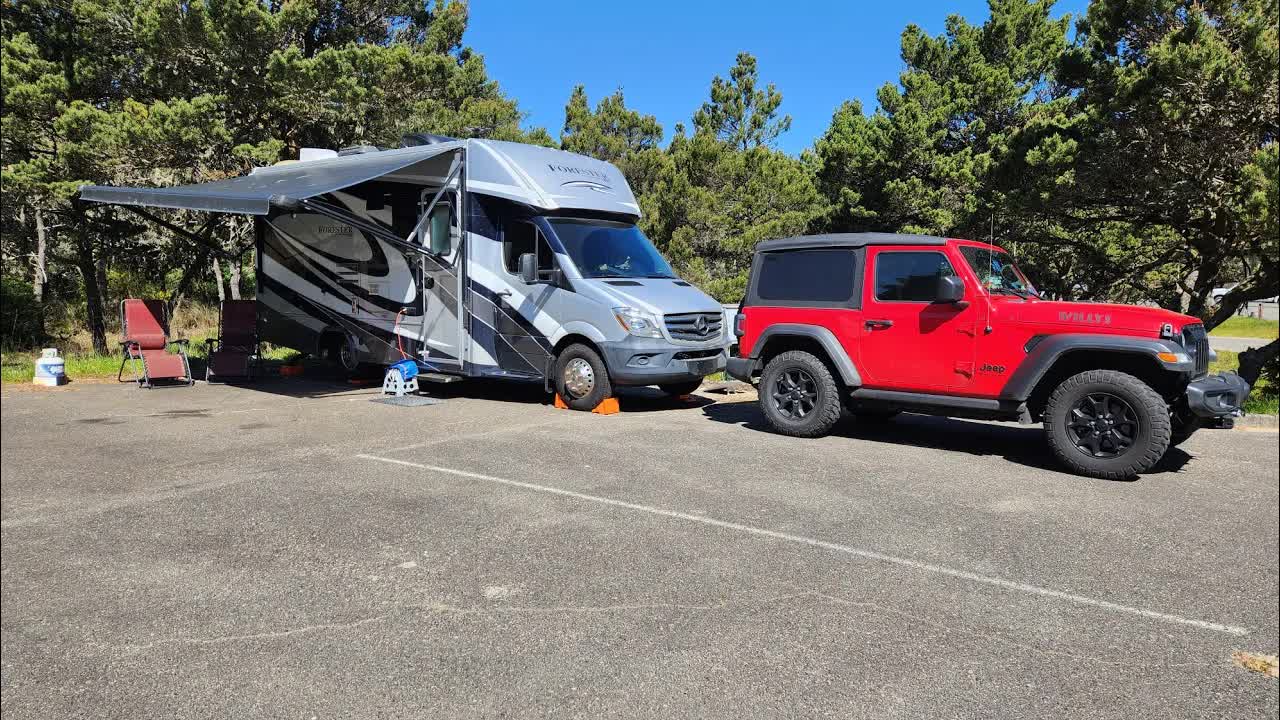
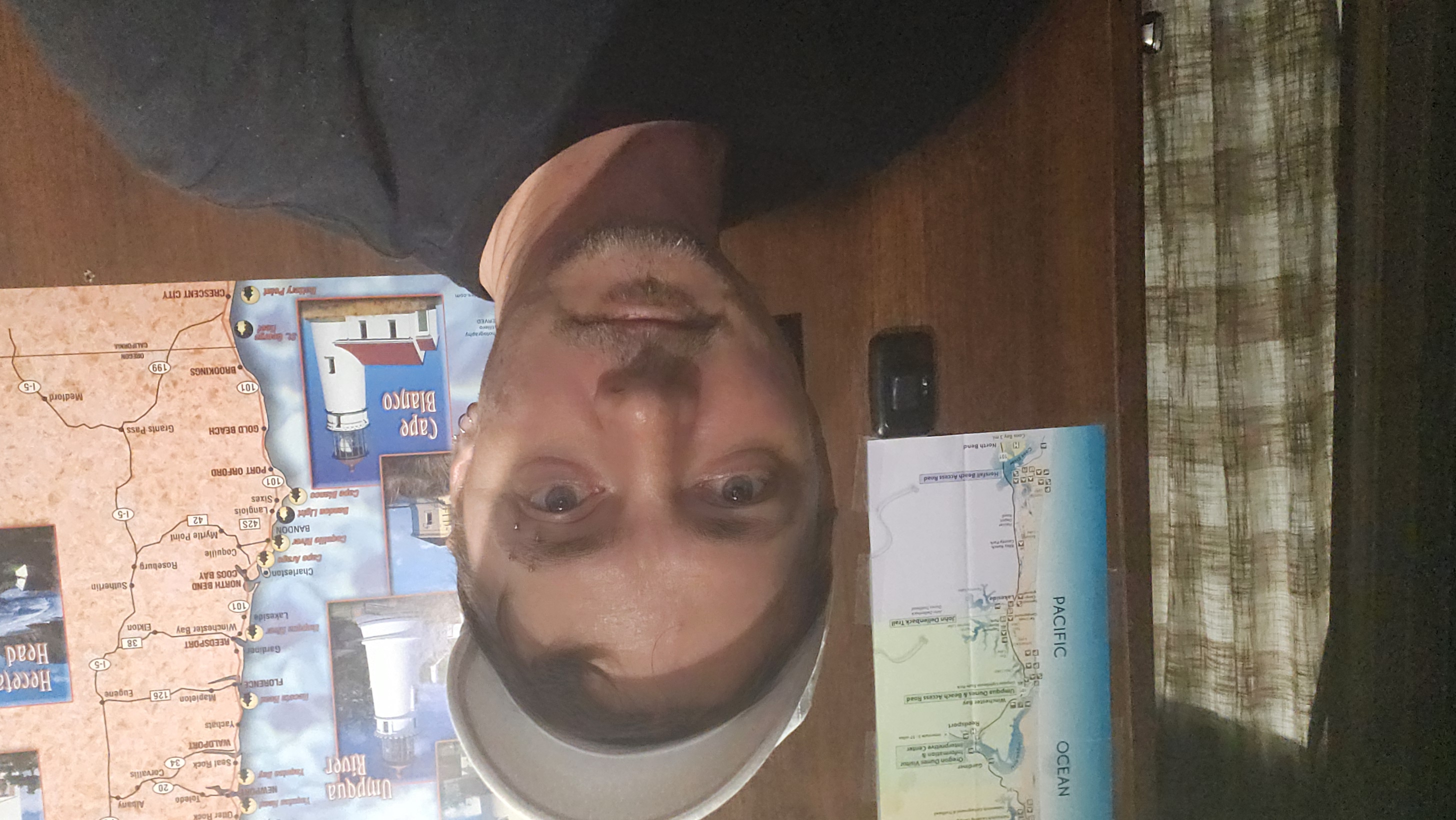
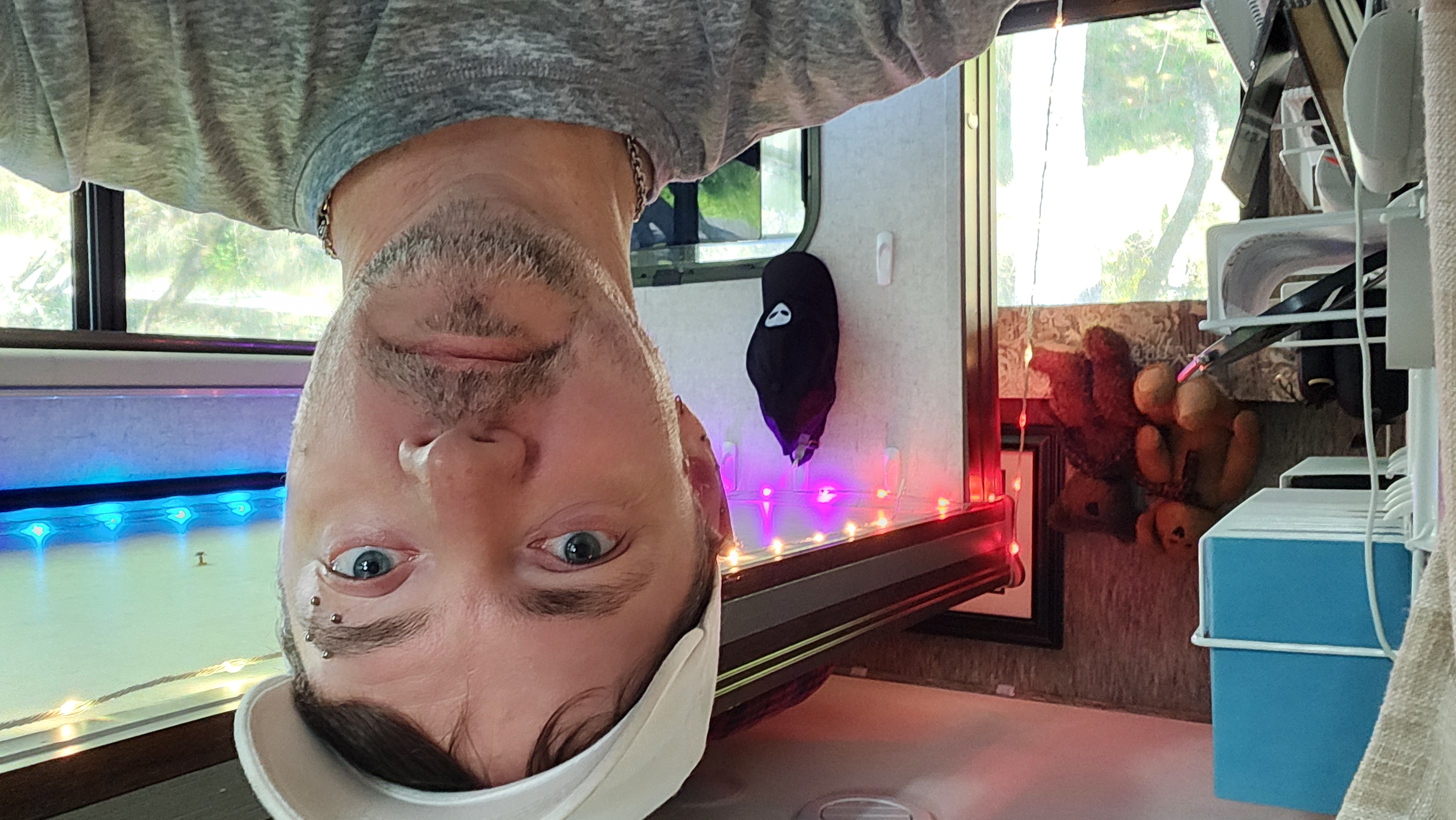
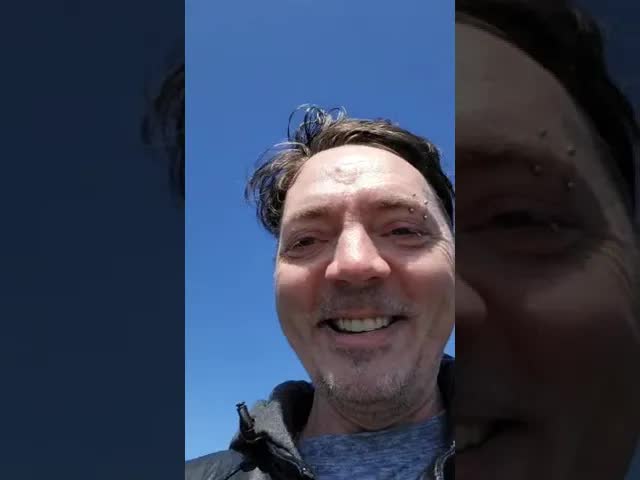
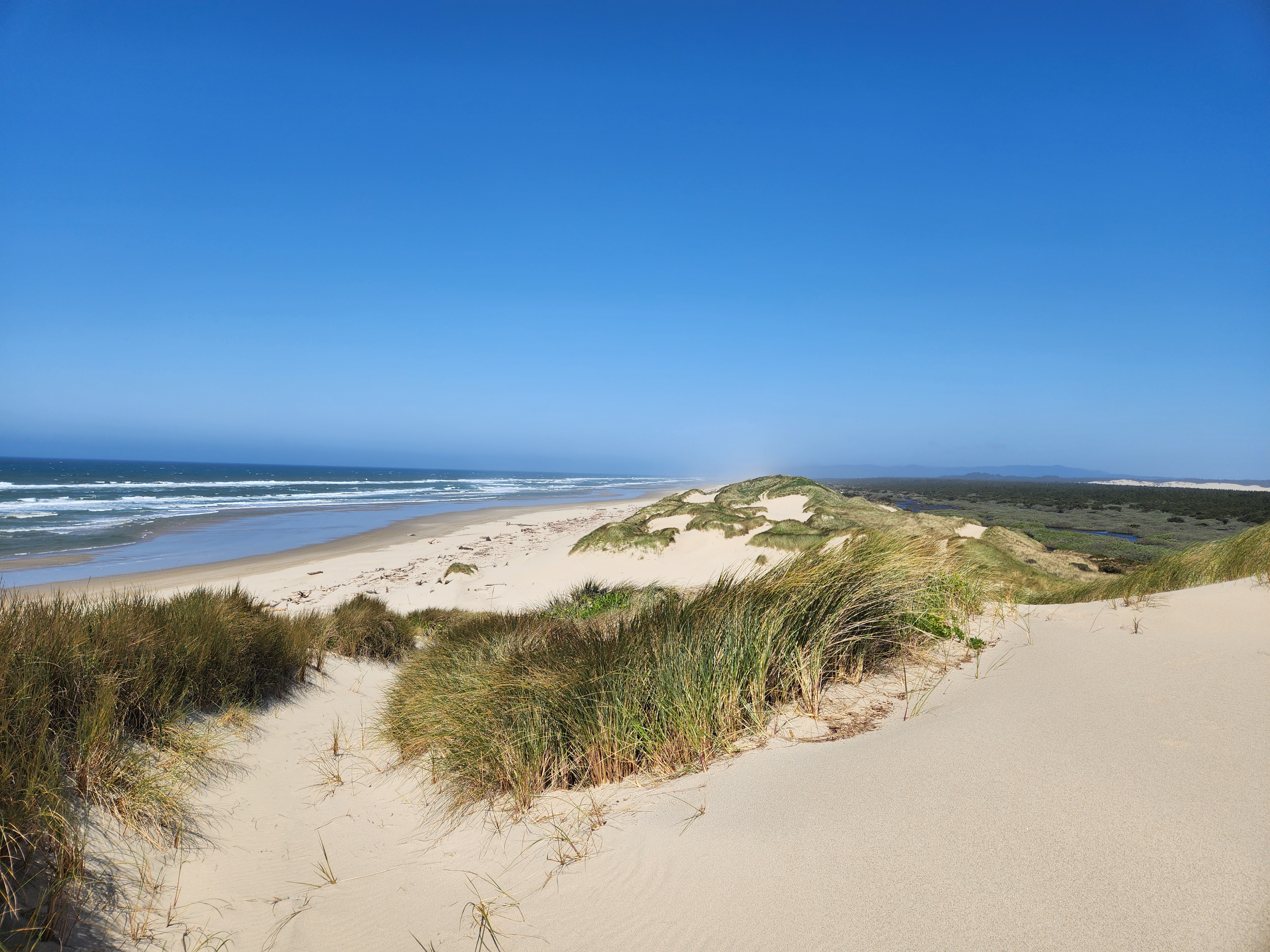
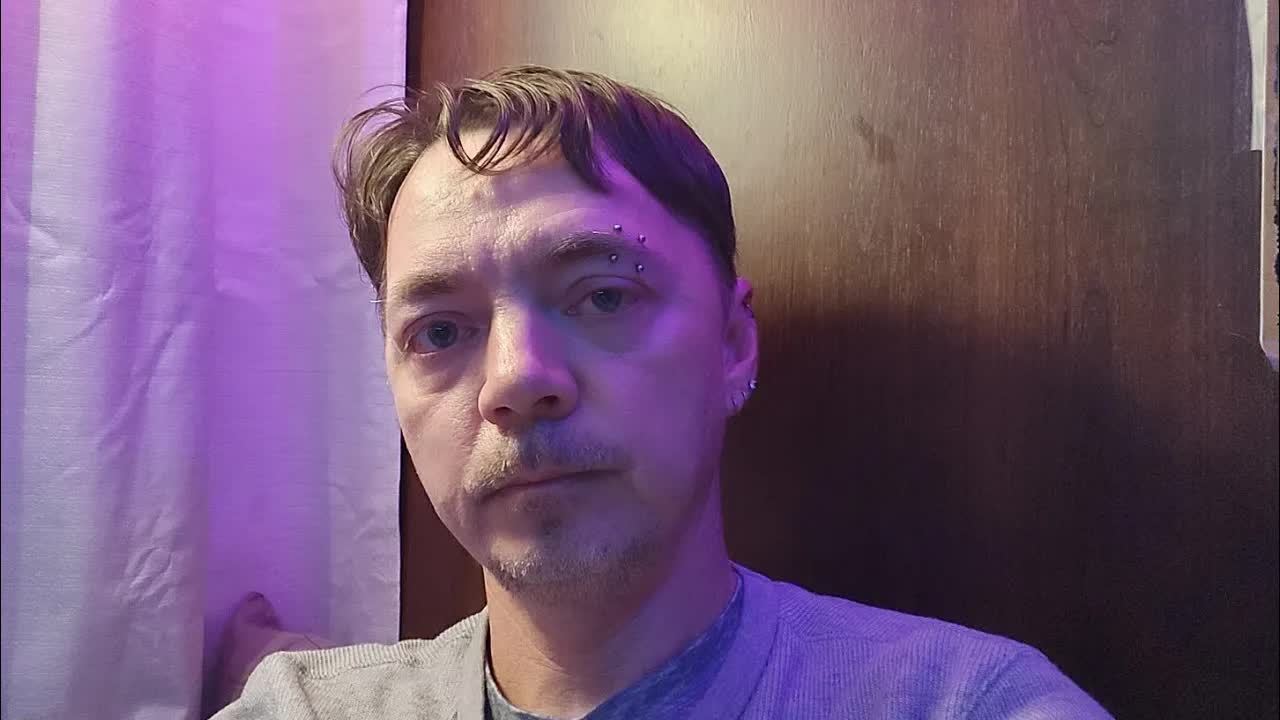
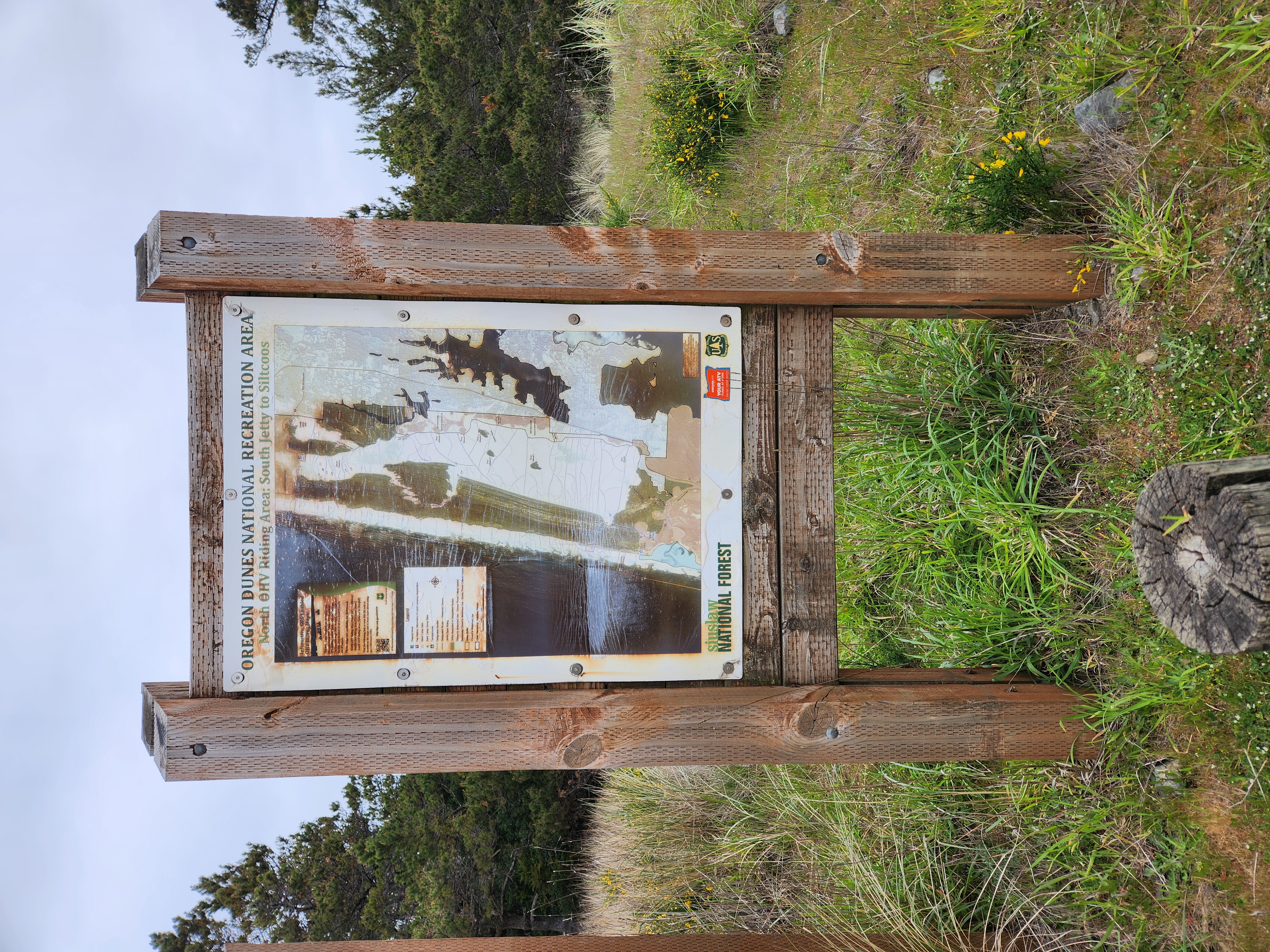
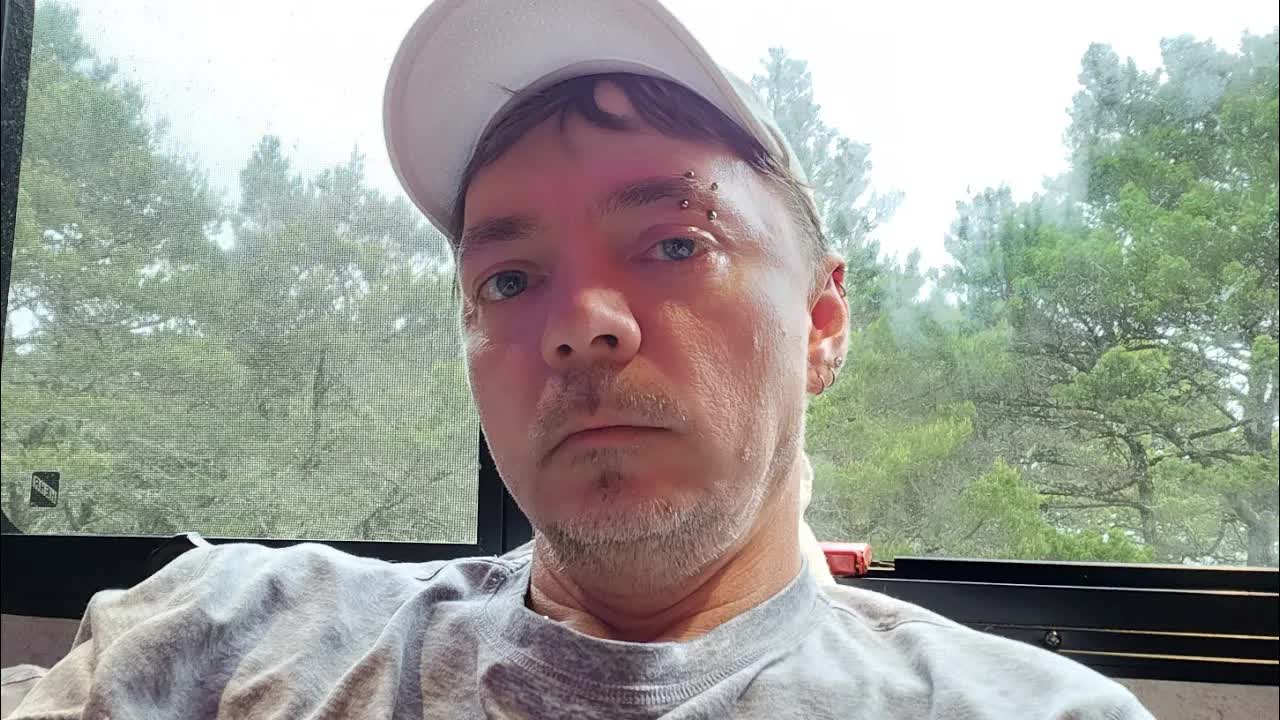
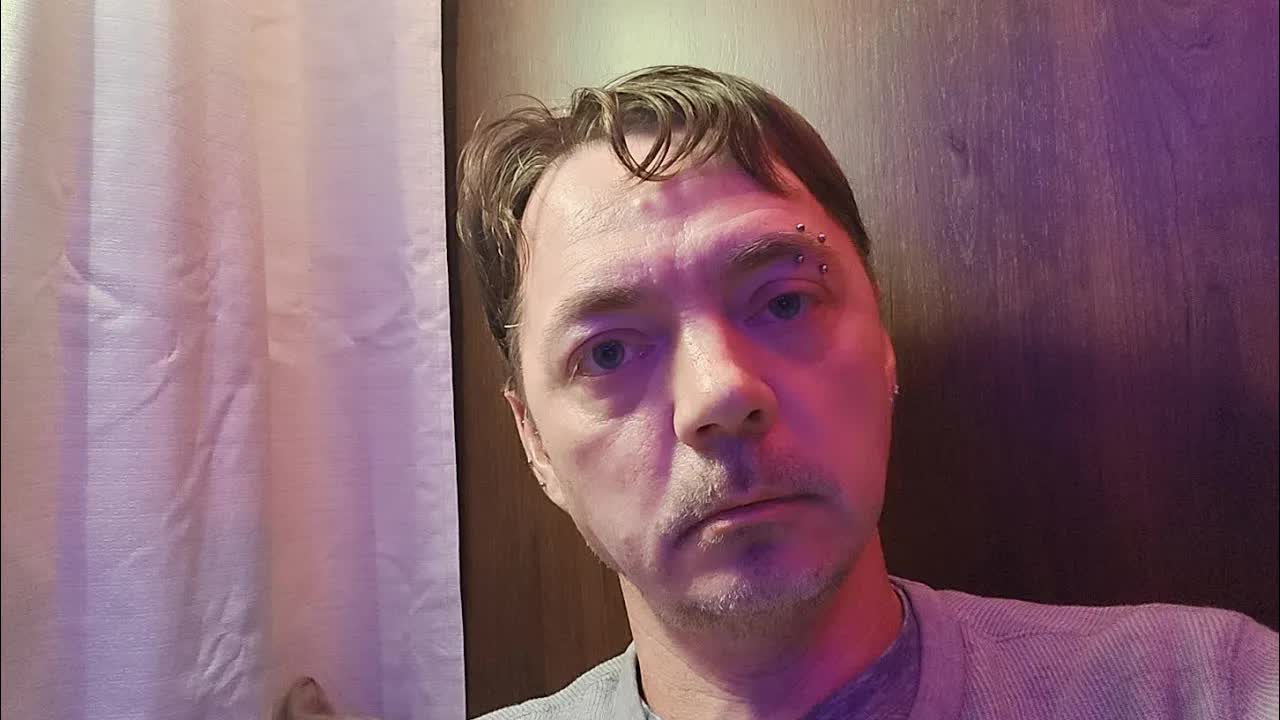
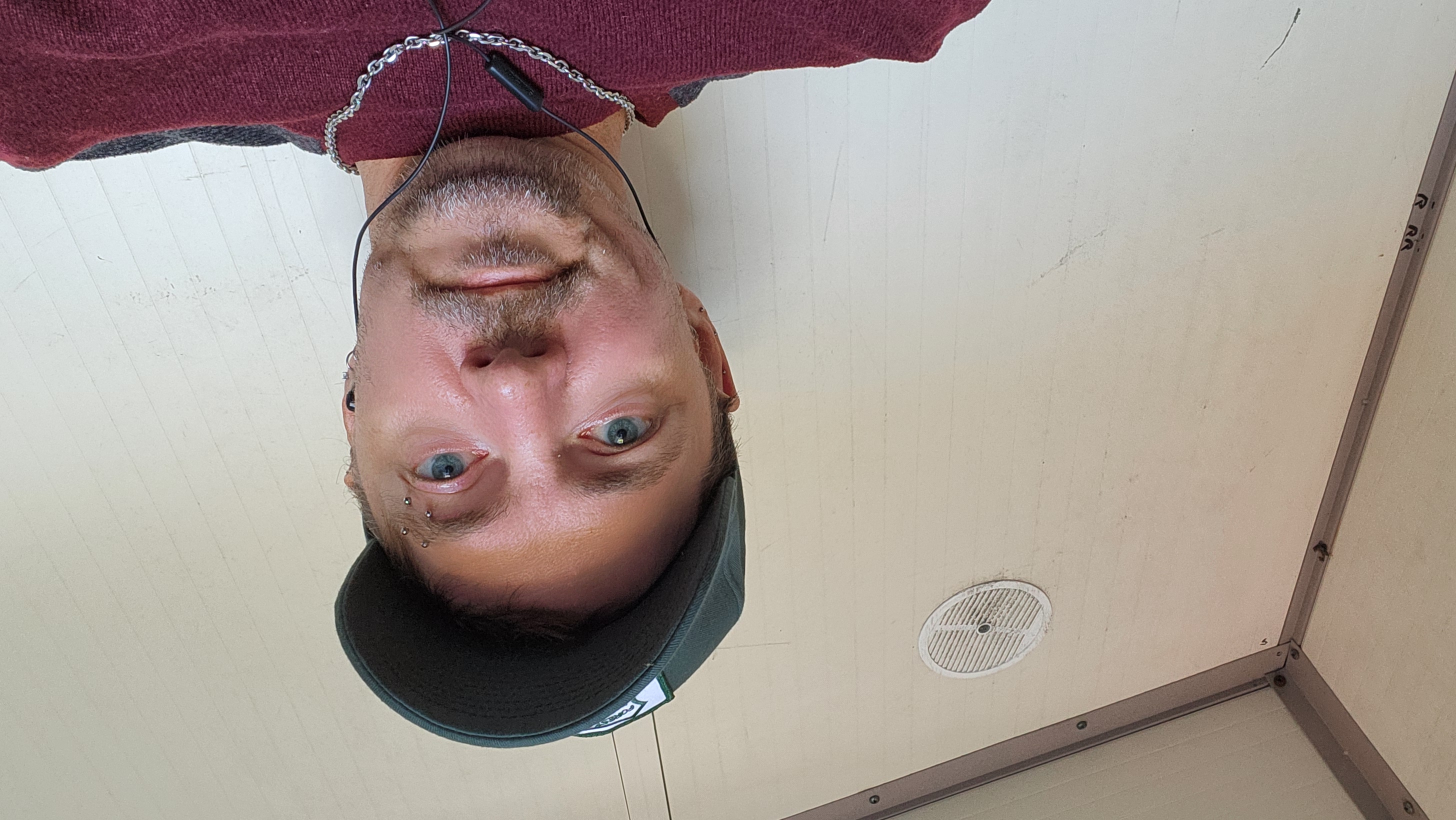
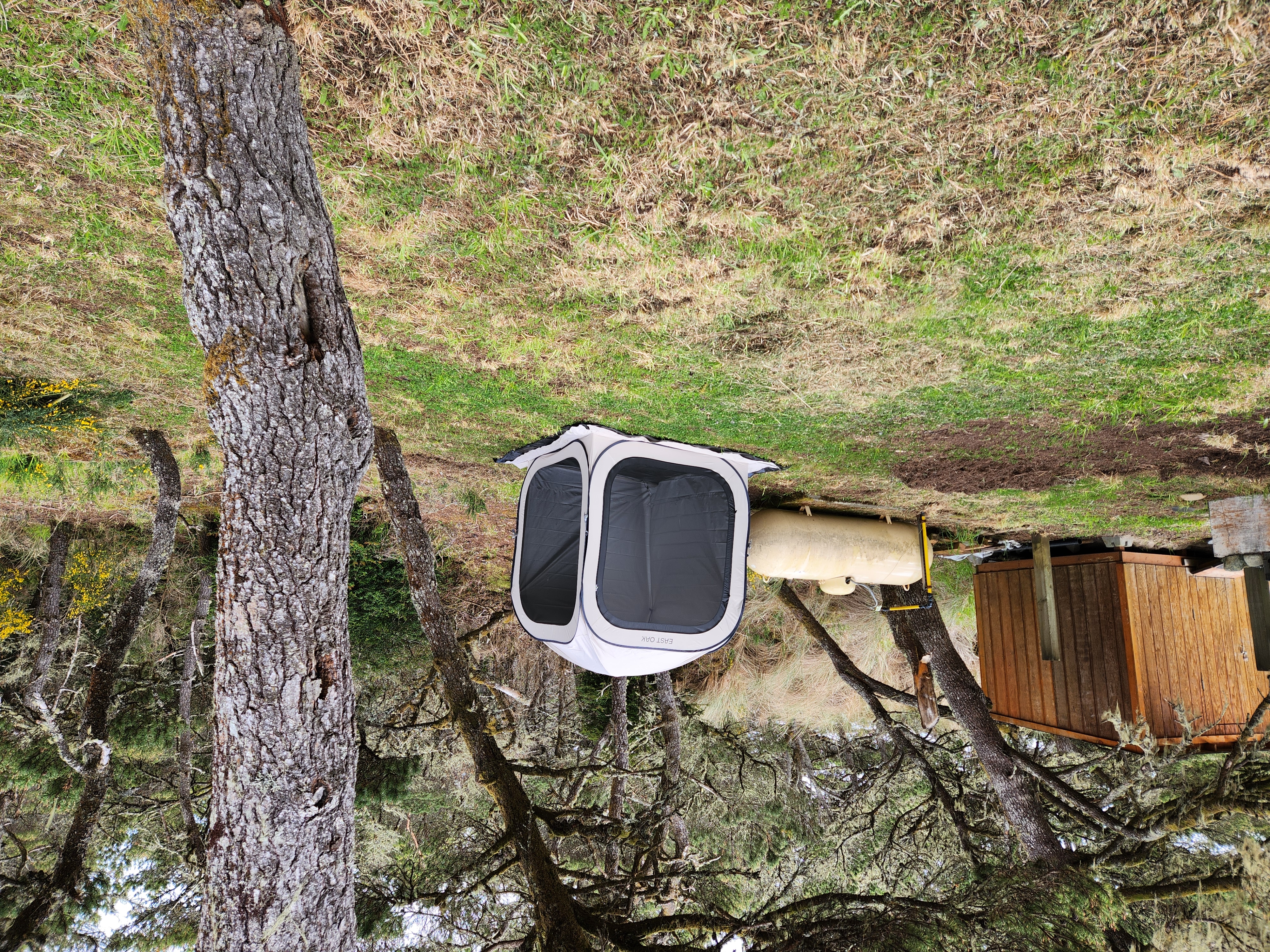
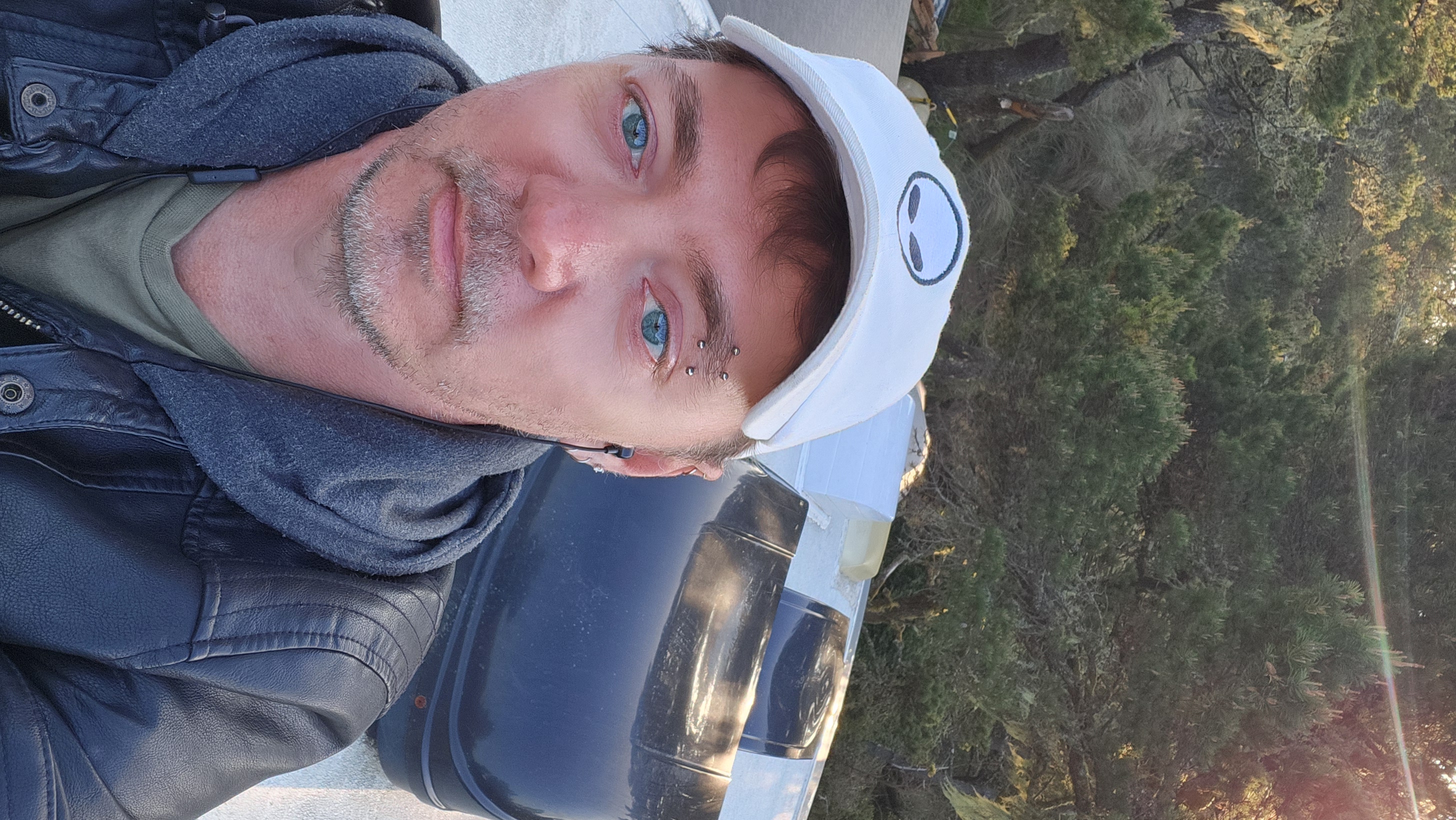
The morning brought news, and the news relocated him. rswfire woke at the campground in the Oregon Dunes expecting an assignment forty miles south, and instead learned he would be stationed a quarter mile away — the campground adjacent to the one he had been staying at, close enough to walk, a quarter mile from the Pacific. He describes the site as a loop of parking lot beside a larger parking lot. He says he likes it. The ocean is within earshot, the ATV noise runs its usual pattern across the Dunes, and somewhere nearby a beep repeats at intervals he has been tracking for hours. He attributes it to a neighbor's site. She is leaving today. He states he is looking forward to the beeping going away, and distinguishes carefully between the ATV noise, which he does not mind, and a sound that recurs every twenty seconds, which he does.
He sets the day's shape before he begins recording anything else: he will show the campsite, then cross Highway 101 to Siltcoos Lake, which he has not yet visited, where there is a trail, and where he intends to hike and talk. And he names the second thing he intends to do, without preamble or apology — he is going to ask for financial help.
What precedes this placement, he states plainly. Two weeks off grid without water or power, following rejection as a volunteer with the state park service at what he describes as the worst possible moment. He says he went through the eye of the storm already and pulled himself out of that fight. Now there is a Forest Service post, a boss who manages the full forty-mile stretch between Coos Bay and Florence, a weekend to acclimate, and a start date next week. Propane hookup is scheduled. He reads the propane as a signal about duration — three months minimum, possibly three to six, possibly years in the Dunes. He says he could be moved around. The infrastructure arriving next week tells him he will not be, not soon.
Then he addresses the gap between how he presents and what he is describing. He states that the past two weeks were scary but not overwhelming, because he does not work that way. He does not appear emotional, and he names the consequence of that directly: viewers therefore do not believe the situation is as bad as he says. He describes his cognition and his emotions as integrated — hardware and software running as one system — and says he knows this is foreign to most people, and that he is not the only one who operates this way. He does not cope. He does not compartmentalize. He adapts and navigates. He says he faces the situation without dramatizing it and without making it smaller than it is, and then he states it: no money, a Jeep nearly out of fuel, and a need for that fuel so he can drive to Florence and look for work in a store — something to hold until he can reestablish his freelance programming business online while volunteering for the Forest Service. The satellite is working at this moment, which is why the video will upload. The bill is unpaid. He expects to lose it within a week. RV payments are behind. Jeep payments are behind.
He sets the terms of the channel in the same level register. Comments are off. He tells viewers not to take it personally — that it is not about them, that thousands of strangers arrive at these videos and he will not tolerate abuse. He is not asking for advice, validation, or criticism. He describes himself as a sovereign being navigating life on his own terms and sharing it to show there is another way. Commentary, he says, is not helpful. On his private channel comments are open, because that is a different thing. He notes the pattern he sees: viewers assume someone else will help, take a closed comment section personally, hear the word you and receive it as an accusation. One door closed, he says. Many others open — email, Facebook, methods he has provided.
The video runs seven minutes, which he registers mid-sentence, and he decides to split the day's transmission: upload this one now while the satellite holds, and post the hike separately tonight. He says it is a very beautiful day. He says his life is very stressful and he navigates it as well as he can. He acknowledges that many people watching are struggling too — and that not all of them are, and that some of those who could help simply choose not to.
He closes by refusing the frame before anyone can apply it. This is not begging. Asking for help does not contradict his values or his ethics, does not make him smaller, does not make him less than, does not make him a loser — none of the things he says people put into their heads. He points to what he has done: a year of adapting to life on the road, programming since childhood, the full history he had shared publicly that same week. He states that whenever a human being came to him needing help, he helped them. He did not judge them. He did not tell them how to live. He just helped. That, he says, is what he is asking for.